
تفريغ هواء الفرامل
تُعدّ عملية تنفيس الفرامل إجراءً يُجرى على أنظمة الفرامل الهيدروليكية ، حيث يتمّ خلالها تفريغ أنابيب الفرامل (الأنابيب والخراطيم التي تحتوي على سائل الفرامل ) من أي فقاعات هواء. هذا ضروري لأنّ سائل الفرامل سائل غير قابل للانضغاط ، بينما فقاعات الهواء غاز قابل للانضغاط ، ووجودها في نظام الفرامل يُقلّل بشكل كبير من الضغط الهيدروليكي الذي يُمكن توليده داخل النظام. تُستخدم نفس طرق التنفيس في عملية غسل أو تنظيف نظام الفرامل ، حيث يتمّ استبدال السائل القديم بسائل جديد، وهي صيانة ضرورية.
طُرق
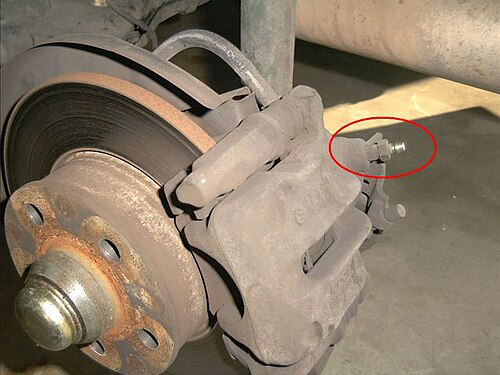
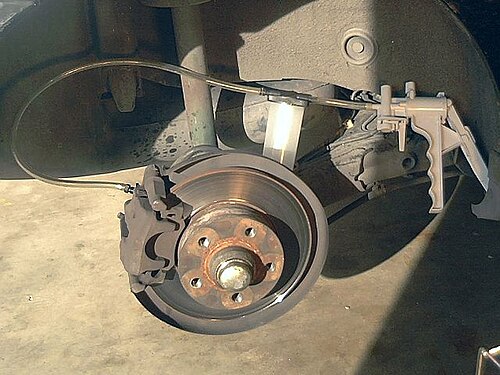
تُجرى هذه العملية بضخ سائل فرامل نظيف وخالٍ من الفقاعات عبر النظام بأكمله، عادةً من الأسطوانة الرئيسية إلى مكابح الأقراص (أو أسطوانات العجلات في فرامل الأسطوانة )، ولكن في بعض الحالات يكون الضخ في الاتجاه المعاكس. ويُركّب صمام تنفيس الهواء عادةً في أعلى نقطة على كل أسطوانة أو مكبح.
هناك خمس طرق رئيسية للنزيف: [ 1 ]
- في طريقة الضغط المستمر ، يتم الضغط على دواسة الفرامل مع فتح صمام تنفيس واحد في كل مرة، مما يسمح بخروج الهواء. يجب إغلاق صمام التنفيس قبل رفع القدم عن الدواسة، أو تركيب صمام أحادي الاتجاه .
- في طريقة التفريغ ، يتم توصيل مضخة تفريغ بصمام التنفيس، والذي يتم فتحه واستخراج السائل بواسطة المضخة حتى يصبح خالياً من الفقاعات.
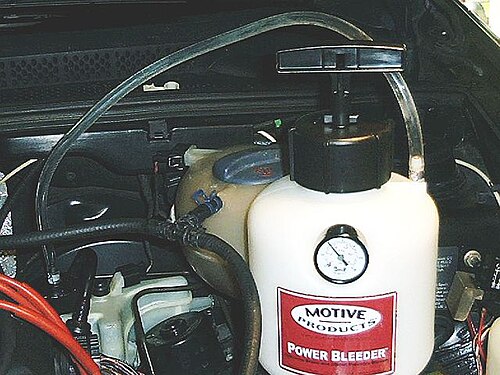
- في طريقة الضغط ، يتم توصيل مضخة ضغط بالأسطوانة الرئيسية، لضغط النظام، ثم تُفتح صمامات التنفيس واحدة تلو الأخرى حتى يصبح السائل خاليًا من الهواء. وقد تتضمن المضخات المتخصصة آلية للحفاظ على خزان سائل الفرامل ممتلئًا تلقائيًا أثناء عملية التنفيس.
- في الطريقة العكسية ، تُستخدم مضخة لدفع السائل عبر صمام التنفيس إلى الأسطوانة الرئيسية. وتعتمد هذه الطريقة على مبدأ أن الهواء يرتفع في السائل ويميل بطبيعته إلى الخروج من نظام الفرامل.
- يُعدّ التنفيس بالجاذبية طريقة بسيطة وسهلة لتغيير سائل فرامل السيارات. ويمكن استخدامه أيضاً لتفريغ الهواء من الأنظمة التي تحتوي على فقاعات هوائية، ولكنه قد لا يكون بنفس فعالية الطرق الأخرى.
مزايا وعيوب الطرق المختلفة
The pump and hold method usually requires two people, although it can be performed by one person if one-way bleed nipples or valves are fitted. During this method, the brake pedal and master cylinder piston will travel beyond their normal range which can cause wear on seals or incorporate corroded metal into the brake fluid.
Multiple wheel cylinders or calipers can be bled simultaneously, although this is only usually done with the gravity method which doesn't require pumps. The gravity method does take a long time, typically several hours to replace all the fluid. Bubbles in the system may rise faster than the fluid drains, so it may not be effective at bleeding, but is generally sufficient for replacing old fluid with new. Gravity bleeding is a very simple method requiring only one person. When the reservoir cap is removed and a bleed nipple opened, fluid drips slowly from the nipple because it is lower than the reservoir. A hose is typically used to collect the fluid in a container for safe disposal. The reservoir must be kept above the min mark at all times to avoid more air being drawn into the system.
Applying pressure to the reservoir or bleed nipples, or applying a vacuum to the bleed nipples, makes the fluid flow through much more quickly than gravity alone. Replacing all the fluid takes only a few minutes.
Different vehicles have different recommended bleeding patterns. Brakes are usually bled starting with the wheel that is furthest from the master cylinder and working towards the wheel closest to the master cylinder. This prevents bubbles in the system being forced into pipes towards wheels that have already been bled.
Bench bleeding
After replacement of the master cylinder, the master cylinder is usually "bench bled" before installation. Typically this is done by securing it on the bench, filling it with fluid, connecting fittings and hoses to route fluid from the outlet ports on the master cylinder back to its reservoir, and repeatedly depressing the master cylinder plunger until bubbles are no longer seen coming from the hoses.
Clutch bleeding
The same techniques are used for bleeding hydraulic clutch systems. A bleed nipple on the clutch slave cylinder is used.
References
- ↑Brake Bleeding Methods by Phoenix Systems
External links
- Vehicle braking technologies