
CNC wood router
A CNC wood router is a CNC router that creates objects from wood, and controls tool paths by computer numerical control (CNC).[1] The CNC works on the Cartesian coordinate system (X, Y, Z) for 3D motion control. Parts of a project can be designed in the computer with a CAD/CAM program, and then cut automatically using a router or other cutters to produce a finished part. The CNC router is ideal for hobbies, engineering prototyping, product development, art, and production work.


Operation
A CNC wood router uses CNC (computer numerical control) and is similar to a metal CNC mill with the following differences:
- The wood router typically spins faster — with a range of 13,000 to 24,000 RPM
- Professional quality machines frequently use surface facing tools up to 3" in diameter or more, and spindle power from 5 to 15 horsepower. Machines capable of routing heavy material at over a thousand inches per minute are common.
- Some machines use smaller toolholders MK2 (Morse taper #2 - on older machines), ISO-30, HSK-63 or the tools just get held in a collet tool holder affixed directly to the spindle nose. ISO-30 and HSK-63 are rapid-change toolholding systems. HSK-63 has begun to supplant the ISO-30 as the rapid change standard in recent years.
A wood router is controlled in the same way as a metal mill, but there are CAM and CAD applications such as Artcam, Mastercam, Bobcad, and AlphaCam, which are specifically designed for use with wood routers.
Wood routers are frequently used to machine other soft materials such as plastics.
Typical three-axis CNC wood routers are generally much bigger than their metal shop counterparts. 5' x 5', 4' x 8', and 5' x 10' are typical bed sizes for wood routers. They can be built to accommodate very large sizes up to, but not limited to 12' x 100'. The table can move, allowing for true three axis (xyz) motion, or the gantry can move, which requires the third axis to be controlled by two slaved servo motors.
Advantages
The advantages of CNC wood router (compared to general machine) as follows,
- High degree of automation
- Consistent quality
- High productivity
- Processing complex shape
- Easy to implement CAD/CAM
- 2D, 2.5D and 3D capable
Components
Separate heads
تحتوي بعض أجهزة توجيه الخشب على رؤوس متعددة منفصلة يمكن أن تنزل في وقت واحد أو بشكل منفصل. كما تحتوي بعض أجهزة التوجيه الأخرى على رؤوس متعددة يمكنها تشغيل برامج منفصلة تمامًا على طاولات منفصلة، مع إمكانية التحكم بها جميعًا من خلال واجهة واحدة.
مجمع الغبار / مكنسة كهربائية
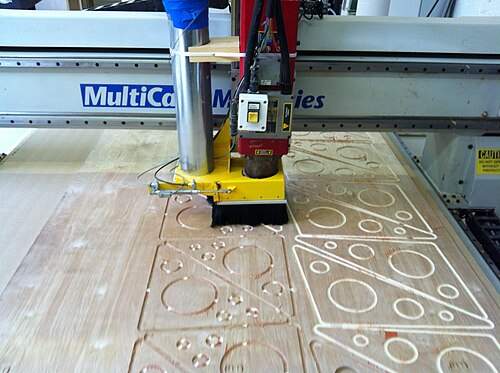
تحتوي آلة توجيه الخشب عادةً على قنوات تهوية بقطر يتراوح بين 6 و10 بوصات لشفط نشارة الخشب والغبار الناتج. ويمكن توصيلها بنظام تجميع غبار مستقل أو نظام متكامل للورشة.
تُصمم بعض آلات التوجيه الخشبية خصيصًا لصناعة الخزائن ، وتضم العديد من رؤوس الحفر التي يمكن برمجتها للنزول بشكل منفصل أو متزامن. عادةً ما تكون المسافة بين رؤوس الحفر 32 مم، وهو نظام تباعد يُعرف بنظام 32 مم. يُستخدم هذا النظام لضمان التباعد الأمثل لأرفف الخزائن. يمكن أن يكون الحفر رأسيًا أو أفقيًا (على المحور Y أو X من أي جانب/طرف من قطعة العمل)، مما يسمح بحفر اللوحة من جميع حوافها الأربعة بالإضافة إلى سطحها العلوي. العديد من هذه الآلات ذات مجموعات الحفر الكبيرة مُشتقة من آلات الحفر CNC النقطية.
تثبيت قطعة العمل
أنظمة الشفط
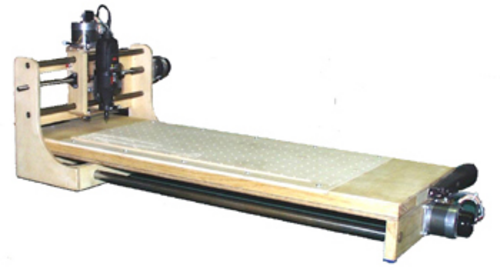
عادةً ما تُثبّت آلة توجيه الخشب الخشبَ بالشفط عبر الطاولة أو بواسطة منصات ترفع قطعة العمل فوق الطاولة. تُستخدم هذه المنصات للمكونات التي تتطلب تشكيل الحواف (أو القطع السفلي )، أو المصنوعة من الخشب الصلب، أو حيثما تكون هناك حاجة إلى مرونة أكبر في الإنتاج. يتطلب هذا النوع من قواعد التثبيت شفطًا أقل مع فراغ مطلق أعلى.
يستخدم نوع ثانٍ من أدوات التثبيت لوحًا داعمًا. يسمح هذا اللوح بالشفط الفراغي عبر طاولة منخفضة الكثافة، مما يتيح وضع القطع في أي مكان عليها. تُستخدم هذه الطاولات عادةً في التصنيع القائم على التداخل (NBM)، حيث يتم توجيه مكونات متعددة من صفيحة واحدة. يمنع هذا النوع من التصنيع حفر الحواف أو تشكيلها من الأسفل.
تُعد مضخات التفريغ ضرورية مع كلا النوعين من الطاولات حيث يتم تحديد الحجم و"القوة" بناءً على أنواع المواد التي يتم قطعها.
صيانة
يمكن للتشغيل والصيانة السليمين بالطريقة الصحيحة أن يطيلا عمر الآلة بشكل كبير ويقللا من حدوث الأعطال.
- تجنب أشعة الشمس المباشرة والغبار والرطوبة الزائدة
- ابتعد عن المعدات ذات الاهتزاز العالي
- أبقِ الغبار وما شابهه بعيدًا عن العجلات والمحامل، واستخدم الهواء المضغوط.
مراجع
- ↑ ألبرت، آلان (2010). فهم أجهزة التوجيه CNC: تبسيط تقنية أجهزة التوجيه CNC للخشب . FPInnovations.
- آلات النجارة
- التحكم الرقمي