
Emerald Dragon
Emerald Dragon (エメラルドドラゴン, Emerarudo Doragon) is a role-playing video game developed by Glodia and released for multiple platforms in Japan. It was first launched for the NEC PC-8801 and PC-9801 home computers on December 22, 1989, followed by conversions for the X68000 (released on December 6, 1990), MSX2 (released on December 26 of the same year), and FM Towns (released on May 28, 1992). Developer Alfa System later produced console versions of the game for the PC Engine in Super CD-ROM² format (released on January 29, 1994) and the Super Famicom (released on July 28, 1995). The game features characters and locations based on Zoroastrian mythology.
Gameplay
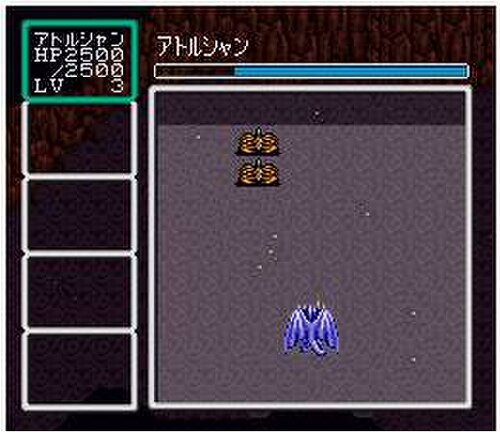
The game utilizes a top-down overhead perspective, in which players move the controllable character in two dimensions. As players navigate the world map, they may encounter battles that are turn-based and employ a time point system: both movement and attacks deplete a bar displayed at the top of the screen, and a character's turn ends when this bar is exhausted. Experience points, used to level up playable characters, are earned by defeating enemies.
Stronger attacks for the main protagonist, Atorushan, become available through the collection of key items called Emerald Graces. These items allow him to transform into a dragon to unleash a powerful attack, at the cost of reducing his HP when used.
Plot
A long time ago, dragons and humans lived in peace in the land of Ishbahn. Lord Tiridates, believing that the presence of dragons among humans defiles Ishbahn, casts a curse that kills dragons in the region. Some of the dragons—now collectively known as the Dragon Tribe—manage to escape and find refuge in Draguria, where a dimensional rift prevents humans from crossing.
At the start of the game, a ship wrecks on the coast of Draguria. The protagonist, a Dragon Tribe youth named Atorushan, seeks the friendship of the sole survivor, a human girl named Tamryn, under the guidance of the White Dragon, leader of the tribe. The girl is cared for by the dragons of the land, but twelve years later, she departs in search of happiness among her own kind. Atorushan breaks off his left horn and gives it to her as a means of summoning him should she ever require help.
Three years after this event, Atorushan is summoned by the White Dragon, as the horn has been blown. Granting him a silver scale to protect him from the curse of Ishbahn, the White Dragon sends him to the human world to aid Tamryn.
عند وصوله، يكتشف أتوروشان أن إشبهن بأكملها تتعرض لهجوم من جيوش شريرة يقودها تيريداتس. لهزيمته ورفع اللعنة عن الأرض، يجب على أتوروشان العثور على النعم الزمردية الخمس - وهي كنوز مستوحاة من التنانين منتشرة في جميع أنحاء المملكة - وإحياء التنين الزمردي، أعظم التنانين على الإطلاق، والمُقدَّر له أن يُحدث معجزة.
الإصدار والاستقبال
| منشور | نتيجة |
|---|---|
| فاميتسو | 7/10، 6/10، 6/10، 7/10 (SFC) [ 1 ] |
| محرك جيكان للكمبيوتر | 90/100، 90/100، 90/100، 85/100، 85/100 (PCE) [ 2 ] |
| وحدة التحكم | 94% (PCE) [ 3 ] |
| محرك دينجيكي بي سي | 90/100، 95/100، 90/100 (PCE) [ 4 ] |
تم إصدار لعبة Emerald Dragon كإضافة Super CD-ROM² لجهاز PC-Engine في 29 يناير 1994. [ 4 ] وتم إصدارها لاحقًا لجهاز Super Famicom في اليابان في 28 يوليو 1995. [ 1 ]
إرث
نجح أكيهيرو كيمورا في جمع التمويل الجماعي لسلسلة صوتية مكملة بعنوان "إليمنتال دراغون" عام ٢٠١٥. [ ٥ ] تستند هذه السلسلة إلى أفكار طُرحت في التسعينيات لتكملة "إميرالد دراغون" ، لكنها لم تُكتب لها النجاح بسبب مشاكل حقوق النشر. مع ذلك، ابتكر كيمورا وآخرون العديد من أعمال الدوجينشي والروايات المستقلة التي واصلت القصة على مر السنين، بالإضافة إلى إنتاج لعبة فيديو مقتبسة من سلسلته الصوتية بعنوان "إليمنتال دراغون: فوتاتسو نو هيكاري" . [ ٦ ] صُممت السلسلة لتجاوز مشاكل حقوق النشر من خلال التركيز على شخصيات جديدة وتغيير الأسماء قليلاً، بما في ذلك العنوان، مع ظهور الشخصيات الأصلية في النهاية. كان الهدف منها أيضاً مساعدة كيمورا على إثارة الاهتمام بتكملة حقيقية لـ "إميرالد دراغون" وربما استعادة حقوق النشر. [ ٧ ]
مراجع
- 1 2 Tsūshin, هامامورا ; هادا، تاكايوكي؛ واتانابي، ميكي؛ أوتشيساوا، جورو (4 أغسطس 1995). “مراجعة الألعاب الجديدة المتقاطعة”. ويكلي فاميكوم تسوشين (باللغة اليابانية). رقم 346. شركة ASCII . ص. 31.
- ^ "مراجعة جديدة لدايساكوسن! エメラルドドラゴン" . Gekkan PC Engine (باللغة اليابانية). المجلد. 6، لا. 2. شوجاكوكان . فبراير 1994. ص. 133.
- ^ هيلوت ، جريجوار (مارس 1994). "NEC Import (الإصدار الياباني): Emerald Dragon" . جويباد (بالفرنسية). رقم 29. مطبعة هاشيت ديزني . ص. 141.
- 1 2 "الاسم الجديد: エメラルドドラゴン" . محرك Dengeki للكمبيوتر الشخصي (باللغة اليابانية). المجلد. 2، لا. 2. ميديا ووركس . فبراير 1994. ص. 154.
- ↑ "エ レ メ ン タ ル ド ラ グ ー ン メ イ ン ペ ー ジ" .
- ^ "エ レ メ ン タ ル ド ラ グ ー ン -2 つ の 光 - آر بي جي" . تم الاسترجاع بتاريخ 2025-09-08 .
- ↑ "木村明広×保志総一朗"""" . مؤرشف من الأصل بتاريخ 2018-09-20 . تم الاسترجاع 2018-09-20 .
- ألعاب الفيديو لعام 1989
- ألعاب FM Towns
- ألعاب فيديو حصرية لليابان
- ألعاب ميديا وركس
- ألعاب MSX2
- ألعاب NEC PC-8801
- ألعاب NEC PC-9801
- ألعاب الفيديو ذات الأدوار
- ألعاب الفيديو الفردية
- ألعاب نظام سوبر نينتندو الترفيهي
- ألعاب TurboGrafx-CD
- ألعاب فيديو عن التنانين
- ألعاب فيديو مستوحاة من الأساطير
- ألعاب الفيديو التي تم تطويرها في اليابان
- ألعاب فيديو سجلها ياسوهيكو فوكودا
- ألعاب X68000
- ألعاب غلوديا