
معدن الهاليد
المعادن الهاليدية هي تلك المعادن التي يغلب عليها أنيون الهاليد ( F⁻ ، Cl⁻ ، Br⁻ ، و I⁻ ). وقد تحتوي المعادن الهاليدية المعقدة أيضًا على أنيونات متعددة الذرات . [ 1 ]
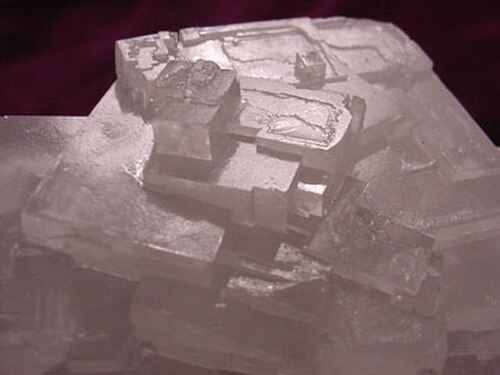
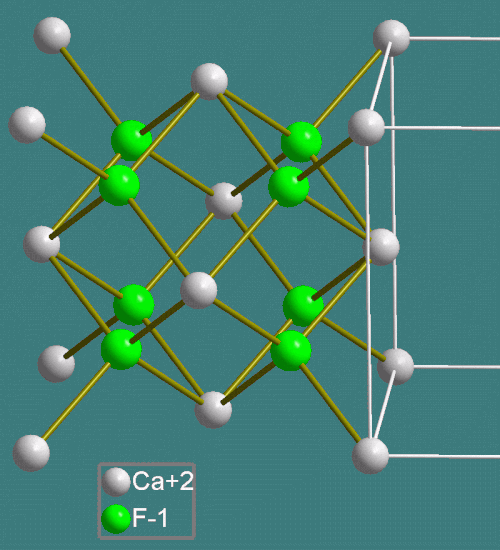
وتشمل الأمثلة ما يلي: [ 2 ] [ 3 ]
- أتاكاميت Cu 2 Cl(OH) 3
- أفوجادريت (K,Cs)BF
- الباراريت (β) (NH 4 ) 2 SiF 6 [ 4 ]
- بيشوفيت MgCl 2 · 6H 2 O
- البروجنيت Ca(IO 3 ) 2 (H 2 O)
- كالوميل كلوريد الزئبق
- كارناليت KMgCl 3 · 6H 2 O
- كارناليت KMgCl · 6H 2 O
- سيرارجيريت / فضة قرنية AgCl
- الكلورارجيريت AgCl، والبرومارجيريت AgBr، واليودارجيريت AgI
- كريوليت Na 3 AlF 6
- كريبتوهاليت (أ) (NH 4 ) 2 SiF 6 [ 5 ]
- دايتزيت Ca 2 (IO 3 ) 2 CrO 4
- إيجلستونيت Hg 4 OCl 2
- إمبوليت AgCl+AgBr
- إريوكالسيت CuCl 2 · 2H 2 O
- فلوريت CaF 2
- هاليت كلوريد الصوديوم
- لوتاريت Ca(IO 3 ) 2
- مارشايت كول
- ميرسايت إيه جي آي
- نانتوكيت CuCl
- كلوريد الأمونيوم ( NH4Cl )
- سيلفيت KCl
- تيرلينغوايت Hg 2 OCl
- تولباشيت CuCl 2
- فيليوميت نافور
- إيتروسيريت (Ca,Y,Ce)F 2
- فلوريد الإيتريوم (Ca,Y)F 2
- زافاريتسكيت (BiO)F
Many of these minerals are water-soluble and are often found in arid areas in crusts and other deposits as are various borates, nitrates, iodates, bromates and the like. Others, such as the fluorite group, are not water-soluble. As a collective whole, simple halide minerals (containing fluorine through iodine, alkali metals, alkaline Earth metals, in addition to other metals/cations) occur abundantly at the surface of the Earth in a variety of geologic settings. More complex minerals as shown below are also found.[6]
Commercially significant halide minerals
Two commercially important halide minerals are halite and fluorite. The former is a major source of sodium chloride, in parallel with sodium chloride extracted from sea water or brine wells. Fluorite is a major source of hydrogen fluoride, complementing the supply obtained as a byproduct of the production of fertilizer. Carnallite and bischofite are important sources of magnesium. Natural cryolite was historically required for the production of aluminium, however, currently most cryolite used is produced synthetically.
Many of the halide minerals occur in marine evaporite deposits.[6] Other geologic occurrences include arid environments such as deserts.[6] The Atacama Desert has large quantities of halide minerals as well as chlorates, iodates, oxyhalides, nitrates, borates and other water-soluble minerals. Not only do those minerals occur in subsurface geologic deposits, they also form crusts on the Earth's surface due to the low rainfall (the Atacama is the world's driest desert as well as one of the oldest at 25 million years of age).
Nickel–Strunz Classification -03- Halides
IMA-CNMNC proposes a new hierarchical scheme (Mills et al., 2009). This list uses the Classification of Nickel–Strunz (mindat.org, 10 ed, pending publication).
- Abbreviations
- REE: rare-earth element (Sc, Y, La, Ce, Pr, Nd, Pm, Sm, Eu, Gd, Tb, Dy, Ho, Er, Tm, Yb, Lu)
- PGE: platinum-group element (Ru, Rh, Pd, Os, Ir, Pt)
- * : discredited (IMA/CNMNC status)
- ? : questionable/doubtful (IMA/CNMNC status)
Regarding 03.C Aluminofluorides, 06 Borates, 08 Vanadates (04.H V[5,6] Vanadates), 09 Silicates:
- neso-: insular (from Greekνῆσοςnêsos, "island")
- soro- : مجمعة (من اليونانية σωρός sōrós ، "كومة، كومة، كومة")
- cyclo- : حلقية (من اليونانية κύκлος kúklos ، "دائرة")
- ino- : مقيد (من اليونانية ίνα ína ، "ألياف"، [من اليونانية القديمة ἴς ])
- phyllo- : مُغطى بورق (من اليونانية φῠ́λλον phúllon ، "ورقة")
- tecto- : إطار ثلاثي الأبعاد (من اليونانية τεκτον ικός tektōnikós ، "البناء")
- مخطط كود النيكل – سترونز : NN.XY.##x
- NN : رقم فئة المعادن النيكل-سترونز
- X : حرف تقسيم معادن النيكل – سترونز
- Y : رسالة من عائلة معادن النيكل – سترونز
- ## x : رقم معدن/مجموعة النيكل-سترونز؛ x حرف إضافي
الفئة: الهاليدات

- 03.أ الهاليدات البسيطة، بدون H2O
- 03.AA M:X = 1:1، 2:3، 3:5، وما إلى ذلك: بانيتشيت ؛ 05 نانتوكيت ، 05 مرشيت ، 05 ميرسيت ؛ 10 يودارجيريت ، 10 توكورناليت ؛ 15 برومارجيريت ، 15 إمبوليت *، 15 كلورارجيريت ؛ 20 كاروبيت ، 20 جريسيت ، 20 هاليت ، 20 سيلفيت ، 20 فيليوميت ؛ 25 سال أمونياك ، 25 لافوسايت ؛ 30 كالوميل ، 30 كوزمينيت ، 30 موسكيليت ؛ 35 جار ; 40 كلوروكالسيت ، 45 كولاريت ، 50 راداكريشنايت ؛ 55 هيفايستوسيت ، 55 تشالاكولويت
- 03.AB M:X = 1:2: 05 تولباشيت ، 10 كوكينيت ، 15 سيلايت ؛ 20 كلوروماغنيسيت *، 20 لورنسيت ، 20 سكاكيت ؛ 25 فرانكديكسونيت ، 25 فلوريت ؛ 30 تيفيتيت-(Y) ؛ 35 غاغارينيت-(Y) ؛ 35 زاجاسيت-(Ce)
- 03.AC M:X = 1:3: 05 Zharchikhite ، 10 Molysite ؛ 15 فلوسيريت -(Ce)، 15 فلوسيريت-(La)، 20 جانانيت
- 03.ب الهاليدات البسيطة، مع H2O
- 03.BA M:X = 1:1 و 2:3: 05 هيدروهاليت ، 10 كارناليت
- 03.BB M:X = 1:2: 05 إريوكالسيت ، 10 روكوهنيت ، 15 بيشوفيت ، 20 نيكلبيشوفيت ، 25 سينجاريت ، 30 أنتاركتيسيت ، 35 تاكيهيدريت
- 03.BC M:X = 1:3: 05 كلورالومينيت
- 03.BD هاليدات بسيطة مع H2O و OH إضافية: 05 كادوالديريت ، 10 ليسوكيت ، 15 كورشونوفسكايت ، 20 نيبسكويت ، 25 كوينينيت
- 03.ج هاليدات معقدة
- 03.C: ستيروبيسايت ، IMA2008-032، IMA2008-039
- 03.CA بوروفلوريد: 05 فيروتشيت ؛ 10 افوجادريت , 10 بربريت
- 03.CB نيسو-ألومينوفلوريدات: 05 كريوليثيونيت ؛ 15 كريوليت ، 15 إلباسوليت ، 15 سيمونسيت ؛ 20 كولكيريت ، 25 ويبريت ، 30 كاراسوجيت ، 35 أوسوفيت ؛ 40 باتشنوليت ، 40 ثومسينوليت ؛ 45 كارلينتزيت ، 50 ياروسلافيت
- 03.CC سورو-ألومينوفلوريدات: 05 جيركسوتيت ؛ 10 أكومينيت ، 10 تيخونينكوفيت ؛ 15 أرترويت ؛ 20 كالسيجارليت ، 20 جارليت ، 20 يورجنسنيت
- 03.CD إينو-ألومينوفلوريدات: 05 روزنبرجيت ، 10 بروسوبيت
- 03.CE فيلو-ألومينوفلوريدات: 05 شيوليت
- 03.CF تيكتو-فلوريدات الألومنيوم: 05 رالستونيت ، 10 بولديرفيت ؟، 15 بوجفاديت
- 03.CG فلوريد الألومنيوم مع ثاني أكسيد الكربون 3 ، SO 4 ، PO 4 : 05 ستينونيت ؛ 10 تشوكروفيت -(Nd)، 10 تشوكروفيت-(Ce)، 10 تشوكروفيت-(Y)، 10 مينيايلوفيت ؛ 15 كريديت ، 20 بوجيلدايت ، 25 ثيرميسايت
- 03.CH: 5 مالادريت ، 10 باراريت ؛ 15 كريبتوهاليت ، 15 هيراتيت ؛ 20 ديمارتينيت ، 25 كناسيبفيت
- 03.CJ مع مجمعات MX 6 ؛ M = الحديد، المنغنيز، النحاس: 05 كلورمنغانوكاليت ، 05 رينيت ؛ 10 إريثروسيديت ، 10 كريمرسيت ؛ 15 ميتشيرليشيت ، 20 دجلاسيت ، 30 زركليريت
- 03.د أوكسي هاليدات، هيدروكسي هاليدات وهاليدات مزدوجة ذات صلة
- 03.DA مع النحاس، إلخ، بدون رصاص: 05 ميلانوثاليت ؛ 10أ أتاكاميت ، 10أ كيمبيت ، 10أ هيبينجيت ، 10 ب بوتالاكيت ، 10ب كلينوأتاكاميت ، 10ب بيلويت ، 10ج جيلارديت ، 10ج كابيلاسيت ، 10 ج هايدييت ، 10 ج باراتاكاميت ، 10ج هيربرتسميثيت ؛ 15 كلارينجبوليت ، 20 سيمونكوليت ؛ 25 بوتجينباخيت ، 25 كونيليت ؛ 30 أبهوريت ، 35 بونوماريفيت ؛ 40 كالوميتيت ، 40 أنثونيتيت ؛ 45 خايداركانيت ، 50 بوبكينجيت ، 55 أفدونينيت ، 60 درونينويت
- 03.DB مع الرصاص والنحاس، إلخ: 5 ديابوليت ، 10 بسودوبوليت ، 15 بوليت ، 20 كومينجيت ، 25 بيدوكسيت ، 30 كلوروكسيفيت ، 35 هيماتوفانيت ؛ 40 أسيسيت ، 40 باركنسونيت ؛ 45 موردوشيت ، 50 يدلينيت
- 03.DC مع Pb (As، Sb، Bi)، بدون النحاس: 05 لوريونيت ، 05 بارالوريونيت ؛ 10 فيدليريت ، 15 بنفيلديت ، 20 لوريليت ؛ 25 زهانجبيشانيت ، 25 ماتلوكايت ، 25 روريسيت ، 25 دوبرييت ، 25 بسموكلايت ، 25 زافاريتسكيت ؛ 30 الناظوريت ، 30 البيريت ؛ 35 أرافايبايت ، 37 كالسيوارافايبايت ، 40 ثوريكوسيت ، 45 ميرهيديت ، 50 بليكسيت ، 55 بينالايت ، 60 سيميسيت ؛ 65 إكديميت ، 65 هيليوفيليت ؛ 70 منديبيت ، 75 داماريت ، 80 أونوراتويت ، 85 كوتونيت ، 90 بسودوكوتونيت ، 95 بارستويت
- 03.DD مع الزئبق: 05 إجلستونيت ، 05 قديريليت ؛ 10 بوياركوفيت ، 15 هانوالتيت ، 20 تيرلينجوايت ، 25 بينشيت ؛ 30 موسى ، 30 جنيللايت ؛ 35 كلاينيت ، 40 تيدهادلايت ، 45 فاسيليفايت ، 50 أوريفيليوسيت ، 55 تيرلينجواكريكيت ، 60 كيليانيت ، 65 كومانشيت
- 03.DE مع عناصر الأرض النادرة: 05 هالينيوسيت-(La)
- 03.X هالوجينات سترنز غير مصنفة
- 03.XX غير معروف: 00 هيدروفيلايت ؟، 00 هيدروموليسيت ؟، 00 إيتروسيريت *، 00 لوريتويت ؟، 00 IMA2009-014، 00 IMA2009-015
مراجع
- ↑ https://webmineral.com/strunz/strunz.php?class=03 فئة الهاليدات من Webmineral.
- ↑ كلاين، كورنيليس وكورنيليوس هورلبوت الابن، دليل علم المعادن ، وايلي، الطبعة العشرون، 1985، الصفحات 320-325، ISBN 0-471-80580-7.
- ↑ أنتوني، جيه دبليو، بيدو، آر إيه، بلاد، كيه دبليو، ونيكولز، إم سي، كتيب علم المعادن، المجلد الثالث: الهاليدات، والهيدروكسيدات، والأكاسيد ، 1997، دار نشر بيانات المعادن: توسون.
- ↑ دليل علم المعادن - الباراريت مؤرشف بتاريخ 2016-04-01 في آلة Wayback Machine .
- ↑ كتيب علم المعادن - كريبتوهاليت مؤرشف بتاريخ 2021-12-02 في Wayback Machine .
- 1 2 3 سوريل، تشارلز أ.، الصخور والمعادن (أصلها معادن العالم )، الفصل "الهاليدات"، الصفحات 118-127، 1973، مطبعة سانت مارتن: نيويورك · راسين، ويسكونسن، ISBN 1-58238-124-0.
- ستيوارت ج. ميلز؛ فريدريك هاترت؛ إرنست هـ. نيكل؛ جيوفاني فيراريس (2009). "توحيد تسلسل المجموعات المعدنية: تطبيق على مقترحات التسمية الحديثة" (ملف PDF) . المجلة الأوروبية لعلم المعادن . 21 (5): 1073-1080 . Bibcode : 2009EJMin..21.1073M . doi : 10.1127/0935-1221/2009/0021-1994 . hdl : 2268/29163 .
- إرنست هـ. نيكل؛ مونتي سي نيكولز (مارس 2009). “قائمة أسماء المعادن IMA-CNMNC” (PDF) . IMA-CNMNC.
- فيرايولو، جيم. "نظام تصنيف النيكل – سترونز (الإصدار 10)" . webmineral.com.
روابط خارجية
- معادن الهاليد