
Human processor model
Human processor model or MHP (Model Human Processor[1]) is a cognitive modeling method developed by Stuart K. Card, Thomas P. Moran, & Allen Newell (1983) used to calculate how long it takes to perform a certain task. Other cognitive modeling methods include parallel design, GOMS, and keystroke-level model (KLM).
Cognitive modeling is one way to evaluate the usability of a product. This method uses experimental times to calculate cognitive and motor processing time. The value of the human processor model is that it allows a system designer to predict the performance with respect to time it takes a person to complete a task without performing experiments. Other modeling methods include inspection methods, inquiry methods, prototyping methods, and testing methods.
The standard definition for MHP is: The MHP draws an analogy between the processing and storage areas of a computer, with the perceptual, motor, cognitive and memory areas of the computer user.
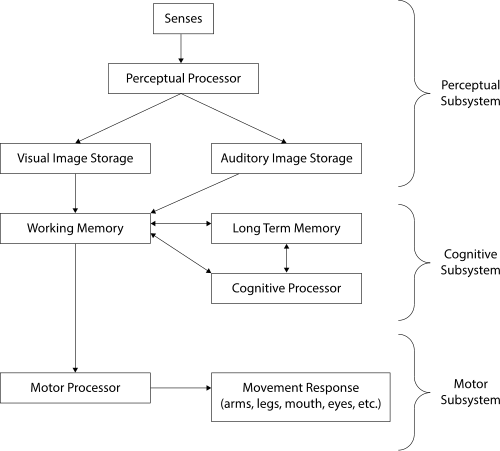
The human processor model uses the cognitive, perceptual, and motor processors along with the visual image, working memory, and long term memory storages. A diagram is shown below. Each processor has a cycle time and each memory has a decay time. These values are also included below. By following the connections diagrammed below, along with the associated cycle or decay times, the time it takes a user to perform a certain task can be calculated. Studies into this field were initially done by Stuart K. Card, Thomas P. Moran, & Allen Newell in 1983.[1] Current studies in the field include work to distinguish process times in older adults by Tiffany Jastrembski and Neil Charness (2007
How to calculate
The calculations depend on the ability to break down every step of a task into the basic process level. The more detailed the analysis, the more accurate the model will be to predict human performance. The method for determining processes can be broken down into the following steps.
- Write out main steps based on: a working prototype, simulation, step by step walk-through of all steps
- Clearly identify the specific task and method to accomplish that task
- For each final step identify sub-levels down to a basic process (in the diagram or chart below)
- Convert into pseudo code (writing out methods for each step)
- List all assumptions (will be helpful as multiple iterations are completed)
- Determine time of each operation (based on the table below)
- Determine if operation times should be adjusted (slower for elderly, disability, unfamiliarity, etc.)
- Sum up execution times
- Iterate as needed and check with prototyping if possible
| Parameter | Mean | Range |
|---|---|---|
| Eye movement time | 230 ms | 70–700 ms |
| نصف عمر اضمحلال تخزين الصور المرئية | 200 مللي ثانية | 90-1000 مللي ثانية |
| القدرة البصرية | 17 حرفًا | 7-17 حرفًا |
| نصف عمر اضمحلال التخزين السمعي | 1500 مللي ثانية | 900–3500 مللي ثانية |
| القدرة السمعية | 5 أحرف | 4.4–6.2 حرفًا |
| زمن دورة المعالج الشخصي | 100 مللي ثانية | 50-200 مللي ثانية |
| زمن دورة المعالج المعرفي | 70 مللي ثانية | 25-170 مللي ثانية |
| زمن دورة معالج المحرك | 70 مللي ثانية | 30-100 مللي ثانية |
| سعة الذاكرة العاملة الفعالة | 7 قطع | 5-9 قطع |
| سعة الذاكرة العاملة الخالصة | 3 قطع | 2.5–4.2 قطعة |
| نصف عمر اضمحلال الذاكرة العاملة | 7 ثوانٍ | 5-226 ثانية |
| نصف عمر اضمحلال جزء واحد من الذاكرة العاملة | 73 ثانية | 73–226 ثانية |
| نصف عمر اضمحلال 3 أجزاء من الذاكرة العاملة | 7 ثوانٍ | 5-34 ثانية |
الاستخدامات المحتملة
بعد اكتمال الحسابات، يمكن استخدامها لتحديد احتمالية تذكر المستخدم لعنصرٍ ما قد يكون قد صادفه خلال العملية. يمكن استخدام الصيغة التالية لإيجاد الاحتمالية: P = e -K*t ، حيث K هو ثابت اضمحلال الذاكرة المعنية (سواءً كانت ذاكرة عاملة أو طويلة الأمد)، و t هو مقدار الوقت المنقضي (بوحدات تتوافق مع وحدة K ). يمكن استخدام الاحتمالية بعد ذلك لتحديد ما إذا كان من المرجح أن يتذكر المستخدم معلومةً مهمةً عُرضت عليه أثناء قيامه بنشاطٍ ما.
من المهم تحديد ما إذا كان المستخدم سيتمكن من تكرار المعلومات الأساسية خلال الفترة الزمنية t ، لأن عدم قدرته على ذلك يؤثر سلبًا على ذاكرته العاملة. على سبيل المثال، إذا كان المستخدم يقرأ سطورًا من النص وظهر له رقم هاتف مهم، فقد لا يتمكن من تكرار الرقم إذا اضطر إلى مواصلة القراءة. سيؤدي هذا إلى تقليل زمن اضمحلال المعلومات في ذاكرته العاملة، وبالتالي تقليل احتمالية استرجاعها.
انظر أيضاً
مراجع
- كارد، إس كيه؛ موران، تي بي؛ ونيويل، إيه. المعالج البشري النموذجي: نموذج هندسي للأداء البشري. في كيه آر بوف، إل كوفمان، وجي بي توماس (محررون)، دليل الإدراك والأداء البشري. المجلد 2: العمليات المعرفية والأداء، 1986، الصفحات 1-35.
- ليو، ييلي؛ فيين، روبرت؛ وتسيمهوني، عمر. معالج بشري قائم على نموذج شبكة الانتظار (QN-MHP): بنية حسابية لأداء المهام المتعددة في أنظمة الإنسان والآلة. معاملات ACM في تفاعل الإنسان مع الحاسوب. المجلد 13، العدد 1، مارس 2006، الصفحات 37-70.
- جاسترزيمبسكي، تيفاني؛ وتشارنيس، نيل. نموذج المعالج البشري وكبار السن: تقدير المعلمات والتحقق من صحتها ضمن مهمة الهاتف المحمول. مجلة علم النفس التجريبي: التطبيقي. المجلد 13، العدد 4، 2007، الصفحات 224-248.
- محدد
- 1 2 ك.، كارد، ستيوارت (1983). سيكولوجية التفاعل بين الإنسان والحاسوب . موران، توماس ب.، نيويل، ألين. هيلزديل، نيوجيرسي: إل. إيرلبوم أسوشيتس. ISBN 9780898592436. OCLC 9042220 .
{{cite book}}: صيانة CS1: أسماء متعددة: قائمة المؤلفين ( رابط )
- التفاعل بين الإنسان والحاسوب