
عملية بافالو (1967)
كانت عملية بافالو (2-14 يوليو 1967) عملية من عمليات حرب فيتنام التي جرت في النصف الجنوبي من المنطقة المنزوعة السلاح ، حول كون ثين .
عملية
2 يوليو
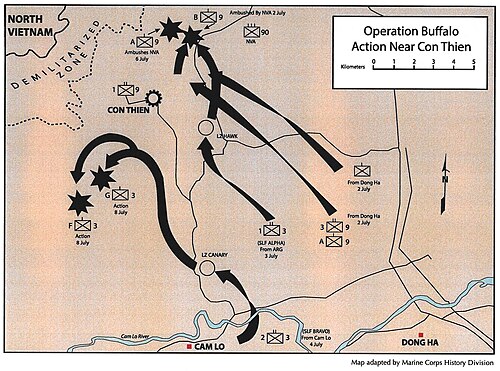
في صباح الثاني من يوليو، شقت سريتا ألفا وبرافو، من الكتيبة الأولى، الفوج التاسع من مشاة البحرية، طريقهما شمالًا على الطريق السريع 561، واتخذتا من مفترق طرق هدفًا لهما. وبينما كانتا تتقدمان شمالًا بين جيا بينه وأن خا، بالقرب من مكان يُسمى "السوق" ( 16°55′37″ شمالًا 107 °00′00″ شرقًا ) ، اشتبكتا مع عناصر من الفوج التسعين التابع لجيش الشعب الفيتنامي ، حين بدأ إطلاق نار القناصة. واشتدّت نيران العدو مع محاولات الفصيلة الثالثة قمعها. وقد أدت الكمائن ثلاثية الاتجاهات إلى إبادة سرية برافو تقريبًا. [ 2 ] وتعرضت سرية ألفا، التي أُرسلت لإنقاذ سرية برافو، لكمين. [ ٢ ] خلال المعركة، استخدم جيش فيتنام الشمالية قاذفات اللهب لأول مرة في القتال، حيث أشعل النار في التحصينات على طول الطريق السريع ٥٦١، مما أجبر مشاة البحرية على الخروج إلى العراء، وعرضهم لنيران المدفعية وقذائف الهاون والأسلحة الخفيفة، متسببًا في خسائر فادحة في صفوف السرية (أ) والسرية (ب)، ومنعهما من الالتحام. دُمّرت قيادة السرية (ب) بالكامل عندما انفجرت قذيفة مدفعية تابعة لجيش فيتنام الشمالية داخل مجموعة القيادة. قُتل قائد السرية، النقيب ستيرلينغ ك. كوتس، وقائدا فصيلتين، ومشغل اللاسلكي، والمراقب المتقدم، وعدد من الجنود الآخرين. [ ٣ ] : ٩٦
أدت الغارات الجوية إلى إحباط محاولات جيش فيتنام الشمالية (PAVN) لمحاصرة الفصيلة الأولى، مما سمح في النهاية للفصيلة الأولى بالالتحام مع الفصيلة الثانية المنهكة. أرسل قائد الكتيبة الأولى/الفوج التاسع، المقدم ريتشارد شينينغ، قوة إنقاذ صغيرة تضم سريتي "ج" و"د" مدعومة بأربع دبابات. [ 3 ] : 98 باستخدام نيران المروحيات والدبابات لتفريق قوات العدو، تمكنت سرية "د" من تأمين مهبط للمروحيات لإجلاء المصابين. ثم واصلت سرية "ج" تقدمها شمالًا تحت نيران كثيفة لإنقاذ ما تبقى من السريتين. [ 3 ] : 99
من بين ما يقارب 400 جندي من مشاة البحرية، تكبدت الكتيبة 84 قتيلاً و190 جريحاً و9 مفقودين، مما جعل هذه الخسارة الأكبر في يوم واحد لمشاة البحرية في فيتنام. لم يكن سوى 27 جندياً من الكتيبة ب/1/9 ونحو 90 من الكتيبة أ/1/9 لائقين للخدمة بعد اليوم الأول. [ 3 ] أفادت القوات الأمريكية أن جيش فيتنام الشمالية تكبد 55 قتيلاً، مع وجود 88 آخرين يُعتقد أنهم قُتلوا، لكن مصيرهم مجهول.
3-5 يوليو
On 3 July a USAF observer spotted more than 100 PAVN soldiers moving south from positions north of Con Thien, Battery E, 3/12 Marines fired on them killing 75 men.[3]:100
On the morning of 4 July, following 12 hours of preparatory airstrikes, 3/9 Marines supported by Battalion Landing Team (BLT) 1/3 Marines attacked towards the Marketplace ambush site to recover the bodies of those killed on 2 July. 3/9 Marines met heavy resistance from the PAVN southwest of the Marketplace and by the end of the day had suffered 15 dead and 33 wounded, while BLT 1/3 suffered 11 wounded.[3]:100
On 5 July the Marines operating north of Con Thien came under artillery and mortar fire, but there was little ground contact and the Marines were able to collect the dead from the 2 July fighting. It was reported that some of the Marines were shot at point-blank range by the PAVN, some of the bodies had been booby-trapped while others had been mutilated by the PAVN.[2]:218 In the afternoon PAVN soldiers were seen 3 km northeast of Con Thien and artillery and tactical air strikes were called in resulting in US claims of an estimated 200 PAVN killed.[3]:100
6–7 July
On the morning of 6 July BLT 2/3 ran into a PAVN force north of Con Thien and killed 35 PAVN for the loss of 5 killed and 25 wounded.[3]:100 Company A, 9th Marines reinforced by the survivors of Company C and a detachment of the 3rd Reconnaissance Battalion moved northeast of Con Thien and established a forward fighting position. By the afternoon 1/3 and 2/3 Marines were stopped by PAVN artillery fire and an aerial observer reported that 400 PAVN soldiers had crossed the Ben Hai River and were heading towards the two Battalions. The PAVN force was unaware of the presence of Company A 9th Marines who were able to ambush the PAVN force, the PAVN quickly reorganized and attacked Company A, but were unable to penetrate their lines and Marine artillery fire effectively boxed in the defending Marines. The following morning Company A counted 154 PAVN dead, while suffering only 12 wounded. While the PAVN force attacked Company A, the remainder of the PAVN 90th Regiment attacked 1/3 and 2/3 Marines achieving negligible results before breaking contact at 21:30.[3]:102
Also on 6 July the PAVN fired eight SA-2s from positions north of the DMZ hitting an A-4E #151032 of VMA-311 as it conducted close air support in front of 1/3's lines. The pilot Maj. Ralph Brubaker ejected successfully and was rescued the following day.[3]:104
On the morning of 7 July Company A was withdrawn into the Battalion perimeter just before a heavy PAVN artillery bombardment hit their ambush positions of the previous day. 7 July saw minimal ground contact and the Marines spent most of the day trying to achieve an accurate PAVN body count, but this proved difficult due to the carnage caused by the artillery and air strikes.[3]:102–3
8 July
On the morning of 8 July BLT 2/3 moved southwest towards the Cam Lo River when they discovered a PAVN bunker complex. Air and artillery strikes were called in and then Company G attacked the bunkers, the PAVN lost 39 killed while the Marines suffered 2 dead and 29 wounded. In the afternoon Company G engaged another PAVN force and the PAVN lost 118 killed while the Marines suffered 14 dead and 43 wounded.[3]:103
9–14 July
For the remainder of the operation there were no further ground contacts and the Marines only encountered mines and harassing artillery fire.[3]:103
Aftermath
The operation ended on 14 July with total Marine casualties for the operation amounting to 159 killed, 845 wounded and 1 missing. U.S. forces claimed that the PAVN suffered 1,290 killed and a further 513 probably killed. 164 bunkers and 15 artillery and rocket positions were destroyed. Around 100 PAVN weapons were recovered or captured.[1]
One marine who fought in the operation recounted 40 years later that he and other Marines were cynical of claimed PAVN casualty figures in the fighting along the DMZ, stating that "If we sent in a body count of fifteen to the headquarters for the Marines Corps in Vietnam, it would turn into twenty or thirty and by the time it got to MACV in Saigon it would turn into fifty or sixty".[2]:218
1st Lt Gatlin J. Howell and SSgt Leon R. Burns were both awarded the Navy Cross for their actions during this battle.[3]:104
The Marines launched Operation Hickory II and Operation Kingfisher in the same general area within days of the conclusion of Operation Buffalo.
References
 تتضمن هذه المقالة مواد متاحة للعموم من مواقع إلكترونية أو وثائق تابعة لقوات مشاة البحرية الأمريكية .
- 1 2 3 "عملية بافالو" (ملف PDF) . تقرير العمليات الأمريكية . مؤرشف من الأصل (ملف PDF) بتاريخ 4 يونيو 2016. تم الاطلاع عليه بتاريخ 28 نوفمبر 2014 .تتضمن هذه المقالة نصًا من هذا المصدر، وهو متاح للعموم .
- 1 2 3 4 وارد، جيفري سي؛ بيرنز، كين (2017). حرب فيتنام: تاريخ حميم . ألفريد أ. كنوبف. ص 216-218 . ISBN 9780307700254.
- ١ ٢ ٣ ٤ ٥ ٦ ٧ ٨ ٩ ١٠ ١١ ١٢ ١٣ ١٤ تيلفر، غاري آي. (١٩٨٤). مشاة البحرية الأمريكية في فيتنام: قتال الفيتناميين الشماليين ١٩٦٧. قسم التاريخ والمتاحف، مقر قيادة مشاة البحرية الأمريكية. ISBN 9781482538878.تتضمن هذه المقالة نصًا من هذا المصدر، وهو متاح للعموم .
للمزيد من القراءة
- باومان، جون س. (1989). حرب فيتنام يومًا بيوم . نيويورك: دار مالارد للنشر. رقم ISBN 0-7924-5087-6.
- نولان، كيث دبليو. (1 ديسمبر 1992). عملية بافالو: معركة مشاة البحرية الأمريكية من أجل المنطقة المنزوعة السلاح . ديل. ISBN 0-440-21310-X.
روابط خارجية
- سلاح مشاة البحرية الأمريكية في حرب فيتنام
- معارك وعمليات حرب فيتنام عام 1967
- تاريخ مقاطعة كوانج ترو
- العمليات العسكرية التي شاركت فيها الولايات المتحدة في حرب فيتنام
- كمائن حرب فيتنام
- يوليو 1967 في آسيا