
Brachypodium sylvaticum
نبات Brachypodium sylvaticum ، المعروف باسم البروم الكاذب ، [ 2 ] أو البروم الكاذب النحيل ، [ 3 ] أو البروم الكاذب الخشبي ، هو عشب معمر موطنه الأصلي أوروبا وآسيا وأفريقيا. [ 4 ] ويشمل نطاق انتشاره الأصلي معظم أنحاء أوروبا، وشمال غرب أفريقيا، والسودان وإريتريا، وغرب ووسط آسيا، وشبه القارة الهندية، والصين، وكوريا، واليابان، وماليزيا ، وغينيا الجديدة . [ 1 ]
يتواجد هذا النوع من الحشائش بكثرة في الغابات والأحراج، ويفضل الظل، ولكنه قد ينمو في المناطق المفتوحة. وهو يفضل التربة جيدة التصريف المحايدة والكلسية، ويتجنب التربة الرطبة.
وصف

Brachypodium sylvaticum هو عشب معمر طويل ومتكتل ينمو حتى ارتفاع 0.9 متر (3.0 قدم) .
نصل الورقة المتدلي للنبات أخضر داكن أو أخضر مصفر فاتح، مسطح ويصل عرضه إلى 12 مم، ويحيط به هدب من الشعيرات. لا تحتوي الأوراق على أذينات . يتصل نصل الورقة بالساق المجوفة بواسطة غمد الورقة. هذا الغمد الشعري مفتوح ويحيط بالساق. الساق مُشعّر (طويل، ناعم، مُشعّر)، ويحتوي عادةً على 4 إلى 5 عقد. [ 5 ] اللسينات غير حادة، ويتراوح طولها بين 1 و6 مليمترات (0.039-0.236 بوصة) .
يتميز هذا العشب بسنابل زهرية طويلة وضيقة متدلية على أعناق قصيرة جدًا . يبلغ طول رأس الزهرة من 6 إلى 20 سنتيمترًا (2.4 إلى 7.9 بوصة ) ، ويزهر النبات في شهري يوليو وأغسطس. أما شعيراته فهي مستقيمة ويتراوح طولها من 6 إلى 18 مليمترًا (0.24 إلى 0.71 بوصة ) ، وتبرز من نهاية السنابل.
الأنواع الفرعية
تم قبول نوعين فرعيين. [ 1 ]
- Brachypodium sylvaticum subsp. creticum H.Scholz & Greuter – كريت
- Brachypodium sylvaticum subsp. sylvaticum – أوراسيا وشمال أفريقيا وغينيا الجديدة
قيمة الحياة البرية
يمكن أن تنتشر بذورها عن طريق الحيوانات البرية والبشر. تستخدمها يرقات بعض أنواع الفراشات كغذاء، مثل فراشة النطاط المخطط ( Carterocephalus palaemon ) وفراشة إسيكس ( Thymelicus lineola ).
الأنواع الغازية في أمريكا الشمالية
The grass is an introduced species in North America. Brachypodium sylvaticum is an invasive species colonizing new areas and outcompeting native plants. As this species has spread to the Pacific Northwest of the U.S. it has demonstrated a capability of dominating forest understories and open grasslands to the exclusion of all other flora found in those areas.
Recent observations suggest that populations at the leading edge of the expanding range undergo an establishment phase before they can contribute to the local invasion, perhaps because newly colonized populations are suffering from inbreeding depression.
- Oregon
Brachypodium sylvaticum is a newly invasive brome species in Oregon that is rapidly expanding in the Pacific Northwest. Although B. sylvaticum appears to be in the early phases of invasion in North America, it has become a noxious weed throughout the Willamette Valley area of Oregon since the late 1980s.[6] It is most likely that B. sylvaticum was first introduced to Oregon in range experiments when accessions from the native range were planted near Eugene and Corvallis in the Willamette Valley using seed obtained from the USDA Office of Foreign Seed and Plant Introduction anywhere between 70 and 80 years ago.[7]
Gallery
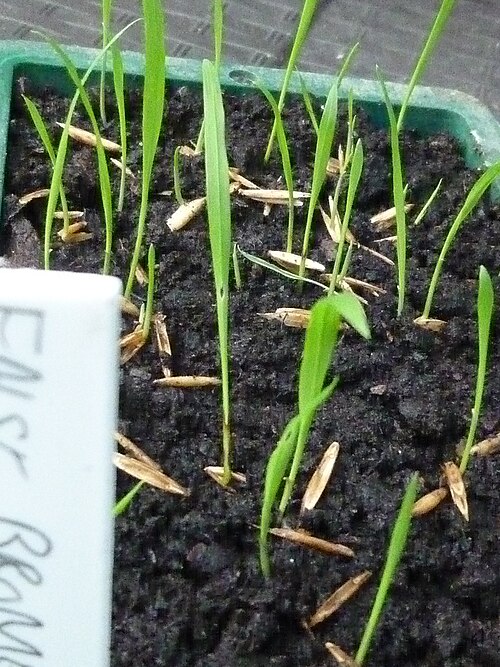 seedling
References
- 123Cite error: The named reference
powowas invoked but never defined (see the help page). - ↑BSBI List 2007(xls). Botanical Society of Britain and Ireland. Archived from the original(xls) on 2015-06-26. Retrieved 2014-10-17.
- ↑NRCS. "Brachypodium sylvaticum". PLANTS Database. United States Department of Agriculture (USDA). Retrieved 10 January 2016.
- ↑Hitchcock 1969. Vascular Plants of the Pacific Northwest. University of Washington Press, Seattle.
- ↑C E Hubbard (1978). Grasses. Penguin books.
- ↑Kaye, T. N. and M. Blakeley-Smith. 2006. False-brome (Brachypodium sylvaticum). Pp. 80-81 in P. D. Boersma, S. E. Reichard, and A. N. van Buren, eds. Invasive species in the Pacific Northwest. University of Washington Press, Seattle.
- ↑ كروزان، إم بي 2019. كيف تصنع عشبة ضارة - ملحمة غزو نبات البروم الكاذب النحيل في غرب أمريكا الشمالية ودروس للمستقبل. العلوم البيولوجية 69: 469-507. ( http://doi.org/https://doi.org/10.1093/biosci/biz051 )
روابط خارجية
- نباتات أيرلندا الشمالية: Brachypodium sylvaticum .
- " Brachypodium sylvaticum " . شبكة معلومات موارد البلازما الجرثومية . دائرة البحوث الزراعية ، وزارة الزراعة الأمريكية .
- جونسون ج، تحديد Brachypodium sylvaticum (البروم الكاذب النحيل) ، مجلس مستجمعات المياه في سان فرانسيسكو، يناير 2004.
- صفحة عن نبات البروم الكاذب من برنامج التراث الطبيعي في ألاسكا.
- مجموعة عمل البروم الكاذب، معهد علم البيئة التطبيقية .
- براكيبوديوم
- نباتات الحشائش المتكتلة في أوروبا
- أعشاب التكتل في أفريقيا
- أعشاب آسيا المتكتلة
- نباتات شمال أفريقيا
- نباتات غرب آسيا
- النباتات الموصوفة في عام 1762
- التصنيفات التي سماها ويليام هدسون (عالم النبات)