
رسم تخطيطي للزهور
الرسم التخطيطي الزهري هو تمثيل بياني لبنية الزهرة . يُظهر عدد الأعضاء الزهرية، وترتيبها، والتحامها. تُمثل أجزاء الزهرة المختلفة برموزها الخاصة. تُعد الرسوم التخطيطية الزهرية مفيدة لتحديد أنواع الزهور، كما تُساعد في فهم تطور النباتات المزهرة . ظهرت هذه الرسوم في أواخر القرن التاسع عشر، وتُنسب عمومًا إلى أ. و. إيخلر . [ 1 ]
تُستخدم عادةً مع الصيغة الزهرية لتلك الزهرة لدراسة شكلها .
تاريخ
في القرن التاسع عشر، ظهرت طريقتان متناقضتان لوصف الزهرة: الصيغ الزهرية النصية والرسوم البيانية الزهرية. [ 2 ] يُنسب الفضل في الرسوم البيانية الزهرية إلى أ. و. إيخلر ، الذي لا يزال عمله الشامل "Blüthendiagramme" [ 3 ] [ 4 ] (1875، 1878) مصدرًا قيّمًا للمعلومات حول مورفولوجيا الأزهار. وقد ألهم إيخلر أجيالًا لاحقة من العلماء، بمن فيهم جون هنري شافنر . [ 5 ] أُدرجت الرسوم البيانية، على سبيل المثال، في كتاب " Types of Floral Mechanism" [ 6 ] لآرثر تشيرش (1908). كما استُخدمت في كتب دراسية مختلفة، مثل "Organogenesis of Flowers" [ 7 ] لرولف ساتلر (1973)، و "Botanische Bestimmungsübungen" [ 8 ] لشتوتزل (2006)، و "Plant Systematics" [ 9 ] لسيمبسون (2010). اتبعت المخططات الزهرية [ 1 ] (2010) لرونس دي كراين نهج إيخلر باستخدام نظام APG II المعاصر [ ملاحظة 1 ] .
الخصائص الأساسية والأهمية
الرسم التخطيطي الزهري هو مقطع عرضي تخطيطي لزهرة صغيرة. [ 1 ] ويمكن تعريفه أيضًا بأنه "إسقاط الزهرة عموديًا على محورها". [ 3 ] يُظهر عادةً عدد أجزاء الزهرة، [ ملاحظة 2 ] وأحجامها، ومواقعها النسبية، والتحامها. تُمثَّل الأعضاء المختلفة برموز مميزة، قد تكون موحدة لنوع واحد من الأعضاء، أو قد تعكس مورفولوجيا محددة . قد يتضمن الرسم التخطيطي أيضًا رموزًا لا تُمثل هياكل فيزيائية، ولكنها تحمل معلومات إضافية (مثل اتجاه مستوى التناظر ).
There is no agreement on how floral diagrams should be drawn, it depends on the author whether it is just a rough representation, or whether structural details of the flower are included.
Diagrams can describe the ontogeny of flowers, or can show evolutionary relationships. They can be generalized to show the typical floral structure of a taxon.[1]:37 It is also possible to represent (partial) inflorescences by diagrams.
A substantial amount of information may be included in a good diagram. It can be useful for flower identification or comparison between angiosperm taxa. Paleontologists can take advantage of diagrams for reconstruction of fossil flowers. Floral diagrams are also of didactic value.[1]:xiii

Orientation
Diagrams are usually depicted with the subtending bractbelow and the axis above the flower itself, both in the median line. The axis corresponds to the position of the main stem relative to a lateral flower.[10]:12 When a terminal flower is depicted, the axis is not present and therefore cannot be shown. Bracteoles, if they are present, are usually drawn on the sides of the diagram.
Symbols used in diagrams
Not only the information contained within diagrams, but also their appearance commonly varies between authors. Some publications include an overview of symbols used.
Bracts and bracteoles, axes
Bracts and bracteoles are commonly shown as arcs. In Floral Diagrams by Ronse De Craene they consistently have a black fill and a little triangle on the outer side to distinguish them from the perianth. In Eichler’s Blüthendiagramme their representation alters between diagrams.
| Ronse De Craene | Eichler |
|---|---|
 | inconsistent |
The axis relative to the flower is shown as black circle in Floral Diagrams. When inflorescence is depicted, the position of its main stem is illustrated by a crossed circle. Eichler’s depiction of axes alternates between diagrams.
| Ronse De Craene | Eichler | |
|---|---|---|
| axis relative to the flower |  | inconsistent |
| main stem of an inflorescence |  |
Perianth
Perianth parts are also shown as arcs. They may be colored according to their type. In Blüthendiagramme the tepals are usually white with black stroke, sepals are hatched and petals are black. Ronse De Craene implies that it may be sometimes impossible to classify the organs, he shows green perianth parts as black and pigmented as white. Estivation can be accurately shown in the diagram.
| Ronse De Craene | Eichler |
|---|---|
 for sepals or sepaloid tepals for sepals or sepaloid tepals
|  for tepals for tepals
|
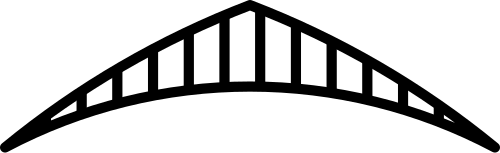
Androecium
Stamens are represented by a cross-section through anthers. In case there are many stamens in the flower, they can be simplified and drawn as circles. Staminodes have a small black circle inside or are painted black in Floral Diagrams, Eichler also fills them black.
| Ronse De Craene | Eichler | ||
|---|---|---|---|
| stamen |  or or  |  | |
| staminode |  or or  |  | |
Gynoecium
The pistil is shown as a sectional view of the ovary. Ovary position is highlighted by small triangles in Floral Diagrams. Ronse De Craene also incorporates ovule morphology or shows the position of stigmatic lobes by white shapes.
| Ronse De Craene | Eichler | |
|---|---|---|
| superior ovary |  |  |
| inferior ovary |  | |
| half-inferior ovary |  |
Nectaries
In Floral Diagrams, nectaries are filled by grey color, Eichler fills them by hatching.
Other
Fusion can be shown in diagrams by full connecting lines between organs. Lost organs can be represented by a star (✶), lost perianth parts or bracts/bracteoles can be shown with dashed stroke. It is possible to show the direction of monosymmetry by a large arrow. Resupination may be illustrated by a curved arrow. Floral parts can be accompanied by numbers to show their sequence of initialization.
Floral diagrams and floral formulae
Each of these two concepts is better in expressing some information. Floral diagrams can show the size and relative position of the organs and the reproductive organs. On the other hand, floral formulae are capable of broader generalization. Prenner et al. view them as complementary methods and state they make an “identikit” flower when utilized together.[2]:248 Ronse De Craene also approves of their combined use.[1]:xiii
Examples
 |  |
| Partial inflorescence of Theobroma cacao (after Ronse De Craene). Floral formula: ✶ K5 C5 A(5°+5²) G(5) | مخطط الأزهار لبيروس كومونيس (بعد إيشلر). تركيبة الأزهار : ✶ K(5) C5 A10+5+5 Ğ(4) |
انظر أيضاً
ملحوظات
مراجع
- 1 2 3 4 5 6 7 رونسي دي كراين، لويس ب. (2010-02-04). الرسوم البيانية الزهرية: أداة لفهم مورفولوجيا الزهرة وتطورها . كامبريدج: مطبعة جامعة كامبريدج. ISBN 978-0-521-49346-8.
- 1 2 برينر، جيرهارد؛ ريتشارد م. بيتمان؛ باولا ج. رودال (فبراير 2010). "تحديث الصيغ الزهرية لإدراجها بشكل روتيني في الأوصاف التصنيفية الرسمية" . تاكسون . 59 (1): 241-250 . Bibcode : 2010Taxon..59..241P . doi : 10.1002/tax.591022 . ISSN 0040-0262 . مؤرشف من الأصل في 29 مارس 2018. تم الاسترجاع في 10 نوفمبر 2014 .
- 1 2 إيشلر، أغسطس فيلهلم (1875). Blüthendiagramme، erster Theil: Enthaltend Einleitung، عاريات البذور، Monocotylen وDicotylen المتماثلة . المجلد. v.1. لايبزيغ: فيلهلم إنجلمان.
- ^ ايشلر، أغسطس فيلهلم (1878). Blüthendiagramme، zweiter Theil: Enthaltend die apetalen und choripetalen Dicotylen . المجلد. v.2. لايبزيغ: فيلهلم إنجلمان.
- ↑ شافنر 1916 .
- ↑ تشرش، آرثر هاري (1908). أنواع الآليات الزهرية؛ مجموعة مختارة من الرسوم البيانية وأوصاف الأزهار الشائعة مرتبة كمقدمة للدراسة المنهجية للنباتات المزهرة . أكسفورد: مطبعة كلارندون.
- ↑ ساتلر، رولف (1973). تكوين أعضاء الأزهار؛ أطلس نصي مصور . تورنتو، بوفالو: مطبعة جامعة تورنتو. ISBN 0-8020-1864-5.
- ^ ستوتزل، توماس (2006). Botanische Bestimmungsübungen: Praktische Einführung in die Pflanzenbestimmung ( الطبعة الثانية). شتوتغارت (هوهنهايم): UTB، شتوتغارت. رقم ISBN 9783825282202.
- ↑ سيمبسون، مايكل جورج (2010). تصنيف النباتات . أكسفورد (بريطانيا العظمى): دار النشر الأكاديمية. ISBN 978-0-12-374380-0.
- ↑ ويبرلينغ، فوكو (1992). مورفولوجيا الأزهار والنورات . كامبريدج: مطبعة جامعة كامبريدج. ISBN 9780521438322.
فهرس
- شافنر، جون هنري (يونيو 1916). "نظام عام للرسوم البيانية الزهرية" (ملف PDF) . مجلة أوهايو للعلوم . 16 (8): 360-366 . hdl : 1811/1914 . ISSN 0030-0950 .
روابط خارجية
- الزهور
- مورفولوجيا النبات