
Hydroelectricity in Italy

Italy is the world's 14th largest producer of hydroelectric power, with a total of 50,582 GWh produced in 2010.[1] Electric energy from hydro accounted for about 18% of the national electricity production in 2010.[2]
There were a total of 2,729 active plants in 2010, of which 302 had a capacity greater than 10 MW.[3]:54–55 Hydroelectric plants are especially widespread in the north, where there are many rivers and mountains. Lombardy, Piedmont and Trentino-Alto Adige contributed for almost 60% of the total energy production in 2010.[3]:62
Hydroelectricity played a major role in the development of energy sector in Italy, since until the 1950s almost all the electric energy produced in the country came from this source. In fact, almost all the current capacity was installed in the first half of the twentieth century.[2]
Plants in Italy are also used to store excess energy from other sources during off-peak periods.
History

Since the Italian Peninsula is relatively recent geological formation, it lacks commercial coal deposits and oil, so hydroelectricity was the first source widely used in Italy to produce electric energy,[4] and remained the main source at least until the 1960s. For example, of the total 15.5 TWh produced in 1938, hydro accounted for 14.6, or 94%. Hydroelectric energy played a main role in the Italian industrialization since late 19th century.[5] Hydroelectricity contributed about 87.5% of the total energy produced from 1900 to 1960.[2]
Since the 1960s the share of hydroelectricity decreased constantly due to the increase in energy needs and almost unchanged total capacity. By 1980, the share of hydro was already below 25%. The majority of energy was at that time produced by fossil fuels. For comparison, energy consumed in Italy in 2010 was about 20 times that of 1938.[2]
يُقدّر أن نسبة استغلال الطاقة الكهرومائية في إيطاليا تبلغ 90%. وهذا ما يفسر ثبات القدرة الإجمالية تقريبًا خلال الخمسين عامًا الماضية. وقد استُغلت جميع المواقع المناسبة بالفعل، مما يفرض قيودًا على بناء محطات جديدة ذات قدرة كبيرة، وذلك من الناحية التقنية والاقتصادية والبيئية. [ 5 ]
أكبر محطات الطاقة الكهرومائية
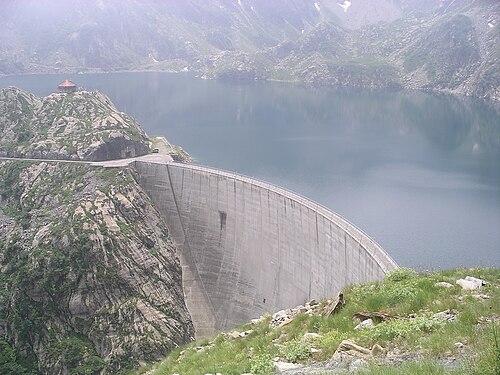

| شركة | نبات | السعة (ميغاواط) | مكان | مقاطعة | يكتب |
|---|---|---|---|---|---|
| إينيل | Entracque | 1317 | Entracque | سي إن | تخزين الطاقة بالضخ |
| إينيل | رونكوفالغراندي [ 6 ] | 1016 | ماكاجنو | VA | تخزين الطاقة بالضخ |
| إينيل | دومينيكو سيماروسا (بريسينزانو) | 1000 | بريسينزانو | علامة CE | تخزين الطاقة بالضخ |
| إينيل | سنترال دي إيدولو | 1000 | إيدولو | بكالوريوس العلوم | تخزين الطاقة بالضخ |
| إينيل | Centrale idroeletrica di San Fiorano | 568 | سيليرو | بكالوريوس العلوم | التخزين التقليدي + التخزين بالضخ |
| إنديسا إيطاليا | سنترال دي غاليتو | 530 | تيرني | TR | |
| إينيل | مركز التحكم الإلكتروني في سان جياكومو | 448 | فانو أدريانو | تي إي | التخزين التقليدي + التخزين بالضخ |
| A2A | مركز idroeletrica di Grosio | 428 | غروسيو | لذا | عادي |
| إدي باور | نوكليو دي ميسي - سي.لي ميسي | 377 | ميسي | لذا | |
| إدي باور | Nucleo di Udine - C.le di Somplago | 309 | كافاتزو كارنيكو | يو دي | |
| A2A | مركزية idroeletrica di Premadio | 245 | بريماديو | لذا |
انظر أيضاً
مراجع
- ↑ قائمة مقارنة الدول حسب إنتاج الكهرباء من مصادر متجددة
- 1 2 3 4 "إحصائيات إنتاج الكهرباء 1883-2010" . تيرنا. مؤرشفة من الأصلي في 7 فبراير 2015 . تم الاسترجاع 10 يناير 2012 .
- 1 2 "Raporto Statistico 2010" (PDF) . Statistiche sulle Fonti rinnovabili (باللغة الإيطالية). Gestore Servizi Energetici (GSE) . تم الاسترجاع 4 يناير 2012 .
- ↑ "إيطاليا - الموارد والقوة | بريتانيكا" .
- 1 2 "إيدروليتريكو في إيطاليا" . ايني سكوولا . إيني. مؤرشفة من الأصلي في 28 أكتوبر 2012 . تم الاسترجاع 13 يناير 2012 .
- ↑ "Impianti: Roncovalgrande - Maccagno" . Enel. مؤرشف من الأصل في 15 نوفمبر 2012. تم الاطلاع عليه في 12 يناير 2012 .
روابط خارجية
- الطاقة الكهرومائية في إيطاليا