
نيكولاي غريغوريسكو
نيكولاي غريغوريسكو ( بالرومانية: nikoˈla.e ɡriɡoˈresku ؛ 15 مايو 1838 - 21 يوليو 1907) كان أحد مؤسسي الرسم الروماني الحديث. يُعتبره الرومانيون أعظم رسام روماني ، وأحد مؤسسي الفن الروماني الحديث . اشتهر بلوحاته التي تُصوّر الحياة الريفية. [ 1 ] كان من أكثر الرسامين الرومانيين احترامًا وشهرةً على الصعيد الدولي . [ 2 ]
توجد محطة مترو تحمل اسم غريغوريسكو في بوخارست. وقد سُميت بهذا الاسم عام ١٩٩٠، بعد أن كانت تحمل اسم الجنرال ليونتين سالاجان، قائد الجيش الشيوعي . وتظهر صورة غريغوريسكو على ورقة العشرة لي الرومانية.
وقت مبكر من الحياة
وُلد في بيتارو ، مقاطعة دامبوفيتسا ، وهو السادس بين سبعة أبناء لأيون غريغوريسكو (المتوفى عام 1845) والخياطة روكساندرا غريغوريسكو. كانت المنطقة تُعرف آنذاك باسم والاشيا، وهي الآن رومانيا. في عام 1843، انتقلت عائلته إلى بوخارست . توفي والده، أيون غريغوريسكو، في سن السابعة. في عام 1848، أصبح نيكولاي متدربًا في ورشة الرسام الروماني من أصل تشيكي أنطون تشلاديك، ورسم أيقونات لكنيسة بايكوي ودير كالداروشاني . عمل شقيقه، غيورغي غريغوريسكو (1835-1912)، أيضًا لدى تشلاديك. [ 3 ] لقد ألهمت فترة عمله لدى تشلاديك مسيرته المهنية، على الرغم من أنه ترك ورشته في عام 1850. وفي عام 1856، ابتكر التكوين التاريخي Mihai scăpând stindardul ( ميخائيل الشجاع ينقذ العلم )، والذي قدمه إلى أمير والاشيا باربو شتيربي ، مع التماس يطلب فيه المساعدة المالية لدراسته.
بين عامي 1856 و1857، رسم كنيسة دير زامفيرا في مقاطعة براهوفا ، وفي عام 1861 رسم كنيسة دير أغابيا . وبمساعدة ميخائيل كوغالنيسيانو ، حصل على منحة دراسية للدراسة في فرنسا.
الدراسة والمسار الوظيفي
In the autumn of 1861, young Grigorescu left for Paris, where he studied at the École des Beaux-Arts. He also attended the workshop of Sébastien Cornu, where he had as a colleague Pierre-Auguste Renoir. Knowing his weaknesses, he concentrated drawing and composition. However, he soon left this workshop and, attracted by the artistic concepts of the Barbizon school, he left Paris for that village, where he became the associate of artists such as Jean-François Millet, Jean-Baptiste-Camille Corot, Gustave Courbet and Théodore Rousseau. Under the influence of the movement, Grigorescu looked for new means of expression and followed the trend of en plein air painting, which was also important in Impressionism. As part of the Universal Exposition of Paris (1867), he contributed seven works. Then he exhibited at the Paris Salon of 1868 the painting Tânără ţigancă (Young Gypsy girl).
He returned to Romania a few times and starting in 1870 he participated in the exhibits of living artists and those organized by the Society of the Friends of the Belle-Arts. Between 1873 and 1874 he traveled to Italy, Greece and Vienna.

In 1877 he was called to accompany the Romanian Army as a "frontline painter" in the Romanian War of Independence. During the battles at the Grivitsa Strongpoint and Oryahovo, he made drawings and sketches which later used in creating larger-scale works.
In 1889 his work was featured in the Universal Exhibition in Paris and at the Romanian Atheneum. Centerpiece exhibits took place at the Romanian Atheneum would follow in 1891, 1895, 1897, 1902, and 1905.
From 1879 to 1890 he worked in France, especially in Vitré, Brittany, and in his workshop in Paris. In 1890 he settled in Câmpina and started depicting pastoral themes, especially portraits of peasant girls, pictures of ox carts on dusty country roads and other landscapes. He was named honorary member of the Romanian Academy in 1899.
At the time of his death, Grigorescu had been working on his Întoarcerea de la bâlci (The Return from the Fair). His house in Câmpina opened as the Nicolae Grigorescu Memorial Museum in 1957.
Selected paintings

 Fisherwoman at Grandville
 Joyful Peasant Woman
 Oxcart
 Woman on the Beach
 Bugler
 Guardsman
 Andreescu at Barbizon
 Head of a Peasant
 Girl with Her Dowry
 Entering the Bath
 Old Woman Darning
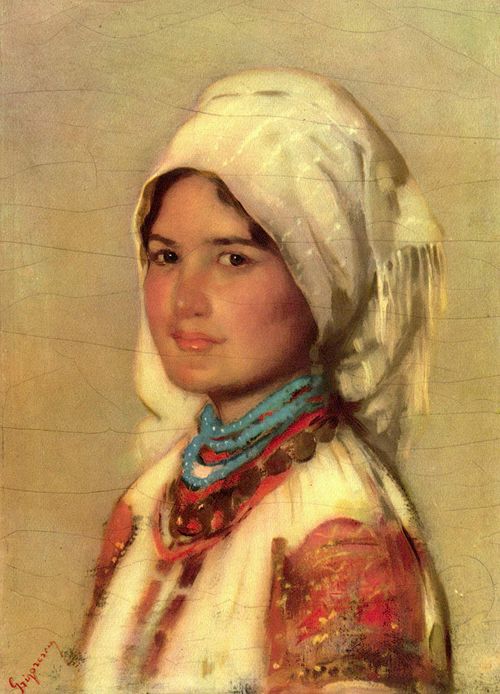 Peasant from Muscel
 Nude
Nude Portrait of a Girl
 The Guardian of Chailly
 Interior in Vitré
 Hebrew with Caftan
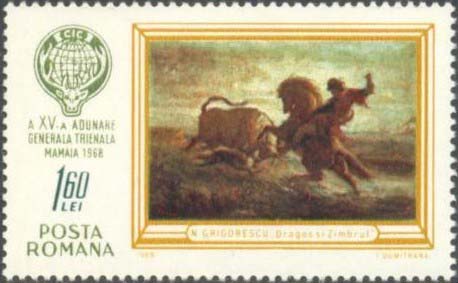 Prince Dragos and the Bison
References
- ↑Ion, Monica (21 July 2022). "PORTRET: Nicolae Grigorescu – maestrul din Câmpina, pictorul naţional al României | Agenția de presă Rador" (in Romanian). Retrieved 20 November 2024.
- ↑"Romanian Painter Nicolae Grigorescu - 175 Years since Birth - 10 lei 2013 - Romanian Coins". romaniancoins.org. Retrieved 20 November 2024.
- ↑Vlahuță, Alexandru (1910). A. Vlahuță, Pictorul N. I. Grigorescu. Alexandru Vlahuță.
Sources
- Virgil Cioflec: Grigorescu, Editura Cultura Națională, Bucharest, 1925
- Barbu Brezianu: Nicolae Grigorescu, Tineretului, Bucharest, 1959
- George Oprescu and Remus Niculescu: Nicolae Grigorescu, 2 vol. Curier Rapid, Bucharest, 1961–1962
- Mircea Popescu: "N. Grigorescu", series: Arta pentru toți, Editura Meridiane, Bucharest, 1962
- Alexandru Vlahuță: Pictorul Nicolae Grigorescu, Editura Tineretului, Bucharest, 1969
- George Sorin Movileanu and Vasile Florea: Grigorescu, Editura Meridiane, Bucharest, 1978
- Mariana Vida and Monica Enache: Grigorescu – Commemorative album on the 100th anniversary of the artist's death, edited by the National Art Museum of Romania on the occasion of the retrospective exhibition "Grigorescu painter of nature" held at the Gallery, 2007
- Alexandru Cebuc: Grigorescu, Editura Monitorul Oficial al României, Bucharest, 2008 ISBN 978-973-567-627-8
- Iulia Iliescu and Marina Motroc: Viața și opera lui Grigorescu, Editura Monitorul Oficial R.A., Bucharest, 2009 ISBN 978-606-539-105-5
External links
- Nicolae Grigorescu's paintings at Agapia Monastery @ Viziteazaneamt
- Paintings by Nicolae Grigorescu @ Zeno
- "If only you knew how beautiful my country is!" by Paul Ioan @ Revista
- "Proud to be Romanian: Nicolae Grigorescu, Romanian with all his soul and in all his work" by Victor Pitigoi @ Ziare
- "Values of national culture: Nicolae Grigorescu – 102 years since his death" @ Amos News
- 1838 births
- 1907 deaths
- People from Dâmbovița County
- Honorary members of the Romanian Academy
- Romanian muralists
- أعضاء الكنيسة الأرثوذكسية الرومانية
- الرسامون الرومانيون
- الرسامون الانطباعيون الرومانيون
- الشعب الروماني في الحرب الروسية التركية (1877-1878)
- فنانو الحرب في القرن التاسع عشر
- فنانو الحرب الرومانيون