
الضربة الخاطفة (البيسبول)

الضربة الخفيفة هي أسلوب ضرب في لعبة البيسبول أو كرة السوفتبول السريعة . تُعرّف قواعد البيسبول الرسمية الضربة الخفيفة على النحو التالي: "الضربة الخفيفة هي ضرب الكرة دون تأرجح المضرب، بل بضربها بالمضرب عمدًا وببطء داخل الملعب الداخلي". لتنفيذ الضربة الخفيفة، يمسك الضارب المضرب برفق أمام لوحة القاعدة الرئيسية ويضرب الكرة عمدًا لتبدأ اللعب . تُحدث الضربة الخفيفة المُنفذة بشكل صحيح احتكاكًا ضعيفًا بالكرة أو توجيهها استراتيجيًا، مما يُجبر لاعبي الدفاع الداخلي على القيام بحركة دفاعية صعبة لتسجيل إخراج . [ 1 ]
تقنية
تعتمد استراتيجية التمريرة القصيرة على توجيه الكرة إلى منطقة اللعب ، بعيدًا قدر الإمكان عن المدافعين ولكن داخل الملعب الداخلي . وهذا يتطلب ليس فقط براعة بدنية وتركيزًا، بل أيضًا إدراكًا لمواقع المدافعين بالنسبة للاعب أو اللاعبين على القواعد، وردود أفعالهم المحتملة على التمريرة القصيرة، ومعرفة أنواع الكرات الأكثر ترجيحًا للرامي .
تُنفَّذ الضربة الخفيفة عادةً بأن يُدير الضارب جسده نحو الرامي ويُمرِّر إحدى يديه على رأس المضرب لتثبيته. يُسمى هذا الوضع " الاستعداد" . وبحسب الموقف، قد يستعدّ الضارب إما قبل أن يُجهِّز الرامي رميته ، أو عندما تقترب الكرة من لوحة القاعدة. أحيانًا، قد يستعدّ الضارب، ثم يسحب المضرب بسرعة ويُسدّد ضربة كاملة عند رمي الكرة.
الأنواع
ضربة التضحية
في ضربة التضحية ، يقوم الضارب بضرب الكرة بهدف تقدم أحد العدائين ، مقابل إخراج الضارب نفسه. تُستخدم ضربة التضحية غالبًا لتقدم العداء من القاعدة الأولى إلى الثانية ، مع إمكانية تقدمه أيضًا من الثانية إلى الثالثة ، أو من الثالثة إلى القاعدة الرئيسية. تُستخدم ضربة التضحية عادةً في المباريات المتقاربة ذات النتائج المنخفضة، وعادةً ما يقوم بها الضاربون الأقل مهارة. لا تُحتسب ضربة التضحية كضربة واحدة . بشكل عام، عند تنفيذ ضربة التضحية، يستعد الضارب للضرب قبل أن يرمي الرامي الكرة بوقت كافٍ. [ 2 ]
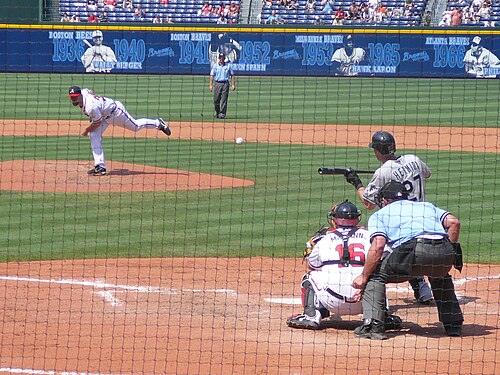
تحدث حركة الضغط عندما يضحي الضارب بهدف تسجيل نقطة لعداء من القاعدة الثالثة. في حركة الضغط الانتحارية ، حيث يبدأ العداء الموجود على القاعدة الثالثة بالركض نحو القاعدة الرئيسية بمجرد أن يبدأ الرامي برمي الكرة، من الضروري أن ينجح الضارب في تمرير الكرة، وإلا فمن المرجح أن يتم إخراج العداء بسهولة. نظرًا لطبيعة هذه الحركة عالية المخاطر، فإنها لا تُنفذ كثيرًا، ولكنها غالبًا ما تكون لحظة مثيرة في المباراة. بدلاً من ذلك، في حركة الضغط الآمنة الأقل مخاطرة ، ينتظر العداء الموجود على القاعدة الثالثة تمرير الكرة قبل الانطلاق نحو القاعدة الرئيسية. إذا سجل عداء نقطة في حركة الضغط، فقد يُحتسب للضارب نقطة RBI . [ 3 ]
محاولة تسجيل ضربة ناجحة
يجوز للضارب أيضًا أن يقوم بضربة خفيفة للحصول على قاعدة . هذه ليست ضربة تضحية، لأن الضارب يحاول الوصول إلى القاعدة بأمان، دون أي نية لتقدم أي عداء. يجوز للضارب محاولة الضربة الخفيفة للحصول على قاعدة حتى مع وجود عدائين على القواعد. في هذه الحالة، إذا تقدم العداء وتم إخراج الضارب، وإذا رأى مسجل النقاط الرسمي أن نية الضارب كانت الضربة الخفيفة للحصول على قاعدة، فلن تُحتسب له ضربة تضحية. غالبًا ما يُؤخر الضارب ضربته الخفيفة أثناء بدء الرامي في رمي الكرة، لمفاجأة لاعبي الدفاع. إذا نجحت الضربة، تُحتسب ضربة فردية. نادرًا ما تؤدي الضربة الخفيفة إلى ضربة مزدوجة، [ 4 ] ولم تُسفر أبدًا عن ضربة ثلاثية في دوري البيسبول الرئيسي. [ 2 ]
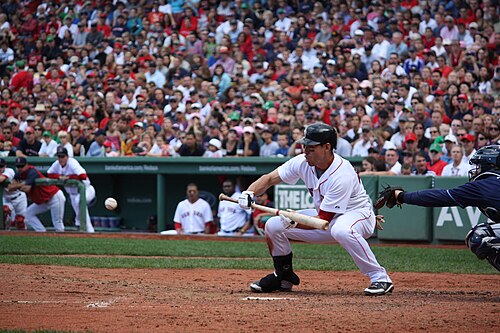
غالباً ما يبدأ الضارب بالجري أثناء محاولته ضرب الكرة بضربة خفيفة . تُسمى هذه الضربة بالضربة الخفيفة الساحبة . يُنفذها الضاربون الذين يستخدمون اليد اليسرى أكثر من الضاربين الذين يستخدمون اليد اليمنى، لأن وقفتهم في منطقة الضرب أقرب إلى القاعدة الأولى ، ولا يحتاجون إلى الجري عبر لوحة القاعدة الرئيسية، حيث ستُرمى الكرة، أثناء ضربهم للكرة الخفيفة. [ 5 ]
تتأثر عملية الاستعداد للضربة القصيرة أثناء الضربة القصيرة السريعة، حيث لا تكون القدمان ثابتتين. أحيانًا يضع اللاعبون يدًا واحدة على المضرب، وأحيانًا أخرى يضربون بكلتا اليدين عند قاعدة المضرب. وقد سُجلت حالات لضربات قصيرة سريعة بيد واحدة أيضًا؛ ومن المعروف أن رافائيل فوركال جرب مثل هذه الضربة. [ 5 ]
ضربة خاطفة متأرجحة
A swinging bunt occurs when a poorly hit ball rolls a short distance into play, much like a bunt. A swinging bunt is often the result of a checked swing, and only has the appearance of a bunt. It is not a true bunt, and if the scorer judges that the batter intended to hit the ball, it cannot be counted as a sacrifice. There is also a "slug" bunt that is intended to surprise the opposing defense, as the desired effect is a hard-hit ball into the infield defense that is expecting a standard bunt.[6]
Fielding a bunt
Fielding a bunt can be more difficult than fielding a normally batted ball. Bunted balls are typically slow, so fielders must charge the ball to get to it quickly, in order to throw out a runner in time. Well-placed bunts can sometimes be impossible to field, and result in base hits. The tactic in bunting for a base hit is to hit the ball fast enough to get it past the pitcher, but slow enough to not allow time for the other infielders to make a play. Bunting a ball into no-man's land– the triangle between the locations of the pitcher, first baseman, and second baseman, or between the pitcher, catcher and third baseman – can succeed because of uncertainty among the fielders as to which should field the ball and which should receive the throw to first base. It is not unusual for all three fielders to try to field the ball, and for nobody to cover the bag, or for no one to try to field the ball, assuming someone else will handle it. Teams use a rotation play to defend against the bunt: the first baseman will charge the bunt and the second baseman "rotates" out of his usual position to cover first base and receive the throw. The shortstop covers the base towards which the runner is headed.[7]
Special rules
A foul bunt that is not caught in flight is always counted as a strike, even if it is a third strike and thus results in a strikeout of the batter. This is distinct from all other foul balls which, if not caught in flight, are only counted as a strike if not a third strike. This special exception applies only to true bunts, not on any bunt-like contacts that might occur during a full swing or check-swing. If a batter bunts the ball and his bat hits the ball again after initial contact, it is a dead ball even if by accident.[8]
Additionally, the infield fly rule is not applied to bunts popped-up in the air. Instead, the intentional drop rule (Rule 6.05k) that also applies to line drives can be invoked.
History
It is not known when the bunt was introduced; the earliest known reference to a bunt-like hit appears in the account of a game played in 1864 between the junior squads ("muffins") of the Brooklyn Excelsior and Enterprise clubs: "The feature of the play was the batting of Prof. Bassler of the Enterprise team...Being an original of the first water, he adopted an original theory in reference to batting, which we are obliged to confess is not of the most striking character. His idea is not a bad one though, it being to hit the ball slightly so as to have it drop near the home base, therefore necessitating the employment of considerable skill on the part of the pitcher to get at the ball, pick it up and throw it accurately to first base."[9] But the batting technique now known as the bunt was almost certainly perfected by Dickey Pearce, one of baseball's early stars. For much of his career, Pearce used his 'tricky hit' to tremendous effect as the rules permitted it to roll foul and still be counted as a hit. The bunt was not common until the 1880s, and was not an accepted part of baseball strategy until the 20th century. The bunt has enjoyed periodic waves of popularity throughout baseball history, coinciding with the periodic shifts of dominance between pitching and hitting over the decades.[10]
During periods of pitching dominance, for example, during the dead-ball era or the 1960s, bunting was an important offensive weapon. Conversely, during periods of hitting dominance, for example, the 1990s and 2000s, the value of the bunt has often been questioned.[11] Teams following the "Moneyball" school of baseball thought (such as the Oakland Athletics, the Boston Red Sox, and the 2004–2005 Los Angeles Dodgers) have shown a tendency to shun the sacrifice bunt almost entirely. However, a canvass of the 2002–2005 World Series champions (the 2002 Los Angeles Angels being the "small ball" trendsetter for the 2000s) reveals that each team used bunting frequently in order to overcome power hitting teams. Nevertheless, the role of the bunt in baseball strategy is one of the perennial topics of discussion for baseball fans.
References
- ↑Official Baseball Rules
- 12"Sacrifice Bunt (SH)". MLB Advanced Media, LP. Archived from the original on 29 October 2016. Retrieved 28 October 2016.
- ↑ جيسون زينومان (20 أغسطس 2006). "محاولة يائسة ودعاء" . صحيفة نيويورك تايمز . مؤرشف من الأصل في 29 أكتوبر 2016. تم الاطلاع عليه في 28 أكتوبر 2016 .
- ↑ ميلهوت، جيك (19 يونيو 2019). "نبذة تاريخية عن ضربة البانْت المزدوجة" . فانغرافز . تم الاسترجاع في 31 يوليو 2021 .
- 1 2 جيمس جنتيل (10 ديسمبر 2012). "أفضل لاعب رمي الكرة في التاريخ" . مؤرشف من الأصل في 29 أكتوبر 2016. تم الاطلاع عليه في 28 أكتوبر 2016 .
- ↑ ترافيس كوفرستون (28 ديسمبر 2015). "الضربة الخاطفة: مصطلحات البيسبول" . مؤرشف من الأصل في 29 أكتوبر 2016. تم الاطلاع عليه في 28 أكتوبر 2016 .
- ↑ "موقف التضحية: عداء على القاعدة الأولى، اللعب رقم 1 - عادي" (ملف PDF) . مؤرشف من الأصل (ملف PDF) بتاريخ 29 أكتوبر 2016. تم الاطلاع عليه بتاريخ 28 أكتوبر 2016 .
- ↑ "لعبة الحالة 2013-06: ضربة خاطئة مع ضربتين (مكتملة)" . 10 يوليو 2013. مؤرشف من الأصل في 29 أكتوبر 2016. تم الاسترجاع في 28 أكتوبر 2016 .
- ↑ صحيفة بروكلين إيجل، 16 سبتمبر 1864
- ↑ راندي ليونارد (1 أكتوبر 2014). "علاقة البيسبول الطويلة والمعقدة مع الضربة الخاطفة" . مجلة ذا أتلانتيك . مؤرشف من الأصل في 29 أكتوبر 2016. تم الاطلاع عليه في 28 أكتوبر 2016 .
- ↑ بيل ليتلفيلد (21 مايو 2016). "لم يمت بعد: التاريخ غير المتوقع لضربة البانْت في لعبة البيسبول" . مؤرشف من الأصل في 29 أكتوبر 2016. تم الاطلاع عليه في 28 أكتوبر 2016 .
روابط خارجية
 وسائط متعلقة بلعبة البانْت (البيسبول) على ويكيميديا كومنز
- قواعد لعبة البيسبول
- استراتيجية البيسبول
- مصطلحات البيسبول