
Desert Botanical Garden
Desert Botanical Garden is a 140-acre (57 ha)botanical garden located in Papago Park, at 1201 N. Galvin Parkway in Phoenix, central Arizona.
Founded by the Arizona Cactus and Native Flora Society in 1937[1] and established at this site in 1939, the garden now has more than 50,000 plants in more than 4,000 taxa, one-third of which are native to the area, including 379 species which are rare, threatened or endangered.
Of special note are the rich collections of agave (4,026 plants in 248 taxa) and cacti (13,973 plants in 1,320 taxa), especially the Opuntia sub-family. Plants from less extreme climate conditions are protected under shadehouses. It focuses on plants adapted to desert conditions, including an Australian collection, a Baja California collection and a South American collection. Several ecosystems are represented: a mesquitebosque, semi-desert grassland, and upland chaparral.
Desert Botanical Garden has been designated as a Phoenix Point of Pride.[2]
History
In the 1930s, a small group of local citizens became interested in conserving the fragile desert environment. One was Swedish botanist Gustaf Starck, who found like-minded residents by posting a sign, "Save the desert", with an arrow pointing to his home. In April 1934 they formed the Arizona Cactus and Native Flora Society (ACNFS) to sponsor a botanical garden to encourage an understanding, appreciation and promotion of the uniqueness of the world's deserts, particularly the local Sonoran Desert.[3]
Eventually Gertrude Webster, whose home encompassed all of what is today the neighborhood of Arcadia, joined the Society. She offered her encouragement, connections and financial support to establish the botanical garden in Papago Park. Margaret Bell Douglas provided support as well, donating 1,500 specimens to the herbarium.[4]
شغل ويبستر منصب رئيس مجلس إدارة الجمعية الأول، وكان غوستاف ستارك، وويليام ووكر، وريل هاسكيت، وإل. إل. كريغباوم، وصموئيل ويلسون نوابًا للرئيس. كما شغل ويلسون منصب أمين الصندوق. وكان بول جي. أولسن سكرتيرًا. في عام ١٩٣٨، وبعد جهود حثيثة بذلتها الجمعية الأمريكية لنباتات الصحراء، عيّن مجلس الإدارة أول مدير تنفيذي للحديقة، جورج ليندسي ، الذي أشرف على أولى عمليات الزراعة في الموقع. وافتُتحت حديقة نباتات الصحراء عام ١٩٣٩ كمتحف غير ربحي مُكرّس للبحث والتعليم والحفاظ على نباتات الصحراء وعرضها.
التعليم والفن
تقدم الحديقة جولات متخصصة وورش عمل ومحاضرات حول تنسيق الحدائق الصحراوية والبستنة، وفن الطبيعة والتصوير الفوتوغرافي، والصحة والعافية. [ 2 ]
تقدم الحديقة سلسلة حفلات موسيقية صوتية في الهواء الطلق في فصلي الربيع والخريف، ومعارض فنية، وفعالية "لاس نوتشيس دي لاس لومينارياس" منذ عام 1978. وقد أصبح مهرجان "لومينارياس" تقليدًا احتفاليًا في جنوب غرب الولايات المتحدة، حيث يتميز بالموسيقى الحية على أنغام 8000 فانوس مضاء يدويًا. [ 5 ]
معرض
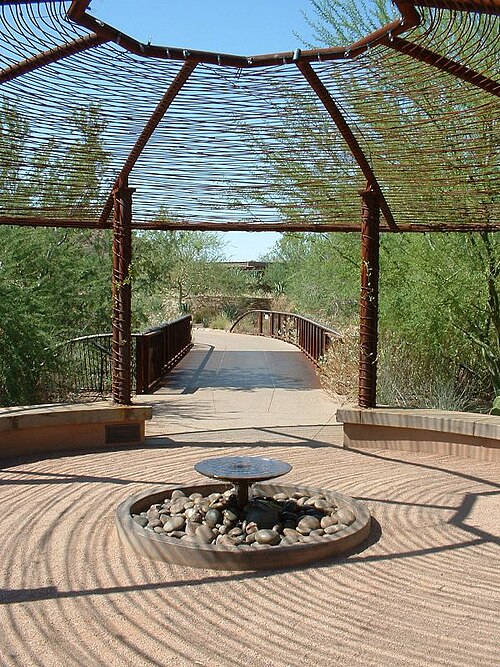 حديقة النباتات الصحراوية
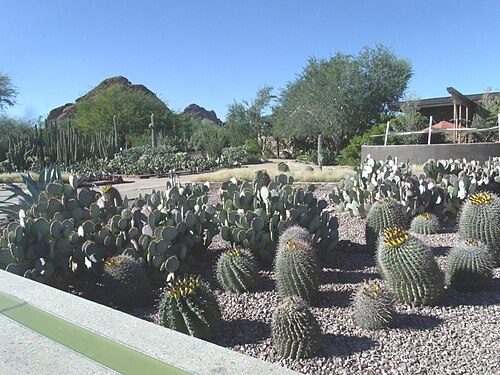 أنواع مختلفة من الصبار معروضة في حديقة النباتات الصحراوية في فينيكس
 قاعة ويبستر
 شُيّد مبنى قاعة ويبستر عام ١٩٣٩، ويقع داخل مجمع حديقة النباتات الصحراوية. في عام ١٩٣٧، انضمت جيرترود ويبستر إلى جمعية أريزونا للصبار والنباتات المحلية التي تأسست حديثًا. سُمّيت القاعة باسمها. في عام ١٩٩٠، صنّفت إدارة المتنزهات الوطنية قاعة ويبستر موقعًا تاريخيًا وطنيًا، ومنحتها الرقم المرجعي ٩٠٠٠٨٢٣.
 داخل قاعة ويبستر التاريخية. أُدرجت القاعة في السجل الوطني للأماكن التاريخية في 1 مايو 1990، المرجع: 9000823.
 نبات باركينسونيا ميكروفيلا في الحديقة النباتية الصحراوية
 عرض الصبار
 اليوكا المنقارية (Yucca rostrata)
 Pachycormus discolor (شجرة الفيل)
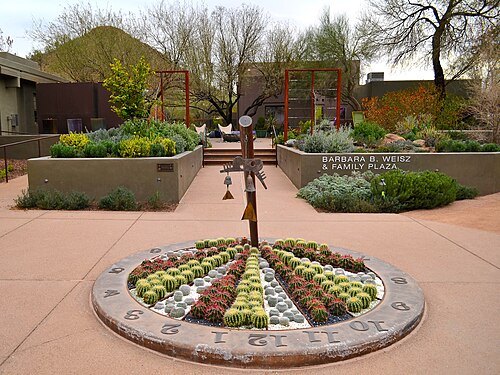 ساحة عائلة وايز
 جوستيسيا كاليفورنيكا
 عرض الصبار والنباتات العصارية
 جناح الفراشات
 زهور الصبار
 يوجد تنوع كبير من الصبار في حديقة النباتات الصحراوية.
 حديقة الزهور البرية
انظر أيضاً
مراجع
- ↑ ديبورا أ. ستار، "حديقة النباتات الصحراوية"، البستنة ، مارس 1994: 48-54.
- 1 2 "نقاط فخر فينيكس" . مؤرشف من الأصل في 1 أكتوبر 2006. تم الاطلاع عليه في 18 أكتوبر 2006 .
- ↑ ريس لي: منارة ساطعة للحفاظ على البيئة: حديقة النباتات الصحراوية. مؤرشفة بتاريخ 4 أكتوبر 2019 في أرشيف الإنترنت. أخبار أركاديا، 1 أكتوبر 2019
- ↑ "مارغريت بيل دوغلاس" . AWHF . مؤرشف من الأصل في 25 سبتمبر 2020. تم الاطلاع عليه في 15 مايو 2019 .
- ^ "تاريخ Las Noches de las Luminarias" . حديقة النباتات الصحراوية . 30 نوفمبر 2021 . تم الاسترجاع في 15 مايو 2022 .
{{cite web}}: CS1 maint: deprecated archiveal service ( link )
روابط خارجية
- الموقع الرسمي لحديقة النباتات الصحراوية
 بيانات جغرافية متعلقة بالحديقة النباتية الصحراوية على موقع OpenStreetMap
- الحدائق النباتية في أريزونا
- بيوت الفراشات
- حدائق الصبار
- نباتات أريزونا
- نباتات صحراوية في أمريكا الشمالية
- نباتات الصحراء
- نقاط فخر فينيكس
- المؤسسات المعتمدة من قبل التحالف الأمريكي للمتاحف
- المعالم السياحية في فينيكس، أريزونا