
Government of New Mexico
The government of New Mexico is the governmental structure of the state of New Mexico as established by the Constitution of New Mexico. The executive is composed of the governor, several other statewide elected officials and the governor's cabinet. The New Mexico Legislature consists of the House of Representatives and Senate. The judiciary is composed of the New Mexico Supreme Court and lower courts. There is also local government, consisting of county administrations, city governments, and special districts.[1]
Executive
The state elected officials are:[2]


The New Mexico Governor's Cabinet includes:[3]
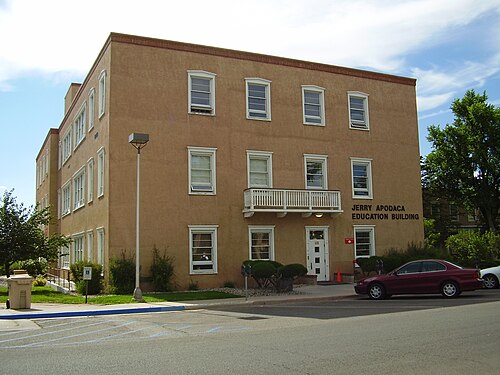
- Office of African American Affairs
- Department of Aging and Long-Term Services
- Department of Agriculture
- Department of Children, Youth, and Families
- Department of Corrections
- Department of Cultural Affairs
- Department of Economic Development
- Department of Energy, Minerals, and Natural Resources
- Office of the State Engineer
- Department of Environment
- Department of Finance and Administration
- Department of General Services
- Department of Health
- Department of Higher Education
- Department of Homeland Security and Emergency Management
- Department of Human Services
- Department of Indian Affairs
- Department of Information Technology
- Office of State Personnel
- Department of Public Education
- Department of Public Safety
- Department of Regulation and Licensing
- Department of Taxation and Revenue
- Department of Tourism
- Department of Transportation
- Department of Veteran Services
- Department of Worker's Compensation
- Department of Workforce Solutions
Legislature
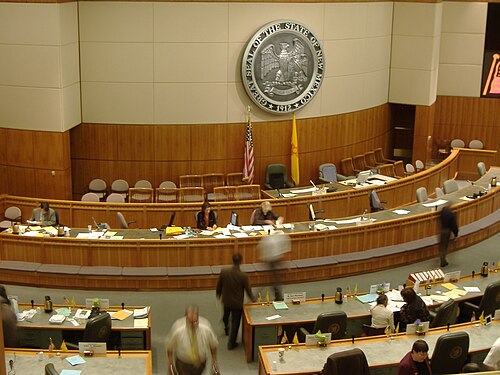
The New Mexico Legislature is a bicameral body made up of the 70-member New Mexico House of Representatives and the 42-member New Mexico Senate. The New Mexico Constitution limits the regular session to sixty calendar days, and every other year it is thirty days. The lieutenant governor presides over the Senate, while the speaker of the House is elected from that body in a closed door majority member caucus. Both have wide latitude in choosing committee membership in their respective houses and have a large impact on lawmaking in the state.
Judiciary
The New Mexico Supreme Court is the highest court. It is primarily an appellate court, only having original jurisdiction in a limited number of actions; criminal cases in which the death penalty or life imprisonment is sought, appeals from the New Mexico Public Regulation Commission, and cases involving the writ of habeas corpus are reviewed directly by the Supreme Court. The court's five justices are chosen by statewide election, or appointed by the governor if to fill a seat that has become vacant mid-term.
The New Mexico Court of Appeals is the intermediate-level appellate court. The court has general appellate jurisdiction over the district courts and certain state agencies. Ten judges preside, sitting in panels of three.[4]

The New Mexico district courts are courts of general jurisdiction.[4] They hear cases involving: tort, contract, real property rights, estate; exclusive domestic relations, mental health, appeals for administrative agencies and lower courts, miscellaneous civil jurisdiction; misdemeanor; exclusive criminal appeals jurisdiction; and exclusive juvenile jurisdiction.[4] There are thirteen judicial districts.[4]
The New Mexico magistrate courts are courts of limited jurisdiction.[4] They hear cases involving: tort, contract, landlord/tenant rights ($0–10,000); felony preliminary hearings; and misdemeanor, DWI/DUI and other traffic violations.[4] There are fifty-four magistrate courts.[4]
محاكم الوصايا في نيو مكسيكو هي محاكم ذات اختصاص محدود ولا تعقد جلسات محاكمة أمام هيئة محلفين. [ 4 ] توجد محكمة واحدة لكل مقاطعة من مقاطعات نيو مكسيكو الثلاث والثلاثين. [ 4 ]
تُعدّ المحاكم البلدية في نيو مكسيكو محاكم ذات اختصاص محدود، ولا تعقد جلسات محاكمة أمام هيئة محلفين. [ 4 ] وتختصّ هذه المحاكم بالنظر في القضايا المتعلقة بما يلي: الجنح البسيطة، والقيادة تحت تأثير الكحول أو المخدرات، ومخالفات المرور، وغيرها من مخالفات القوانين البلدية. [ 4 ]
محكمة مقاطعة بيرناليلو الحضرية هي محكمة ذات اختصاص محدود في مقاطعة بيرناليلو . [ 4 ] تنظر في القضايا المتعلقة بما يلي: المسؤولية التقصيرية، والعقود، وحقوق المالك والمستأجر (من 0 إلى 10000 دولار أمريكي)؛ والمثول الأول أمام المحكمة في قضايا الجنايات؛ والجنح، والقيادة تحت تأثير الكحول أو المخدرات، والعنف الأسري، ومخالفات المرور الأخرى. [ 4 ]
الحكومة المحلية
تتألف الحكومة المحلية في نيو مكسيكو من مقاطعات وبلديات . يوجد ثلاث وثلاثون مقاطعة، من بينها مقاطعة بيرناليلو ، التي تضم مدينة ألبوكيرك ، أكبر مدن الولاية ، وهي الأكثر اكتظاظًا بالسكان. تُدار المقاطعات عادةً بواسطة مجلس مقاطعة منتخب من خمسة أعضاء، بالإضافة إلى عمدة، ومُقيّم ضرائب، وكاتب، وأمين صندوق. قد تُطلق البلدية على نفسها اسم قرية أو بلدة أو مدينة ، [ 5 ] ولا يوجد تمييز قانوني بين هذه المسميات، ولا يوجد ارتباط بأي شكل محدد (رئيس بلدية - مجلس، لجنة - مدير، إلخ). تُجرى الانتخابات البلدية على أساس غير حزبي. [ 6 ] علاوة على ذلك، يمكن تفويض سلطة محلية محدودة إلى مناطق خاصة وجمعيات مُلّاك الأراضي.
مراجع
- ↑ "حكومة نيو مكسيكو" . www.newmexico.gov . تم الاطلاع عليه في 1 يناير 2019 .
- ↑ "نيو مكسيكو > الحكومة > المسؤولون المنتخبون" . www.newmexico.gov . تم الاطلاع عليه في 1 يناير 2019 .
- ↑ مكتب حاكم ولاية نيو مكسيكو . "الوزارات على مستوى مجلس الوزراء" . مؤرشف من الأصل بتاريخ 27 مارس 2014. تم الاطلاع عليه بتاريخ 31 مارس 2014 .
- ١ ٢ ٣ ٤ ٥ ٦ ٧ ٨ ٩ ١٠ ١١ ١٢ ١٣ مكتب إدارة المحاكم في نيو مكسيكو . "نبذة عن المحاكم" . تم الاطلاع عليه بتاريخ ٣١ مارس ٢٠١٤ .
- ↑ قانون ولاية نيو مكسيكو § 3-1-3
- ↑New Mexico Statutes § 3-8-29C
External links
- Government of New Mexico
- State governments of the United States