
Heffalump
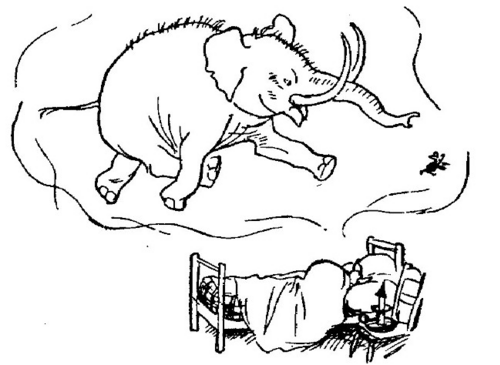
A Heffalump is an elephant-like creature in the Winnie-the-Pooh stories by A. A. Milne. Heffalumps are mentioned, and only appear, in Pooh and Piglet's dreams in Winnie-the-Pooh (1926), and are seen again in The House at Pooh Corner (1928). Physically, they resemble elephants; E. H. Shepard's illustration shows an Indian elephant. In Disney's Winnie the Pooh franchise, they are mentioned repeatedly, with several Heffalumps appearing featured in the animated television series The New Adventures of Winnie the Pooh (1988–1991), followed by two animated films in 2005 featuring a Heffalump as a main character, Pooh's Heffalump Movie and Pooh's Heffalump Halloween Movie.
Origins
Although the fifth chapter of Winnie-the-Pooh is titled "In Which Piglet Meets a Heffalump", Piglet only actually meets a Heffalump in his imagination.[1] In this chapter, Pooh and Piglet bravely attempt to capture a heffalump in a clever trap; however, no heffalumps are ever caught, and indeed they never meet a heffalump in the course of the books. The sole appearance of heffalumps in the books is imagined, as Pooh tries to put himself to sleep:
[H]e tried counting Heffalumps [but] every Heffalump that he counted was making straight for a pot of Pooh's honey ... [and] when the five hundred and eighty-seventh Heffalump was licking its jaws, and saying to itself, "Very good honey this, I don't know when I've tasted better", Pooh could bear it no longer.
In the third chapter of The House at Pooh Corner, Pooh and Piglet fall into a similar trap (it is implied it was the same trap) and think that it was made by a Heffalump to catch them. Pooh and Piglet rehearse the conversation they will have when the heffalump comes, but Pooh falls asleep and when Piglet hears a voice, he panics and says the wrong thing. He is mortified when the voice turns out to be that of Christopher Robin.
Explanation
Although this is not explicitly stated, it is generally thought that heffalumps are elephants from a child's viewpoint (the word "heffalump" being a child's attempt at pronouncing "elephant").[2] Shepard's illustrations in Milne's books depict heffalumps (in Piglet's dreams) as looking much like elephants.[1]
Disney version
In Disney's adaptations of the stories, Heffalumps are first mentioned in the 1968 featurette Winnie the Pooh and the Blustery Day and later The Many Adventures of Winnie the Pooh, and seem to be a product of Tigger's imagination. They appeared with their partners, the woozles, in a song called "Heffalumps and Woozles" during a nightmare that Pooh has. Here, Tigger described them as honey-eating creatures. In both the animated films and all subsequent television series, they are also depicted as looking like elephants, albeit slightly cuddlier and less fierce than those Pooh imagines in the books, with rabbit-like tails and stitches as would be found on a stuffed animal.
In the animated television series The New Adventures of Winnie the Pooh, most heffalumps are enemies of Pooh and his friends. They are known to steal honey and are often associated with woozles. One particular heffalump named Heff was the dim-witted sidekick of Stan the Woozle and was afraid of Roo because he thought Roo was a giant mouse.
Piglet befriended a young heffalump named Junior in two episodes of The New Adventures of Winnie the Pooh. Junior lived with his parents, Papa Heffalump (voiced by Jim Cummings) and Mama Heffalump. Mama Heffalump often had to remind Papa Heffalump of his many allergies.

Pooh's Heffalump Movie, released in 2005, looks at the differences between the denizens of the Hundred Acre Wood, and the Heffalumps, cleared up after Roo becomes friends with a Heffalump named Lumpy. A sequel to this movie called Pooh's Heffalump Halloween Movie, was later released. Lumpy later appears in the television program My Friends Tigger & Pooh, where he continues to appear as Roo's friend and joins the gang on many adventures.
كما تظهر هذه الشخصيات والأغنية في معلم الجذب السياحي في مملكة السحر في عالم والت ديزني ، وديزني لاند ، وديزني لاند هونغ كونغ ، وديزني لاند شنغهاي ، والذي يُطلق عليه أيضًا اسم "مغامرات ويني الدبدوب العديدة" ، حيث يسافر الركاب عبر مخلوقات الهيفالومبس والووزلز في حلم ويني الدبدوب.
توجد عدة ألعاب فيديو لسلسلة ويني ذا بوه، حيث تُشكّل مخلوقات الهيفالومبس خصماً في قصة مستويات مختلفة من لعبتي "لعبة بيغليت الكبيرة" و "مغامرة ويني ذا بوه الصاخبة" . وقد طُوّرت كل لعبة على منصات مختلفة مثل نينتندو غيم بوي أدفانس، ونينتندو غيم كيوب، والحاسوب الشخصي، وسوني بلاي ستيشن 2.
في مشهد خيالي في فيلم كريستوفر روبن لعام 2018 ، عندما يكاد بطل الفيلم يغرق في فخ هيفالومب، يتوهم أنه يرى فيلاً حقيقياً على أنه هيفالومب.
التأثير الثقافي
منذ خمسينيات القرن الماضي، اكتسبت حيوانات الهيفالومب شهرة تتجاوز قصص ويني الدبدوب.
- يستخدم الكبار مصطلح "هيفالومب" بشكل طريف لوصف الفيل، أو لوصف نظرة الطفل للفيل. [ 2 ]
- يُستخدم مصطلح "فخ هيفالومب" في الصحافة السياسية لوصف فخ يُنصب للإيقاع بالخصم، ولكنه ينتهي بالإيقاع بالشخص الذي نصبه (كما حدث لويني الدبدوب في قصة "البيت في ركن بو" ). [ 3 ]
- يعتقد بطل الرواية، غنوسوس بابادوبوليس، في رواية ريتشارد فارينا الصادرة عام 1966 بعنوان "لقد كنت في الأسفل لفترة طويلة لدرجة أنني أبدو وكأنني في الأعلى"، أن اسم صديقه المقرب هو هيفالومب طوال معظم أحداث الرواية، على الرغم من أن غنوسوس يكتشف في كوبا أن اسم هيفالومب الحقيقي هو أبراهام جاكسون وايت. [ 4 ]
- توجد مقطوعة موسيقية أوركسترالية بعنوان " To Catch a Heffalump " (1971) من تأليف ويليم فريدريك بون. [ 5 ]
- جائزة هيفالومب التي تمنحها صحيفة إكسبريسن السويدية هي جائزة أدبية سنوية تُمنح لأفضل كاتب سويدي في مجال أدب الأطفال واليافعين. [ 6 ]
- يُعد البحث عن "جسيمات الهيفالون" موضوع ورقة بحثية نُشرت في الأول من أبريل على خادم ما قبل الطباعة العلمية. [ 7 ]
- يُستخدم عامل heffalump "=>" في لغة برمجة BCPL للإشارة إلى البنية. [ 8 ]
- أغنية Cosmo Sheldrake لعام 2018 بعنوان "Come Along"، والتي ظهرت في إعلان لهاتف iPhone XR ، تحتوي على عبارة "Come along, catch a Heffalump".
- كان إريك هيفر ، النائب العمالي المخضرم عن دائرة ليفربول والتون من عام 1964 إلى عام 1991، رجلاً قليل الكلام وبدينًا، وكان يُعرف في كثير من الأحيان في القصص الإعلامية الساخرة باسم "هيفرلامب"، في البداية في مجلة برايفت آي ثم في أماكن أخرى.
- أغنية "هيفالومبس" لعام 2020 من أداء سيماتاري وغوست ماونتن تشير إلى الهيفالومبس.
- في مارس 2024، بعد فترة وجيزة من إصدار لعبة ويني الدبدوب: الدم والعسل 2 ، تم الإعلان عن بدء تطوير لعبة ويني الدبدوب: الدم والعسل 3 ، والتي ستضم شخصيات الهيفالومبس. [ 9 ]
- تتضمن لعبة الفيديو " الدبلوماسية ليست خيارًا" شخصيات هيفالومبس.
مراجع
- 1 2 روبنشتاين، مايكل (2020). الحداثة وبيئاتها . بلومزبري. ص 110.
- 1 2 قاموس أكسفورد الإنجليزي ، الطبعة الثانية، 1989: "كلمة يستخدمها الأطفال للدلالة على 'الفيل'. وهي الآن شائعة الاستخدام بين البالغين."
- ↑ صحيفة ذا سبيكتاتور (22 أغسطس 1958). "لن يقع المحافظون في فخ الفيل الذي يقبع فيه خصومهم...". ورد في قاموس أكسفورد الإنجليزي .
- ↑ "لقد كنتُ في الأسفل لفترة طويلة لدرجة أنني أشعر وكأنني في الأعلى" . Richardandmimi.com . تم الاطلاع عليه بتاريخ 29-05-2019 .
- ↑ اصطياد فيل صغير، للأوركسترا (1971) . دونيموس. 1 يناير 1971. OCLC 19557428 .
- ^ "يعرب عن هيفاكلومب" . www.boksampo.fi . تم الاسترجاع 2019-11-30 .
- ↑ بار، آلان جيه؛ ليستر، كريستوفر جي (29 مارس 2013). "بحث عن إنتاج مباشر للهيفالون باستخدام تجارب ATLAS وCMS في مصادم الهادرونات الكبير". arXiv : 1303.7367 [ hep-ph ].
- ↑ كاري، جيمس (14 سبتمبر 1979). دليل مرجعي لمكتبة مقاطعة بالو ألتو العامة (ملف PDF) . بالو ألتو، كاليفورنيا: زيروكس بارك. ص 6.9. مؤرشف (ملف PDF) من الأصل بتاريخ 9 أكتوبر 2022.
- ↑ ريتمان، أليكس (28 مارس 2024). "تأكيد إنتاج فيلم ويني الدبدوب: الدم والعسل 3 (حصري)" . مجلة فارايتي . تاريخ الاسترجاع: 28 مارس 2024 .
روابط خارجية
 تعريف كلمة "heffalump" في قاموس ويكشنري
- الأفيال في الأدب
- أفيال خيالية
- أفيال مجسمة
- الشخصيات الأدبية التي ظهرت عام 1926
- الشخصيات الذكورية في الأدب
- شخصيات ويني الدبدوب