
Orthograde posture
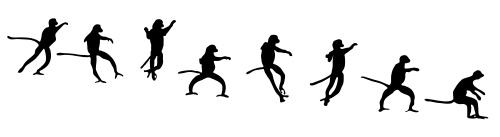
Orthograde is a term derived from Greek ὀρθός, orthos ("right", "true", "straight")[1] + Latin gradi (to walk)[2] that describes a manner of walking in an upright posture, with the independent motion of limbs. Both New and Old World monkeys are primarily arboreal, and they have a tendency to walk with their limbs swinging in parallel to one another. This differs from the manner of walking demonstrated by the apes.
Chimpanzees, gorillas, orangutans and humans, when walking, walk upright, and their limbs swing in opposition to one another for balance (unlike monkeys, apes lack a tail to use for balance). Disadvantages related to upright walking do exist for primates, since their primary mode of locomotion is quadrupedalism. This upright locomotion is called "orthograde posture". Orthograde posture in humans was made possible through millions of years of evolution. In order to walk upright with maximum efficiency, the skull, spine, pelvis, lower limbs, and feet all underwent evolutionary changes.
Origin
The definition of orthograde posture can easily be derived from its roots “ortho-” meaning “upright” and “-grade” meaning “ascent.” This was true for the early hominidae, whose transition to upright walking took place approximately six to seven million years ago evident in Orrorin tugenensis.[3] These hominin were some of the first bipeds who propagated forward one leg at a time, step by step.
Evolutionary significance
The first definitive evidence of habitual orthograde posture in human evolutionary lineage begins with Ardipithecus ramidus, dating between 5.2 and 5.8 million years ago. The skeletal remains of this hominid exhibit a mosaic of morphological characteristics that would have been both adapted to an arboreal environment and walking upright terrestrially.[4] The earliest evidence of a hominid exhibiting skeletal morphology capable of achieving orthograde posture dates to 9.5 million years ago, with the discovery of a Miocene ape, Dryopithecus in Can Llobateres, Spain.[5]
بعد ملايين السنين من ظهور أورورين توغينينسيس ، مارست أشباه البشر الأسترالوبيثكس، مثل أوسترالوبيثيكوس أفريكانوس وأسترالوبيثيكوس أفارينسيس، المشي على قدمين بشكل اعتيادي. كانت هذه الكائنات الشجرية تعيش على الأشجار وتسكن المناطق المشجرة في أعالي الأشجار. [ 6 ] في تلك الفترة، كان بعض أشباه البشر لا يزالون يستخدمون المشي على مفاصل الأصابع، وهي عادة شائعة لدى أنواع القردة الأخرى. ومع ذلك، فإن المشي على قدمين بشكل اعتيادي لدى الأسترالوبيثكس يعني أنه على الرغم من تعشيشهم بين أغصان الأشجار ليلاً، إلا أنهم كانوا يتحركون بوضعية مستقيمة تسمح لهم باستخدام أيديهم في الجمع والتغذية ونقل الوزن والحفاظ على التوازن خلال النهار. تشير الأدلة الأحفورية والفرضيات إلى أن الوضعية المنتصبة كانت رد فعل أساسيًا للتغيرات البيئية والمنافسة. وبسبب ازدياد كثافة الغابات في السافانا الجرداء في شمال إفريقيا، بدأ أورورين توغينينسيس والأسترالوبيثيكس في التغير، وهو ما يتضح من البيانات المورفولوجية المتراكمة من بقايا الأنواع المختلفة. [ 7 ] هذه التغيرات المورفولوجية الرئيسية تميزها عن أشباه البشر الذين يتقدمون للأمام والذين شوهدوا في أحافير الجمجمة والعمود الفقري والحوض وعظم الفخذ.
الخصائص المورفولوجية
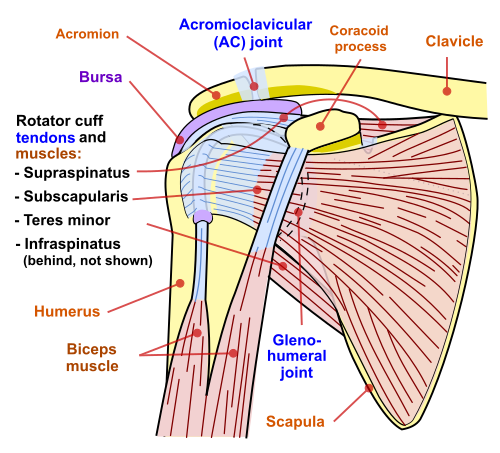
لكي تتمكن الحيوانات من المشي منتصبة، توجد متطلبات تشريحية محددة. ففي الثدييات التي تتخذ وضعية الوقوف المستقيمة، يكون موضع لوح الكتف أكثر ارتفاعًا من موضعه في الحيوانات التي تتخذ وضعية الانبطاح. [ 8 ] ويقل مؤشر لوح الكتف، وهو مقياس نسبة عرض لوح الكتف إلى طوله، في الحيوانات التي تتخذ وضعية الوقوف المستقيمة. وهذا يعني أن لوح الكتف أعرض من طوله. كما يكون القفص الصدري أكثر تسطحًا، ويكون النتوء الأخرمي على لوح الكتف أكبر حجمًا. ويعود ذلك إلى ازدياد الحاجة إلى عضلة الدالية في وضعية الوقوف المستقيمة، نظرًا لتوافر إمكانية تحريك اليدين بحرية.
التغيرات المورفولوجية
In 1924, the discovery of remains of the Taung Child in South Africa provided further evidence of bipedalism and orthograde posture.[9] The skull belonged to a three-year-old child, later identified as Australopithecus africanus. The skull was an indicator of orthograde posture because of the location and orientation of the foramen magnum. The foramen magnum is the space in the skull that acts as the bridge to the central nervous system from the spinal cord to the brain. For animals with "pronograde posture, the foramen magnum is dorsally oriented, whereas in humans it is anteriorly located and forwardly inclined.[10] In the Taung Child despite lacking the forward inclination seen in humans, the foramen magnum is also anteriorly oriented. Similarly in Australopithecus afarensis, the site of the space in the skull is even more human-like, inferiorly located such that the spinal cord would run perpendicularly to the ground.[10] Relating this orientation to the encephalization of hominin of the time, the position foramen magnum assisted in balance and supported upright posture.
More evidence in hominidae that enabled orthograde posture is present in the vertical column or lumbar vertebra of Australopithecus afarensis. The human lumbar column consists of five vertebrae that connect the twelve thoracic vertebrae to the sacrum and pelvis. Primates with pronograde posture such as gorillas have four lumbar vertebrae that connect to twelve thoracic vertebrae.[11] The difference in vertebra number results in a greater range of movement for humans with less thoracic vertebrae than gorillas with more lumbar vertebrae. Au. afarensis has six total lumbar vertebrae with also twelve thoracic vertebra[12] Another key characteristic that enforced upright posture in hominin was the shape of the lumbar vertebra. The “s” shape of the lumbar vertebra is called spinal lordosis, which produces the unique convex curvature seen in upright bipeds. The vertebral column of australopith fossils also share the curved morphology of modern humans. Lordosis in the lower lumbar spine centers the mass of the body on the lower joints such as the pelvis and femur such that the body is self-stabilizing and can remain upright.[13]
كان أورورين توجينينسيس أقدم ثنائيات المشي المعتادة لدى أشباه البشر . وتستند الأدلة إلى ثلاثة أجزاء من عظم الفخذ، تشمل جسم ورأس عظم الفخذ الأيسر، ورأس عظم الفخذ الأيمن. يربط عظم الفخذ الساقين بالحوض والفقرات القطنية، ويدعم بشكل أساسي وزن الجسم أثناء انتقاله من الحوض إلى الركبة والأطراف السفلية. ويمتص عنق عظم الفخذ تحديدًا، الذي يربط رأس عظم الفخذ بجسمه الرئيسي، قوة الصدمة عند قيام ثنائيات المشي المنتصبة بالحركة. [ 14 ] في أورورين توجينينسيس ، يكون اتجاه لقمتي رأس عظم الفخذ المتسع أوسع وأكثر سمكًا مقارنةً بالشمبانزي والقرود العليا الأخرى.
انظر أيضاً
مراجع
- ↑ "تعريف ORTHO-" . www.merriam-webster.com . تم الاطلاع عليه بتاريخ 10-10-2021 .
- ↑ "تعريف كلمة -GRADE" . www.merriam-webster.com . تم الاطلاع عليه بتاريخ 10-10-2021 .
- ↑ شميت د (مايو 2003). "رؤى حول تطور المشي على قدمين لدى الإنسان من خلال الدراسات التجريبية على البشر والرئيسيات الأخرى" . مجلة علم الأحياء التجريبي . 206 (الجزء 9): 1437-1448 . Bibcode : 2003JExpB.206.1437S . doi : 10.1242/jeb.00279 . PMID 12654883 .
- ↑ نيميتز، سي (مارس 2010). "تطور وضعية الجسم المنتصبة والمشي - مراجعة وتوليف جديد" . مجلة العلوم الطبيعية . 97 (3): 241-263 . رمز Bibcode : 2010NW.....97..241N . doi : 10.1007/ s00114-009-0637-3 . PMC 2819487. PMID 20127307 .
- ↑ مويا-سولا إس، وكوهلر إم (يناير 1996). "هيكل عظمي لـ Dryopithecus وأصول حركة القردة العليا". Nature . 379 ( 6561): 156-159 . Bibcode : 1996Natur.379..156M . doi : 10.1038/379156a0 . PMID 8538764. S2CID 4344346 .
- ↑Crompton RH, Sellers WI, Thorpe SK (October 2010). "Arboreality, terrestriality and bipedalism". Philosophical Transactions of the Royal Society of London. Series B, Biological Sciences. 365 (1556): 3301–14. doi:10.1098/rstb.2010.0035. PMC 2981953. PMID 20855304.
- ↑Johannsen L, Coward SR, Martin GR, Wing AM, Casteren AV, Sellers WI, et al. (April 2017). "Human bipedal instability in tree canopy environments is reduced by "light touch" fingertip support". Scientific Reports. 7 (1): 1135. Bibcode:2017NatSR...7.1135J. doi:10.1038/s41598-017-01265-7. PMC 5430707. PMID 28442732.
- ↑Bain GI, Itoi E, Di Giacomo G, Sugaya H (2015). Normal and Pathological Anatomy of the Shoulder. Springer. pp. 403–413. ISBN 978-3662457191.
- ↑Falk D (2009). "The natural endocast of Taung (Australopithecus africanus): insights from the unpublished papers of Raymond Arthur Dart". American Journal of Physical Anthropology. 140 Suppl 49 (S49): 49–65. doi:10.1002/ajpa.21184. PMID 19890860.
- 12Kimbel WH, Rak Y (October 2010). "The cranial base of Australopithecus afarensis: new insights from the female skull". Philosophical Transactions of the Royal Society of London. Series B, Biological Sciences. 365 (1556): 3365–76. doi:10.1098/rstb.2010.0070. PMC 2981961. PMID 20855310.
- ↑Williams SA, Middleton ER, Villamil CI, Shattuck MR (January 2016). "Vertebral numbers and human evolution". American Journal of Physical Anthropology. 159 (Suppl 61): S19-36. doi:10.1002/ajpa.22901. PMID 26808105.
- ↑ وارد سي في، نالي تي كي، سبور إف، تافورو بي، ألمسيجد زد (يونيو 2017). "أسترالوبيثيكوس أفارينسيس" . وقائع الأكاديمية الوطنية للعلوم في الولايات المتحدة الأمريكية . 114 (23): 6000-6004 . doi : 10.1073/pnas.1702229114 . PMC 5468642. PMID 28533391 .
- ↑ فاغنر هـ، ليبتراو أ، شينوفسكي د، وولف ت، دي لوسانيه م.هـ (أبريل 2012). "يُحسّن التقعر الفقري متطلبات وضعية الوقوف المستقرة" . علم الأحياء النظري والنمذجة الطبية . 9 (1): 13. doi : 10.1186/1742-4682-9-13 . PMC 3349546. PMID 22507595 .
- ^ بيكفورد م، سينوت ب، جومري د، تريل جي (سبتمبر 2002). “المشي على قدمين في Orrorin tugenensis الذي كشفت عنه عظمة الفخذ”. كومتيس ريندوس باليفول . 1 (4): 191– 203. بيب كود : 2002CRPal...1..191P . دوى : 10.1016/S1631-0683(02)00028-3 .
للمزيد من القراءة
- كرومبتون، آر إتش، وفيريك، إي إي، وثورب، إس كيه (أبريل 2008). "الحركة والوضعية من السلف البشري المشترك إلى أشباه البشر المعاصرين تمامًا، مع إشارة خاصة إلى آخر سلف مشترك من البانين/أشباه البشر" . مجلة التشريح . 212 (4): 501-543 . doi : 10.1111/j.1469-7580.2008.00870.x . PMC 2409101. PMID 18380868 .
- "ماذا يعني أن تكون إنسانًا؟ المشي منتصبًا" . مؤسسة سميثسونيان . تم الاطلاع عليه في 21 سبتمبر 2015 .
- كوتاك، سي بي (2005). نوافذ على الإنسانية: مقدمة موجزة في علم الإنسان . نيويورك، نيويورك: ماكجرو هيل. ص 80. ISBN 978-0073258935.
- "أورثوغراد" . قاموس دورلاند الطبي . مؤرشف من الأصل في 20 فبراير 2007.
- المشي