
Oso Kuka

Osman Bejtullah Agë Kuka, also known as Oso Kuka (c. 1812/1820–1862), was an Albanian border guard on the Albanian-Montenegrin border under the Ottoman Empire. Surrounded by Montenegrin soldiers in an Albanian tower on the island of Vranjina in Albania, he blew it up, killing himself in order to kill the Montenegrin soldiers. In the following decades, he became a rallying figure of the Albanian independence movement and a much-celebrated character in multiple important works in Albanian literature.
Background
Two decades earlier, several battles had been fought over the possession of the island, primarily between Ottoman forces (joined by Albanians) and Montenegrins. Between 1835 and 1844, various rebellions among Albanian highlanders against the Porte led to the enforcement of Montenegrin interests. On October 16, 1843, Albanian forces numbering 12,000, led by the Governor of Shkodër, invested the island. The Albanians arrived at the lake with 50-60 cannons and opened fire against the Montenegrin troops in the tower. The Ottomans blew up the tower, killing 7 and wounding 18, who were captured.[1] The Ottomans also seized the tower of Lesendra with 10,000 to 12,000 troops. The Montenegrins, numbering 200, fled and were met with harsh criticism by their countrymen. They tried to reclaim the island several times under Petar II Petrović-Njegoš, but failed.[2] In 1844, Albanian highlanders from Shkodër sailed with 4 ships to the island of Vranjina to build barracks in order to resist Montenegrin forces.[3]
Life
Osa Kuka was born around 1812[4][5] or 1820[6] in Shkodër, Albania in a timariot family, from a Catholic Albanian family recently converted. His family also held several other positions in the Sanjak of Scutari, with his grandfather and other relatives being kethüda of the castle. His father, Bejtullah agë Kuka, was standard-bearer of the Albanian Pasha and Vezir, Mustafa Pasha of Shkodra of the powerful Bushati dynasty. In 1859, due to the proposition of the Albanian-Ottoman commander Hodo Sokoli, Oso Kuka was promoted to the rank of yüzbaşı of the border guards on the Ottoman-Montenegrin border.[4]

Oso Kuka himself had formed a 24-man band (çetë) that was active in the city.[7] At the head of a small group, Oso Kuka arrived on the battlefield where 8,000 Montenegrin soldiers had been besieging the fort of Vranjina. Kuka and his group were defending a secondary tower in front of the main tower. When it was surrounded, instead of surrendering, Kuka planted explosives in the tower. He then activated them when the tower was stormed by the Montenegrins, thereby killing hundreds of Montenegrin soldiers along with his group.[6] His bravery made it possible for Vranina to stay under Albanian control until 1879, when it was ceded to Montenegro by the Congress of Berlin.
Legacy
Over the decades, Oso Kuka became a major rallying figure of the Albanian national awakening. One of the most important representations of Oso Kuka in literature is found in Gjergj Fishta's epic Lahuta e Malcis, in which Oso Kuka's involvement in the war and his death comprise the first five cantos, also known as the "cycle of Oso Kuka."[8] Ndre Zadeja also wrote a melodrama titled Oso Kuka, based on his life.[9]
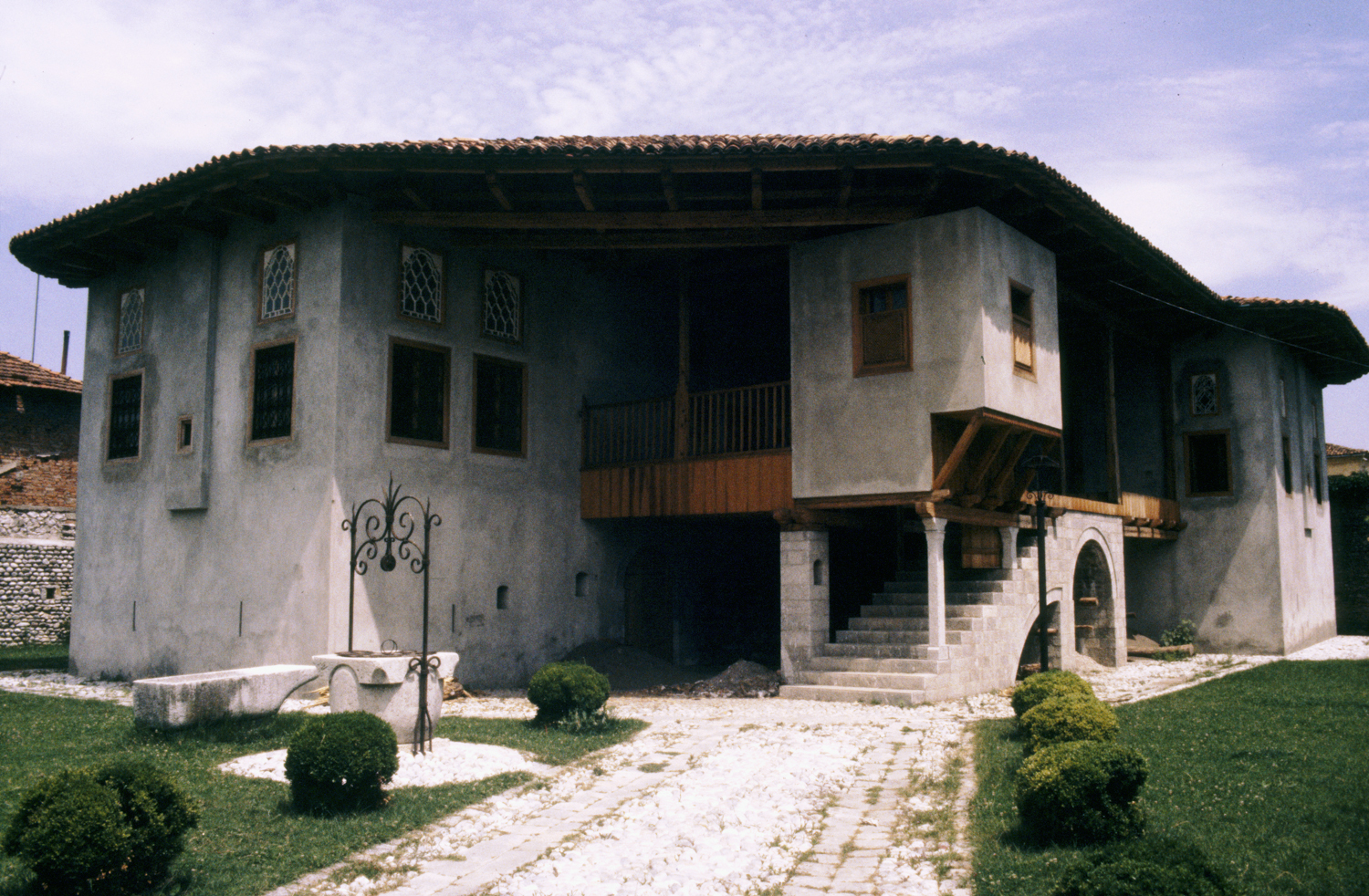
His residence in Shkodër houses the city's historical museum, while the Slavic-speaking population of the small village in Vranjina (modern-day Montenegro) show to visitors the so-called "house of Oso Kuka."[6]
Sources
- ^ جيريميجي، م. جاجيكو، بيتار الثاني بيتروفيتش نجيجوس إيزابرانا بيسما [hronološki pregled]. PP NJEGOŠ (سيتينيي 24. أكتوبر 1843. أد.) . تم الاسترجاع في 25 مارس 2020 .
{{cite book}}: صيانة CS1: أسماء متعددة: قائمة المؤلفين ( رابط ) - ^ GLAVA III Mitropolija crnogorska za vrijeme mitropolita Petrovica. السيد ألكسندر ستاماتوفيتش: Kratka istorija Mitropolije Crnogorsko-primorske (1219-1999). URL: http://www.rastko.rs/rastko-cg/povijest/istorijat/istorijat_3.html , "التاريخ في مدينة بيترا الثانية بتروفيتشا - لم يكن هناك الكثير من المشاركات في مخطط السياسة، وهو ما حدث في إزغوبلينا في عام 1843. Skadarskom jezer: Vranjina, Grmožur and Lesendro is nekoliko puta pokušao da ih povrati, ali u tome nije uspio, if u Crnoj Gori izreka, da as nešto žali, kže: "Izgore ka vladika za." "ليسيندرو" (الترجمة: لم تحقق الجبل الأسود الكثير على صعيد السياسة الخارجية خلال عهد بيتر الثاني بيتروفيتش نيغوش، بل وخسرت. ففي عام 1843، فقدت ثلاث جزر في بحيرة سكادار: فرانجينا، وغرموزور، وليسيندرو. حاول نيغوش استعادتها عدة مرات، لكنه فشل. وحتى اليوم، يُقال في الجبل الأسود عند الشكوى: "أحرقوا ليسيندرو للأسقف").
- ^ ايفان ، بيدرين (1995). OBLICI OTPORA BALKANSKIH MUSLIMANA REFORMAMA IZ CARIGRADA (PREMA SPISIMA ZADARSKE PISMOHRANE) (PDF) (الترجمة: في عام 1844.56، بدأ بناء ثكنة في فرانجينا، وأحضر الألبان أربع سفن محملة بمدفعين، وبالتالي فإن فرص الجبل الأسود في إعادة هذه الجزر الألبانية قبالة سواحلهم مباشرة كانت ضئيلة إد.). زادار: (فيلوزوفسكي فاكولتيت، زادار). UDK 297:949.7 "18" 949.7" 18" Izvorni znanstveni članak Primljen: 15.V 1995. ص. 214 . تم الاسترجاع في 25 مارس 2020 .
- 12 بوشاتي ، حمدي (1998). شكودرا دي موتيت ضد أنا . شكودر: إدرومينو. ص 510 – 514. OCLC 645720493 .
- ^ جعفر (يناير 1921). "أوسو كوكا" (PDF) . bksh.al . أجيمي الخامس أنا، لا. 9.
- 1 2 3 إلسي، روبرت (24-12-2012). قاموس سير تاريخ ألبانيا . IBTauris. ص 263. ISBN 9781780764313.
- ↑ "أوسو كوكا، البطل me vulën e popullit، jo të qeverisë" . غازيتا شكيب . تم الاسترجاع 28 يناير 2013 .
- ↑ إلسي، روبرت (8 يناير 2006). الأدب الألباني: تاريخ موجز . دار نشر IBTauris. ص 123. ISBN 9781845110314. Retrieved 28 January 2013.
- ↑Banham, Martin (1995-09-21). The Cambridge Guide to Theatre. Cambridge University Press. p. 14. ISBN 9780521434379. Retrieved 28 January 2013.
External links
- http://www.bksh.al/gsdl/collect/revistaa/tmp/190106.html "Newspaper from 1896 by Faik Bey Konica"
- http://shkoder.net/oso_kuka/ "Oso Kuka – A Great Hero"
- http://argophilia.com/albania/lake-skadar.html "Lake Skadar"
- http://dome.mit.edu/bitstream/handle/1721.3/147464/204131_cp.jpg?sequence=1 "House of Oso Kuka"
- 19th-century births
- 1862 deaths
- People from Shkodër
- Activists of the Albanian National Awakening
- 19th-century people from the Ottoman Empire
- 19th-century Albanian military personnel
- People from Scutari vilayet