
تغير الضغط الرأسي
يُعرَّف تغير الضغط الرأسي بأنه تغير الضغط تبعًا للارتفاع . وبحسب نوع السائل والسياق، قد يختلف هذا التغير اختلافًا كبيرًا في الأبعاد العمودية على الارتفاع أيضًا، وهذه التغيرات ذات أهمية في سياق قوة تدرج الضغط وتأثيراتها. مع ذلك، يُعد التغير الرأسي ذا أهمية خاصة، إذ ينتج عن تأثير الجاذبية على السائل؛ أي أنه بالنسبة للسائل نفسه، يُقابل انخفاض الارتفاع فيه عمودًا أطول من السائل يضغط على تلك النقطة.
الصيغة الأساسية
تتمثل إحدى الصيغ البسيطة نسبيًا [ 1 ] لتغير ضغط السائل الرأسي في أن فرق الضغط بين ارتفاعين هو حاصل ضرب تغير الارتفاع، والجاذبية، والكثافة . والمعادلة هي كما يلي: أين

- P هو الضغط،
- ρ هي الكثافة،
- g هي تسارع الجاذبية الأرضية ، و
- h هو الارتفاع .
يشير رمز دلتا إلى تغير في متغير معين. وبما أن قيمة g سالبة، فإن زيادة الارتفاع ستؤدي إلى انخفاض الضغط، وهو ما يتوافق مع المنطق المذكور سابقًا حول وزن عمود السائل.
عندما تكون الكثافة والجاذبية ثابتتين تقريبًا (أي عند تغيرات طفيفة نسبيًا في الارتفاع)، فإن ضرب فرق الارتفاع والجاذبية والكثافة يعطي تقريبًا جيدًا لفرق الضغط. إذا عُلم أن الضغط عند نقطة ما في سائل ذي كثافة منتظمة ρ هو P₀ ، فإن الضغط عند نقطة أخرى هو P₁ .

حيث h 1 - h 0 هي المسافة الرأسية بين النقطتين. [ 2 ]
عند وضع سوائل مختلفة فوق بعضها البعض، يُحسب فرق الضغط الكلي بجمع فرقَي الضغط؛ الأول من النقطة 1 إلى الحد الفاصل، والثاني من الحد الفاصل إلى النقطة 2؛ وذلك ببساطة عن طريق استبدال قيم ρ و Δh لكل سائل وجمع النتائج. أما إذا كانت كثافة السائل تتغير بتغير الارتفاع، فسيلزم استخدام التكامل الرياضي.
Whether or not density and gravity can be reasonably approximated as constant depends on the level of accuracy needed, but also on the length scale of height difference, as gravity and density also decrease with higher elevation. For density in particular, the fluid in question is also relevant; seawater, for example, is considered an incompressible fluid; its density can vary with height, but much less significantly than that of air. Thus water's density can be more reasonably approximated as constant than that of air, and given the same height difference, the pressure differences in water are approximately equal at any height.
Hydrostatic paradox

The barometric formula depends only on the height of the fluid chamber, and not on its width or length. Given a large enough height, any pressure may be attained. This feature of hydrostatics has been called the hydrostatic paradox. As expressed by W. H. Besant,[3]
- Any quantity of liquid, however small, may be made to support any weight, however large.
The Flemish scientist Simon Stevin was the first to explain the paradox mathematically.[4] In 1916 Richard Glazebrook mentioned the hydrostatic paradox as he described an arrangement he attributed to Pascal: a heavy weight W rests on a board with area A resting on a fluid bladder connected to a vertical tube with cross-sectional area α. Pouring water of weight w down the tube will eventually raise the heavy weight. Balance of forces leads to the equation

Glazebrook says, "By making the area of the board considerable and that of the tube small, a large weight W can be supported by a small weight w of water. This fact is sometimes described as the hydrostatic paradox."[5]
Hydraulic machinery employs this phenomenon to multiply force or torque. Demonstrations of the hydrostatic paradox are used in teaching the phenomenon.[6][7]
In the context of Earth's atmosphere
عند تحليل التغير الرأسي لضغط الغلاف الجوي للأرض ، يصبح المقياس الطولي بالغ الأهمية ( إذ يبلغ ارتفاع طبقة التروبوسفير وحدها عدة كيلومترات ، بينما يبلغ ارتفاع طبقة الثيرموسفير عدة مئات من الكيلومترات)، كما أن السائل المعني (الهواء) قابل للانضغاط. ومع ذلك، يمكن تقريب الجاذبية بشكل معقول على أنها ثابتة، لأن المقاييس الطولية التي تبلغ بضعة كيلومترات لا تزال صغيرة مقارنةً بنصف قطر الأرض، الذي يبلغ في المتوسط حوالي 6371 كيلومترًا، [ 8 ] والجاذبية دالة للمسافة من لب الأرض. [ 9 ]
أما الكثافة، من ناحية أخرى، فتتغير بشكل ملحوظ مع الارتفاع. ويترتب على ذلك قانون الغاز المثالي أن أين

- m هي متوسط الكتلة لكل جزيء هواء ،
- يمثل P الضغط عند نقطة معينة.
- k هو ثابت بولتزمان ،
- T هي درجة الحرارة بالكلفن .
ببساطة، تعتمد كثافة الهواء على ضغط الهواء. ونظرًا لأن ضغط الهواء يعتمد أيضًا على كثافة الهواء، فقد يتبادر إلى الذهن أن هذا تعريف دائري ، ولكنه في الواقع مجرد ترابط بين متغيرات مختلفة. وهذا بدوره يُنتج صيغة أكثر دقة، على النحو التالي: أين
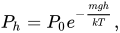
- يمثل P h الضغط عند الارتفاع h ،
- P 0 هو الضغط عند نقطة مرجعية 0 (عادةً ما تشير إلى مستوى سطح البحر)،
- m هي كتلة كل جزيء هواء،
- g هو تسارع الجاذبية الأرضية ،
- يمثل h الارتفاع من نقطة المرجع 0،
- k هو ثابت بولتزمان ،
- T هي درجة الحرارة بالكلفن.
لذلك، بدلاً من أن يكون الضغط دالة خطية للارتفاع كما قد يتوقع المرء من الصيغة الأبسط الواردة في قسم "الصيغة الأساسية"، فإنه يتم تمثيله بدقة أكبر كدالة أسية للارتفاع.
Note that in this simplification, the temperature is treated as constant, even though temperature also varies with height. However, the temperature variation within the lower layers of the atmosphere (troposphere, stratosphere) is only in the dozens of degrees, as opposed to their thermodynamic temperature, which is in the hundreds, so the temperature variation is reasonably small and is thus ignored. For smaller height differences, including those from top to bottom of even the tallest of buildings, (like the CN Tower) or for mountains of comparable size, the temperature variation will easily be within the single-digits. (See also lapse rate.)
An alternative derivation, shown by the Portland State Aerospace Society,[10] is used to give height as a function of pressure instead. This may seem counter-intuitive, as pressure results from height rather than vice versa, but such a formula can be useful in finding height based on pressure difference when one knows the latter and not the former. Different formulas are presented for different kinds of approximations; for comparison with the previous formula, the first referenced from the article will be the one applying the same constant-temperature approximation; in which case: where (with values used in the article)

- z is the elevation in meters,
- R is the specific gas constant = 287.053 J/(kg K)
- T is the absolute temperature in kelvins = 288.15 K at sea level,
- g is the acceleration due to gravity = 9.80665 m/s2 at sea level,
- P is the pressure at a given point at elevation z in Pascals, and
- P0 is pressure at the reference point = 101,325 Pa at sea level.
A more general formula derived in the same article accounts for a linear change in temperature as a function of height (lapse rate), and reduces to above when the temperature is constant: where
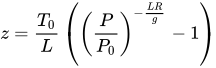
- L is the atmospheric lapse rate (change in temperature divided by distance) = −6.5×10⁻³ K/m, and
- T0 is the temperature at the same reference point for which P = P0
and the other quantities are the same as those above. This is the recommended formula to use.
See also
References
- ↑"The Barometric Formula".
- ↑ ستريتر، فيكتور ل. (1966). ميكانيكا الموائع ، الطبعة الرابعة، ص 28، ماكجرو هيل
- ↑ بيسانت، دبليو إتش (1900). أساسيات علم السوائل الساكنة . جورج بيل وأولاده . ص 11 – عبر أرشيف الإنترنت .
- ↑ رو، صوفي (25 سبتمبر 2012). ميكنة الفلسفة الطبيعية . سبرينغر ساينس آند بيزنس ميديا. ص 160. ISBN 978-9400743458يقدم ستيفن
برهانًا رياضيًا أصليًا لما يسمى بمفارقة التوازن الهيدروستاتيكي
- ↑ جليزبروك، ريتشارد (1916). الهيدروستاتيكا: كتاب تمهيدي، نظري وعملي . مطبعة جامعة كامبريدج . ص 42 – عبر أرشيف الإنترنت .
- ↑ جرينسليد الابن، توماس ب. "مفارقة التوازن الهيدروستاتيكي" . كلية كينيون .
- ↑ شرح على يوتيوب
- ↑ "نصف قطر الأرض" . يونيفرس توداي . 2 مارس 2009.
- ↑ "قانون نيوتن للجاذبية" . www.splung.com . تم الاطلاع عليه بتاريخ 23 يونيو 2023 .
- ↑ "اشتقاق سريع يربط الارتفاع بضغط الهواء" (ملف PDF) . مؤرشف من الأصل (ملف PDF) بتاريخ 28-09-2011 . تم الاطلاع عليه بتاريخ 30-11-2011 .
- ميرلينو، روبرت ل. (2003). "علم السكون - السوائل في حالة سكون" . تم الاسترجاع في 20-11-2014 .
روابط خارجية
 الوسائط المتعلقة بمفارقة التوازن الهيدروستاتيكي على ويكيميديا كومنز
- الضغط الجوي
- التوزيعات الرأسية