
كارلوس سوتومايور

كان كارلوس سوتومايور رومان (1911-1988) رسامًا تشيليًا ، ولد في لا سيرينا، تشيلي . ويُعتبر أحد أبرز رواد المدرسة التكعيبية في أمريكا الجنوبية .
السنوات الأولى
كان والده كارلوس سوتومايور كاسيريس مهندسًا مدنيًا يعمل في شركة السكك الحديدية التشيلية ( Empresa de los Ferrocarriles del Estado )، وهو متزوج من جوليا رومان موراليس. كان لديهم خمسة أطفال: كارلوس، خوليو (شاعر)، لوسيا، إينيس (مهندس زراعي) وإيلينا.
في سنوات مراهقته، التقى كارلوس سوتومايور بالرسامة والنحاتة لورا روديغ ، التي كانت قد عادت لتوها من أوروبا، وعمل معها، وأقام معرضاً مشتركاً مع بيدرو أولموس .
درس في المعهد الوطني في سانتياغو ، وفي عام ١٩٣١ التحق بكلية الهندسة المعمارية في جامعة تشيلي . إلا أنه في عام ١٩٣٢ اختار الدراسة في كلية الفنون الجميلة التابعة للجامعة نفسها. وكان من بين أساتذته خورخي كاباييرو، وهيرمان غازموري، وأوغوستو إيغيلوز.
عمل
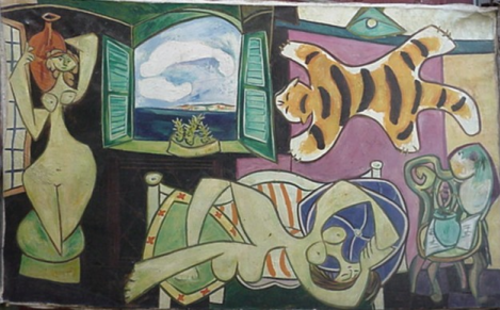
أُقيم أول معرض رسمي له في سبتمبر 1933 في مكتبة والتون، وهي مركز للفعاليات الثقافية. وقد رُعِيَ هذا الحدث وقُدِّمَ من قِبَل الشاعر فيسنتي هيدوبرو ، الذي كان كارلوس سوتومايور صديقًا حميمًا له.
في عام 1934 انضم سوتومايور إلى جروبو ديسيمبريستا، مع ماريا فالنسيا، وغابرييلا ريفانيديرا، وخايمي دفار، ووالدو باراغيز. هذه المجموعة من الفنانين التكعيبيين الجدد كان يقودها فيسنتي هويدوبرو. وبعد ذلك بعامين، تزوج كارلوس سوتومايور من فرانكا سيركا جوراك، زميلته الطالبة في كلية الفنون الجميلة.
في عام 1938 انضم إلى Grupo Rectángulo de Arte Moderno، بتشجيع من الفنانة فيرجارا جريز. عرض أعماله في Alianza de Intelectuales de Chili مع ماريا فالنسيا ووالدو باراغيز وهارولدو دونوسو.
في أغسطس 1944، عرض عشرين لوحة في قاعة وزارة التربية والتعليم. وتضمن الكتالوج مقالات وقصائد للشاعرين إدواردو أنجويتا وخوليو مولينا. وقد كتب الناقد أنطونيو روميرا مراجعة نقدية إيجابية للغاية في الصحافة.
في عام 1946، عرضت سوتومايور العديد من اللوحات الزيتية والرسومات في قاعة وزارة التربية والتعليم. وقد كتب الكاتب أندريس سابيلا مقالاً عن ذلك.
في ديسمبر 1952، عرض سوتومايور أعماله في Sala Pro Arte وفي عام 1953 شارك في Primer Salon de Primavera de la Casa de la Cultura de Nunoa، مع 50 فنانًا آخر: خوسيه بالميس ، وسيرجيو مونتيسينوس، وراؤول سانتيليس، وخوسيه فينتوريلي.
في عام 1955 بدأ العمل في شركة السكك الحديدية التشيلية ( EFE ) كرسام في قسم الطرق والأعمال.
In 1960 Sotomayor took part in La Segunda Feria de Artes Plasticas (Parque Forestal) organised by the Museo de Arte Contemporáneo. Sotomayor won second prize.
Sotomayor exhibited his works at the Exposicion de Pintura Chilena Nueva in March 1962, organised and sponsored by Empresa Esso Oil Co. Nemesio Antúnez and José Balmes also participated.
In November 1966 Sotomayor exhibited his oil paintings at the Sala del Instituto de Artes Plasticas de la Universidad de Chile.
His last exhibition while he was alive, took place in 1979 at the Galeria Eco, where there were 30 of his paintings, among them: The painter and his models, Rape 1 and Landscapes of Cartagena. The art critic José María Palacios praised Sotomayor’s works in the press.
In 1973 Sotomayor retired from the railway company and devoted himself entirely to his paintings until his death. In 1984 he travelled to Europe where he visited museums of modern art in Paris, London, Birmingham and Rome.
In 1988 he suffered a heart attack from which he did not recover and died on 17 April.
In the year 2004, an exhibition of his paintings was organized at the Cultural Corporation of Las Condes, so called "Carlos Sotomayor: A modern classic"
A Unique Figure in Chilean Painting (by J. Palacios)
A retired employee of the Chilean Railways, quiet, with a distant air, most people would not suspect that he is an artist, particularly a modern one. However, this unassuming artist inspired the critic Antonio Romera to write about him: 'Perhaps, in the entire history of Chilean painting, there isn't a clearer example of dedication to artistic creativity for its own sake.' And it would be difficult to find a more fitting observation.
Even as a teenager he displayed an innovative vision. At 14, he took part in a poster competition for the Spring Festival, encouraged by his father. An excellent draughtsman, with a line capable of expressing both the graceful and the vigorous in the classical tradition, Carlos Sotomayor could have worked entirely figuratively, an approach which would have brought him instant commercial success. With his mastery of line, he could also have diversified into printmaking, but his instinct was for painting. As a result, in 1934 he joined the Grupo Decembrista, a neocubist group led by the poet Vicente Huidobro, one of his most fervent admirers, who revealed his enthusiasm for Sotomayor's work in the magazine PRO published in the same year.
The writers of the avant-garde were the first to recognise Sotomayor's talent. E. Anguita, who won the 1988 Writer of the Year Award, Julio Molina and Guillermo Atías were among his greatest apologists, praising him as a painter who did not confine his work to the replication of reality, or to conventional romanticism. Supported by the solid foundation of his drawings, Sotomayor alters reality in order to render it more real, in the quest for more sensitive communication through highly personal, expressive forms. He is both violent and tender at the same time.
He remains an enigma, a solitary figure, praised by a few and still unknown to the majority. He doesn't win official accolades, nor do they hold any interest for him. Quiet, retiring, conversing only with his friends, the artist is not afraid of confronting his own solutions. Sensitive to current events, the initial figuration suddenly emerges in his work, but not as a final phase of his expression, only as the rebelliousness of a pure spirit. It is for this reason that, although efforts have been made to pigeonhole it, Sotomayor's work admits no labels. Picasso may be in the background, but it is because he admires in him, above all, his creative independence. The poet E. Anguita goes as far as saying that Sotomayor's painting is like the image of a "restless idea", a definition which the critic Romera elaborates on, underlying it as "a certain restlessness or agitation of the spirit.'.
External links
- Official site (Spanish)
- Art Site (Spanish)Archived 2008-02-23 at the Wayback Machine
- 1911 births
- 1988 deaths
- People from La Serena
- 20th-century Chilean painters
- Chilean male painters
- 20th-century Chilean male artists