
Conchoidal fracture

A conchoidal fracture is a break or fracture of a brittle material that does not follow any natural planes of separation. Mindat.org defines conchoidal fracture as follows: "a fracture with smooth, curved surfaces, typically slightly concave, showing concentric undulations resembling the lines of growth of a shell".[1] Materials that break in this way include quartz, chert, flint, quartzite, jasper, and other fine-grained or amorphous materials with a composition of pure silica, such as obsidian and window glass, as well as a few metals, such as solid gallium.
Crystalline materials such as quartz also exhibit conchoidal fractures when they lack a cleavage plane and do not break along a plane parallel to their crystalline faces. Hence, a conchoidal or uneven fracture is not a specific indication of the amorphous character of a mineral, or a material. Amorphous, cryptocrystalline, and crystalline materials can all present conchoidal fracture when they lack a preferential cleavage plane.
Conchoidal fractures can occur in various materials if they are properly percussed (struck). Cryptocrystalline silica, such as chert, or flint, with this material property were widely sought after, traded, and fashioned into sharp tools in the Stone Age.
Conchoidal fractures often result in a curved breakage surface that resembles the rippling, gradual curves of a mussel shell; the word "conchoid" is derived from the word for this animal (Ancient Greek: κογχοειδήςkonchoeidēs < κόγχηkonchē).[2][3] A swelling appears at the point of impact called the bulb of percussion. Shock waves emanating outwards from this point leave their mark on the stone as ripples. Other conchoidal features include small fissures emanating from the bulb of percussion.
يتم تعريفها على النقيض من الكسور متعددة الأوجه التي غالباً ما تُرى في البلورات الأحادية مثل رقائق أشباه الموصلات والأحجار الكريمة ، وعلى أسطح الكسور المرنة عالية الطاقة المرغوبة في معظم التطبيقات الهيكلية.
 كسر محاري في حجر الأوبسيديان
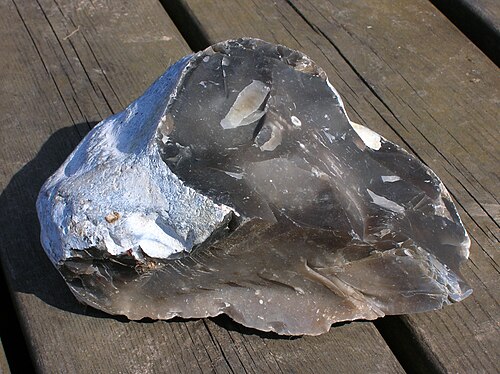 كسر محاري في الصوان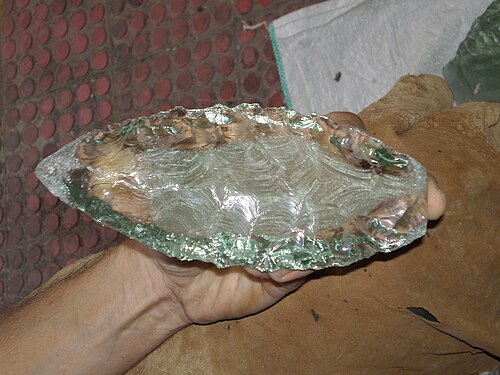
المجموعات الفرعية
توجد عدة تعريفات فرعية، على سبيل المثال على موقع الويب الخاص بـ Webmineral: [ 4 ]
- هش - محاري الشكل: كسر هش للغاية ينتج عنه شظايا صغيرة محارية الشكل
- هش - تحت المحاري: كسر هش مع شظايا تحت المحاري
- محاري الشكل - غير منتظم: كسر غير منتظم ينتج عنه شظايا صغيرة محارية الشكل
- محاري الشكل - غير منتظم: كسر غير منتظم ينتج عنه شظايا صغيرة محارية الشكل
- شبه محاري: كسور تتطور في المواد الهشة وتتميز بأسطح شبه منحنية
الأدوات الحجرية
في الأدوات الحجرية القديمة ، تُشكل الكسور المحارية أساسًا لتقنية تشكيل الصوان ، إذ أن شكل السطح المكسور لا يتحكم فيه سوى الإجهادات المُطبقة ، وليس أي اتجاه مُفضل للمادة. هذه الخاصية تجعل هذه الكسور مفيدة أيضًا في الهندسة، لأنها تُوفر سجلًا دائمًا لحالة الإجهاد وقت الكسر . ولأن الكسور المحارية لا تنتج إلا عن الصدمات الميكانيكية، وليس عن تشققات الصقيع مثلًا، فإنها تُعد طريقة مفيدة للتمييز بين الأدوات الحجرية القديمة والأحجار الطبيعية.
انظر أيضاً
مراجع
- ↑ كسر محاري الشكل على موقع Mindat.org
- ↑ "Conchoidal" . قاموس ميريام-ويبستر الإلكتروني . تم الاطلاع عليه بتاريخ 30-10-2010 .
- ↑ κογχοειδής ، κόγχη . ليدل، هنري جورج ؛ سكوت، روبرت ؛ معجم يوناني إنجليزي في مشروع بيرسيوس .
- ↑ صلابة المعادن والكسر في موقع Webmineral
روابط خارجية
 تعريف كلمة "conchoid" في قاموس ويكشنري
- الأدوات الحجرية
- تدهور المواد
- مفاهيم علم المعادن
- علم الصخور
- العصر الحجري