
Common greenshank
The common greenshank (Tringa nebularia) is a wader in the large family Scolopacidae, the typical waders. The genus name Tringa is the Neo-Latin name given to the green sandpiper by Aldrovandus in 1599 based on Ancient Greektrungas, a thrush-sized, white-rumped, tail-bobbing wading bird mentioned by Aristotle. The specificnebularia is from Latinnebula "mist". Like the Norwegian Skoddefoll, this refers to the greenshank's damp marshy habitat.[2]
Relatives
Its closest relative is the greater yellowlegs, which together with the spotted redshank form a close-knit group. Among them, these three species show all the basic leg and foot colours found in the shanks, demonstrating that this character is paraphyletic.[3] They are also the largest shanks apart from the willet, which is altogether more robustly built. The greater yellowlegs and the common greenshank share a coarse, dark, and fairly crisp breast pattern as well as much black on the shoulders and back in breeding plumage.
Distribution
This is a subarctic bird, breeding from northern Scotland eastwards across northern Europe and east across the Palearctic. It is a migratory species, wintering in Africa, the Indian subcontinent, and Australasia, usually on fresh water. It breeds on dry ground near marshy areas, laying about four eggs in a ground scrape. The common greenshank has been sighted as a vagrant outside of its normal range, including in Barbados, the United States, Canada, Bermuda, Puerto Rico, and Brazil.[1][4]
Description
Common greenshanks are brown in breeding plumage, and grey-brown in winter. When in water, they can appear very similar to marsh sandpipers but are distinguished by the shape of the lower bill which gives it an upturned appearance to the bill. They have long greenish legs and a long bill with a grey base. They show a white wedge on the back in flight. They are somewhat larger than the related common redshank. The usual call is a rapid series of three short fluty notes syllabilized as teu-teu-teu.
ومثل معظم الطيور الخواضة، تتغذى هذه الطيور على اللافقاريات الصغيرة ، ولكنها ستتناول أيضًا الأسماك الصغيرة والبرمائيات.
يُعدّ طائر الزقزاق الأخضر الشائع أحد الأنواع التي يشملها اتفاق حماية الطيور المائية المهاجرة الأفريقية الأوراسية (AEWA). وفي عام 2024، أُدرج طائر الزقزاق الأخضر الشائع (T. nebularia) ضمن قائمة الأنواع المهددة بالانقراض بموجب قانون حماية البيئة والتنوع البيولوجي الأسترالي. [ 5 ]
معرض
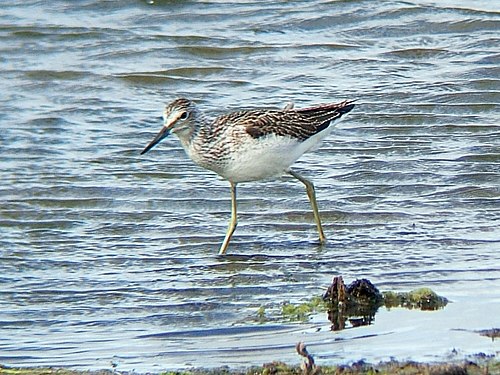 الأحداث
- مرسى مانلي، جنوب شرق كوينزلاند، أستراليا
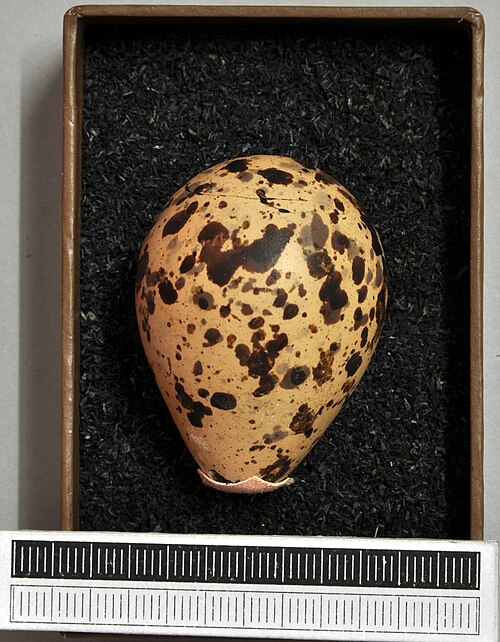 بيضة، مجموعة متحف فيسبادن
 إن طائر الزقزاق الأخضر الشائع أكبر بكثير من، على سبيل المثال، طائر الزقزاق الأحمر الشائع .
مراجع
- 1 2 منظمة بيردلايف الدولية (2016). " Tringa nebularia " . القائمة الحمراء للأنواع المهددة بالانقراض التابعة للاتحاد الدولي لحفظ الطبيعة . 2016 e.T22693220A86684205. doi : 10.2305/IUCN.UK.2016-3.RLTS.T22693220A86684205.en . تاريخ الاطلاع: 12 نوفمبر 2021 .
- ↑ جوبلينج، جيمس أ. (2010). قاموس هيلم لأسماء الطيور العلمية . لندن: كريستوفر هيلم. ص 266 ، 390. ISBN 978-1-4081-2501-4.
- ↑ بيريرا، إس إل؛ بيكر، إيه جيه (2005). "أدلة جينية متعددة على التطور المتوازي والاحتفاظ بالحالات المورفولوجية السلفية في طيور الشنقب (Charadriiformes: Scolopacidae)" . كوندور . 107 (3): 514-526 . doi : 10.1650 / 0010-5422(2005)107 [ 0514:MGEFPE ] 2.0.CO ; 2. S2CID 86221767 .
- ↑ "ML417021971 - طائر الزقزاق الأخضر الشائع - مكتبة ماكولاي" . macaulaylibrary.org . 2022-02-12 . تم الاطلاع عليه بتاريخ 2025-03-28 .
- ↑ "Tringa nebularia — طائر الشنقب الأخضر الشائع" . قاعدة بيانات ملفات تعريف الأنواع والتهديدات . وزارة التغير المناخي والطاقة والبيئة والمياه الأسترالية. 5 يناير 2024. تاريخ الاسترجاع: 6 مارس 2024 .
روابط خارجية
- نص عن أنواع طائر الشنقب الأخضر (الشائع) في أطلس طيور جنوب أفريقيا
- الشيخوخة والجنس (ملف PDF؛ 1.2 ميجابايت) بقلم خافيير بلاسكو-زوميتا وجيرد-مايكل هاينز
- نشرة معلومات عن أنواع الطيور من منظمة BirdLife لنبات Tringa nebularia
- "سديم ترينجا" . افيباس .
- "وسائل الإعلام الخاصة بطائر الشنقب الأخضر الشائع" . مجموعة طيور الإنترنت .
- معرض صور طائر الشنقب الأخضر الشائع في مركز VIREO (جامعة دريكسل)
- خريطة تفاعلية لنطاق انتشار نبات ترينجا نيبولاريا في القائمة الحمراء للاتحاد الدولي لحفظ الطبيعة
- تسجيلات صوتية لطائر الشنقب الأخضر الشائع على موقع Xeno-canto .
- صورة طائر ترينجا نيبولاريا في دليل الطيور الميداني: طيور العالم على موقع فليكر
- الأنواع الأقل تهديداً في القائمة الحمراء للاتحاد الدولي لحفظ الطبيعة
- ترينغا
- طيور الدول الاسكندنافية
- طيور روسيا
- طيور أفريقيا
- الطيور الموصوفة في عام 1767
- الأصناف التي أطلق عليها يوهان إرنست غونيروس