
Fukuivenator
Fukuivenator ("hunter of Fukui Prefecture") is an extinct genus of maniraptorantheropoddinosaur from the Early CretaceousKitadani Formation of Japan.
Discovery and naming

The type speciesFukuivenator paradoxus was named and described in 2016 by Yoichi Azuma, Xu Xing, Masateru Shibata, Soichiro Kawabe, Kazunori Miyata and Takuya Imai. The generic name combines a reference to the Fukui prefecture with Latinvenator, "hunter". The specific name refers to the paradoxical combination of traits shown by the species.
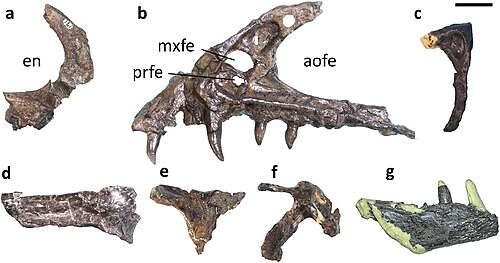
The rocks in which the skeleton of Fukuivenator, holotypeFPDM-V8461, was found in August 2007 belong to the Kitadani Formation, which is probably of Barremian or Aptian age. Radiometric dating of nearby rock units has given this formation an estimated age of somewhere between 127 and 115 million years old. The holotype consists of a partial skeleton with skull. The skeleton of F. paradoxus is currently the most complete non-avian dinosaur fossil found in Japan. The remains, including about 160 bones and bone fragments, were not found in articulation and recovered from an area of 50 by 50 centimetres (20 in × 20 in).[1]
Description
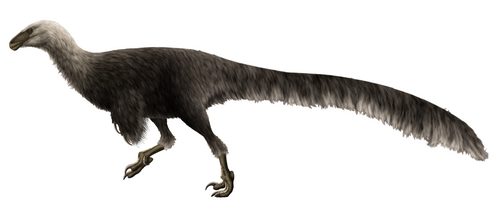
Fukuivenator had an estimated length of 2.45 metres (8.0 ft) and an estimated weight of 25 kilograms (55 lb). Distinctive traits include spatulate teeth in the front praemaxillae, pointed, recurved and unserrated teeth in the maxillae and a long neck with elongated neck vertebrae.[1]
Classification

يُظهر تشريح فوكويفيناتور مزيجًا فريدًا من السمات البدائية والمتقدمة للسيلوروصورات . وقد وجد تحليلٌ تطوريٌّ أجراه فريق البحث الذي وصف فوكويفيناتور أنه عضوٌ بدائيٌّ في مجموعة مانيرابتوريفورميس ، في موقعٍ غير مُحدَّد، يرتبط ارتباطًا وثيقًا بالأورنيثوميموصورات ، والمانيرابتورانات ، والأورنيثوليستس . وقد فُسِّرت العديد من أوجه التشابه مع الدروميوصورات على أنها حالةٌ من التطور التقاربي . [ 1 ] وحددت دراسةٌ أُجريت عام 2021 أنه عضوٌ قاعديٌّ في الثيريزينوصورات ، كما هو موضح أدناه: [ 2 ]
تم دعم نوع آخر غامض من المانيرابتوران، وهو Migmanychion ، باعتباره أقرب تصنيف إلى Fukuivenator بناءً على التحليلات الوراثية: [ 3 ]




علم الأحياء القديمة

نظام عذائي
بسبب رقبته الطويلة وأسنانه غير المسننة ذات التفرعات المختلفة، والتي ربما كانت أطرافها الخارجية مسطحة، اقترح المؤلفون الذين وصفوه أن فوكويفيناتور لم يعد حيوانًا لاحمًا خالصًا، بل تكيف مع نظام غذائي نباتي أو على الأقل نظام غذائي متنوع . [ 1 ]
انظر أيضاً
مراجع
- ١ ٢ ٣ ٤ أزوما، ي.، شو، إكس.، شيباتا، م.، كاوابي، س.، مياتا، ك.، وإيماي، ت. ٢٠١٦. "ثيروبود غريب من العصر الطباشيري المبكر في اليابان يُسلط الضوء على التطور الفسيفسائي بين السيلوروصورات". التقارير العلمية ، ٦ (٢٠٤٧٨). doi : 10.1038/srep20478
- ↑ هاتوري، س.؛ كاوابي، س.؛ إيماي، ت.؛ شيباتا، م.؛ مياتا، ك.؛ شو، ش.؛ أزوما، ي. (2021). "علم عظام فوكويرابتور بارادوكسوس : ديناصور مانيرابتوراني غريب من العصر الطباشيري المبكر في فوكوي، اليابان" (ملف PDF) . مذكرات متحف ديناصورات محافظة فوكوي . 20 : 1-82 .
- ↑ وانغ، شوري؛ كاو، أندريا؛ وانغ، تشنغدونغ؛ يو، كايفنغ؛ وو، وينهاو؛ وانغ، يانغ؛ ليو، ييتشوان (5 يونيو 2023). "ديناصور ثيروبود جديد من تكوين لونغجيانغ الطباشيري السفلي في منغوليا الداخلية (الصين)" . أبحاث العصر الطباشيري . 151 105605. doi : 10.1016/j.cretres.2023.105605 . ISSN 0195-6671 .
- مانيرابتورا
- أجناس الديناصورات
- ديناصورات العصر الأبتي
- التصنيفات التي سماها شو شينغ
- التصنيفات الأحفورية الموصوفة في عام 2016
- ديناصورات اليابان