
Marathon tumuli
38°07′04″N23°58′42″E / 38.11791°N 23.97833°E / 38.11791; 23.97833
There are two tumuli at Marathon, Greece. One is a burial mound (Greek τύμβος, tymbos, tomb), or "Soros" that houses the ashes of 192 Athenians who fell during the Battle of Marathon in 490 BC. The other houses the inhumed bodies of the Plataeans who fell during that same battle. The burial mound dominates the plain of Marathon, where the eponymous battle took place, along with the tumulus of the Plataeans, and a victory column erected by the Athenians to commemorate their victory over Darius' Persian expedition. The tumulus is encompassed in a park today.
Battle of Marathon
The Battle of Marathon took place on September 12, or possibly August 12, 490 BCE at the plain of Marathon. Athens and its ally Plataea, some 11,000 hoplites in total, attacked a Persian expeditionary force of some 25,000 infantry and 1,000 cavalry, with 100,000 armed sailors acting as reserves.[1] The Athenian forces attacked down a hillside onto the coastal plain, and using the momentum of their tightly packed, heavily armored formation routed the less disciplined Persian flanks, which were unused to fighting heavily armored troops. The subsequent rout left the Persian center exposed and as a result the Persians suffered high casualties as their command structure fell into disarray and as soldiers scrambled onto their ships. Herodotus claims that the Greeks counted 6,400 dead Persians on the field, but could make no account for those who fled into the swamps off to the north of the battlefield.[1] Herodotus states that the Athenians lost 192 men in the battle and the Plataeans lost 11.
Monuments
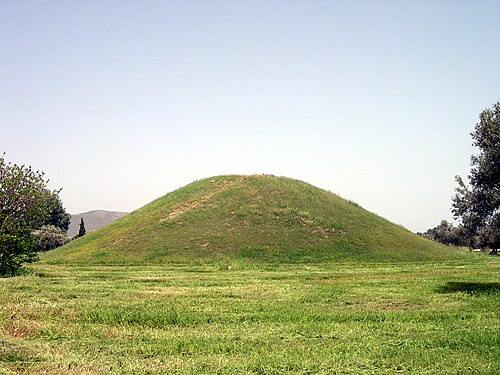
توجد ثلاثة آثار في سهل ماراثون: التل الأثيني، والتل البلاطي، وعمود النصر الذي أقامه الأثينيون. يتميز التلان بشكلهما شبه الكروي، حيث يُدفن الموتى داخل الحفرة الناتجة عن حفر التراب الذي يُكدس فوقهما. إلا أن التلال تُعدّ غير مألوفة، إذ لم تكن ممارسات الدفن الضخمة هذه شائعة في وسط اليونان منذ القرن السابع قبل الميلاد. اعتاد الأثينيون دفن قتلاهم في مقبرة كيراميكوس ، مع وضع مسلة أو مزهرية لتحديد موقع المتوفى. مع ذلك، يرى بعض الباحثين أن بناء التلال كان محاولة مقصودة من الأثينيين وحلفائهم لاستحضار هوميروس . يستند هذا التصور إلى أوجه التشابه بين بنية التلال وطريقة الدفن المستخدمة فيها، ووصف طقوس الدفن التي استخدمها أبطالهم الأسطوريون في الإلياذة . [ 2 ]

يبلغ ارتفاع التل الأثيني حوالي 12 مترًا ، وقد نُقِّب عنه عام 1884 على يد ديميتريوس فيليوس، ثم مرة أخرى عامي 1890 و1891 على يد فاليريوس ستايس . أما التل البلاتائي فهو أصغر حجمًا، إذ يبلغ ارتفاعه حوالي 3 أمتار ، وقد تم اكتشافه والتنقيب عنه عام 1970 على يد البروفيسور ماريناتوس، الذي كان آنذاك المفتش العام للآثار اليونانية. عُثر في التل الأثيني على طبقة سميكة من الرماد والعظام المتفحمة، بينما عُثر في التل البلاتائي على جثث متعددة مدفونة. [ 3 ] انهار عمود النصر لاحقًا، واستُبدل بنسخة حديثة تُطابق الأصل في الارتفاع والكتلة.
مراجع
- 1 2 ووترفيلد، روبن (1998). هيرودوت: التواريخ .
- ↑ ويتلي، جيمس (1994). "الآثار التي كانت قائمة قبل ماراثون: عبادة المقابر وعبادة الأبطال في أتيكا القديمة". المجلة الأمريكية لعلم الآثار . 98 (2). doi : 10.2307/506636 .
- ↑ "العثور على عظام محاربين يونانيين في موقع معركة ماراثون" . صحيفة نيويورك تايمز . 3 مايو 1970.
- التلال
- إحياء ذكرى معركة ماراثون
- المعالم والمنشآت الجنائزية في اليونان
- المواقع الأثرية اليونانية القديمة في اليونان