
Sam Rice
Edgar Charles "Sam" Rice (February 20, 1890 – October 13, 1974) was an American pitcher and outfielder in Major League Baseball (MLB). Although Rice made his debut as a relief pitcher, he is best known as an outfielder. Playing for the Washington Senators from 1915 until 1933, he was regularly among the American League (AL) leaders in runs scored, hits, stolen bases and batting average. He led the Senators to three postseasons and a World Series championship in 1924. He batted left-handed but threw right-handed. Rice played his final year, 1934, for the Cleveland Indians. He was elected to the Baseball Hall of Fame in 1963.
Rice was best known for making a controversial catch in the 1925 World Series which carried him over the fence and into the stands. While he was alive, Rice maintained a sense of mystery around the catch, which had been ruled an out. He wrote a letter that was only opened after his 1974 death; it claimed that he had maintained possession of the ball the entire time. He collected nearly 3,000 hits in his career, with his 2,889 as a Senator being the most in franchise history.
Early life
Rice was the first of six children born to Charles Rice and Louisa Newmyer. Charles and Louisa married about two months after his birth. He grew up in various towns near Morocco, Indiana, on the Indiana-Illinois border, and considered Morocco his hometown.[1] He was known as "Eddie" during his childhood. In 1908, Rice married 16-year-old Beulah Stam.[2] They lived in Watseka, Illinois, where Rice ran the family farm, worked at several jobs in the area, and attended tryouts for various professional baseball teams.[3]
By April 1912, Rice and his wife had two children, aged 18 months and three years. While Rice's wife cared for the children, Rice traveled to Galesburg, Illinois, to play for a spot on a minor league baseball team, the Galesburg Pavers of the Central Association.[4] Rice spent about a week with the team, appearing in three exhibition games. In an appearance on April 21, Rice entered the game as a relief pitcher and finished the last three innings of a Pavers victory, giving up one run in a game marked by forceful winds.[5]
That same day, Rice's wife took their children on a day trip to the homestead of Rice's parents in Morocco, about 20 miles from Watseka. A storm arose and a tornado swept across the homestead, destroying the house and most of the outbuildings. The tornado killed Rice's wife, his two children, his mother, his two younger sisters and a farmhand. Rice's father survived for another week before also succumbing to his injuries. Rice had to attend two funerals: one for his parents and sisters, and a second for his wife and children.[6]
Rice played for the Muscatine Muskies of the Central Association in 1912, hitting .194 in 18 games. He did not play in 1913.[7]
Early baseball career
Perhaps wracked with grief, Rice spent the next year wandering the area and working at several jobs. In 1913, he joined the United States Navy and served on the USS New Hampshire, a 16,000-ton battleship that was large enough to field a baseball team. Rice played on that team during one season.[8] He was on the ship when it took part in the United States occupation of Veracruz, Mexico.[9]
In 1914, Rice joined the Petersburg Goobers of the Virginia League as a pitcher. He compiled a 9–2 record with a 1.54 earned run average (ERA) that year, then returned in 1915, earning an 11–12 record with a 1.82 ERA.[10] Petersburg team owner "Doc" Leigh owed a $300 debt to Clark Griffith, who owned the major-league Washington Senators at the time, and he offered Rice's contract to Griffith in payment of the debt. Leigh is credited with two acts which influenced Rice's subsequent career: he changed the player's name from "Edgar" to "Sam", and he convinced the Senators to let Rice play in the outfield instead of pitching.
Major league career
First MLB seasons
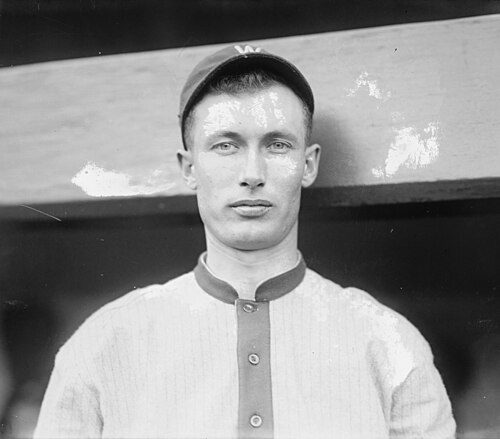
لعب رايس 19 موسمًا من أصل 20 مع فريق واشنطن سيناتورز. شارك في 62 مباراة فقط في دوري البيسبول الرئيسي خلال عامي 1915 و1916. لعب 155 مباراة في عام 1917، مسجلاً معدل ضربات بلغ 0.302 في 656 ظهورًا له في الملعب. [ 11 ] استُدعي رايس للخدمة العسكرية في عام 1918. [ 12 ] انضم إلى فوج المدفعية الساحلية 68، وتمركز في فورت تيري بنيويورك. شارك مع فريق سيناتورز في بضع مباريات خلال فترتي إجازة. [ 13 ] بحلول سبتمبر، أُرسلت كتيبته إلى فرنسا، حيث استعدوا للقتال، لكن لم يشاركوا في أي معركة قبل توقيع هدنة 11 نوفمبر 1918. [ 14 ]
في عام 1919، شارك رايس في 141 مباراة وحقق معدل ضربات بلغ 0.321، وهو واحد من 13 موسمًا حقق فيها معدل ضربات لا يقل عن 0.300. وفي عام 1920، حقق معدل ضربات بلغ 0.338، وسجل 63 قاعدة مسروقة ، وهو أعلى رقم في مسيرته وتصدر الدوري في هذا الجانب، كما تم القبض عليه 30 مرة أثناء محاولته سرقة القواعد، وهو أيضًا أعلى رقم في الدوري. وفي عام 1921، سجل 13 ضربة ثلاثية ، وهو أول موسم من عشرة مواسم متتالية حقق فيها أكثر من 10 ضربات ثلاثية. وفي عام 1924، حقق رايس أعلى رقم في الدوري بـ 216 ضربة ، [ 15 ] وهو ما تُوّج بفوزه مع فريق سيناتورز ببطولة العالم عام 1924 في سلسلة مثيرة من 7 مباريات ضد فريق نيويورك جاينتس. [ 16 ] وعلى الرغم من أنه لم يكن متصدرًا للدوري في عام 1925، إلا أن رايس سجل أعلى رقم في مسيرته بـ 227 ضربة، و87 نقطة، ومعدل ضربات بلغ 0.350، وهي أعلى أرقامه في مواسمه الكاملة.
المأزق
كانت أبرز لحظات مسيرة رايس في الدفاع. ففي المباراة الثالثة من سلسلة بطولة العالم عام ١٩٢٥ ، كان فريق السيناتورز متقدمًا على فريق بيتسبرغ بايرتس بنتيجة ٤-٣. في منتصف الشوط الثامن، نُقل رايس من مركز الملعب إلى الملعب الأيمن. ومع خروج لاعبين في بداية الشوط، [ ١٧ ] سدد إيرل سميث، لاعب فريق بايرتس ، كرةً قويةً إلى منتصف الملعب الأيمن. ركض رايس خلف الكرة وبدا أنه أمسكها عند السياج، مانعًا سميث من تسجيل ضربة هوم رن كانت ستعادل النتيجة. بعد الإمساك بالكرة، سقط رايس فوق السياج ودخل المدرجات، واختفى عن الأنظار. عندما عاد رايس، كانت الكرة في قفازه، فأعلن الحكم خروج سميث. كان تفسير الحكم أن اللعبة انتهت بمجرد الإمساك بالكرة، لذا لم يكن مهمًا أين انتهى المطاف برايس. خسر فريقه السلسلة في سبع مباريات.
Controversy persisted over whether Rice had actually caught the ball and whether he had kept possession of it. Some Pittsburgh fans sent signed and notarized documents claiming that they saw a fan pick up the ball and put it back in Rice's glove. Rice himself would not tell, answering only, "The umpire said I caught it." Magazines offered to pay him for the story, but Rice turned them down, saying, "I don't need the money. The mystery is more fun." He would not even tell his wife or his daughter. The controversy became so great that Rice wrote a letter when he was selected to the Hall of Fame, to be opened upon his death.[18] After Rice's death, a Hall of Fame official located the letter describing his World Series play and delivered it to Rice's family. It was opened and read after his funeral. In an interview, his wife Mary said, "He did catch it. You don't have to worry about that anymore."[18] The letter concluded by stating, "At no time did I lose possession of the ball."[19]
Later career
Leading the league in hits again in 1926, Rice finished fourth in the Most Valuable Player Award voting.[11] His batting average dipped to .297 in 1927, but he hit .328, .323 and .349 from, respectively, the 1928 through 1930 seasons.[11] Though Rice hit .310 in 1931 across 120 games, Dave Harris got significant playing time when the team was facing lefthanded pitchers. The Senators also began to explore younger players for their outfield spots.[11][20]
The Senators held "Sam Rice Day" in late 1932, where the team presented him with several gifts, including a check for more than $2,200 and a new Studebaker automobile. He played only 106 games that year, often appearing as a pinch hitter. In 1933, the team returned to the World Series. Though the team lost, Rice batted once in the second game, picking up a pinch hit single.[21] The Senators released him after the season.[22]
He played in 1934 with the Cleveland Indians, then retired at the age of 44. Cleveland manager Walter Johnson talked to Rice about returning in 1935, but Rice refused.[22] Rice retired with a .322 career average. He stood erect at the plate and used quick wrists to slash pitches to all fields. He never swung at the first pitch and seldom struck out, once completing a 616-at-bat season (1929) with nine strikeouts. Rice struck out only 275 times in 9,269 at-bats, or once every 33.71 at-bats, making him the 11th all-time most difficult MLB player to strike out.[23] He recorded six 200-hit seasons in the major leagues. As the ultimate contact man with the picture-perfect swing, Rice was never a home run threat, but his speed often turned singles into doubles, and his 1920 stolen base total of 63 earned him the timely nickname "Man o' War".
With 2,987 hits, Rice has the most hits of any player not to reach 3,000. Rice later said, "The truth of the matter is I did not even know how many hits I had. A couple of years after I quit, [Senators owner] Clark Griffith told me about it, and asked me if I'd care to have a comeback with the Senators and pick up those 13 hits. But I was out of shape, and didn't want to go through all that would have been necessary to make the effort. Nowadays, with radio and television announcers spouting records every time a player comes to bat, I would have known about my hits and probably would have stayed to make 3,000 of them."[24] In postseason play, Rice produced 19 hits and a .302 batting average.[15]
Career statistics
See:Career Statistics for a complete explanation.
| G | AB | H | 2B | 3B | HR | R | RBI | BB | SO | AVG | OBP | SLG | FP |
|---|---|---|---|---|---|---|---|---|---|---|---|---|---|
| 2,404 | 9,269 | 2,987 | 498 | 184 | 34 | 1,514 | 1,078 | 708 | 275 | .322 | .374 | .427 | .965 |
Rice accumulated 7 five-hit games and 52 four-hit games in his career.[26] In the years that Rice played from 1915 to 1934, no major league player had more hits than Rice did.[27]
Later life
By the 1940s, Rice had become a poultry farmer. His farm was located in Olney, Maryland next to that of Harold L. Ickes, the United States Secretary of the Interior. Rice and Ickes employed several workers of Japanese descent who were displaced from the West Coast by order of the U.S. Army after the outbreak of World War II.[28]
Rice was inducted into the Baseball Hall of Fame in 1963. He and three other players – John Clarkson, Elmer Flick and Eppa Rixey – were elected unanimously that year by the Hall of Fame's Veterans Committee, which considered players who had been inactive for 20 or more years. Rice said that he was glad to be inducted and said that he thought he would probably be elected if he survived long enough.[29]
Rice remarried twice, first to Edith and at age 69 to Mary Kendall Adams. Mary had two daughters by a prior marriage, Margaret and Christine.[30] In 1965, Rice and his family were interviewed in advance of a program to honor his career. The interviewer asked Rice about the tornado, and as he told of the storm and its destruction, his wife and children learned for the first time of the existence of his previous family.[31]
Rice made one of his last public appearances at the Baseball Hall of Fame induction ceremonies honoring Whitey Ford and Mickey Mantle in August 1974. He died of cancer that year on October 13.[18] He was buried in Woodside Cemetery in Brinklow, Maryland.
See also
- List of Major League Baseball hit records
- List of Major League Baseball career hits leaders
- List of Major League Baseball career doubles leaders
- List of Major League Baseball career triples leaders
- List of Major League Baseball career runs scored leaders
- List of Major League Baseball career runs batted in leaders
- List of Major League Baseball career stolen bases leaders
- List of Major League Baseball career total bases leaders
- List of Major League Baseball annual stolen base leaders
- List of Major League Baseball annual triples leaders
Notes
- ↑Carroll, p. 9.
- ↑Carroll, pp. 9-10.
- ↑Paul Niemann, Red, White & True Mysteries, Tooele Transcript-Bulletin, 10 November 2011
- ↑Carroll, p. 11.
- ↑Carroll, pp. 11-12.
- ↑Carroll, pp. 12-15.
- ↑"Sam Rice Minor Leagues Statistics & History".
- ↑Red, White & True
- ↑"Sam Rice Biography at SABR". sabr.org. Retrieved April 22, 2024.
- ↑"Sam Rice Minor League Statistics & History". Baseball-Reference.com. Retrieved December 22, 2014.
- 1 2 3 4 "إحصائيات وتاريخ سام رايس" . Baseball-Reference.com . تم الاطلاع عليه بتاريخ 21 ديسمبر 2014 .
- ↑ كارول، ص 40.
- ↑ كارول، الصفحات 43-44.
- ↑ كارول، ص 47.
- 1 2 "إحصائيات سام رايس" .
- ↑ "سلسلة العالم 1924" .
- ↑ "المباراة الثالثة من سلسلة بطولة العالم لعام 1925، فريق بيتسبرغ بايرتس ضد فريق واشنطن سيناتورز، 10 أكتوبر 1925" .
- 1 2 3 "وفاة سام رايس، عضو قاعة مشاهير البيسبول، عن عمر يناهز 84 عامًا" . صحيفة بانجور ديلي نيوز . 15 أكتوبر 1974. تاريخ الاطلاع: 21 ديسمبر 2014 .
- ↑ «رايس يدّعي أنه لم يفقد الكرة قط» . صحيفة إلينسبورغ ديلي ريكورد . 5 نوفمبر 1974. تم الاطلاع عليه بتاريخ 21 ديسمبر 2014 .
- ↑ فوسبرغ، تيد (17 أغسطس 1931). "جونسون يقود الإشادة بنادي أثليتكس العظيم" . صحيفة ساراسوتا هيرالد تريبيون . تم الاطلاع عليه بتاريخ 22 ديسمبر 2014 .
- ↑ "المباراة الثانية من سلسلة بطولة العالم لعام 1933، واشنطن سيناتورز ضد نيويورك جاينتس، 4 أكتوبر 1933" .
- 1 2 فليتز، ديفيد ل. (3 أبريل 2007). المزيد من الأشباح في المعرض: ستة عشر فنانًا عظيمًا آخرين غير معروفين في كوبرستاون . ماكفارلاند. ص 87. ISBN 978-0-7864-8062-3تم الاطلاع عليه بتاريخ 21 ديسمبر 2014 .
- ↑ "تصنيفات الضربات لكل ضربة ضائعة على مر التاريخ من موقع Baseball Reference" . baseball-reference.com . تم الاطلاع عليه بتاريخ 22 أبريل 2024 .
- ↑ نادي الـ 3000 ضربة . قاعة مشاهير البيسبول . تم الاطلاع عليه بتاريخ 21 ديسمبر 2014.
- ↑ إحصائيات سام رايس على موقع baseball-almanac.com
- ↑ "أفضل أداء لسام رايس على موقع ريتروشيت" . retrosheet.org . تم الاطلاع عليه بتاريخ 22 أبريل 2024 .
- ↑ "للموسم المجمع، من عام 1915 إلى عام 1934، في الموسم العادي، مرتبة تنازليًا حسب عدد مرات النجاح" . Stathead . تم الاسترجاع في 16 يوليو 2025 .
- ↑ إيدز، جين (31 يناير 1945). "200 أمريكي من أصل ياباني يعملون في وظائف حكومية مهمة" . صحيفة بالم بيتش بوست . تم الاطلاع عليه في 21 ديسمبر 2014 .
- ↑ "ريكسي وسام رايس في قاعة مشاهير البيسبول" . بيتسبرغ بوست غازيت . 28 يناير 1963. تم الاطلاع عليه في 21 ديسمبر 2014 .
- ↑ مجلة سبورتس إليستريتد ، 23 أغسطس 1993، رسائل - مارغريت آدامز روبنسون.
- ↑ «هناك شيء واحد لا يمكن لأحد أن ينكره بشأن إدغار "سام" رايس: لقد كان بارعًا في حفظ الأسرار». أحمر، أبيض، وحقيقي
مراجع
- كارول، جيف (2007). سام رايس: سيرة ذاتية لعضو قاعة مشاهير فريق واشنطن سيناتورز . رقم ISBN 0786431199مكفارلاند.
روابط خارجية
- سام رايس في قاعة مشاهير البيسبول
- إحصائيات المسيرة المهنية من موقع Baseball Reference · Baseball Reference (الفرق الصغيرة) · Retrosheet · Baseball Almanac
- سام رايس في مشروع سيرة البيسبول التابع لجمعية أبحاث البيسبول الأمريكية (SABR)
- سام رايس في موقع Find a Grave
- مواليد عام 1890
- وفيات عام 1974
- لاعبو البيسبول من ولاية إنديانا
- أعضاء قاعة مشاهير البيسبول الوطنية
- لاعبو فريق واشنطن سيناتورز (1901-1960)
- الرياضيون الأمريكيون في القرن العشرين
- لاعبو فريق كليفلاند إنديانز
- أبطال الدوري الأمريكي في سرقة القواعد
- لاعبو مركز الجناح الأيمن في دوري البيسبول الرئيسي
- لاعبو موسكاتين والوبرز
- لاعبو فريق سانت بطرسبرغ غوبرز
- سكان مقاطعة نيوتن، إنديانا
- سكان واتسيكا، إلينوي
- الوفيات الناجمة عن السرطان في ولاية ماريلاند
- بحارة البحرية الأمريكية