
سينغاكو-جي
معبد سينغاكو-جي (泉岳寺) هو معبد بوذي ينتمي إلى مدرسة سوتو من الزن الياباني، ويقع في حي تاكاناوا في ميناتو-كو ، بالقرب من محطتي سينغاكو-جي وشيناغاوا في طوكيو ، اليابان. كان أحد المعابد الثلاثة الرئيسية لمدرسة سوتو في إيدو خلال فترة حكم شوغونية توكوغاوا ، واكتسب شهرة واسعة لارتباطه بحادثة أكو التي تورط فيها سبعة وأربعون رونين في القرن الثامن عشر.
تاريخ
تأسس معبد سينغاكو-جي ككنيسة صغيرة على يد الشوغون المؤسس توكوغاوا إياسو عام 1612، وكان موقعه الأصلي في سوتوساكورا، بالقرب من كاسوميغاسيكي الحالية . بعد أن دُمر في حريق كانئي عام 1641، أمر الشوغون الثالث توكوغاوا إيميتسو عشائر الدايميو الخمس : موري ، وأسانو ، وكوتسوكي ، ونيوا ، وميزوتاني، بإعادة بناء المعبد في موقعه الحالي في تاكاناوا، ولكن على نطاق أوسع بكثير.
As this temple became the Edo bodaiji for the Asano clan, after the seppukuAsano Takumi-no-Kami Naganori for having broken protocol and drawing a sword in the Edo Castle, his funeral and tomb were located here. In 1702, the forty-seven Rōnin led by Ōishi Kuranosuke avenged his death and assassinated Kira Kōzuke-no-suke Yoshinaka. After parading Kira's severed head through Edo, they washed it at a well at the temple and presented it on the altar in front of Asano's tomb. They then surrendered to the authorities and were subsequently ordered by the Shōgun to commit seppuku. Their tombs were built at Sengaku-ji next to that of their master. This story became famous through the Kabuki epic Chūshingura and their graves became a popular site of pilgrimage. The graves of Asano Naganori and of the "47 Rōnin" were designated a National Historic Site in 1922.[1] Each year on 14 December, the temple holds a festival commemorating the 47 Rōnin. The temple maintains a museum displaying the personal belongings of the 47 Rōnin and displays on the events of the Akō incident.
The temple also has the graves of Asano Naganori's widow, Yozen-in (1674-1714) and his younger Asano Nagahiro (1670-1734) who was allowed by the Shogunate to re-establish the Asano clan as a hatamoto. With regards to the graves of the "47 Rōnin", there are actually 48 graves, as the grave of Kayano Shigezane (also known as "Sanpei") is included in their number. Kayano was one of the Asano ronin, but committed suicide before the vendetta took place.
Gallery
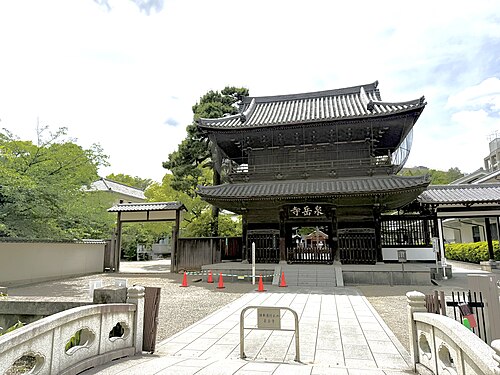 Exterior view of the main gate
 Main gate (seen from the inside)
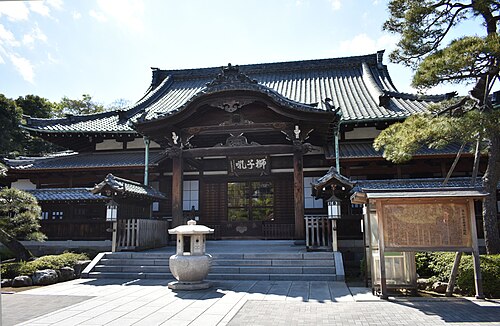 Main Temple Hall
 Grave of Asano Naganori
 47 rōnin graves
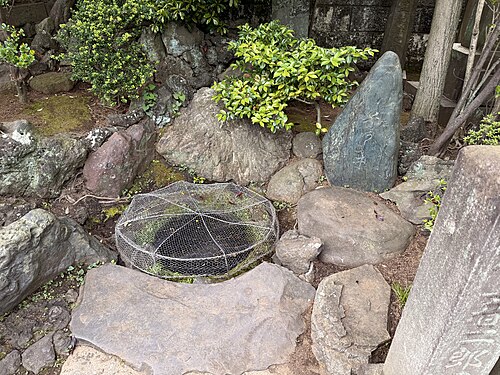 Well where Kira's head was washed by the 47 Ronin before presenting it to Lord Asano's grave
 Museum
 Festival
References
- ↑"浅野長矩墓および赤穂義士墓" (in Japanese). Agency for Cultural Affairs.
External links
 Media related to Sengakuji at Wikimedia Commons
- Sengaku-ji - homepage(in Japanese)
- National Diet Library: photograph of Sengaku-ji (1900)
- Sōtō school temples
- Buildings and structures in Minato, Tokyo
- Buddhist temples in Tokyo
- Historic Sites of Japan
- 1612 establishments in Japan