
Stan Frankel
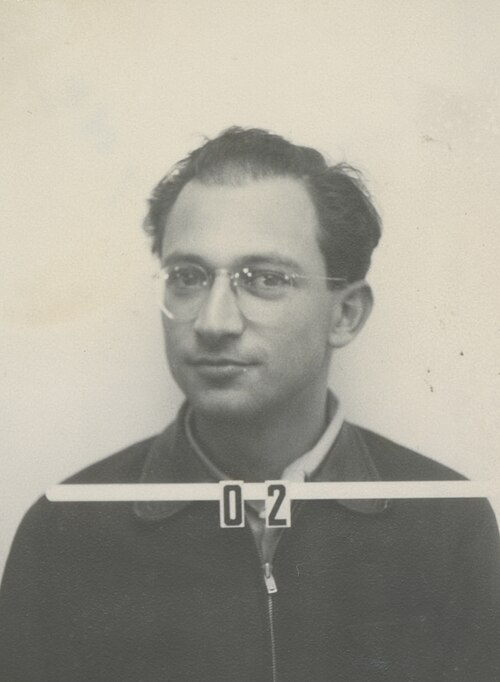
Stanley Phillips Frankel (1919 – May 1978) was an American computer scientist. He worked in the Manhattan Project and developed various computers as a consultant.
Early life
He was born in Los Angeles, attended graduate school at the University of Rochester, received his PhD in physics from the University of California, Berkeley,[1] and began his career as a post-doctoral student under J. Robert Oppenheimer at University of California, Berkeley in 1942.
Career
Frankel helped develop computational techniques used in the nuclear research taking place at the time, notably making some of the early calculations relating to the diffusion of neutrons in a critical assembly of uranium with Eldred Nelson.[2] He joined the T (Theoretical) Division of the Manhattan Project at Los Alamos in 1943. His wife Mary Frankel was also hired to work as a human computer in the T Division.[3] While at Los Alamos, Frankel and Nelson organized a group of scientists' wives, including Mary, to perform some of the repetitive calculations using Marchant and Friden desk calculators to divide the massive calculations required for the project.[2] This became Group T-5 under New York University mathematician Donald Flanders when he arrived in the late summer of 1943.

Mathematician Dana Mitchell noticed that the Marchant calculators broke under heavy use and persuaded Frankel and Nelson to order IBM 601punched card machines.[4][2] This experience led to Frankel's interest in the then-dawning field of digital computers. In August 1945, Frankel and Nick Metropolis traveled to the Moore School of Engineering in Pennsylvania to learn how to program the ENIAC computer. That fall they helped design a calculation that would determine the likelihood of being able to develop a fusion weapon. Edward Teller used the ENIAC results to prepare a report in the spring of 1946 that answered this question in the affirmative.


بعد فقدانه تصريحه الأمني (وبالتالي وظيفته) خلال موجة الخوف من الشيوعية في أوائل الخمسينيات، أصبح فرانكل مستشارًا مستقلًا في مجال الحواسيب. تولى مسؤولية تصميم حاسوب CONAC لشركة كونتيننتال أويل خلال الفترة 1954-1957، وحاسوب LGP-30 المكتبي أحادي المستخدم عام 1956، والذي تم ترخيصه من حاسوب صممه في معهد كاليفورنيا للتكنولوجيا (كالتك) يُدعى MINAC. [ 5 ] حقق حاسوب LGP-30 نجاحًا متوسطًا، حيث بيع منه أكثر من 500 وحدة. كما عمل مستشارًا لشركة باكارد بيل للحواسيب في تصميم حاسوب PB-250.
في وقت لاحق من مسيرته المهنية، انخرط في تطوير الآلات الحاسبة الإلكترونية المكتبية. كان أول مشروع آلة حاسبة شارك في تطويره هو حاسبتا SCM Marchant Cogito 240 و240SR الإلكترونيتان اللتان طُرحتا في عام 1965. وسعيًا لتحسين تصميم حاسبتي SCM Cogito 240 و240SR، طوّر فرانكل آلة جديدة أطلق عليها اسم NIC-NAC، والتي اعتمدت على بنية برمجية دقيقة. بُنيت NIC-NAC كنموذج أولي في منزله كإثبات للمفهوم، وقد عملت الآلة بكفاءة عالية. وبفضل تطبيقها البرمجي الدقيق، تميزت الآلة بكفاءة عالية من حيث عدد المكونات المطلوبة. ومن خلال علاقاته في شركة SCM، تواصل فرانكل مع شركة Diehl، وهي شركة ألمانية غربية متخصصة في الآلات الحاسبة، تشتهر في أوروبا بآلاتها الحاسبة الكهروميكانيكية ذات التصميم الرائع. كانت Diehl ترغب في دخول سوق الآلات الحاسبة الإلكترونية، لكنها لم تكن تمتلك الخبرة اللازمة. تعاقد فرانكل مع شركة ديهل لتطوير آلة حاسبة إلكترونية مكتبية، وانتقل إلى ألمانيا الغربية لتنفيذ المشروع. أسفر المشروع عن آلة حاسبة سُميت ديهل كومبيترون. كانت الكومبيترون آلة حاسبة إلكترونية مكتبية قابلة للطباعة، وقابلة للبرمجة من قِبل المستخدم. اعتمدت الآلة الحاسبة على مفاهيم بنية NIC-NAC المُشفّرة، حيث يتم تحميل شفرتها المُشفّرة في خط تأخير مغناطيسي عند التشغيل عبر شريط داخلي مثقوب من الفولاذ المقاوم للصدأ يحتوي على الشفرة. كما احتوى خط تأخير مغناطيسي آخر على سجلات العمل وسجلات الذاكرة وبرنامج المستخدم. تم لاحقًا تطوير تصميم الكومبيترون ليشمل إمكانية توصيل أجهزة إدخال/إخراج خارجية، وأُطلق على هذه الآلة اسم كومبيترون إس. شكلت بنية فرانكل المُشفّرة أساسًا لعدد من الآلات الحاسبة اللاحقة التي طورتها وسوّقتها شركة ديهل. أصبحت شركة SCM لاحقًا عميلًا لشركة ديهل، حيث سوّقت الكومبيترون تحت اسم SCM Marchant 556PR.
الأوراق العلمية
Frankel published a number of scientific papers throughout his career. Some of them explored the use of statistical sampling techniques and machine driven solutions. In a 1947 paper in Physical Review, he and Metropolis predicted the utility of computers in replacing manual integration with iterative summation as a problem solving technique. As head of a new Caltech digital computing group he worked with PhD candidate Berni Alder in 1949–1950 to develop what is now known as Monte Carlo analysis. They used techniques that Enrico Fermi had pioneered in the 1930s. Due to a lack of local computing resources, Frankel travelled to England in 1950 to run Alder's project on the Manchester Mark 1 computer. Unfortunately, Alder's thesis advisor was unimpressed, so Alder and Frankel delayed publication of their results until 1955, in the Journal of Chemical Physics. This left the major credit for the technique to a parallel project by a team including Teller and Metropolis who published similar work in the same journal in 1953.
In September, 1959, Frankel published a paper in IRE Transactions on Electronic Computers proposing a microwave computer that used travelling-wave tubes as digital storage devices, similar to, but faster than the acoustic delay lines used in the early 1950s. Frankel published a paper on measuring the thickness of soap films in the Journal of Applied Physics in 1966.[6]
Publications
- Frankel, S. Phillips, “Elementary Derivation of Thermal Diffusion”, Physical Review, Volume 57, Number 7, April 1, 1940, p. 661.
- Frankel, S. and N Metropolis, “Calculations in the Liquid-Drop Model of Fission”, Physical Review, Volume 72, Number 10, November 15, 1947, p. 914–925.
- Frankel, Stanley P., “Convergence Rates of Iterative Treatments of Partial Differential Equations”, Mathematical Tables and Other Aids to Computation, Volume 4, 1950, p. 65–75.
- Frankel, S. P., “The Logical Design of a Simple General Purpose Computer”, IRE Transactions on Electronic Computers, March 1957, p. 5–14.
- Frankel, S. P., “On the Minimum Logical Complexity Required for a General Purpose Computer”, IRE Transactions on Electronic Computers, December 1958, p. 282–284.
- Frankel, Stanley P., “A Logic Design for a Microwave Computer”, IRE Transactions on Electronic Computers, September 1959, p. 271–276.
- فرانكل، ستانلي ب. وكارول ج. مايسلز، "حول 'التجويف' أثناء اقتراب سطحين"، مجلة الكيمياء الفيزيائية ، المجلد 66، يناير 1962، ص 190-191.
- فرانكل، ستانلي ب. وكارول ج. مايسلز، "نظرية مبسطة لقياس سمك الانعكاس للصابون المهيكل والأغشية ذات الصلة"، مجلة الفيزياء التطبيقية ، المجلد 37، العدد 10، سبتمبر 1966، ص 3725-3728.
مراجع
- ↑ أوبنهايمر ومشروع مانهاتن ، حررته سينثيا سي. كيلي، دار النشر العالمية العلمية، 2006، رقم ISBN 981-256-418-7.
- 1 2 3 سيدل، روبرت و. "التطور من الآلات الحاسبة إلى أجهزة الكمبيوتر" . مكتبة أبحاث مختبر لوس ألاموس الوطني . منشورات تاريخ مختبر لوس ألاموس الوطني . تم الاطلاع عليه بتاريخ 10 نوفمبر 2017 .
- ↑ هاوز، روث هـ .؛ هيرزنبرغ، كارولين ل. (2003). يومهن في الشمس: نساء مشروع مانهاتن . فيلادلفيا، بنسلفانيا: مطبعة جامعة تمبل. ص 99-100 . ISBN 9781592131921.
- ↑ ترينيتي بالأرقام: الجهد الحسابي الذي جعل ترينيتي ممكنًا
- ↑ بحث، مكتب البحرية الأمريكية (1953). مسح للحواسيب الرقمية الآلية . مكتب البحوث البحرية، وزارة البحرية. ص 65.
- ↑ ستانلي ب. فرانكل وكارول ج. مايسلز، "نظرية مبسطة لقياس سمك الانعكاس للصابون المهيكل والأغشية ذات الصلة"، مجلة الفيزياء التطبيقية ، سبتمبر 1966، المجلد 37، العدد 10، الصفحات 3725-3728.
روابط خارجية
- قصة ستان ب. فرانكل، مصمم جهاز LGP-30، مع الصور.
- براءة الاختراع الأمريكية رقم 3,518,629، توقيت الذاكرة المعاد تدويرها ، تم تقديمها في فبراير 1964، وتم إصدارها في يونيو 1970
- لا شك أنك تمزح يا سيد فاينمان! – استذكر ر. فاينمان مساهمة فرانكل في مشروع مانهاتن
- مواليد عام 1919
- وفيات عام 1978
- مصممو الكمبيوتر
- علماء الفيزياء الأمريكيون في القرن العشرين
- مشروع مانهاتن
- خريجو جامعة كاليفورنيا، بيركلي
- خريجو جامعة روتشستر