
Bernstorff Palace
Bernstorff Palace (Danish: Bernstorff Slot) in Gentofte, Copenhagen, Denmark, was built in the middle of the 18th century for Foreign MinisterCountJohann Hartwig Ernst von Bernstorff. It remained in the possession of the Bernstorff family until 1812. In 1842, it was bought by Christian VIII. For many years, it was used as a summer residence by Christian IX until his death in 1906.
Since then and until recently, it was used by the Danish Emergency Management Agency as an academy for non-commissioned officers, but it has now opened as a hotel and conference centre.
History
Bernstorff family
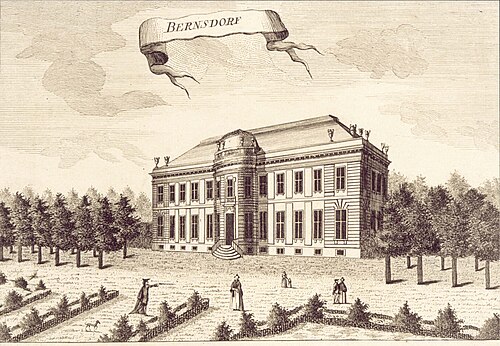
The palace was designed by the French architect Nicolas-Henri Jardin, who had been brought to Denmark to complete Frederick's Church in Copenhagen after the death of Nicolai Eigtved in 1754. It is one of the earliest examples of Neoclassical architecture in Denmark. The elaborately decorated two-storeyed building was completed in May 1765 at considerable cost.[1] At the time, it had four small decorative garrets, attics with decorative vases and a wide balcony on the roof ridge itself. On the garden side, there is a dome-covered projection rising the full height of the building.[2]
The palace's many rooms were modest in size and intended primarily for domestic use rather than for display. Most are panelled with parquet floors, large mirrors and decorated ceilings. The four rooms on the south side have overdoors decorated by Johan Edvard Mandelberg.
Bernstorff left Denmark in 1770, after being dismissed by the regent, Johann Friedrich Struensee.
The estate remained in his family's hands until 1812.
Changing owners, 1812–1842
In 1812, Bernstorff Palace was sold for 225,000 rigsdaler to Ole Christian Borch. The next year, he sold it for 280,000 rigsdaler to royal president, later gehejmestats- og justitsministerFrederik Julius Kaas.
في عام ١٨١٧، باع كاس قصر بيرنستورف إلى كريستوفر ماك إيفوي الابن ، وهو مالك مزرعة ثري من جزر الهند الغربية الدنماركية ، والذي اشترى بعد ذلك بوقت قصير قصر دين في كوبنهاغن. وأعاد تصميم الحديقة على طراز الحدائق الإنجليزية. عند وفاته عام ١٨٣٨، كان قصر بيرنستورف قد أُهمل. وظلت معظم الأرض في حوزة عائلة بيرنستورف حتى عام ١٨٣٩، حين بيعت إلى بيتر هيلاريوس فرديناند كالكو، وهو محاسب قانوني . وفي العام نفسه، اشترى كالكو قصر بيرنستورف في مزاد علني مقابل ٢٥٨٥٠ ريغسدالر. وكان ينوي هدم المبنى الرئيسي، لكن هذه الخطة لم تُنفذ.
ملكية ملكية، 1842 – 1939

كان قصر بيرنستورف على وشك الهدم عام 1842 عندما اشتراه كريستيان الثامن وكلف يورغن هانسن كوخ بترميم شامل له. أُضيف طابق نصفي، وجرى تغيير تصميم غرف الطابق الأول.
تماشياً مع أسلوب جاردان الزخرفي، توجد مدافئ من الرخام النرويجي في ثلاث من الغرف الكبيرة. وتقول لافتة فوق المدخل: "Honesto inter labores otio sacrum" أو "مخصصة للراحة الصادقة بين فترات العمل".

في عام ١٨٥٤، وُضع قصر بيرنستورف تحت تصرف ولي العهد كريستيان ، الذي أصبح فيما بعد الملك كريستيان التاسع، والذي اتخذه مقرًا صيفيًا مفضلًا له. وبالفعل، أصبح ملاذًا شهيرًا للزوجين الملكيين وعائلتهما الممتدة خلال فترة حكم الملك الطويلة. ومن بين زواره القيصر ألكسندر الثالث قيصر روسيا وإدوارد السابع ملك المملكة المتحدة . وفي عام ١٨٨٨، بعد المعرض النوردي ، اشترت الملكة لويز الجناح السويدي الخشبي وجهزته ليكون جناحًا للضيوف.
عند وفاة كريستيان التاسع عام 1906، ورث الأمير فالديمار من الدنمارك القصر، واستمر في استخدامه كمقر صيفي حتى وفاته عام 1939. ولدت الأميرة مارغريت من الدنمارك ، وهي أصغر أبناء الأمير فالديمار، في قصر بيرنستورف.
التاريخ الحديث
بعد ذلك، استخدمته وكالة إدارة الطوارئ الدنماركية كأكاديمية لضباط الصف. وفي الأول من مايو/أيار 2009، وبعد اتفاق مع جيت ينسن وكيرستن نيلسن، افتُتح قصر بيرنستورف كفندق ومركز مؤتمرات. [ 3 ] [ 4 ]
حدائق القصر
The palace's extensive gardens were laid out in the Romantic landscape style which had just been introduced to Denmark in the 1760s. In addition to the lawns and woods, they include a rose garden, an orchard and a tea house.[5] It is believed that Jardin, who designed the palace, was also responsible for the design of the gardens, especially as his plans refer to the emergence of landscape gardens as a new trend in Denmark.
The Bernstorffs, who took great interest in the gardens, planted apricots, peaches, grapes, rare apple and pear trees, cherries and plums in their kitchen garden, together with rare varieties of cucumbers, artichokes, lettuces and melons from France and the Netherlands. They also acquired a host of rare trees and bushes for the gardens including chestnuts, acacias, holly, tulip trees, plane trees, medlars, azaleas, barberries, quinces and lilacs, many of them completely new to Denmark at the time.
Most of these exotic varieties had withered away by the time Christian IX bought the estate in 1854. He charged Rudolph Rothe, the royal garden inspector, to replace them with Danish oak and beech which can still be seen today.
The beautiful Swedish Villa in the gardens was built in 1888 in the classic Swedish timbered style for the Nordic Exhibition. Run by the Swedish Villa Foundation, it is used for art exhibitions, concerts and as a café.[6]

See also
References
- ↑Bernstorffs Slot from Palaces and Properties Agency.Archived February 19, 2012, at the Wayback Machine Retrieved 23 January 2010.
- ↑Bernstorff Slot - Neoclassical architectureArchived May 16, 2011, at the Wayback Machine. Retrieved 23 January 2010.
- ↑Bernstorff Slot. From Danish Conference Centres.[link removed] Retrieved 23 January 2010.
- ↑Nutidige konferencer & møder i historiske omgivelser. From Bernstorffs Slot.Archived October 25, 2009, at the Wayback Machine In Danish. Retrieved 23 January 2010.
- ↑Bernstorff Palace Gardens.Archived October 26, 2013, at the Wayback Machine Retrieved 22 July 2013.
- ^ سفينسكي فيلا في بيرنستوفباركن. من Gentofte kommune أرشفة 27 أبريل 2009 في آلة Wayback .. باللغة الدنماركية. تم الاسترجاع 24 يناير 2010.
روابط خارجية
55°45′30″ شمالاً 12°33′08″ شرقاً / 55.7584° شمالاً 12.5523° شرقاً / 55.7584; 12.5523
- مباني ومنشآت عائلة بيرنستورف
- منازل اكتمل بناؤها عام 1765
- منازل في بلدية جينتوفت
- المنازل المدرجة في كوبنهاغن
- المباني والمنشآت المدرجة في قائمة التراث في بلدية جنتوفت
- العمارة الكلاسيكية الجديدة في كوبنهاغن
- مباني نيكولاس هنري جاردان
- القصور في الدنمارك
- الحدائق والمساحات المفتوحة في بلدية جنتوفت
- المساكن الملكية في الدنمارك
- العمارة في الدنمارك في ستينيات القرن الثامن عشر