
كارتيلينو


الكارتيلينو ( كلمة إيطالية تعني "قطعة صغيرة من الورق" [ 1 ] ) هو تصويرٌ مُخادعٌ لملاحظة مكتوبة مُدمجة في اللوحة، وغالبًا ما تتضمن شرحًا يُسجل اسم الفنان، والتاريخ، والموضوع، أو أي معلومات أخرى ذات صلة بالعمل. يحتوي حوالي 500 لوحة من عصر النهضة على كارتيلينو ، ولكن بعض الفنانين اللاحقين اعتمدوا هذه التقنية.
عادةً ما يتخذ شكل قطعة مستطيلة وهمية من الرق أو الورق - أحيانًا بحواف مهترئة أو مجعدة أو ممزقة - تُصوَّر وكأنها مثبتة بدبوس أو شمع على سطح موازٍ لمستوى اللوحة، ربما درابزين في المقدمة أو جدار في الخلفية. غالبًا ما توحي هذه القطعة بأن الملاحظة مُلصقة بسطح اللوحة وليست جزءًا من العمل الفني نفسه.
قد يعكس هذا التأثير البصري الخادع ممارسة فنية سابقة تتمثل في لصق ملاحظات حقيقية على اللوحات. وتشمل التفسيرات الأخرى لأصول هذا التأثير النقوش الموجودة في لوحات يان فان إيك الهولندية المبكرة ، مثل لوحته "ليال سوفنير" عام 1432 ، بالإضافة إلى الممارسة الفنية في مرسم فرانشيسكو سكوارسيوني في بادوا ، والمستوحاة من النقوش القوطية الموجودة في لوحات العصور الوسطى .
تاريخ
يظهر الكارتيلينو في لوحات عصر النهضة الإيطالية من القرن الخامس عشر إلى القرن السادس عشر، وخاصةً في لوحات البندقية ومنطقة فينيتو من سبعينيات القرن الخامس عشر إلى عشرينيات القرن السادس عشر. أحد أوائل الكارتيلينو يظهر في لوحة "مادونا تاركوينيا" للفنان فيليبو ليبي ، التي رُسمت عام ١٤٣٧. ومن الأمثلة المبكرة الأخرى لوحة القديس مرقس للفنان أندريا مانتينيا عام ١٤٤٨ ، ولوحة "مادونا ويمبورن " للفنان ماركو زوبو حوالي عام ١٤٥٥. أما الأمثلة اللاحقة فتشمل لوحة " مادونا لينتي" للفنان كارلو كريفيلي حوالي عام ١٤٨٠، ولوحة "بورتريه الدوق ليوناردو لوريدان" للفنان جيوفاني بيليني بين عامي ١٥٠١ و١٥٠٢، ولوحة "طبيعة صامتة مع طائر الحجل والقفازات " للفنان جاكوبو دي بارباري عام ١٥٠٤ .
The cartellino fell out of fashion, as artists desired to be known directly from the virtuosic quality of their work, not as craftsmen with a workshop whose work was identified by their name on a label. By 1548, a character in Paolo Pino's Dialogo di pittura was describing the cartellino as a laughable thing. However, there are several cartellini in Hans Holbein the Younger's Portrait of Georg Giese from 1532, and Francisco de Zurbarán included cartellini in about a fifth of his autograph works, including his 1628 painting of Saint Serapion.
In her 2009 PhD thesis, Kandice Rawlings distinguishes the cartellino from other written element including in a painting, such as depictions of inscriptions in stone or on wooden plaques, or writing in books held by subjects, or on streamers or banderoles. Other contemporary terms that were used for the same device include letterina, cartucce, and bolletta – that is, small letter, cartouche, or label. Despite the similarity of the word, there is little evidence of any connection with the cardellino (goldfinch, a symbol of Christ's Passion).
Rawlings documents 412 Italian paintings with cartellini, almost all religious subject or portraits. Early examples are connected with Padua. About three quarters were painted by artists trained or active in Venice and the Veneto. About three quarters were painted between 1470 and 1530, with the largest number in the first decade of the 16th century. About four fifths contain the artist's signature. A third include a date, often alongside a signature. Rawlings identifies another 74 paintings from outside Italy that include cartellini, principally from Germany, mainly Albrecht Dürer in the early 16th century, England, mainly Holbein in the mid-1500s, and Spain, mainly El Greco in the late 16th and early 17th century, Velázquez in the 1630s, and Zurbarán as late as the 1660s.
The cartellino had a knowing revival in Diego Rivera's 1915 Zapatista Landscape.

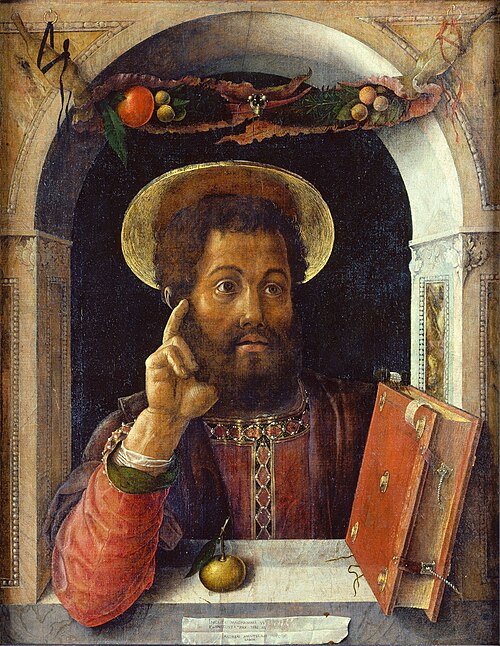 Andrea Mantegna, St Mark, 1448
 Marco Zoppo, Wimborne Madonna, c.1455
 كارلو كريفيليا ، لينتي مادونا ، ج.1480
 جيوفاني بيليني ، صورة دوجي ليوناردو لوريدان ، 1501-2
 فرانسيسكو دي زورباران ، القديس سيرابيون ، 1628
 دييغو ريفيرا ، منظر زاباتيستا ، 1915
انظر أيضاً
ملحوظات
- ↑ في اللغة الإيطالية الحديثة، تعني كلمة carta "ورقة"، وتعني كلمة cartello المصغرة "علامة"، وتعني كلمة cartellino المصغرة المزدوجة "بطاقة".
مراجع
- كارتيلينو ، مسرد المصطلحات، المعرض الوطني
- أوسترو، ستيفن ف. (2017). ""كارتيليني" لزورباران: الحضور و"المثال""". Art Bulletin . 99 (1): 67– 96. JSTOR 44973137 .
- راولينغز، كانديس (2009). الرسائل الحدية: الكارتيلينو في لوحات عصر النهضة الإيطالية (أطروحة دكتوراه). نيو برونزويك: جامعة روتجرز.
- الزخارف البصرية