
Catete Palace
The Catete Palace (Portuguese: Palácio do Catete, IPA:[paˈlasjudukaˈtetʃi]) is an urban mansion in the Flamengo neighborhood of Rio de Janeiro, Brazil. The property stretches from Rua do Catete (Catete Street) to Praia do Flamengo (Flamengo Beach). Construction began in 1858 and ended in 1867. It was Brazil's presidential palace from 1897 to 1960, and the site of Getúlio Vargas' suicide. It now houses the Museu da República (Republic Museum) and a theatre. The Catete underground rail station is adjacent.
History

The building was built as the residence of the family of the Portuguese-born Brazilian coffee producer António Clemente Pinto, Baron of Nova Friburgo, in the then capital of the Empire of Brazil. It was called the Palace of Largo Valdetaro and Palace of Nova Friburgo.
With the design of German architect Carl Friedrich Gustav Waehneldt, dated 1858, the work began with the demolition of the old house. The construction officially ended in 1866, but the finishing works still continued for over a decade.
After the death of the Baron and the Baroness, their son Antônio Clemente Pinto Filho, the Count of São Clemente, sold the property in 1889, shortly before the Proclamation of the Republic of Brazil, to an investor group, who founded the Companhia Grande Hotel Internacional (Grande Hotel Internacional Company). This development, however, did not succeed in turning the palace into a luxury hotel. Due to the economic crisis in the late 1880s and early 1890s (The Encilhamento), the venture went bankrupt, and its titles acquired by counselor Francisco de Paula Mayrink. Five years later, Mayrink paid off debts to the Bank of Brazil.
كان قصر إيتاماراتي في ريو دي جانيرو مقر السلطة التنفيذية في البرازيل . في عام ١٨٩٧، مرض الرئيس برودينتي دي مورايس ، فتولى نائب الرئيس مانويل فيتورينو الرئاسة مؤقتًا. واستحوذ على قصر كاتيتي، ونقل إليه مقر الحكومة. رسميًا، كان القصر مقر الحكومة الفيدرالية من عام ١٨٩٧ حتى عام ١٩٦٠، حين نُقلت العاصمة والمقاطعة الفيدرالية إلى برازيليا .
شهدت قاعات القصر أحداثاً تاريخية متنوعة، مثل وفاة الرئيس أفونسو بينا عام 1909؛ وتوقيع إعلان الحرب ضد الإمبراطورية الألمانية وحلفائها عام 1917، خلال الحرب العالمية الأولى ؛ وزيارة واستضافة الكاردينال يوجينيو باتشيلي، البابا بيوس الثاني عشر المستقبلي ، عام 1934؛ وإعلان الحرب ضد دول المحور في الحرب العالمية الثانية عام 1942؛ وانتحار الرئيس جيتوليو فارغاس عام 1954، بإطلاق النار على قلبه، في غرفة نومه في الطابق الثالث من القصر؛ من بين أحداث أخرى.
معرض
 الواجهة الرئيسية لقصر كاتيت مع تماثيل ربات الإلهام في الأعلى، 1897.
 القصر خلال جنازة الرئيس أفونسو بينا ، 15 يونيو 1909
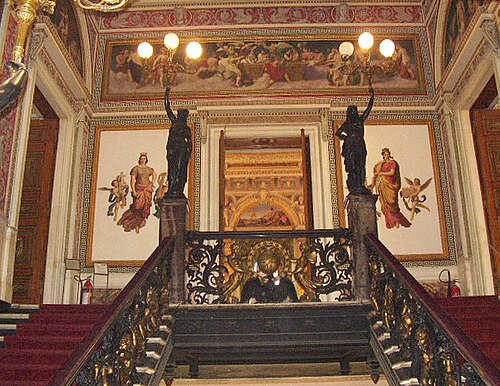 الدرج الرئيسي للقصر الرئاسي السابق
 غرفة الوزراء
 غرفة نوم الرئيس فارغاس
 تمثال رمزي
 تمثال على البحيرة
 ساحات القصر
انظر أيضاً
- القصور الرئاسية في البرازيل
- قصور في ريو دي جانيرو (مدينة)
- متاحف في ريو دي جانيرو (مدينة)
- مسارح في ريو دي جانيرو (مدينة)
- المتاحف التاريخية في البرازيل
- تم الانتهاء من بناء المباني الحكومية عام 1867
- منازل اكتمل بناؤها عام 1867
- 1867 منشأة في البرازيل
- المعالم السياحية في مدينة ريو دي جانيرو
- العمارة الكلاسيكية الجديدة في البرازيل
- مواقع التراث الوطني في ولاية ريو دي جانيرو