
التربية النسوية
التربية النسوية هي إطار تربوي قائم على النظرية النسوية . وهي تشمل مجموعة من النظريات المعرفية ، واستراتيجيات التدريس، ومناهج المحتوى، والممارسات الصفية، وعلاقات المعلم بالطالب. [ 1 ] وتعتبر التربية النسوية، إلى جانب أنواع أخرى من التربية التقدمية والنقدية، المعرفة بناءً اجتماعياً .
ملخص
يهدف المنهج التربوي النسوي إلى وضع معايير أو إزالتها في الفصول الدراسية بطرق تُحرر الطلاب وتُعزز تعلمهم. على سبيل المثال، فصل دراسي مُحرر خالٍ من أي ثنائية. [ 2 ] يُنشئ المنهج التربوي النسوي بطبيعته أسلوبًا جديدًا للتدريس، حيث لا تقتصر المهارات والمعارف على الفصل الدراسي فحسب، بل تشمل المجتمع ككل. تستغل الفصول الدراسية التي تُطبق المنهج التربوي النسوي التجارب المتنوعة والمختلفة الموجودة فيها كفرص لتنمية التعلم من خلال استخدام تجارب الحياة كدروس، وتفكيك المعرفة، والنظر إلى النوع الاجتماعي والعرق والطبقة الاجتماعية كوحدة متكاملة. [ 3 ]
تتناول التربية النسوية اختلالات موازين القوى السائدة في العديد من المؤسسات التعليمية الغربية، وتسعى إلى إعادة هيكلة هذه السلطة. ففي معظم البيئات التعليمية التقليدية، يضع هيكل السلطة المهيمن المعلمين في موقع أعلى من الطلاب. وترفض التربية النسوية هذه الديناميكية الصفية النمطية، ساعيةً إلى تعزيز بيئات أكثر ديمقراطية، تنطلق من فهم أن كلاً من المعلمين والطلاب فاعلون لا مفعول بهم. [ 3 ] ويُشجَّع الطلاب على رفض المواقف النمطية السلبية، وعلى تولي زمام تعلمهم بأنفسهم.
من خلال المشاركة الفعّالة في عملية التعلّم، يتم تشجيع الطلاب على تنمية مهارات التفكير النقدي والتحليلي. ثم تُستخدم هذه القدرات لتفكيك ومناقشة القضايا في مجتمعنا، مثل "الخصائص القمعية لمجتمع خدم تقليديًا المحافظين سياسيًا والمتميزين اقتصاديًا". [ 4 ]
The foundation of feminist pedagogy is grounded in critical theories of learning and teaching such as Paulo Freire's Pedagogy of the Oppressed. Feminist pedagogy is an engaged process facilitated by concrete classroom goals in which members learn to respect each other's differences, accomplish mutual goals, and help each other reach individual goals. This process facilitates participatory learning, validation of personal experience, encouragement of social understanding, and activism, and the development of critical thinking and open-minds.[5] It identifies the practical applications of feminist theory, while promoting the importance of social change, specifically within the institutional hierarchy found in academia. Feminist pedagogy is employed most frequently in women's studies classes, which aim to transform students from objects to subjects of inquiry. However, the use of feminist pedagogy is not restricted only to women's studies courses.
Atmosphere of Schools
Feminist pedagogy seeks to critique and correct perceived power imbalances between forms of hierarchical authority, such as educators and institutions, and students, who are believed to be typically granted much less social power and agency in the knowledge creation process. In this sense, feminist pedagogy aims to restructure traditional learning environments in favor of a communal and collaborative experience of education, which ultimately views students as equal contributors and sources of expertise.
The educational climate of schools, the result of dominant neoliberal competitive ideologies, does not prioritize communal processes of learning, research, and community action. Classroom power dynamics operating within neoliberal institutions exhibit a competitive style of engagement that employs fear and shame as a motivator for student growth. Traditional approaches to education maintain the status quo, reinforcing current power structures of domination. The "academic work process is essentially antagonistic to the working class, and academics, for the most part, live in a different world of culture, different ways that make it, too, antagonistic to working-class life."[6] In contrast, feminist pedagogy rejects societal systems of oppression, recognizing and critiquing institutional and individual compliance associated with the academy that perpetuates larger ongoing societal oppression. The classroom is a microcosm of how power is disturbed and exercised in the larger society. "Students use subtle means to keep their vested power and attempt to enforce and replicate the status quo in the classroom."[4]
Qualities of feminist pedagogy
تُعزز التربية النقدية فكرة أن المعرفة ليست ثابتة أو أحادية، بل هي نتاج عملية مفتوحة من التفاوض والتفاعل بين المعلم والطالب. وتؤكد التربية النسوية، كفرع من التربية النقدية، على أن النوع الاجتماعي يلعب دورًا محوريًا في الفصل الدراسي، مؤثرًا ليس فقط على "ما يُدرَّس، بل على كيفية تدريسه أيضًا". [ 3 ] وكجميع أشكال التربية النقدية، تهدف التربية النسوية إلى "مساعدة الطلاب على تنمية وعيهم بالحرية، وإدراك النزعات السلطوية، وربط المعرفة بالسلطة والقدرة على اتخاذ إجراءات بناءة". [ 7 ] وتنسجم التربية النسوية مع العديد من أشكال التربية النقدية، بما في ذلك تلك التي تركز على العرق والإثنية، والطبقة الاجتماعية، وما بعد الاستعمار، والعولمة.
شرحت مقدمة مجموعة "التربية النسوية: النظر إلى الماضي للمضي قدماً" الصفات والاختلافات عن التربية النقدية:
على غرار منهج فريري التحرري، يستند المنهج النسوي إلى افتراضات حول السلطة ورفع الوعي، ويُقرّ بوجود القمع وإمكانية إنهائه، ويُبرز الرغبة في التحول الاجتماعي وهدفه الأساسي. مع ذلك، يُقدّم التنظير النسوي تعقيدات مهمة، مثل التشكيك في مفهوم الذات الاجتماعية المتماسكة أو الهوية الجوهرية، وتوضيح الطبيعة المتعددة الأوجه والمتغيرة للهويات وأنواع القمع، والنظر إلى تاريخ وقيمة رفع الوعي النسوي باعتبارهما متميزين عن مناهج فريري، والتركيز على استجواب وعي المعلم وموقعه الاجتماعي بقدر تركيزه على وعي الطالب وموقعه الاجتماعي. [ 8 ]
Feminist pedagogy concerns itself with the examination of societal oppressions, working to dismantle the replication of them within the institutional settings. Feminist educators work to replace old paradigms of education with a new one which focuses on the individual's experience alongside acknowledgment of one's environment.[9] It addresses the need for social change and focuses on educating those who are marginalized through strategies for empowering the self, building community, and ultimately developing leadership.[10] Feminist pedagogy embodies a theory about knowledge transfer in the classroom by providing specific educational strategies, criteria, and techniques to meet the desired course goals or outcomes. Many distinctive qualities characterize feminist pedagogies and the instructional methods that arise out of feminist approaches. Of the associated attributes, some of the most prominent features include the development of reflexivity, critical thinking, personal and collective empowerment, the redistribution of power within the classroom setting, and active engagement in the processes of re-imaging. The critical skills fostered with the employment of a feminist pedagogical framework encourages recognition and active resistance to societal oppressions and exploitations. Also, feminist pedagogies position its epistemological inquiries within the context of social activism and societal transformation.[2]
Reflectivity, essential to the execution of feminist pedagogy, allows students to examine the positions they occupy within society critically. Positions of privilege and marginalization are decoded, producing a theorization and greater understanding of one's multifaceted identity and the forces associated with the possession of a particular identity. Critical thinking is another quality of feminist pedagogy that is deeply interconnected with practices of reflectivity. The critical thinking encouraged by feminist pedagogy is firmly rooted in everyday lived experiences.[2] Critical thinking is employed inside and outside of the classroom space to challenge dominant cultural narratives and structures.
يُعدّ التمكين داخل بيئة الفصل الدراسي جوهريًا لأساليب التدريس التربوية النسوية. إذ يتمّ تأكيد هويات الطلاب وخبراتهم، ويُشجّعون على مشاركة فهمهم الشخصي لبناء قاعدة معرفية متنوعة ومتداخلة. تُقدّر بيئات الفصول الدراسية التي تعمل ضمن إطار تربوي نسوي نزاهة المشاركين والاحترام الجماعي للاختلافات القائمة في الخبرات والمعارف. [ 4 ] يُعزّز الاعتراف بواقع الطلاب تنمية المواهب والقدرات الفردية وتوطيد التماسك الجماعي. يُمكن تحقيق تمكين الطلاب من خلال إعادة النظر في علاقات القوة التقليدية في الفصل الدراسي. من المفهوم، وهو أمر أساسي لنجاح الفصل الدراسي وتقدّمه، أن تُشارك السلطة بين جميع مكوناته. في البيئات الأكاديمية التقليدية، تُحافظ السلطة على موقعها من خلال السلطة التي يمارسها المُدرّس. يُؤكد هيكل علاقة القوة هذا على خبرات المُدرّس ومعرفته فقط، مُشيرًا إلى أن الطلاب لا يُقدّمون الكثير لتيسير عملية التعلّم. [ 4 ] يهدف المنهج التربوي النسوي في جوهره إلى تفكيك مركزية السلطة في الصف الدراسي، لإتاحة الفرصة للطلاب للتعبير عن وجهات نظرهم وواقعهم ومعارفهم واحتياجاتهم. [ 10 ] تعتمد هذه الأداة على عملية تفكيك مركزية السلطة، حيث ينأى المعلم بنفسه عن سلطته، ويُمكّن طلابه من التواجد معه على قدم المساواة. وعلى عكس العديد من أساليب التدريس الأخرى، يتحدى المنهج التربوي النسوي المحاضرات والحفظ والاختبارات كوسائل لتطوير المعرفة ونقلها. [ 10 ] ويؤكد هذا المنهج على ضرورة تحقيق توازن دقيق في السلطة بين المعلم والطلاب في الصف الدراسي، بما يُسهم في إثراء المناهج الدراسية والممارسات الصفية. ويُتيح تبادل الطاقة مساحةً للحوار تعكس تعدد أصوات الطلاب وواقعهم. ومن خلال مشاركة السلطة وتعزيز التعبير بين الطلاب، ينتقل المعلم والطلاب إلى علاقة أكثر ديمقراطية واحترامًا، تُقرّ بإنتاج المعرفة من قِبل الطرفين. كما يُساهم تبادل السلطة في تفكيك المفاهيم التقليدية السائدة للتعلم، من خلال السماح للطلاب بالتفاعل بحرية مع الأستاذ، بدلًا من أن يُملي الأستاذ المعلومات عليهم. [ 4 ]
Feminist pedagogical theorists not only question the current climate of the classroom but engage in speculations of what it could exist as.[2] Understandings facilitated within the classroom space is not meant to live within the confines of academia but are encouraged to promote social activism.[11] Theory and classroom explorations are positioned to their social contexts and implications. Students are encouraged to take what they learn in the classroom and apply their understandings to institute social change.
History
Feminist pedagogy evolved in conjunction with the growth of women's studies within the academic institution. The increased awareness of sexism occurring on college campuses and the need to promote professionalism within certain segments of the women's movement resulted in the institutionalization of women's studies programs.[1] The institutionalization of women's studies programs, facilitated the challenging of existing canons and disciplines which is reflected in classroom teaching methods.[1] "The field of Women's Studies has expanded dramatically since the first courses were offered in 1970. The critiques of dominant paradigms and compensatory research efforts that characterized its early stages generated an explosion of scholarship that has significantly expanded the undergraduate women's studies curriculum, made possible the development of graduate level instruction, and propelled efforts to integrate the evolving scholarship on women across the curriculum. Throughout the evolution of the field, the processes of teaching women's studies courses have received considerable scholarly attention, resulting in a significant body of theory that attempts to define elements of feminist teaching".[1]
Influential figures
Paulo Freire

Theorist Paulo Freire is known for his work in the field of critical pedagogy, of which feminist pedagogy is a particular manifestation.[1] In his book Pedagogy of the Oppressed 1968, Freire used Marxist theory to argue that the student-teacher relationship reflected and reinforced problematic societal power structures.[12] He also argued against what he called the banking model of education, in which a student is viewed as an empty account waiting to be filled by the teacher, writing "it transforms students into receiving objects. It attempts to control thinking and action, leads men and women to adjust to the world, and inhibits their creative power."[12]
أكد عمل فريري على ضرورة أن يتخلى المعلمون عن منظورهم الطبقي، وأن ينظروا إلى التعليم والثورة على حد سواء كعملية فهم مشترك بين المعلم والمتعلم، والقائد والمقود. [ 4 ] وتُقدم التربية النسوية، كما تطورت في الولايات المتحدة، مثالًا تاريخيًا للتربية النقدية في الممارسة. تتشابه المفاهيم النسوية للتعليم مع تربية فريري في جوانب عديدة، وكثيرًا ما يستشهد التربويون النسويون بفريري باعتباره المنظر التربوي الأقرب إلى منهج وأهداف التربية النسوية. وتستند كل من التربية النسوية، بمفهومها الشائع، وتربية فريري إلى رؤى للتحول الاجتماعي؛ إذ تشتركان في افتراضات معينة تتعلق بالقمع والوعي والتغير التاريخي. وتؤكد كلتاهما على وجود القمع في الظروف المادية لحياة الناس، وكجزء من وعيهم. كما أنها تستند إلى رؤية للوعي باعتباره أكثر من مجرد مجموع خطابات مهيمنة، بل باعتباره يحتوي في داخله على قدرة نقدية - ما أسماه أنطونيو غرامشي "الفطرة السليمة"؛ وبالتالي، ينظر كلاهما إلى البشر على أنهم ذوات وفاعلون في التاريخ، ويحملان التزامًا قويًا بالعدالة ورؤية لعالم أفضل وإمكانية التحرر. [ 1 ]
خطافات الجرس
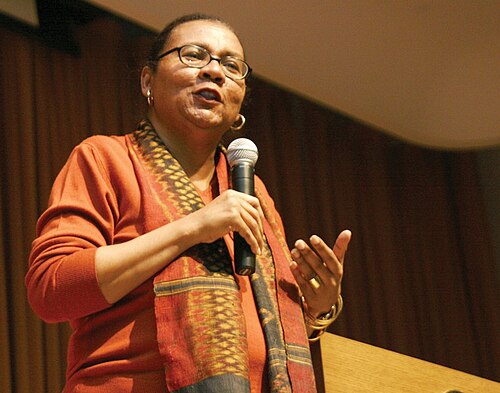
كانت بيل هوكس (1952-2021) كاتبة أمريكية بارزة، ومؤلفة، وناشطة نسوية، وفاعلة اجتماعية. في كتابها "التدريس من أجل التجاوز: التعليم كممارسة للحرية" ، تجادل بأن استخدام المعلم للسيطرة والسلطة على الطلاب يُضعف حماسهم ويُعلّمهم الطاعة العمياء للسلطة، "مُقيدًا كل تلميذ بنهجٍ آليٍّ مُملٍّ في التعلّم". [ 6 ] دعت هوكس الجامعات إلى تشجيع الطلاب والمعلمين على التعاون، مما يجعل التعلّم أكثر استرخاءً وإثارةً في آنٍ واحد. تصف التدريس بأنه "حافز يدعو الجميع إلى مزيدٍ من الانخراط" فيما تسميه أساليب التدريس التفاعلية والتجاوزية. تتجلى ممارسات هوكس التربوية في تفاعلٍ بين أساليب التدريس المناهضة للاستعمار، والنقدية، والنسوية، وهي قائمة على الحرية، "خلق مجتمع في الفصل الدراسي" يُشبه العملية الديمقراطية والحياة الأسرية السليمة، كما يتشكل من خلال "الاستعداد المتبادل للاستماع، والنقاش، والاختلاف، وإحلال السلام".
كما ربطت هوكس بين التفكير النقدي والمواقف الحياتية الواقعية، لتمكين المعلمين من عرض العالم اليومي على الطلاب بدلاً من المنظور النمطي للعالم. وتجادل هوكس بأن على المعلمين والطلاب الانخراط في استجواب الافتراضات الثقافية التي يدعمها القمع.
باتي لاذر
Patti Lather has taught qualitative research, feminist methodology, and gender and education at Ohio State University since 1988. She is a renowned feminist author with a total of four published books. Lather focuses on critical feminist issues and theories, and has recently started research on the relationship between feminism and education.
Ileana Jiménez
Ileana Jiménez is a high school teacher in New York City who teaches courses on feminism, LGBT literature, Toni Morrison, and memoir writing.[5] She is nationally known for her book and speaking about inclusivity in high schools, her work to make schools safer spaces for LGBT students, and has won numerous awards for curriculum development.[5]She was heavily influenced in her feminism and her pedagogy by bell hooks.[9]
Jiménez teaches a class at Elisabeth Irwin High School in New York called "Fierce and Fabulous: Feminist Writers, Artists, and Activists." This class consists of juniors and seniors. The objective of this class is to bring feminism to the attention of teens. Educate through an intersectional lens to help students comprehend their lives. Jiménez wants to apply the feminist pedagogy to engage her students with the national and global issues of our everyday lives. "Intersections, which explains how intersectionality helps understand power and oppression, identity and agency."[10]
Judy Chicago
Judy Chicago is an American artist, art educator and writer. She is best known for her work as a feminist artist and a pioneering feminist educator in the arts. Chicago developed the first feminist art program at Fresno State College in 1970. In 1972 Womanhouse was exhibited at CalArts to an audience of over 10,000. This large scale installation was the product of Judy Chicago and Miriam SchapiroFeminist Art Program and one of the first art pieces of its kind to center the experiences of women. Since then, Chicago has become a leading voice in Art Education. Her career as an art educator is chronicled in her 2014 book Institutional Time: A Critique of Art Education. Her collection of feminist teaching materials from 1970 to 2005 are archived at Penn State University where it is accessible through the Judy Chicago Art Education Collection.
Practical implementation

At its core, feminist pedagogy aims to decenter power in the classroom to give students the opportunity to voice their perspectives, realities, knowledge, and needs.[10] This can be utilized through the process of decentering power, where the educator distances themselves from their authority status and enables their students to have equal footing with them. Pedagogy can also be implemented practically by engaging in activism, within the classroom and outside of it.
Decentering power
One of the central tenets of feminist pedagogy is transforming the teacher and student relationship. Under this teaching method, educators seek to empower students by offering opportunities for critical thinking, self-analysis, and development of voice. Unlike many other ways of teaching, feminist pedagogy challenges lectures, memorization, and tests as methods for developing and transferring knowledge.[10] Feminist pedagogy maintains that power in the classroom should be delicately balanced between teacher and students to inform curriculum and classroom practices. The decentralized power creates a space for dialogue that reflects the multiple voices and realities of the students.
By sharing the power, the educator and students move to an equal position in which students are given space to produce knowledge.
Consciousness Raising
One of the primary methods that feminist teachers utilize this decentering of power is through the process known as "consciousness raising." Popularized in the early 1970s, the technique is implemented usually by sitting in a circle and discussing one's own experiences and by finding commonalities that individuals thought were only personal matters of their own lives. Ideally, consciousness raising is used as a method to increase the number of people who are aware of a social issue or problem.[7]
Questioning and Debriefing
Similar to Consciousness Raising, questioning and debriefing calls for a discussion. The idea of it is to help students realize their own personal stereotypes that stem from race, class, and any other background characteristics. The end goal is to create a reflective discussion on how each of them have more than likely been a victim of some type of discrimination and to call for action from that moment on. The call for action could include bringing in guest speakers and having them hear other stories, or for a more interactive assignment perform a skit. Whatever it may be the objective is to acknowledge and end the prejudice behavior.[4]
Activist projects
تشجع المشاريع النضالية الطلاب على تحديد أشكال القمع الواقعية وإدراك إمكانات الخطاب النسوي خارج النطاق الأكاديمي. تشمل أهداف هذا التطبيق العملي للمنهج النسوي رفع وعي الطلاب بالقمع الأبوي، وتمكينهم من اتخاذ إجراءات، ومساعدتهم على تعلم استراتيجيات سياسية محددة للنضال. وقد اتخذت مشاريع الطلاب النضالية أشكالاً متنوعة، منها تنظيم حملات كتابة الرسائل أو كتابة رسائل إلى المحرر، ومواجهة إدارة الجامعة أو أجهزة إنفاذ القانون المحلية، وتنظيم مجموعات للتظاهر أمام الفعاليات، والمشاركة في المسيرات الوطنية.
تُقرّ المعلمات النسويات اللواتي كتبن عن تجاربهنّ في تكليف الطلاب بمشاريع ناشطة بأنّ هذه الطريقة غير التقليدية قد تكون صعبة على الطلاب. وقد أشارت إحداهنّ إلى بعض الصعوبات، منها مقاومة بعض الطلاب لوضع أنفسهم في مواقف مثيرة للجدل، وصعوبة تعاملهم مع ردود الفعل السلبية. ولأنّ المعلمات يرغبن في أن يخوض الطلاب تجربة إيجابية، وإن كانت مليئة بالتحديات (غالباً ما تكون الأولى لهم)، في مجال النشاط النسوي، فإنهنّ غالباً ما يمنحنهم حرية كبيرة في اختيار المشروع. وقد تطلب المعلمات من الطلاب تطوير مشروع "يحتج على التمييز الجنسي، أو العنصرية، أو رهاب المثلية، أو أيّ شكل آخر من أشكال التمييز المرتبط بالفكر النسوي في سياق واحد". [ 13 ]
تقييم نسوي
الأدبيات المتعلقة بالتقييم النسوي قليلة، ربما بسبب التباين بين مفاهيم النسوية والتقييم. فعلى سبيل المثال، تُرسّخ التقييمات التقليدية، كالاختبارات المعيارية، نموذج التلقين في التعليم، ويُعدّ مفهوم التقييم في صورة درجات أو القدرة على التقدّم ضمن منهج دراسي مُهيكل شكلاً من أشكال السلطة التي تمارسها المؤسسة. ومع ذلك، تتضمن الأدبيات المتعلقة بالتربية النسوية بعض الأمثلة على تقنيات التقييم النسوي. [ 13 ] تعمل هذه التقنيات على تفكيك بنية السلطة التي يدعمها التقييم التقليدي من خلال التركيز على صوت الطالب وتجربته، مما يمنح الطلاب دورًا فاعلًا أثناء مشاركتهم في عملية التقييم. [ 14 ]
The use of journaling is considered to be one feminist assessment technique[14] as well as the idea of "participatory evaluation," or evaluations characterized by interactivity and trust.[15] Assessment techniques borrowed from critical pedagogy should be considered when thinking of feminist assessment approaches.[16] These may include involving students in the creation of assessment criteria or peer assessment or self-assessment.[17] Finally, Accardi argues feminist assessment approaches can be embedded into more traditional forms of assessment (such as classroom assessment techniques or performance assessment techniques) if students are allowed to reflect on or evaluate their experiences. Surveys, interviewing and focus groups, too, could be considered assessments with a feminist approach provided that a student voice or knowledge is sought.[18] These assessment strategies should be tailored to the type of instruction taking place; performance assessment techniques may be more appropriate for short term instruction. If the instructor has more time with the learner, then the opportunity for more in-depth, reflective feedback and assessment is possible.
Critiques
There are several elements of feminist pedagogy that has been criticized over the years. The distinctiveness of feminist pedagogy from other critical and progressive pedagogies have been brought into question.[11]
Feminist pedagogy shares intellectual and political roots with the movements comprising the liberator education agenda of the past 30 years. These movements have challenged traditional conceptions of the nature and role of education, and of relationships among teachers, learners, and knowledge. They have promoted efforts to democratize the classroom, to clarify and expose power relationships within and outside the classroom, and to encourage student agency, both personal and political. Moreover, they have called for education to be relevant to social concerns, arguing that knowledge generated and transmitted in the classroom should relate to the lives of those it describes and facilitate social justice in the world at large.[11]
Exploring the similarities between feminist and other critical and progressive pedagogies, the argument that feminist pedagogy is not entirely distinct from other pedagogies in its ideologies and strategies contains some validity.[11]
Feminist pedagogy aims to redistribute power throughout the classroom. Although attempts to restructure power relations there remains the possibility of maintaining traditional educational hierarchy in feminist classrooms. "Even those professors who embrace the tenets of critical pedagogy (many of whom are white and male) still conduct their classrooms in a manner that only reinforced bourgeois models of decorum."[6] The intentionality behind efforts to redistribute power have the possibility of simply masking power relations rather than authenticity exposing and addressing the compositional makeup of power. Regardless of efforts to create a more egalitarian teacher/student interactions, teachers still largely determine the direction of the classroom, it is teachers who "set the agenda and assign grades, not the students.[3] Feminist Pedagogy, focusing acutely on the power relations between student and teacher can often fail to address the power dynamics that operate among class participants. "As the classroom becomes more diverse, teachers are faced with the way the politics of domination are often reproduced in the educational setting. For example, white male students continue to be the most vocal in our classes. Students of color and some white women express fear that they will be judged as intellectually inadequate by these peers.[6]
Hegemonic white feminism has been criticized for being oppressive in its failure to address and incorporate intersectionality within its ideological consciousness. Many have charged American feminism with claims of racism class elitism from within its mostly academic boundaries, charging that American feminism has become another sphere of academic elitism. Many white female (and male) scholars, even self-identified feminists, do not value everyone's presence in the collective effort of women's or human liberation, hooks refers to these folks as co-oppressors in society, alongside others from privileged classes who do not participate in struggles against oppression in our complex society.[6]
Bernice Fisher points out how feminist pedagogy is at odds with its historical roots in the tradition of "consciousness raising." {citation needed} Consciousness raising groups were an important part of the women's liberation movement of the 1960s and 1970s. Through these groups, individuals were able to recognize that they shared similar struggles. Thus the number of people aware of a particular social issue increased. "Most discussion of feminist pedagogy can be seen as a struggle to reconcile the consciousness raising vision with the realities of higher education. Since the latter assumes and generally supports competition and an individualistic orientation toward learning, one of the first problems for the feminist teacher is to create the kind of trust which consciousness raising presupposes."[4] With the institutionalization of women's studies within the academic, feminist teacher were dispersed into "less radical universities, community colleges and other contexts where the rhetoric of feminism was far less familiar and more threatening, the situation tended to be reversed, teachers who were activists were in touch with, or part of, the changing women's movement, and in a sense became its representatives to the students.[4]
References
- 123456Weiler, Kathleen (December 1991). "Freire and a Feminist Pedagogy of Difference". Harvard Educational Review. 61 (4): 449–475. doi:10.17763/haer.61.4.a102265jl68rju84. ProQuest 212250218.
- 1234Shrewsbury, Carolyn M. (1987). "What Is Feminist Pedagogy?". Women's Studies Quarterly. 15 (3/4): 6–14. JSTOR 40003432.
- 1234McClure, Laura (2000). "Feminist Pedagogy and the Classics". The Classical World. 94 (1): 53–55. doi:10.2307/4352498. JSTOR 4352498.
- 123456789Lee, Ming-yeh; Johnson-Bailey, Juanita (2004). "Challenges to the classroom authority of women of color". New Directions for Adult and Continuing Education. 2004 (102): 55–64. doi:10.1002/ace.138.
- 1 2 3 خيمينيز، إيليانا (28-12-2009). "نبذة عن إيليانا خيمينيز" . تم الاطلاع عليه في 1 يونيو 2012 .
- 1 2 3 4 5 هوكس، بيل (1994). التعليم من أجل التجاوز: التعليم كممارسة للحرية . نيويورك: روتليدج. ISBN 978-0415908078. OCLC 30668295 .
- ١ ٢ "مجلة On The Issues، مجلة المرأة التقدمية، شتاء ٢٠١٠: رفع الوعي بتحرير المرأة: الماضي والحاضر، بقلم كارول هانيش" . www.ontheissuesmagazine.com . تاريخ الاطلاع: ٩ أكتوبر ٢٠١٨ .
- ↑ كرابتري، روبين؛ ساب، ديفيد؛ ليكونا، أديلا سي، محرران. (2009). التربية النسوية: نظرة إلى الماضي للمضي قدمًا . مطبعة جامعة جونز هوبكنز. ص 3. ISBN 9780801892769.
- 1 2 خيمينيز، إيليانا (2013). "المدرسة الثانوية النسوية". مجلة Ms. المجلد 23، العدد 1. الصفحات 48-49 . ProQuest 1312702814 .
- 1 2 3 4 5 6 برايسون، بي جيه؛ بينيت-أنييكوا، فيكتوريا أ. (2003). "تجربة التعليم والتعلم: تفكيك وخلق مساحة باستخدام منهجية تربوية نسوية". العرق ، النوع الاجتماعي، والطبقة . 10 (2): 131-146 . JSTOR 41675079. OCLC 211459355. ProQuest 218810099 .
- 1 2 3 4 ستيك، جاين إي؛ هوفمان، فرانسيس إل. (مارس 2000). "وضع التربية النسوية على المحك: تجربة دراسات المرأة من منظور الطالبات والمعلمات". مجلة علم نفس المرأة الفصلية . 24 (1): 30-38 . doi : 10.1111/j.1471-6402.2000.tb01019.x . S2CID 144495978 .
- 1 2 فريري، باولو (1968). تربية المقهورين . نيويورك: دار سيبري للنشر. ISBN 9788577532285.
- 1 2 روز، سوزانا (1989). " الاحتجاج كأسلوب تعليمي لتعزيز النشاط النسوي". مجلة الرابطة الوطنية لدراسات المرأة . 1 (3): 486-490 . CiteSeerX 10.1.1.1010.4346 . JSTOR 4315928. ERIC ED302492 .
- 1 2 أكاردي، ماريا ت. (2013). التربية النسوية لتعليم المكتبات . دار نشر لايبراري جوس. ص 77-78 . ISBN 978-1-936117-55-0.
- ↑ شابيرو، جوان بولينر (سبتمبر 1988). "التقييم التشاركي: نحو تحويل التقييم لبرامج ومشاريع دراسات المرأة". التقييم التربوي وتحليل السياسات . 10 (3): 191-199 . doi : 10.3102/01623737010003191 . JSTOR 1163952. S2CID 145725059 .
- ↑ أكاردي، ماريا ت. (2013). التربية النسوية لتعليم المكتبات . دار نشر لايبراري جوس. ص 79. ISBN 978-1-936117-55-0.
- ↑ برايس، مارغريت؛ أودونوفان، بيري؛ راست، كريس (مايو 2007). "تطبيق نموذج عملية التقييم البنائي الاجتماعي: بناء حلقة التغذية الراجعة في عملية التقييم من خلال مراجعة الأقران" (ملف PDF) . الابتكارات في التعليم والتدريس الدولي . 44 (2): 143-152 . doi : 10.1080/14703290701241059 . S2CID 143955364 .
- ↑ أكاردي، ماريا ت. (2013). التربية النسوية لتعليم المكتبات . دار نشر لايبراري جوس. ص 83-87 . ISBN 978-1-936117-55-0.
- النسوية والتعليم
- الحركات والنظريات التربوية