
Pickaxe

A pickaxe (American spelling: pickax[1]), pick-axe, or pick is a generally T-shaped hand tool used for digging. Its head is typically metal, attached perpendicularly to a longer handle, traditionally made of wood, occasionally metal, and increasingly fiberglass.
A standard pickaxe, similar to a "pick mattock", has a pointed end on one side of its head and a broad flat "axe" blade opposite. A gradual curve characteristically spans the length of the head. The next most common configuration features two spikes, one slightly longer than the other.
The pointed end is used both for breaking and prying, the axe for hoeing, skimming, and chopping through roots.
Developed as agricultural tools in prehistoric times, picks have evolved into other tools such as the plough and the mattock. They also have been used in general construction and mining, and adapted to warfare.
Etymology
The Oxford Dictionary of English states that both pick and pickaxe have the same meaning, that being a tool with a long handle at right angles to a curved iron or steel bar with a point at one end and a chisel or point at the other, used for breaking up hard ground or rock.[2]
The term pickaxe is a folk etymology alteration of Middle Englishpicas via Anglo-Normanpiceis, Old Frenchpocois, and directly from Medieval Latinpicosa'pick', related to Latin picus'woodpecker'.[3][4] Though modern picks usually feature a head with both a pointed end and an adze-like flattened blade on the other end, current spelling is influenced by axe, and pickaxe, pick-axe, or sometimes just pick cover any and all versions of the tool.
History
في عصور ما قبل التاريخ ، كان يُقطع قرن غزال كبير متساقط من نوع مناسب (مثل الغزال الأحمر ) إلى قاعدته وشعبته السفلية ، ويُستخدم كمعول ذي طرف واحد، [ 5 ] وأحيانًا كان يُستخدم معه لوح كتف حيوان كبير كمجرفة بدائية. وخلال الحروب في العصور الوسطى، استُخدم المعول كسلاح.
كسلاح
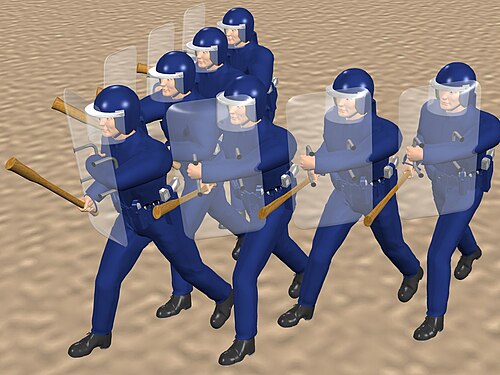
كان من السهل تكييف الفأس التاريخي ليصبح سلاحًا للقتال اليدوي في العصور القديمة. وعلى مر القرون، تم دمج جوانب منه في فؤوس قتالية متنوعة .
يُستخدم مقبض الفأس (الذي يُسمى أحيانًا "مقبض الفأس" أو "مقبض المعول") أحيانًا بمفرده كعصا للضرب . في رواية "عناقيد الغضب " لجون شتاينبك ، استُخدمت مقابض الفؤوس ضد المزارعين المهاجرين، وهدد حاكم ولاية جورجيا ليستر مادوكس باستخدام مقبض فأس مماثل، لكنه أنحف، لمنع السود من دخول مطعم مخصص للبيض فقط خلال الأيام العصيبة لحركة الحقوق المدنية الأمريكية في ستينيات القرن العشرين.
يحمل رقيب الرواد في الجيش البريطاني الفؤوس بشكل شائع . [ 6 ]
يُصنع مقبض الفأس العادي من خشب الدردار أو الجوز، ويبلغ طوله حوالي 91 سم ( 3 أقدام ) ووزنه حوالي 1.1 كجم (2.5 رطل) . ويجب أن يكون طول مقابض الفؤوس في الجيش البريطاني، وفقًا للوائح، 91 سم ( 3 أقدام ) بالضبط ، لاستخدامها في القياس الميداني. وتشمل التصاميم الجديدة ما يلي:
- مع غلاف بلاستيكي في الطرف السميك.
- مصنوع من ألياف الكربون
تُصنع أحيانًا بغلاف فولاذي في الطرف السميك.
انظر أيضاً
مراجع
- 1 2 "فأس" . قاموس Merriam-Webster.com . Merriam-Webster. OCLC 1032680871. تم الاسترجاع في 25-12-2025 .
- ↑ سوانز، كاثرين؛ ستيفنسون، أنجوس (2006). قاموس أكسفورد الإنجليزي (الطبعة الثانية (المنقحة) / تحرير كاثرين سوانز ... محررة). أكسفورد، نيويورك: مطبعة جامعة أكسفورد. ص 1330. ISBN 978-0-19-861057-1.
- ↑ "فأس" . قاموس Merriam-Webster.com . Merriam-Webster. OCLC 1032680871. تم الاسترجاع في 3 مارس 2017 .
- ↑ هاربر، دوغلاس. "فأس" . قاموس أصل الكلمات على الإنترنت .
- ↑ "معول مصنوع من قرن الوعل، يُستخدم في استخراج الصوان من غرايمز غريفز" . ingenious.org.uk . تم الاطلاع عليه بتاريخ 6 يوليو 2012 .
- ↑ توث، جون بول (3 أكتوبر 2018). "تعرّف على رقيب الرواد: أحد الرتب العسكرية القليلة المسموح لها بإطلاق اللحية في العرض العسكري" (صفحة ويب) . forces.net . ص 1. تاريخ الاطلاع: 22 يوليو 2019 .
- الأدوات اليدوية
- أدوات البستنة