
قانون الائتمان العام لعام 1869
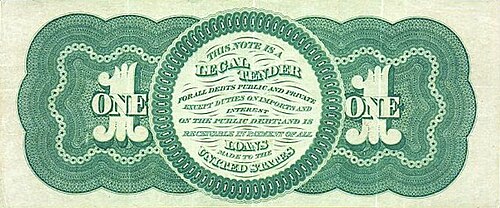
ينص قانون الائتمان العام لعام 1869 في الولايات المتحدة الأمريكية على أن حاملي السندات الذين اشتروا سندات للمساعدة في تمويل الحرب الأهلية (1861-1865) سيتم سداد أموالهم بالذهب. وُقِّع القانون في 18 مارس 1869، وحظي بدعم رئيسي من الحزب الجمهوري ، ولا سيما السيناتور جون شيرمان .
خلفية
قبل الحرب الأهلية ، كانت الولايات المتحدة تعمل بنظام معيار الذهب . وكانت الأوراق النقدية عملة قانونية تصدرها البنوك الحكومية، ويمكن استبدالها بكمية من الذهب في أي بنك. وكان كل من الذهب والأوراق النقدية متداولين كوسيلة للتبادل . في 25 فبراير 1862، أصدرت الولايات المتحدة قانون العملة القانونية الأول للمساعدة في تمويل الحرب الأهلية . غيّر هذا القانون الاقتصاد إلى نظام ائتماني قائم على عملة ورقية تُسمى أوراق الولايات المتحدة ، أو ما يُعرف شعبياً باسم "الأوراق الخضراء" . على عكس الأوراق النقدية ، لم تكن الأوراق الخضراء مدعومة بأي معيار معدني، وكانت بمثابة "قرض بدون فوائد". [ 1 ] صدرت الأوراق الخضراء كحل فوري قصير الأجل لتلبية الطلب المتزايد على العملة في البلاد. وقاد عملية إصدار الأوراق الخضراء وبيع السندات الحكومية لتمويل الحرب وزير الخزانة آنذاك، سالمون بي تشيس . [ 2 ] حتى عام 1879، كان الذهب والأوراق النقدية والأوراق الخضراء تستخدم كوسائل للتبادل وكانت أسعار الصرف فيها عائمة بحرية .
بعد الحرب الأهلية، دار جدلٌ حول ما إذا كان ينبغي الإبقاء على معيار الدولار الأمريكي أو العودة إلى معيار الذهب . خلال الحرب الأهلية، شهدت البلاد فترة تضخم حادة . تضاعف مستوى الأسعار في الولايات المتحدة تقريبًا بين عامي 1861 و1865، مما كان له آثار سلبية على سعر الصرف. أدى التضخم إلى زيادة سعر صرف الجنيه الإسترليني مقابل إنجلترا ، مما جعله أغلى ثمنًا. كان هناك تخوف من أنه في حال تطبيق معيار الذهب الذي كان سائدًا قبل الحرب خلال هذه الفترة التضخمية، سيلجأ الناس إلى استبدال عملاتهم الأمريكية بالذهب لشراء السلع البريطانية. سيؤدي تدفق الذهب خارج البلاد إلى تباطؤ الاقتصاد وارتفاع معدلات البطالة . [ 3 ]
Some Republicans pushed for a gold standard early on. They believed that creditors who supported the war should be paid back in gold, the way they were expected to be paid back. The Republicans also believed that the government should not be in charge of managing currency and that the gold standard did not allow government to intervene in the economy. It was thought by all that the gold standard would also be a good move from an international perspective, since the U.S. would appear stable, and its system would be compatible with its major trading partner, England, who also operated on a gold standard.
Consequences
Over time, the price level and exchange rate began to fall. Congress decided on a severe monetary contraction to lower the price level so they could reinstate the gold standard during the Contraction Act of 1866 before easing the policy in 1868. The passing of the Public Credit Act of 1869 was the first definitive piece of legislation that moved the U.S. toward reinstating a gold standard. However, the act included no explicit dates, people, or actions intended to pay back the bondholders in gold. The U.S. did not officially operate on the gold standard again until the Resumption Act of 1875.
See also
References
- ↑Mitchell, Wesley Clair. A History of the Greenbacks. Chicago: The University of Chicago press, 1903. p. 404.
- ↑Geisst, Charles R. Wall Street: a History. New York: Oxford University Press, 1997.
- ↑Walton, Gary M, and Hugh Rockoff. History of the American Economy. 11th ed. Mason, Ohio: Thomson/South-Western, 2010.
- Ulysses S. Grant Interpretive Outline by Frank Scaturro of the Grant Monument Association
- Act To Strengthen The Public Credit– March 18, 1869, HistoryCentral.com, histories home on the web
- Act to Strengthen The Public Credit – March 18, 1869. History Central, 2000. http://www.historycentral.com/documents/Publiccredit.html March 13, 2011.
- Friedman, Milton, and Anna J. Schwartz. A Monetary History of the United States, 1867 – 1960. National Bureau of Economic Research. Princeton, N.J.: Princeton University Press, 1963.
- Kindahl, James K. "Economic Factors in Specie Resumption the United States, 1865-79." The Journal of Political Economy Vol. 69, No. 1 (Feb., 1961), pp. 30–48.
- Smith, Gregor W. and R. Todd Smith. "Greenback-Gold Returns and Expectations of Resumption, 1862-1879." The Journal of Economic History Vol. 57, No. 3 (Sep., 1997), pp. 697–717.
- والتون، غاري م، وهيو روكوف. تاريخ الاقتصاد الأمريكي . الطبعة الحادية عشرة. ماسون، أوهايو: تومسون/ساوث ويسترن، 2010.
- 1869 في القانون الأمريكي
- تشريعات العملة الفيدرالية في الولايات المتحدة