
فلوفاريوم
يُعدّ مركز فلوفاريوم مركزًا عامًا للتثقيف البيئي، يقع في سانت جونز، نيوفاوندلاند ولابرادور ، وتديره مؤسسة كويدي فيدي /ريني ريفر للتنمية. كما تدير المؤسسة نفسها مركز ليليباد لرعاية الأطفال.
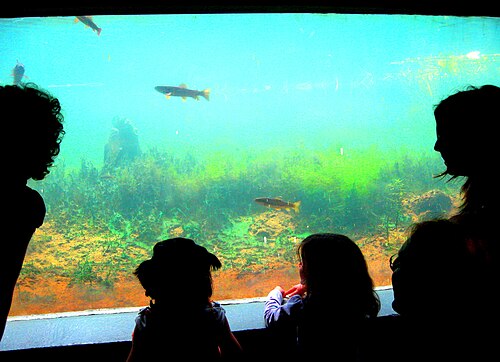
يضم الطابق السفلي من مركز فلوفاريوم إطلالة تحت الماء على جدول ناغل هيل من خلال تسع نوافذ عرض كبيرة. ويمكن للزوار مشاهدة سمك السلمون المرقط البني وسمك السلمون يعيشان في بيئتهما الطبيعية. كما يضم المركز سلسلة من أحواض المياه الطبيعية وأحواض الزواحف التي تعرض أنواع الأسماك والبرمائيات الموجودة في جميع أنحاء نيوفاوندلاند ولابرادور.
تاريخ
تأسست مؤسسة كويدي فيدي/ريني ريفر للتنمية (QVRRDF) كمنظمة خيرية غير ربحية مسجلة عام ١٩٨٥. وقد أنشأها مجموعة من دعاة حماية البيئة والحفاظ عليها، والذين كان دافعهم حماية نهر ريني، وهو ممر مائي رئيسي يتدفق عبر قلب مدينة سانت جونز إلى بحيرة كويدي فيدي، وتعزيزه. بدأت المؤسسة بهدف تنظيف نهر ريني الملوث وإنشاء مسار للمشي على طول مجراه المتعرج. ولتنظيف النهر، نُفذت سلسلة من المشاريع شملت تثبيت مجرى النهر، وإعادة تأهيل البيئة بشكل عام، وبناء ممر للأسماك . ومنذ تأسيسها، تم إنجاز أكثر من ٧.٥ كيلومترات من مسارات المشي، بما في ذلك ممرات خشبية ومناطق للمراقبة، على طول ضفاف نهر ريني وحول بحيرة كويدي فيدي.
في عام 1985، حصلت المؤسسة أيضًا على موافقة مجلس مدينة سانت جونز لبناء مركز تفسيري في لونغ بوند مع خزان مائي "لتمكين الزوار من مشاهدة سطح وقاع النهر من خلال جدار زجاجي، حيث سيتمكنون من مراقبة تكاثر سمك السلمون المرقط". [ 1 ]
بحلول عام ١٩٨٧، بدأت مؤسسة كوين فير ريفر دي إف (QVRRDF) بتقديم برامج توعية بيئية لطلاب المدارس. ركز البرنامج على منح الأطفال فهمًا أفضل للنظام البيئي للنهر . [ ١ ] أمضت المؤسسة معظم عام ١٩٨٨ في تأمين التمويل اللازم لبناء مركز فلوفاريوم. وفي يونيو من العام نفسه، وضع الأمير إدوارد حجر الأساس للموقع الذي سيُبنى فيه المركز. [ ١ ]
In November 1990, The Fluvarium opened to the public with the goal to educate the public and in particular school aged children about the importance of watersheds and how to treat them properly. It was officially opened by The Princess Anne, on July 2, 1991. The opening celebrations included the unveiling of a commemorative plaque, and a tour of the building and grounds.[1]
Exhibits
Water: Past, Present, and Future
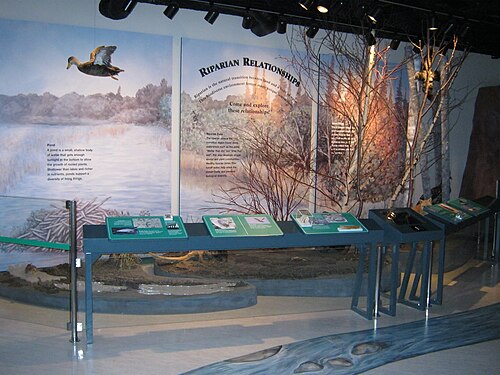
The second level exhibit area features a view of the Nagle's Hill Brook and has a number of educational exhibits concerning freshwater environments. This includes interactive displays on water, glaciations, wetlands, riparian zones and water monitoring.
Fluvarium
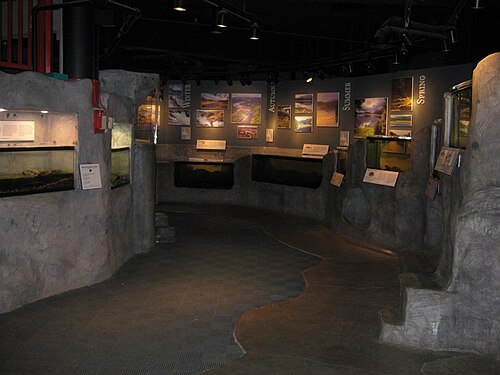
The Fluvarium level features a panoramic view through nine large viewing windows, into Nagle's Hill Brook. A tributary of Rennie's River, this brook originates 3 kilometers north of The Fluvarium, at Three Pond Barrens. It was diverted to flow past the "windows on a stream" for visitors to explore the life of a river and the ecosystem of which it is part.
The windows allow visitors to see typical areas in a river system, including deep pool, shallow pool and riffle areas. The majority of the fish seen in the brook are brown trout, a species introduced into Newfoundland in 1884.[2] Fish can enter and exit the diverted section using a fish ladder. During the fall, visitors can watch brown trout prepare their nests (redds) and spawn in the riffle areas.
The centre also houses a number of aquariums, fed with stream water from Nagle's Hill Brook. These contain species of typical freshwater fish and amphibians from around Newfoundland and Labrador, including Atlantic salmon, American eels, Arctic char, wood frogs and green frogs.
Partnerships
Research
The QVRRDF began its first research project at The Fluvarium, March 1992. Research into the pigmentation of rainbow trout flesh using Rhodotorula in prepared diets was investigated in partnership with the Newfoundland and Labrador Institute of Fisheries and Marine Technology Aquaculture Unit.[3]
From 1995-2002, The Fluvarium took part in an Atlantic salmon restocking program in partnership with the Department of Fisheries and Oceans. Salmon eggs were incubated on site and each year about 8000 salmon fry were released into the Rennie's, Waterford and Virginia Rivers.[3]
In 1999, salmon were found in a fish trap at Quidi Vidi Lake. They were believed to be from the first batch of fry released in the system in 1995 and were the first salmon seen in the rivers since the 1930s.[3]
Salmon program
The Fluvarium continues to play a small part in Atlantic salmon restocking with the Atlantic Salmon Federation's Fish/Friends program. Each spring The Suncor Energy Fluvarium delivers about 1600 salmon eggs to various schools that raise the eggs in special classroom incubators. In the late spring, classes go to The Suncor Energy Fluvarium to release salmon eggs into Nagle's Hill Brook.[3]
The Duck Race
The Annual Rennie's River Duck Race is a popular fundraising event for the Quidi Vidi / Rennie's River Development Foundation that helps to support their environmental initiatives.
An annual tradition since 1988, the event attracts large crowds to the banks of Rennie's River, to watch up to 4800 "sponsored" yellow rubber ducks make their way down the river and through the city, to the finish line. Please visit The Fluvarium's website to learn more.[4]
References
- 1234Quidi Vidi Rennies River Development Foundation (December 2003) A Look Back. Ripples Newsletter. Vol 18, Number 1.
- ↑Fisheries and Oceans Canada, https://www.dfo-mpo.gc.ca/zone/underwater_sous-marin/trout/trout_e.htm
- 1234Quidi Vidi Rennies River Development Foundation (March 2004) A Look Back. Ripples Newsletter. Vol 18, Number 2.
- ↑Quidi Vidi Rennies River Development Foundation (2010)Duck race information. Retrieved from http://www.fluvarium.ca/pg.php?p=19. Last accessed December 26, 2010.
External links
47°34′47.40″N52°43′57.40″W / 47.5798333°N 52.7326111°W / 47.5798333; -52.7326111
- Museums in St. John's, Newfoundland and Labrador
- Natural history museums in Newfoundland and Labrador
- Science museums in Canada
- Museums established in 1990
- Nature centres in Canada
- 1990 establishments in Newfoundland and Labrador