
Alopecia X
Alopecia X is a type of adult-onset follicular dysplasia in dogs previously known by many other names. The condition was first described in 1977. The condition is believed to be caused by a genetic predisposition to a hormone defect. Often dogs will recover after neutering.[1][2]
Etymology
The condition was previously known under multiple names including: adult-onset growth hormone deficiency, growth hormone responsive alopecia, castration responsive alopecia, biopsy responsive alopecia, black skin disease, and congenital adrenal hyperplasia-like syndrome. Today it is known as Alopecia X which reflects the unknown origin of the disease.[3]
Cause
The cause is unknown.[2][3] One theory of a growth hormone deficiency being the cause was abandoned when multiple studies showed normal growth hormone responses following stimulation and normal IGF-1 levels in affected dogs. Why some dogs with alopecia X show a suppressed growth hormone response remains unknown.[3] Mild hypercortisolism has been suggested as a cause of alopecia X in miniature Poodles and Pomeranians.[3]
Risk factors
Alopecia X primarily affects breeds with long and dense coats such as the Pomeranian, Keeshond, Chow Chow, Siberian Husky, and Alaskan Malamute.[4]
Signs and symptoms
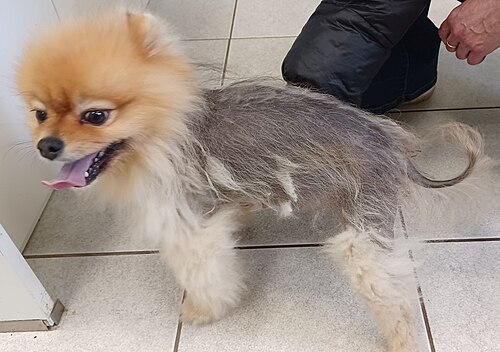
Initial signs of alopecia X are hair loss around the collar and rear thighs that slowly progresses to near complete alopecia of the trunk, neck, and proximal legs. The head, distal legs, and distal tail do not experience alopecia. In some cases a sparse wooly coat will remain. Hyperpigmentation develops simultaneously; however it may not occur, especially in white-coated Poodles. Aside from this clinical affects are not notable.[3]
Diagnosis
يتم التشخيص باستبعاد اضطرابات الغدد الصماء ، بما في ذلك: فرط الكورتيزول ، قصور الغدة الدرقية ، فرط الإستروجين ، وفرط البروجسترون (حالة نادرة في بعض أورام قشرة الكظر أو الخصية)، بالإضافة إلى حالات أخرى مثل: داء الثعلبة الدورية الجانبية ، خلل التنسج الجريبي ، والتهاب الغدد الدهنية . عادةً ما تُظهر خزعة الجلد نفس التغيرات التي تُلاحظ في اضطرابات الغدد الصماء الأخرى. لا توجد طريقة للتمييز بين داء الثعلبة X والحالات الأخرى بشكل ثابت وموثوق. مع ذلك، يبدو أن "البصيلات اللهبية" - وهي عبارة عن نتوءات من الكيراتين المندمج تبدو وكأنها تبرز من خلال الغمد الجذري الخارجي إلى الطبقة الزجاجية ، مما يُحدث نوعًا من التأثير "الناري" - أكثر شيوعًا في داء الثعلبة X مقارنةً بأمراض الجلد الأخرى . [ 3 ]
علاج
استُخدمت علاجات متنوعة لعلاج داء الثعلبة X، مثل: هرمونات النمو، والخصي ، والميلاتونين ، والميتوتان ، والتريلوستان . لا يكون العلاج فعالاً دائماً، ولأن توقف دورة نمو الشعر يُعدّ حالة تجميلية، يجب مقارنة مخاطر العلاج بفوائده. [ 3 ] قد يُسبب علاج هرمون النمو داء السكري المُستحثّ ، لذا تمّ البحث عن علاجات أخرى. أظهرت النتائج التجريبية والقصصية نتائج واعدة للميلاتونين ، والميتوتان ، وأسيتات ميدروكسي بروجستيرون عن طريق الحقن . [ 4 ]
مراجع
- ↑ سيروندولو، روزاريو (2009). "داء الثعلبة عند الكلاب X". مجلة الحيوانات الأليفة . 14 (9): 47-52 . doi : 10.1111/j.2044-3862.2009.tb00427.x .
- 1 2 دي سوزا فيريرا، ماساتشوستس؛ دي كارفاليو، VM؛ دا سيلفا دوترا، م؛ رودريغز، الاب؛ دي أروجو فيانا، د؛ فيريرا، تي سي (2022). "الحاصة X في الكلاب: تقرير عن سبع حالات" . البحث والمجتمع والتنمية . 11 (10): هـ159111032652-. دوى : 10.33448/rsd-v11i10.32652 .
- 1 2 3 4 5 6 7 فيلدمان، إدوارد سي.؛ نيلسون، ريتشارد دبليو.؛ رويش، كلوديا؛ سكوت-مونكريف، جيه. كاثرين (2014-12-08). علم الغدد الصماء لدى الكلاب والقطط . سانت لويس، ميزوري: سوندرز. ص 55. ISBN 978-1-4557-4456-5.
- 1 2 إنجلار، رايان إي. (2019-07-03). "نقص الشعر والثعلبة". الأعراض السريرية الشائعة في الكلاب والقطط . وايلي. ص 67. doi : 10.1002/9781119414612 . ISBN 978-1-119-41458-2.
- أمراض الكلاب