
Franz Schlik
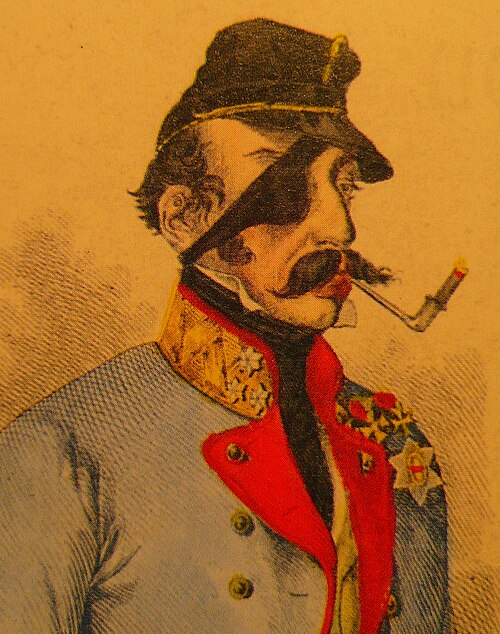
Franz Joseph von Schlik of Bassano and Weisskirchen (23 May 1789 – 17 March 1862) was a count and general in the Austrian Empire. He was one of the most successful Austrian generals during the Hungarian Revolution of 1848.
Early life
Joseph was born as the son of Count Joseph Heinrich Schlick of Bassano and Weisskirchen and his wife, Countess Philippine Ludmilla of Nostitz-Rieneck.
In 1808, he enrolled in the imperial army and fought in the Napoleonic Wars. He lost sight in his right eye in the Battle of Leipzig on 19 October 1813. In 1848, as a Lieutenant general, he became regent of Kraków in Poland.
Hungarian Revolution

In late 1848, Schlik led a legion of 8,000 men through the Dukla Pass into the Kingdom of Hungary before Alfred I, Prince of Windisch-Grätz started to attack Hungary in the Winter Campaign of the Hungarian Revolution of 1848. On 11 December Schlik defeated Sándor Pulszky in the Battle of Budamér and occupied Eperjes (now Prešov, Slovakia) and Kassa (now Košice, Slovakia).
His victories were a warning to the Hungarian Military Commission who recruited approximately 10,000 men around Miskolc under Lázár Mészáros's command, but Schlik defeated him on 28 December 1848 in the Battle of Szikszó and on 4 January 1849 in Kassa.
Schlik waited two weeks before resuming the attack. By this time, György Klapka had reorganized the Upper Tisza legion and because of this, the Hungarians won the Battle of Tarcal on January 22 and the Battle of Bodrogkeresztúr the next day. On January 31 in the Battle of Tokaj Schlik and Windish-Grätz attacked Klapka's positions, losing again.
Richard Guyon's victory in the Battle of Branyiszkó created the possibility that Schlik would be surrounded, but Henryk Dembiński would not change his plans. Schlik's forces escaped and joined Windish-Grätz. The combined force won the Battle of Kápolna on 26–27 February.
شارك شليك في حملة الربيع قائداً للفيلق الثالث. وخسر المعركة أمام أندراس غاسبار، قائد الفيلق المجري السابع، في معركة هاتڤان في 2 أبريل. وشارك في معركة إيساسيج في 6 أبريل، وفي معركة كوماروم الأولى في 26 أبريل ، ثم تراجع لاحقاً باتجاه نهر رابا .
شارك في الحملة الصيفية كقائد للفيلق الأول، وتولى القيادة في معركة جيور في 28 يونيو، ومعركتي كوماروم الثانية والثالثة في يوليو. حرّك يوليوس جاكوب فون هاينو الفيالق النمساوية في ثلاثة خطوط متوازية ضد المجريين في سيجد . وكان شليك قائد الخط المتقدم نحو ماكو، وخاض معركة عبور نهر ماروس في 5 أغسطس.
في سبتمبر 1849 تمت ترقية شليك إلى رتبة جنرال سلاح الفرسان وحصل على وسام التاج الحديدي ووسام ماريا تيريزا العسكري لانتصاراته.
التداعيات
منذ عام 1854، تولى منصب القائد العام لمنطقة غاليسيا وبوكوفينا . وفي 24 يونيو 1859، عُيّن قائداً للجيش النمساوي الثاني، الذي قاده في معركة سولفرينو . وبعد معاهدة فيلافرانكا، استقال من منصبه.
الحياة الشخصية
كان متزوجًا من الكونتيسة صوفي فون أوند زو إلتز جينانت فاوست فون سترومبرج . كان لديهم ابن واحد وبنتان.
التكريمات
 الإمبراطورية النمساوية : [ 1 ]
- فارس التاج الحديدي ، الدرجة الأولى، 1849
- قائد وسام ماريا تيريزا العسكري ، 1849
- وسام الاستحقاق العسكري
 الإمبراطورية الروسية : [ 1 ]
- فارس القديس ألكسندر نيفسكي ، في الماس
- فارس القديس فلاديمير ، من الدرجة الأولى
- فارس النسر الأبيض
- فارس القديسة آنا ، من الدرجة الأولى في الماس
- فارس القديس ستانيسلاوس ، من الدرجة الأولى
 مملكة هانوفر : الصليب الأكبر للرتبة الملكية الغويلفية [ 1 ]
 فورتمبيرغ : قائد تاج فورتمبيرغ [ 1 ]
مصادر
- ليبتاي، إرفين، أد. (1985)، Magyarország hadtörténete két kötetben ("التاريخ العسكري للمجر في مجلدين")(في المجرية)، Zrínyi Katonai ("Zrinyi Military")، ISBN 963-326-337-9
- هيرمان، روبرت (2004)، Az 1848–1849-es szabadságharc nagy csatái ("المعارك الكبرى للثورة المجرية 1848-1849")(باللغة الهنغارية)، زريني، رقم ISBN 963-327-367-6
- hu:Révai Nagy Lexikona ("موسوعة Revai المجرية")
مراجع
- 1 2 3 4 "KK Generalität" ، Hof- und Staatshandbuch des österreichischen Kaiserthumes , 1860، ص. 195 ، تم استرجاعه في 23 يوليو 2020
- 1789 مولودًا
- 1862 حالة وفاة
- شعب الإمبراطورية النمساوية
- نبلاء من براغ
- أفراد عسكريون من براغ
- الحاصلون على وسام القديس فلاديمير من الدرجة الأولى
- وسام قائد من وسام ماريا تيريزا العسكري