
Guru Maneyo Granth

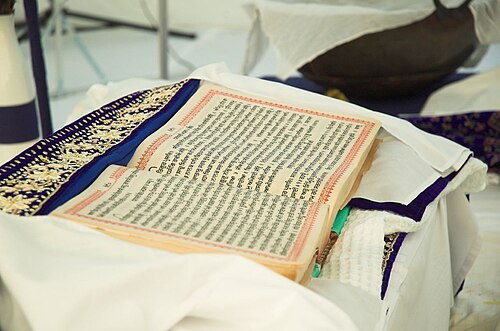
Guru Maneyo Granth (Gurmukhi: ਗੁਰੂ ਮਾਨਿਓ ਗ੍ਰੰਥ or ਗੁਰੂ ਮਾਨਯੋ ਗ੍ਰੰਥ, gurū mānio granth) refers to the historic statement of the 10th Sikh Guru, Guru Gobind Singh (1666–1708) shortly before his demise on affirming the sacred scripture Adi Granth as his successor, thereby terminating the line of human Gurus. Installed as the Guru Granth Sahib, it is now the central holy scripture of Sikhism, and the eternal living Guru of all Sikhs. It is central to Sikh worship as it is said to imbibe the one light of the creator manifested in the Ten Sikh Gurus‐one spirit in ten forms.[1]
The event on 20 October 1708 at Nanded (in present-day Maharashtra), when Guru Gobind Singh installed Adi Granth as the Guru of Sikhism, was recorded in a Bhatt Vahi (a bard's scroll) by an eyewitness, Narbud Singh,[2][3][4] and is now celebrated as Gurgaddi (Guru Gaddi Divas). Guru Gobind Singh's statement is part of the central chant "Sabh Sikhan ko Hukam Hai, Guru Maneyo Granth."[5] October 2008 marked the tercentenary year of Guruship of Guru Granth Sahib and was marked by major celebrations by Sikhs worldwide.[6] Nanded especially saw yearlong celebrations the same year at Takht Sri Hazur Sahib.[7]
Adi Granth to Guru Granth Sahib

ਸੱਬ
Sab
ਸਿੱਖਣ
sikhan
ਕੋ
kō
ਹੁਕਮ
hukam
ਹੈ
hai
ਗੁਰੂ
gurū
ਮਾਨਯੋ
mānyō
ਗ੍ਰੰਥ
granth
ਸੱਬ ਸਿੱਖਣ ਕੋ ਹੁਕਮ ਹੈ ਗੁਰੂ ਮਾਨਯੋ ਗ੍ਰੰਥ
Sab sikhan kō hukam hai gurū mānyō granth
All Sikhs are commanded to take the Granth as Guru.
يحتوي كتاب غرانث المقدس على ترانيم ( باني ) لستة من معلمي السيخ (من غورو ناناك إلى غورو أرجون، بالإضافة إلى المعلم التاسع، غورو تيغ بهادور ) إلى جانب خمسة عشر بهاغات ، وأحد عشر بهات ، وثلاثة غورسيخ (بهاي سوندار جي، وبهاي ساتا جي، وبهاي بالواند جي). وقد أُلِّف بهذا الشكل في عام ١٦٠٤، مع إضافة ترانيم غورو تيغ بهادور (المؤلفات المقدسة) لاحقًا. ويسعى إليه السالك الصادق ذو القلب الخاشع لنيل بركاته. ويؤمن أتباع الديانة السيخية إيمانًا راسخًا بأن روح نور الله، الذي تجلى في غورو ناناك، كان حاضرًا في كل معلم من المعلمين اللاحقين، وانتقل إلى المعلم التالي. يقول غورو رام داس في سيري غورو غرانث صاحب: " واهو واهو ساتغور نيرانكار هاي، جيس أنت نا بارافار "، أي "ينزل الرب في هذا العالم في صورة الغورو الحقيقي الذي لا شكل له، ولكن فقط بعض النفوس/المخلصين النادرين قادرون على التعرف عليه." (SGGS، أنج 1421)
حتى قبل تنصيب الكتاب المقدس مرشدًا روحيًا، كان يحظى بالتبجيل والاحترام لدى السيخ. فعندما وُضع لأول مرة في داربار صاحب في أمريتسار عام ١٦٠٤ على منجي (سرير) فوق قاعدة عالية مظللة، وكان معه خادم يحمل مروحة ذباب ( تشوري )، انحنى غورو أرجان أمام الكتاب وجلس في مستوى أدنى منه. وهكذا، عُومل الكتاب المقدس بالاحترام نفسه الذي يُعامل به الغورو حتى قبل إعلانه مرشدًا روحيًا من قِبل غورو غوبيند سينغ. [ ٨ ]
يُوضع الكتاب المقدس (غرانث) في جميع أماكن العبادة السيخية المقدسة، ويُعتبر بمثابة حضور المعلم الروحي، وتجسيدًا للحقيقة الإلهية. يجتمع أتباع الجماعة ( سانغات ) في مجلس مهيب للصلاة وطلب بركات الخالق. ويتجلى ذلك في الحكمة الروحية الكامنة في كلمات الغورباني ، والتي تُمثل إدراك الحقيقة. وتُعتبر كلمات المعلم الروحي، المسماة شاباد ، بمثابة التجربة الروحية للمعلم.
In the words of Bhai Gurdas, a great scholar of the Guru's time, "In the word is the Guru, and the Guru is in the word (shabad). In other words, the human body was not the Guru, but the light of the word (shabad) within the heart was their real personality." When the human mind dives deeper and deeper into the Guru's word, all mental impurities depart and the wisdom of the Guru permeates the human soul. As a result, the devotee attains the divine light and wisdom which leads him to contemplate and meditate on God's name (Naam). In light of the above realities, the Sikh religion makes the holy Granth the living master of the Sikh Panth.
Before Guru Gobind Singh, the tenth Guru, left his human body, he conferred the Guruship to the [Adi Granth]. He then delivered a self-composed hymn:
- Agya bhai Akal ki tabhi chalayo Panth. Sabh Sikhan ko hukam hai Guru manyo Granth. Guru Granth Ji manyo pargat Guran ki deh.
Jo Prabhu ko milo chahe khoj shabad mein le. Raj karega Khalsa aqi rahei na koe, Khwar hoe sabh milange bache sharan jo hoe."
- Translation:
"Under the order of the Immortal, the Path was created. All Sikhs are ordered to accept the Granth as their Guru.
Consider the Guru Granth as an embodiment of the Gurus. Those who want to meet the Lord, can find Him in its hymns. The Pure shall rule, and no rebels[9] will exist, The areas and people who are missing will be reunited, those who take refuge in it will be saved."
He also offered his obeisance to the sacred Granth, thus conveying his Light to it. This historic development which took place in October 1708 ensured that the order of the Khalsa brotherhood always remained an abiding force for Sikh Panth unity.
As per the contemporary Bhatt Vahis, the guruship was passed onto the scripture in the following manner:[10]
Guru Gobind Singh, the Tenth Prophet, son of Guru Tegh Bahadur, grandson of Guru Hargobind, great-grandson of Guru Arjan, of the family of Guru Ram Das, Surajbansi Gosal clan, Sodhi Khatri resident of Anandpur, Parganah Kahlur, now at Nander, in the Godavari country, in the Deccan, asked Bhai Daya Singh, on Buddhvar [Wednesday] Katik chauth, shukla pakkh, samvat 1765 [6 October 1708] to fetch Sri Granth Sahib. In obedience to his orders, Daya Singh brought the Granth Sahib. The Guru placed before it five paise and a coconut and bowed his head before it. He said to the congregation, 'It is my commandment: own Sri Granth Ji in my place. Whosoever acknowledges it thus will obtain her/his reward. The Guru will rescue that Sikh. Know this as the truth.'
- مؤلف بهات، بهات فاهي تالودا بارغاناه جيند، توجد ترجمة إنجليزية في "السيخية: مقدمة" (2011) نيكي جونيندر كور سينغ
مراجع
- ↑ "صناعة المعلم الروحي الأبدي" . صحيفة ذا هندو . 26 أكتوبر 2008. مؤرشف من الأصل في 29 أكتوبر 2008.
- ↑ سينغ ، غورباتشان؛ سونديب شانكار (1998). السيخ : الإيمان والفلسفة والشعب . رولي وجانسين. ص 55. ISBN 81-7436-037-9.
- ^ كينث، جورشاران سينغ (1999). “3. الخلفية التاريخية لسري جورو جرانث صاحب”. جرانث يكون معلمك: جورو مانيو جرانث . كتب دايا. ص. 28. رقم ISBN 81-86030-97-2أُرشف من المصدر الأصلي بتاريخ 18 نوفمبر 2022. تم الاطلاع عليه بتاريخ 21 أكتوبر 2020 .
- ↑ بارتريدج، كريستوفر هيو (2005). مقدمة في أديان العالم . ص 223.
- ↑ "ترانيم غورو مانيو غرانث تملأ الأجواء" . صحيفة إنديان إكسبريس . 2 سبتمبر 2004. مؤرشف من الأصل في 18 نوفمبر 2022. تم الاطلاع عليه في 23 يناير 2010 .
- ↑ جاغموهان سينغ (19 مارس 2008). "غورو مانيو غرانث" . أخبار السيخ العالمية. مؤرشف من الأصل في 7 فبراير 2010. تم الاطلاع عليه في 23 يناير 2010 .
- ↑ «عائلة غير سيخية تتبرع بسيارة فان لمهرجان يوم غورغادي» . صحيفة ذا تريبيون . ١٤ نوفمبر ٢٠٠٧. مؤرشف من الأصل في ١٦ ديسمبر ٢٠١٠. تم الاطلاع عليه في ٢٣ يناير ٢٠١٠ .
- ↑ راي، غورميت؛ سينغ، كافيتا (يونيو 2003). "طوبة طوبة مقدسة: مشاريع معمارية لغورو أرجان وغورو هارجوبيند" . مارج . 54 (4): 19.
- ↑ "ترجمة ਆਕੀ - ترجمة باللغة الإنجليزية - ترجمة بالإنجليزية" .
- ↑ سينغ، نيكي-غونيندر كور (22 فبراير 2011). "تعيين غرانث المعلم الأبدي". السيخية: مقدمة . دار بلومزبري للنشر. ص 54-57 . ISBN 9780857719621.
للمزيد من القراءة
- جورو مانيو جرانث ، بقلم هارنام داس سهراي. لوكجيت براكاشان، 1989.
- 1708 في الهند
- مصطلحات جديدة من القرن الثامن عشر
- اقتباسات من القرن الثامن عشر
- تاريخ السيخية
- الكتاب المقدس السيخي
- كلمات وعبارات بنجابية
- اقتباسات من الدين