
مستشفى إخوة القديس أنطوني

كان إخوة مستشفى القديس أنطونيوس ، أو رهبان القديس أنطونيوس النظاميون في فيينا ( Canonici Regulares Sancti Antonii ، أو CRSAnt)، ويُعرفون أيضًا باسم الأنطونيين أو الأنتونيين ، جماعةً في الكنيسة الكاثوليكية الرومانية ، تأسست حوالي عام 1095 ، بهدف رعاية المصابين بمرض نار القديس أنطونيوس الشائع في العصور الوسطى. وكان دير القديس أنطونيوس (Saint-Antoine-l'Abbaye) هو الدير الأم .
تاريخ

تأسست الجماعة حوالي عام 1095 على يد غاستون من فالوار، وهو نبيل من دوفينيه ، وابنه، وتم تأكيدها من قبل البابا أوربان الثاني في نفس العام، شكرًا على شفاء الابن المعجزي من حريق القديس أنطونيوس بفضل رفات القديس أنطونيوس الكبير .
وُضعت الآثار المقدسة في كنيسة القديس أنطونيوس في لا موت سان ديدييه ( سانت أنطوان لاباي الحالية ، إيزير )، والتي كانت ملحقة بدير بندكتي ، حيث كان أعضاؤه يعتنون بالمزار. أنشأ غاستون وجماعته، التي كانت تتألف آنذاك من عامة الناس، مستشفىً قريبًا، حيث كانوا يعتنون بالحجاج إلى المزار وبالمرضى، ولا سيما المصابين بداء القديس أنطونيوس، [ 1 ] وهو مرض شائع جدًا في العصور الوسطى، وخاصة بين الفقراء. مع ذلك، لم تكن العلاقات مع الرهبان البندكتيين المقيمين جيدة، وكانت النزاعات متكررة.

The members of the community wore a black habit with the Greek letter Tau (also known as Saint Anthony's cross) in blue. At first laymen, they received sanction as a monastic order from Pope Honorius III in 1218. In 1248 they adopted the Rule of St. Augustine and were constituted canons regular by Pope Boniface VIII in 1297. At this time the conflict that had grown up between the Antonines and the Benedictine monks responsible for the relics had become severe: the Pope put an end to it by dismissing the Benedictines to Montmajour Abbey and giving custody of the shrine to the Antonines.
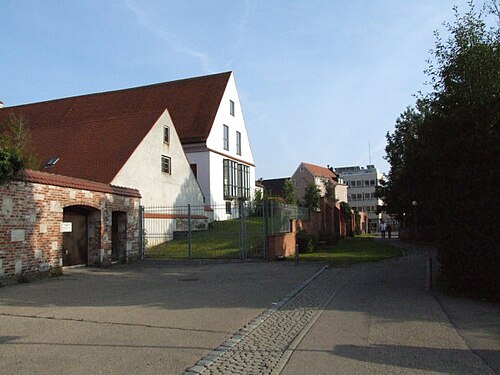
Due to the community's successes further hospitals were opened in Gap, Chambéry and Besançon, and later in Spain, Italy, Flanders and Germany, where one of their first monasteries and hospitals was opened in 1214 in Memmingen.[2] The congregation spread still more during the 14th century, during which they also cared for those suffering from the Black Death, and at its height, in the 15th century, possessed about 370 hospitals. The congregation also produced a number of distinguished scholars and prelates. Among their privileges was that of caring for the sick of the papal household.
Their beneficent activities attracted generous gifts and endowments, but their income declined significantly after the Reformation, and more particularly once the connection was finally made between Saint Anthony's Fire and the ergot fungus, and the incidence of the affliction fell sharply. In 1616 a reform was ordained and partially carried out. In 1777 the congregation, hugely reduced,[3] was canonically united with the Knights of Malta. Only a tiny number of houses remained open, and the remnants of the order were finally suppressed in the French Revolution and the years immediately following. The last few German houses were dissolved during the secularisation of 1803.

List of houses
Denmark
England
See also
Notes
- ↑usually taken to mean ergotism, although it can also refer to erysipelas and other skin diseases
- ↑now a museum of the Hospital Brothers of Saint Anthony and their work: see link below
- ↑220 canons in the whole of France
المراجع والمصادر
- المتحف الأنطوني، ميمينجن (باللغة الألمانية)
- Œuvres Hospitalières Françaises de l'Ordre de Malte (بالفرنسية)
- الموسوعة الكاثوليكية: رهبانيات القديس أنطونيوس
- ساندل دوبيلي، رينيه، 1988: القديس أنطوان أون دوفيني . إصدارات CCL (بالفرنسية)
- كانون العادي
- فرسان مالطا
- أوامر التمريض الكاثوليكية
- الرهبانيات الكاثوليكية التي تأسست في القرن الحادي عشر
- الرهبانيات المسيحية التي تأسست في القرن الحادي عشر
- أنطونيوس الكبير
- إيزير