
TACAM R-2
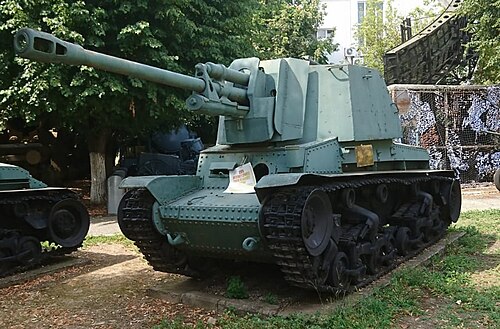
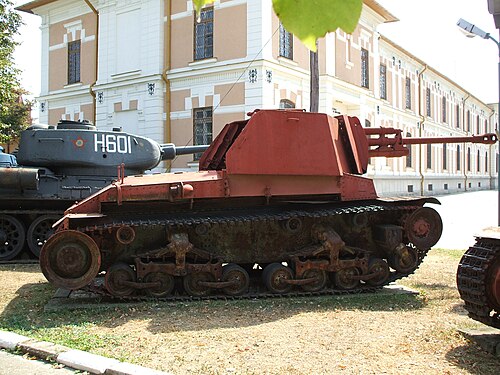
The TACAM R-2 (Tun Anticar pe Afet Mobil R-2 – "Anti-tank gun on R-2 mobile gun carriage") was a Romanian tank destroyer used during World War II. It was built by removing the turret of the R-2 light tank (a slightly modified Panzer 35(t)) and building a pedestal to mount a Soviet 76.2 mm (3.00 in)ZiS-3 field gun in its place. A three-sided fighting compartment was built to protect the gun and its crew. Twenty were built in 1944, but only one is known to exist today. It participated in the Budapest Offensive and the Prague Offensive.
Development
By December 1942 it was blatantly obvious that Romania's R-2 light tanks (Panzer 35(t)) were no longer capable of standing up to Soviet medium tanks, but something had to be done to extend their service. It was decided to convert them to tank destroyers on the model of the German Marder II and Romania's own TACAM T-60, still in development. The turret was removed from one R-2 to serve as the prototype over the summer of 1943 to test the concept. A captured Soviet 76.2 millimetres (3.00 in)M-1936 F-22 field gun was removed from its carriage and a new mount was fabricated to fit the gun to the turretless R-2. A fighting compartment was built using armor salvaged from captured Soviet tanks. New Romanian and German gun sights were fitted to suit the new Romanian ammunition. Testing in late 1943 proved that the gun didn't overpower the chassis, but the gun was only effective against T-34s up to ranges of 500–600 metres (550–660 yd). Forty were planned to be converted by Leonida in Bucharest, but the process couldn't begin immediately because Germany hadn't yet delivered the tanks that were to replace the R-2 which allowed the F-22 gun to be exchanged for the more powerful ZiS-3 gun on the production models.[1]
Uprated armament proposals
Anti-tank guns
Proposals were made to rearm them to better counter the new heavily armored Soviet Iosif Stalin tanks. Guns proposed included the Romanian-built 75 mm (3.0 in)Reşiţa Model 1943anti-tank gun or the German 88 mm (3.5 in) gun, but nothing was done before Romanian pro-Axis leader Ion Antonescu was overthrown in August 1944, making the country defect to the Allied powers.[2][3]
اقترح اقتراح مماثل آخر تركيب مدفع مضاد للدبابات عيار 88 ملم، مُصنّع في رومانيا، ومبني على مدفع فيكرز موديل 1931 عيار 75 ملم ، المُصنّع بترخيص روماني، على هيكل دبابة R-2. وقارن تقرير صدر في يونيو 1944 هذا المدفع الروماني بمدفع فلاك ألماني عيار 88 ملم ؛ حيث تفوّق المدفع الروماني من حيث عدد الطلقات في الدقيقة (25 طلقة مقابل 20 طلقة للمدفع الألماني)، ووزنه القتالي (4.5 طن مقابل 7.5 طن للمدفع الألماني)، ووزنه أثناء النقل (4.5 طن مقابل 5 أطنان للمدفع الألماني). وفي جوانب أخرى، كان المدفعان متشابهين. وفي الفترة القصيرة المتبقية قبل اجتياح الجيش الأحمر لرومانيا، من المعروف أنه تم إنتاج أربعة مدافع على الأقل من هذا النوع عيار 88 ملم. وذكر التقرير نفسه الصادر في يونيو 1944 أن هناك حاجة ماسة إلى نموذج مُعدّل للتركيب على هيكل دبابة R-2، وقدّر إمكانية تصنيعه في غضون 3 إلى 4 أسابيع. [ 4 ] في الوقت الحالي، من غير المعروف ما إذا كان هذا الاقتراح قد تم تنفيذه.
قاذف اللهب
إلى جانب المدافع المضادة للدبابات الأكثر كفاءة المقترحة، ذكر مارك أكسورثي أيضًا اقتراحًا لتحويل الهياكل المتبقية إلى مركبات قاذفة للهب لمواجهة الدبابات السوفيتية الثقيلة الجديدة بشكل أفضل. [ 5 ] لا يُعرف أنه تم بناء أي مركبة من هذا القبيل، لكن الرومانيين بنوا مركبة قاذفة للهب مختلفة حوالي ربيع عام 1943، في المرحلة الأولى من تطوير مدمرة الدبابات مارشال . [ 6 ]
وصف
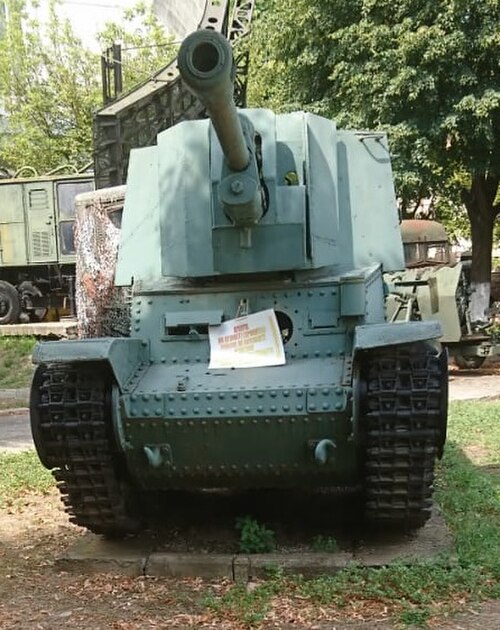
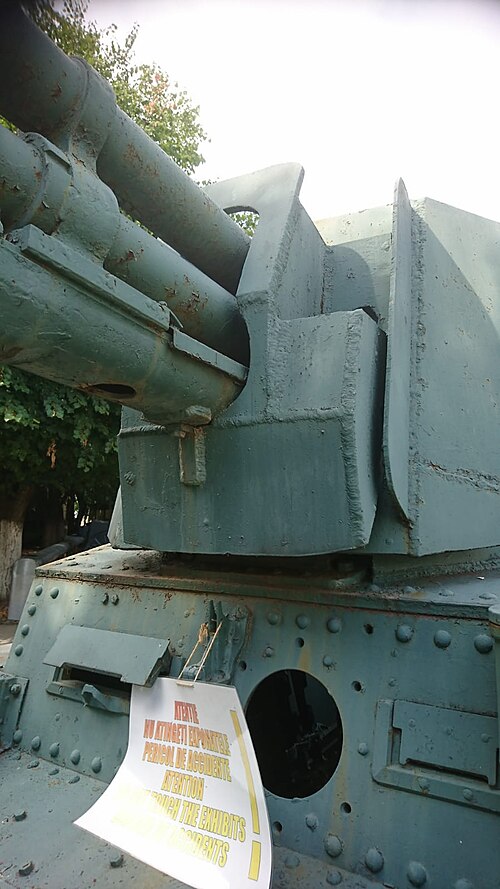
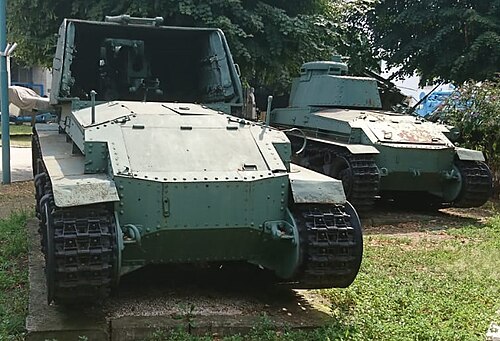
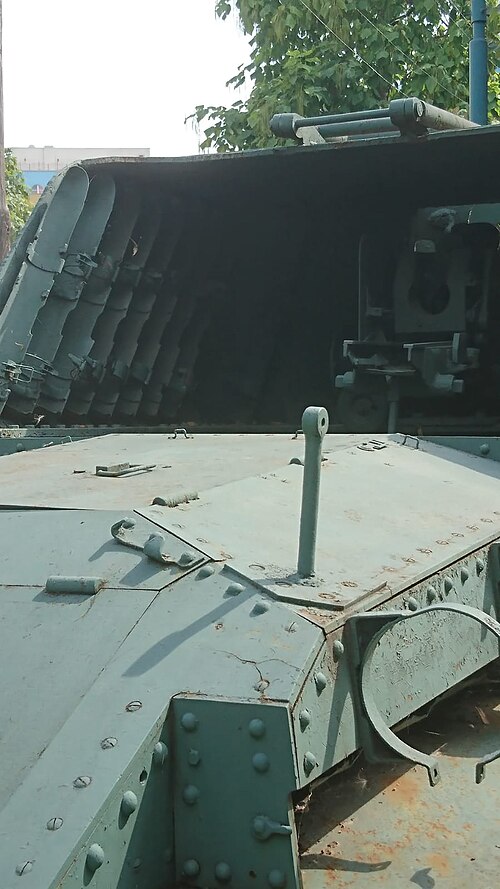
كانت مركبة TACAM R-2 مزودة بمدفع ZiS-3 عيار 76.2 ملم (3.00 بوصة) مثبت على هيكل دبابة خفيفة R-2 (بانزر 35(t)) بعد إزالة البرج. وكان المدفع محميًا بدرع ثلاثي الجوانب ثابت ومغطى جزئيًا، بسماكة تتراوح بين 10 و17 ملم (0.39-0.67 بوصة) . وقد تم استخلاص صفائح الدرع من دبابات BT-7 و T-26 السوفيتية التي تم الاستيلاء عليها . وكان بإمكان المدفع الدوران بزاوية 30 درجة، والارتفاع بزاوية 15 درجة، والانخفاض بزاوية 5 درجات. وحمل المدفع الرئيسي 30 طلقة، منها 21 طلقة شديدة الانفجار و9 طلقات خارقة للدروع. ولم يطرأ تغيير كبير على هيكل المركبة مقارنةً بهيكل R-2، حيث احتفظ بمدفعه الرشاش ZB-53 عيار 7.92 ملم (0.312 بوصة) المثبت على الهيكل . تراوح سمك درع الهيكل بين 8 و25 مليمترًا (0.31 إلى 0.98 بوصة) . وكان بإمكانه عبور خندق بعرض مترين (6.6 قدم) ، وتسلق عائق بارتفاع 0.5 متر (1.6 قدم) ، وخوض مجرى مائي بعمق 0.8 متر (2.6 قدم) . [ 7 ]
التاريخ التشغيلي
Leonida began work in late February 1944, and the first batch of twenty conversions was complete by the end of June. Production was halted then because the gun was thought inadequate to face the new heavily armored IS-2 tanks being fielded by the Soviets. Ten vehicles were organized into the 63rd TACAM Company in July 1944 and assigned to the 1st Armored Training Division. The rest of 10 vehicles were assigned to a Cavalry division. After 23 August coup, a company of twelve was assigned to the Niculescu Detachment when it was rushed north at the beginning of September to defend the Transylvanian frontier against the Axis counterattack from Hungary. Four more were added when the Niculescu Detachment was absorbed into the ad hoc Armoured Group on 29 September in preparation for attacks intended to clear Northern Transylvania. This was successful and the Armoured Group was disbanded when the joint Soviet-Romanian forces pushed the last Axis units out of Romanian territory on 25 October 1944.[8]
Twelve were assigned to the 2nd Armoured Regiment when it was sent to the front Czechoslovakia in February 1945. The Soviets immediately seized most of the TACAM R-2s in exchange for a few captured German tanks, but two were reported as operational on 31 March and two were still on hand on 24 April. One of these was destroyed before 30 April and the other was damaged mopping up German units near Brno in May. None were reported with the remnants of the regiment when it returned to Bucharest on 14 May 1945.[9]
One survives today in the Romanian National Military Museum in Bucharest.[10]
Photo gallery
The gallery shows the TACAM R-2 at the Bucharest Military Museum. Red paintjob photos are from 2006, light teal ones from 2019.
Notes
- ↑Axworthy, pp. 223, 225
- ↑Kliment and Francev, p. 199
- ↑Axworthy, pp. 223, 225
- ↑Gheorghe 2020, p. 75.
- ↑Axworthy, p. 225
- ↑Gheorghe 2020, pp. 76–77.
- ↑Axworthy, p. 225
- ↑Axworthy, pp. 194-201
- ↑Axworthy, pp. 212-13
- ↑"Colectii — Specialitati militare" (in Romanian). Archived from the original on 12 May 2008. Retrieved 21 May 2009.
References
- Axworthy, Mark; Scafes, Cornel; Craciunoiu, Cristian (1995). Third Axis, Fourth Ally: Romanian Armed Forces in the European War, 1941-1945. London: Arms and Armour. ISBN 1-85409-267-7.
- جورجي ، فيوريل (2020). " Încercări de dezvoltare a tehnicii militare româneşti în anii celui de -al Doilea Război Mondial" [ محاولات تطوير التكنولوجيا العسكرية الرومانية خلال سنوات الحرب العالمية الثانية ] (PDF) . Buletinul Arhivelor Militare Române [ مجلة الأرشيف العسكري الروماني ] (باللغة الرومانية). 2 (88): 71– 79. ISSN 1454-0924 .
- كليمنت، تشارلز ك.؛ فرانسيف، فلاديمير (1997). المركبات القتالية المدرعة التشيكوسلوفاكية . أتجلين، بنسلفانيا: شيفر. رقم ISBN 0-7643-0141-1.
روابط خارجية
- TACAM R-2 على موقع worldwar2.ro
- سلسلة صور عن الدروع الرومانية
- جولة تعريفية بكاميرا TACAM R-2 على موقع DishModels.ru
- مدمرات الدبابات الرومانية
- مدمرات الدبابات في الحرب العالمية الثانية
- التاريخ العسكري لرومانيا خلال الحرب العالمية الثانية
- مركبات القتال المدرعة الرومانية في الحرب العالمية الثانية
- المركبات العسكرية التي تم إدخالها من عام 1940 إلى عام 1944