
Futabasaurus
Futabasaurus is a genus of plesiosaur from the Late Cretaceous of Fukushima, Japan. It was described and named in 2006, and was assigned to the family Elasmosauridae. The genus contains one species, F. suzukii.
Description
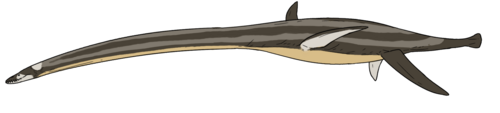
Futabasaurus has been estimated over 6 metres (20 ft) in length,[1] possibly within the range of 6.4–9.2 metres (21–30 ft).[2] It can be distinguished from other elasmosaurids by the following characteristics: there is a long distance between the eye sockets and nostrils; the interclavicles and clavicles are fused, and the anterior edge is bent; the humerus is relatively long; and the femora are slim and show prominent muscle scars.[1]
Discovery and naming

Futabasaurus is the first elasmosaurid found in Japan. It was originally known as either "Wellesisaurus suzukii" or "Futaba Suzuki ryu" before publication. The type specimen of Futabasaurus was found in the Irimazawa Member of the Tamayama Formation, in the Futaba Group of Fukushima Prefecture, Japan. The rocks in which it were found date to the Inoceramus amakusensis zone of the early Santonian. The fossils were found by Tadashi Suzuki, then a high school student.[1] Many of the bones of the type specimen show signs of apparent scavenging or predation by sharks,[1] specifically Cretalamna.[3]
The genus Futabasaurus was named after the Futaba Group, in which it was discovered; the specific name is derived from the family name of its discoverer, Suzuki.[1]
استُخدم اسم " فوتاباسورس " أيضاً للإشارة إلى ديناصور ثيروبود غير ذي صلة ، من تكوين أشيزاوا في اليابان الذي يعود إلى العصر الطباشيري المتأخر . ومع ذلك، لم يُسمَّ هذا الديناصور رسمياً، ولا يزال اسمه غير مُسمّى . [ 4 ]
تصنيف

يوضح المخطط التفرعي التالي موقع Futabasaurus داخل Elasmosauridae وفقًا لتحليل رودريجو أ. أوتيرو، 2016: [ 5 ]

| عائلة الإيلاسوموصورات |
| |||||||||||||||||||||||||||||||||||||||
في الثقافة الشعبية
في فيلم الأنمي " دورايمون: ديناصور نوبيتا" ، يعثر نوبيتا على بيضة متحجرة لديناصور فوتاباسورس. وباستخدام أدوات دورايمون ، يُهيئ البيضة لتكون قابلة للتفقيس، ويُفقسها، ويربيها حتى تبلغ مرحلة البلوغ قبل إعادتها إلى عصرها.
انظر أيضاً
مراجع
- 1 2 3 4 5 ساتو، تاماكي؛ هاسيغاوا، يوشيكازو؛ مانابي، ماكوتو (2006). "بليزوصور جديد من فصيلة الإيلاسوموصوريات من العصر الطباشيري العلوي في فوكوشيما، اليابان" . علم الأحياء القديمة . 49 (3): 467-484 . Bibcode : 2006Palgy..49..467S . doi : 10.1111/j.1475-4983.2006.00554.x .
- ↑ أوغورمان، جيه بي (2016). "إيلاسوموريد صغير الحجم غير أريستونكتيني (سوروبتريجيا، بليزوصوريا) من العصر الطباشيري المتأخر في باتاغونيا مع تعليقات على علاقات الإيلاسوموريدات الباتاغونية والقطبية الجنوبية" . أميغينيانا . 53 (3): 245-268 . doi : 10.5710/AMGH.29.11.2015.2928 . hdl : 11336/54311 . S2CID 133139689 .
- ↑ شيمادا، ك.؛ تسويهيجي، ت.؛ ساتو، ت.؛ هاسيغاوا، ي. (2010). "حالة استثنائية لبليزوصور من فصيلة الإيلاسوموصوريات تعرض لعضة سمكة قرش". مجلة علم الحفريات الفقارية . 30 (2): 592-597 . Bibcode : 2010JVPal..30..592S . doi : 10.1080/02724631003621920 . S2CID 128760390 .
- ↑ مورتيمر، مايكل (2008). "النيوثيروبودا" . قاعدة بيانات الثيروبود . مؤرشف من الأصل بتاريخ 29-09-2013 . تم الاسترجاع بتاريخ 17-11-2009 .
- ↑ أوتيرو، ر. أ. (2016). "إعادة تقييم تصنيفي لـ Hydralmosaurus كـ Styxosaurus : رؤى جديدة حول تطور عنق الإيلاسوموصوريات خلال العصر الطباشيري" . PeerJ . 4 e1777. doi : 10.7717/peerj.1777 . PMC 4806632. PMID 27019781 .
روابط خارجية
- Futabasaurus وDinosaurier-Web (الألمانية)
- البليزوصورات التي عاشت في أواخر العصر الطباشيري
- التصنيفات الأحفورية الموصوفة في عام 2006
- البليزوصورات في آسيا
- الحيوانات المنقرضة في اليابان
- عائلة الإيلاسوموصورات
- أحافير اليابان
- أجناس الزواحف
- الحياة السانتونية