
Simmering
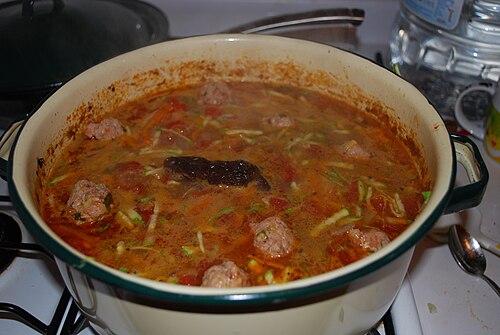
Simmering is a food preparation technique by which foods are cooked in hot liquids kept just below the boiling point of water[1] (lower than 100 °C or 212 °F) and above poachingtemperature (higher than 71–80 °C or 160–176 °F). To create a steady simmer, a liquid is brought to a boil, then its heat source is reduced to a lower, constant intensity (smaller flame on a gas stove, lower temperature on an induction/electric stove). While simmering, a liquid will show little movement without approaching a rolling boil.
Methods and equipments
Simmering ensures gentler treatment than boiling to prevent food from toughening and/or breaking up. Simmering is usually a rapid and efficient method of cooking. Food that has simmered in milk or cream instead of water is sometimes referred to as creamed. The appropriate simmering temperature is a topic of debate among chefs, with some but not all considering that a simmer is as low as 82 °C or 180 °F.[2]
Some modern gas ranges have a simmering burner, which may be a rear burner, supporting a steady low heat. Many electric ranges have a simmer setting.
Slow cookers are countertop electrical appliances used to cook foods at simmering temperature or somewhat lower for hours at a time.[3]
By cuisine
Japanese cuisine
In Japanese cuisine, simmering is often considered one of the four essential cooking techniques, along with grilling, steaming, and deep frying.[4]
International cuisine
Food prepared in a crockpot or slow cooker is simmered. Examples include stews, chili con carne, soups, etc.
Bulgarian cuisine
Bulgarian traditional food, especially tender meat dishes, are often simmered for extended periods of time. Examples include stews, soups, Vanyas, etc.
Dutch and Flemish cuisine

في المطبخ الهولندي والفلمنكي التقليدي، تُطهى قطع اللحم البقري الأقل طراوة على نار هادئة لعدة ساعات للحصول على كاربوناد فلاماند . تقليديًا، يُستخدم لهب صغير يُغذى بزيت محترق، أو لهب غاز منخفض جدًا على موقد. غالبًا ما تُستخدم مقلاة من الحديد الزهر ذات قاع سميك في العديد من البلدان. يكون اللحم جاهزًا عندما يُمكن تمزيقه بسهولة إلى خيوط. [ 5 ]
المطبخ الفارسي
يُعدّ الطهي على نار هادئة من أكثر أساليب الطهي شيوعاً في إيران وأفغانستان. ففي المطبخ الفارسي التقليدي ، تُطهى جميع أنواع الخورش الفارسي تقريباً على نار هادئة لعدة ساعات. وينطبق الأمر نفسه على بعض الأطباق الإيرانية الأخرى مثل الأبجوشت والبوزباش وغيرها .
المطبخ اليهودي
يُعدّ الطهي على نار هادئة الطريقة الرئيسية المُستخدمة في يخنات السبت، إذ يُحظر الطبخ في يوم السبت ، من مساء الجمعة إلى مساء السبت، وفقًا للشريعة اليهودية . ولكل جماعة يهودية في الشتات تقريبًا وصفات مختلفة ليخنات السبت، مع شيوع عادة غلي الطعام قبل بدء السبت، ثم وضع القدر على موقد يُغطي مصدر الحرارة أو أي أداة أخرى لتسخينه. [ 6 ] تُطهى العديد من أطباق السبت على نار هادئة طوال الليل، دون تدخل من الطاهي، امتثالًا للشريعة اليهودية. ومن هذه الأطباق: تشولنت ( اليهود الأشكناز )، [ 7 ] وحامين ( اليهود السفارديم )، [ 6 ] وتبيت ( اليهود العراقيون ). [ 8 ]
مراجع
- ↑ تعريف كلمة "Simmer" مؤرشف بتاريخ 3 أكتوبر 2011 في أرشيف الإنترنت (Wayback Machine) من موقع About.com - فنون الطهي. مؤرشف بتاريخ 3 أكتوبر 2011 في أرشيف الإنترنت (Wayback Machine) . تم الاطلاع عليه في مايو 2009.
- ↑ معهد الطهي الأمريكي (CIA). (2011). الطاهي المحترف، الطبعة التاسعة (ص 263). هوبوكين، نيوجيرسي: جون وايلي وأولاده، المحدودة.
- ↑ جيسلين، دبليو. (2011). الطبخ الاحترافي، الطبعة السابعة (ص 71). هوبوكين، نيوجيرسي: جون وايلي وأولاده، المحدودة.
- ↑ هوسوي، سي. (2012). طبخ كلاسيكي: اليابان. كتاب طبخ خطوة بخطوة (ص 13). سنغافورة: مارشال كافنديش كويزين.
- ^ “ستوفن” (باللغة الهولندية). Vlaams Centrum voor Agro- en Visserijmarketing. 2012 مؤرشفة من الأصلي في 2 مارس 2012.
- 1 2 ماركس، جيل (17-11-2010). موسوعة الطعام اليهودي . دار نشر HMH. رقم ISBN 978-0-544-18631-6.
- ↑"Cholent offers many meaty lessons about Jewish history and law". The Canadian Jewish News. 2017-01-30. Retrieved 2023-12-05.
- ↑"Iraqi Chicken Stuffed With Spiced Rice Recipe | The Nosher". My Jewish Learning. 2019-09-20. Retrieved 2023-12-05.
- Cooking techniques
- Culinary terminology