
Alexander Sarcophagus


The Alexander Sarcophagus is a late 4th century BC Hellenistic stone sarcophagus from the Royal necropolis of Ayaa near Sidon, Lebanon.[1] It is adorned with high relief carvings of Alexander the Great and scrolling historical and mythological narratives. The work is considered to be remarkably well preserved, both structurally and in its surviving traces of polychromy, a practice of painting statues and architecture in bright colours that was common in the ancient world.[2] It is currently in the holdings of the Istanbul Archaeology Museum.[3]
History
According to many scholars, both the provenance and date of the Alexander Sarcophagus remain uncontested,[4] landing it firmly in the city of Sidon and having been most likely commissioned after 332 BC.[4] The pertinent and continuous depiction of Abdalonymus, the King of Sidon, helps narrow down the time period in which this sarcophagus was most likely created. We know that Abdalonymus was appointed to this position by Alexander the Great in 333 to 332 BC,[5] and is said to have died in roughly 311 BC (although the exact date is unknown).[5] It was demonstrated by archaeologist and scholar Karl Schefold to have been made before Abdalonymus's death,[6] due to its still-classical manner being purportedly uninfluenced by the style of Lysippos. Schefold argues that the sarcophagus retains a more conservative approach[6] to its composition and iconography, contrasting against the stylistic progression marked by the work of Lysippos. He also asserts that his tomb would have been prepared before his death,[6] although the vague timeline of Abdalonymus's life leaves this open-ended.
Discovery
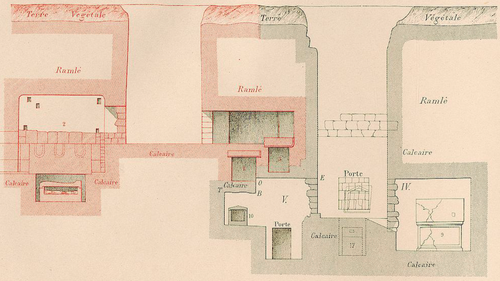
عُثر على تابوت الإسكندر في المقبرة الملكية في أيا ، وهي مقبرة تحت الأرض مقسمة إلى قسمين تحت الأرض ، [ 4 ] وهو عبارة عن معبد أو مقبرة تحت الأرض تتكون من سلسلة من الغرف. ويُرجح أنها كانت تُستخدم كمقبرة ملكية، [ 4 ] مما يُسهم في دعم النقاش العلمي حول الراعي المحتمل لهذا التابوت.
يُعد هذا التابوت تحديداً واحداً من أربعة توابيت ضخمة منحوتة، شكلت زوجين. وقد اكتُشف هذان الزوجان خلال عمليات التنقيب التي أجراها عثمان حمدي بك ويرفانت فوسكان عام 1887 في المقبرة القريبة من صيدا، لبنان.
النقاش الأكاديمي
الراعي
Although it has been widely accepted that this was not the actual sarcophagus of Alexander the Great himself from early on in its analysis, [ 4 ] there has been great scholarly debate surrounding who the patron of the sarcophagus was. It was originally thought [ 7 ] to have been the sarcophagus of Abdalonymus (died 311 BC), the king of Sidon appointed by Alexander immediately following the Battle of Issus (333 BC). [ 8 ] Scholar Andrew Stewart asserts that the Alexander Sarcophagus was patronized by Abdalonymus for a number of reasons: mainly, for the reason that Near Eastern kings regularly commissioned their tombs ante-mortem in consideration of their "posthumous reputations." [ 9 ] This is a commonly supported claim that has been continuously upheld by many scholars, but it has also been equally contested. على سبيل المثال، يجادل فالديمار هيكل بأن التابوت صُنع لمازيوس ، وهو نبيل فارسي وحاكم بابل . ولتأكيد هذا الادعاء، يتساءل هيكل عن سبب احتواء تابوت عبد النعمان، ملك صيدا، على هذا الكمّ من الشخصيات والرموز الفارسية، [ 5 ] مُشيرًا إلى أن لباس الشخصية المركزية وملامح وجهها وأنشطتها [ 5 ] تتوافق تاريخيًا مع النبلاء الفرس أكثر من الفينيقيين. [ 5 ] ويُجيب هيكل بأن أهمية هذه الشخصيات والرموز تتناسب أكثر مع النبيل الفارسي. ويدعم هيكل هذا الرأي بنظرية مفادها أن أحد النقوش الجانبية يُصوّر معركة غوغميلا عام 331 قبل الميلاد، [ 5 ] مُظهرًا قوة قيادة مازيوس العسكرية للجيش الفارسي.
الإسناد
One aspect of the sarcophagus's history that remains widely debated concerns which ancient Mediterranean culture may have created it. According to Schefold, six Ionian sculptors' hands have been distinguished, working in an Attic idiom.[6] Stewart concurs with Schefold, claiming that the unification of the varying stylistic elements is associated with Attic sculpture.[9] However, according to archaeologist Margaret C. Miller, the sarcophagus was produced probably by a Rhodian workshop, in this case working at Sidon.[10] It is helpful to note here, that Sidon was a Phoenician city-state,[4] which has led other scholars like Caroline Houser to argue its stylistic origins being rooted in Phoenicia. It has been argued that the majority of the sculptural detailing can be attributed to ancient Greek styles,[4] drawing back to the capture of this Near Eastern city by the ancient Greeks. Due to the cross-cultural influences in Greek art at the time, however, there are conflicting attributes within the sarcophagus itself. For example, the lions found on the corners of the roof have specifically Asian attributes.[4] There are also several mythologized creatures, such as "three ram horns growing on feline heads"[4] that would have been entirely foreign to the fauna of the ancient Hellenistic world.
Interpretation

The roof ridge of the Alexander Sarcophagus, made of two "massive blocks" of marble, [ 9 ] is lined with statuettes of women's heads, possibly the goddess Atargatis . [ 9 ] Different narratives decorate the friezes on each side and pediment of the sarcophagus, each lending to different interpretations of the overall theme of the sarcophagus itself. [ 9 ] These different interpretations have varied due to the complex styles and subject matters. [ 9 ] Some scholars have interpreted these narratives as biographically relating to the life of Abdalonymos, with the series beginning in 333/332 BC [ 9 ] with the Battle of Issus [ 9 ] and ending in 306/305 BC. [ 9 ] يرى أندرو ستيوارت أن التابوت لا يقدم برنامجًا موحدًا أو رسالة متماسكة بشكل واضح على الإطلاق، [ 9 ] إذ تتناقض المشاهد في كل نقش مع بعضها البعض، مع مزج الرموز بين المعايير الغربية والشرقية. [ 9 ] وتتسم مواضيع المعركة والصيد بالاتساق في جميع النقوش: حيث يصور جانب طويل وجانب قصير كل مشهد من هذه المشاهد.
The relief carvings on one long side of the piece depict Alexander fighting the Persians at the Battle of Issus . Volkmar von Graeve has compared the motif to the famous Alexander Mosaic at Naples ; he concludes that the iconography of both derives from a common original, a lost painting by Philoxenus of Eretria . [ 11 ] The comparison between the mosaic and sarcophagus has gained traction in the scholarly field, supported by other scholars such as Andrew Stewart. [ 12 ] Alexander is shown mounted, wearing a lion skin on his head, and preparing to throw a spear at the Persian cavalry. There remains debate surrounding the importance of the historicity of the figures seen in the hunting and battle scenes. While historians such as von Graeve interpret them as accurate portrayals of historic figures, [ 11 ] other historians like Schefold focus on them as mythic subjects of the battles and royal hunt. [ 6 ] ويعتقد بعض الباحثين أيضاً أن الشخصية المقدونية الثانية التي تركب حصاناً بالقرب من المركز تمثل هيفايستيون ، الصديق المقرب الأكبر سناً للإسكندر. أما الشخصية المقدونية الثالثة التي تركب حصاناً، فيُعتقد غالباً أنها بيرديكاس ، أحد قادة جيش الإسكندر.
يُظهر الجانب الطويل المقابل الإسكندر، المعروف باسم "الفارس في وسط اليسار"، [ 9 ] والمقدونيين يصطادون الأسود برفقة عبد النعمان والفرس. وقد أشار ستيوارت أيضًا إلى أن هذا قد يكون مثالًا على صيد الإسكندر في محمية صيدا عام 332 قبل الميلاد. [ 9 ] يُعد هذا تصويرًا فريدًا لتعاون المقدونيين والفرس في الصيد، [ 9 ] إذ يُخالف تصوير معركة إسوس (وهو التفسير الأكثر شيوعًا) على النقش البارز في الجانب المقابل - هزيمة كارثية للفرس على يد المقدونيين.
On the frieze at one end of the sarcophagus, the eyes are lead towards a mythic lion hunt, where a scene in which Abdalonymus hunts a panther is portrayed.[9] Above the relief, on the pediment, Abdalonymus is shown engaged in an unidentified battle.[9] The relief at the other end of the sarcophagus depicts a battle, possibly the Battle of Gaza in 312 BC, in which case the pediment above likely shows the murder of Perdiccas in 320 BC.[9] It has been conjectured that Abdalonymus ultimately died in the Battle of Gaza,[9] although this is unsubstantiated. If this is the case, however, then this pediment would be the depiction of his last moments in battle.[9]
Polychromy
The Alexander Sarcophagus is constructed of Pentelic marble retaining traces of its polychromy, in the form of a Greek temple. Evidence of polychromy, referring to the colorful paintwork found on statuary (especially ancient statuary), has been found on the sarcophagus, and would have actually been seen during the unearthing of the sarcophagus during its excavation in 1887.[4] The Macedonian Greek warriors depicted on the sarcophagus are shown fighting in the nude, as was typical of Greek iconography.[2] They were, however, painted, showing the colorful details of their skin tones, hair colors, helmets, and shields. The Persians these warriors fought against, on the other hand, were painted with bright, vibrant armor. The polychromy depicts the detailed patterns of their trousers and skirts,[2] as well as the intricate paint work done on their shields.
 The 1887 discovery of the Alexander Sarcophagus
 Color reconstruction of Achaemenid infantry on the Alexander Sarcophagus
 Color reconstruction of Achaemenid cavalry on the Alexander Sarcophagus
See also
- Tabnit sarcophagus – 5th-century BC Phoenician sarcophagus
- Lycian sarcophagus of Sidon – 5th-century BC Phoenician royal coffin
- Sarcophagus of Eshmunazar II – 6th-century BC Phoenician royal coffin
- Royal necropolis of Ayaa – Phoenician necropolis in Lebanon
- Royal necropolis of Byblos – Phoenician necropolis in Lebanon
Notes
- ↑Ancient Greece: From the Archaic Period to the Death of Alexander the Great, Britannica Educational Publishing, p.176
- 123"Gods in Color - Golden Edition". Archived from the original on 2017-07-15. Retrieved 2021-12-14.
- ↑Istanbul Museum numbers 72–74.
- 12345678910Palagia, Olga (1998). Regional Schools in Hellenistic Sculpture. Oxbow Books, Limited. pp. 281–289.
- 123456Heckel, Waldemar. "Mazaeus, Callisthenes and the Alexander Sarcophagus". Historia: Zeitschrift für Alte Geschichte. 55: 385–396.
- 12345Sismondo Ridgway, Brunilde (1969). "Review: Der Alexander-Sarkophag by Karl Schefold". American Journal of Archaeology. 73: 482. doi:10.2307/504019. JSTOR 504019.
- ↑Studniniczka Achäologische Jahrbook9 (1894), pp 226ff; F. Winter, 1912.
- ↑J. D. Beazley and Bernard Ashmole, (Greek Sculpture and Painting 1932, p. 59, fig. 134), Margarete Bieber ("The Portraits of Alexander" Greece & Rome, Second Series, 12.2, Alexander the Great [October 1965], pp. 183–188) and Karl Schefold (Der Alexander-Sarkophag [Frankfort/Berlin] 1968) maintain this opinion; Schefold's is the modern monograph from which more recent opinion departs; its many photographs are by Max Seidel.
- 12345678910111213141516171819Stewart, Andrew (1993). Faces of Power: Alexander's Image and Hellenistic Politics. Oxford, England: University of California Press. pp. 294–298.
- ↑Miller, Margaret C. (2004). Athens and Persia in the Fifth Century BC: A Study in Cultural Receptivity. Cambridge University Press. p. 122.
- 12von Graeve, Volkmar (1970). Der Alexandersarkophag und seine Werkstatt. Berlin.
{{cite book}}: CS1 maint: location missing publisher (link) - ↑Stewart, Andrew (1993). Faces of Power: Alexander's Image and Hellenistic Politics. Oxford, England: University of California Press. p. 43.
References
- Gods in Color - Golden Edition
- Heckel, Waldemar. "Mazaeus, Callisthenes and the Alexander Sarcophagus." Historia: Zeitschrift fur Alte Geschichte 55, 2006.
- Miller, Margaret C. Athens and Persia in the Fifth Century BC: A Study in Cultural Receptivity. Cambridge University Press, 2004.
- Palagia, Olga. Regional Schools in Hellenistic Sculpture. Oxbow Books, Limited, 1998.
- Sismondo Ridgway, Brunilde. "Review: Der Alexander-Sarkophag by Karl Schefold." American Journal of Archaeology 73, 1969.
- Stewart, Andrew. Faces of Power: Alexander's Image and Hellenistic Politics. Oxford, England: University of California Press, 1993.
- von Graeve, Volkmar. Der Alexandersarkophag und seine Werkstatt. Berlin, 1970.
External links
- 4th-century BC sculptures
- Hellenistic sculpture
- Alexander the Great in art
- Ancient Greek military art
- War art
- Collection of the Istanbul Archaeology Museums
- Phoenician sarcophagi
- 1877 in the Ottoman Empire
- Achaemenid Empire
- Royal necropolis of Ayaa
- Archaeological discoveries in Lebanon