
Animal husbandry in Brazil

Animal husbandry has been a significant part of Brazil's economy since the colonial period. In 2023, Brazil had a herd of 238.62 million head of cattle.[1] The average stocking rate in the country was 1.25 head/ha (unit of head per hectare) in 2016.[2] The country is the largest exporter of beef in the world: 3.01 million tonnes in 2023.[3] It is also the world's largest exporter of chicken meat: 5.09 million tonnes in 2025.[4] The fifth largest milk producer, with a total production of 36.74 million liters in 2023.[5] And the 3rd largest producer of pork in the world at 5.3 million tonnes in 2023.[6]
In 2017, the flocks in Brazil were of the following order: 1,425,699,944 birds, with 242,767,457 chicken and 15,473,981 quail; 214,899,796 cattle, 41,099,460 pigs, 17,976,367 sheep, 9,592,079 goats and 1,381,395 buffaloes, in addition to 5,501,872 equine.[7]
Cattle
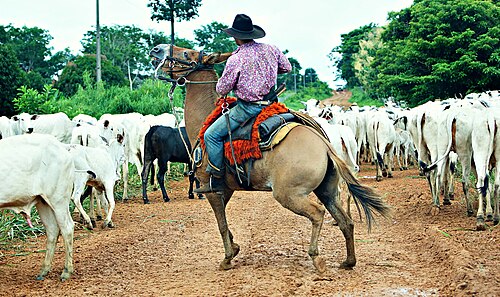
Brazil is the holder of the second largest herd of cattle in the world, 22.2% of the world herd, behind only India, which does not produce them for consumption. The country was also the second largest producer of beef, responsible for 15.4% of global production. The United States (the world's largest producer), Brazil and the European Union, together, accounted for almost half of all meat produced in the world in 2016. In 2016 Brazilian beef exports in natura totaled 1.08 million tons with a value of R $4.35 billion.[8]
The Brazilian cattle herd had 218.23 million head in 2016. The main cattle ranching center in Brazil is the state of Mato Grosso, the largest cattle herd in Brazil. In 2016, the Central-West Region had 34.4% of the national total. The North Region registered 47.98 million head of cattle, the second largest in the country. Mato Grosso was the state with the largest cattle herd, housing 13.9% of the Brazilian total. At the time, the state had 30.30 million head of cattle. Minas Gerais, Goiás and Mato Grosso do Sul contributed 10.8%, 10.5% and 10.0% of the national staff, respectively. At the municipal level, the largest numbers were located in São Félix do Xingu (PA), Corumbá (MS), Ribas do Rio Pardo (MS), Cáceres (MT) and Marabá (PA). Among the 20 municipalities with the largest herd, 13 were located in the Midwest, six in the North, and one in the South of the country.[8]
Brazil in 2018 was the 3rd largest world producer of milk, behind only the United States and India. This year, the country produced 35.1 billion liters.[9]
The South region holds the first place in the ranking in Brazilian milk production. The South has 35.7%, competing with the Southeast (which was the largest producer until 2014), which has 34.2%. The Southeast has the largest herd of milked cows: 30.4% of the total of 17.1 million existing in Brazil. The highest productivity, however, is that of the South Region, with an average of 3,284 liters per cow per year, which is why it leads the ranking of milk production since 2015. The municipality of Castro, in Paraná, was the largest producer in 2017, with 264 million liters of milk. Paraná is already the second largest national producer with 4.7 billion liters, second only to Minas Gerais. Minas Gerais is the main milk producing state in Brazil, with the largest number of milked cows, responsible for 26.6% of production and 20.0% of total milking animals. The municipality of Patos de Minas was the 2nd largest producer in 2017, with 191.3 million liters of milk. In 2015, the state produced 9.1 billion liters of milk.[10][11]
Pigs
In 2019, Brazil was the 4th largest pork producer in the world, with almost 4 million tons, after China, the European Union and the United States.[12]
تُعدّ الولايات الجنوبية الثلاث أكبر منتجي لحم الخنزير في البرازيل. بلغ عدد رؤوس الخنازير في البرازيل 41.1 مليون رأس عام 2017. وتُعتبر سانتا كاتارينا أكبر منتج في البرازيل، حيث تُساهم بنسبة 19.7% من إجمالي الإنتاج البرازيلي. وتُساهم الولاية بنسبة 28.38% من عمليات الذبح في البلاد، وبنسبة 40.28% من صادرات لحم الخنزير البرازيلي. وتأتي بارانا (17.2%) وريو غراندي دو سول (14.6%) في المرتبتين الثانية والثالثة على التوالي. وتُعدّ مدن توليدو (بارانا)، وريو فيردي (غوياس)، وأوبرلانديا (ميناس جيرايس) من أكثر المدن التي تضم أعدادًا كبيرة من الخنازير. [ 7 ] [ 13 ]
دواجن

تُعد البرازيل أكبر مُصدّر للحوم الدجاج في العالم : 3.77 مليون طن في عام 2019. [ 14 ] [ 15 ]
بلغ عدد دواجن البرازيل في عام 2018 نحو 1.5 مليار رأس. وتشمل قطعان الدواجن، وفقًا للمعهد البرازيلي للجغرافيا والإحصاء (IBGE)، الدجاج والديكة والدجاجات الصغيرة والصيصان. في عام 2018، استحوذت المنطقة الجنوبية ، مع التركيز على إنتاج دجاج التسمين، على ما يقرب من نصف إجمالي الدواجن في البرازيل (46.9%). وبلغت نسبة ولاية بارانا وحدها 26.2%. إلا أن الوضع ينعكس بالنسبة للدجاج. فقد تصدرت المنطقة الجنوبية الشرقية القائمة بنسبة 38.9% من إجمالي عدد الدواجن في البلاد. وقُدّر عدد الدجاجات الصغيرة بـ 246.9 مليون دجاجة في عام 2018. وبلغت نسبة ولاية ساو باولو 21.9%. وكانت بلدية سانتا ماريا دي جيتبا (إسبرطة) هي البلدية التي تضم أكبر عدد من الدواجن والدجاجات الصغيرة. أما بالنسبة للدجاج، فقد جاءت بلديات كاسكافيل (بارانا)، وباستوس (ساو باولو)، وريو فيردي (غوياس)، وأوبرلانديا (ميناس جيرايس) في المراكز التالية. تم استكمال تصنيف بلديات الدجاج من قبل باستوس (SP)، بريمافيرا دو ليستي (MT)، ساو بينتو دو أونا (PE) وإيتانهاندو (MG). في عام 2017، كانت الولايات الرئيسية المنتجة للدواجن هي بارانا (25.3%)، وساو باولو (14.0%)، وريو غراندي دو سول (11.0%)، وسانتا كاتارينا (10.8%). فيما يتعلق بالدجاج ، في عام 2017 كان هناك 242.8 مليون رأس: الجنوب الشرقي (38.7٪) والجنوب (26.0٪)، أكبر المنتجين. ومن بين الولايات، تقدمت ساو باولو بنسبة 21.9%، تليها بارانا (10.1%)، وريو غراندي دو سول (8.8%)، وميناس جيرايس (8.7%)، وإسبريتو سانتو (7.9%). [ 16 ] [ 17 ]
في عام 2016، كانت البرازيل سابع أكبر منتج للبيض في العالم. [ 18 ]
Brazilian production of chicken eggs was 4.4 billion dozens in 2018, generating an income of R $14.0 billion. The Southeast Region had 43.8% of this total. The South comes in 2nd place, with approximately 24% of production. The state of São Paulo was the largest national producer (25.6%). Paraná comes in 2nd place with approximately 10%. Among the municipalities, the largest producers are the cities of Santa Maria de Jetibá (ES), Bastos (SP) and Primavera do Leste (MT).[19][20]
In 2018, the Brazilian population of quails was 16.8 million birds. The Southeast is responsible for 64%. São Paulo (24.6%) and Espírito Santo (21.0%) are the largest producers. In the municipal ranking, Santa Maria de Jetibá (ES) occupies the first position both in the quantity of animals and in the production of eggs. Bastos (SP) was in second position.[21]
Goats and sheep
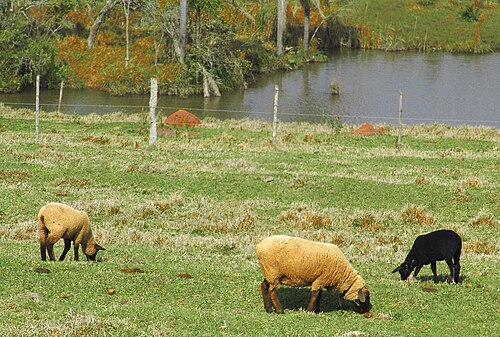
The Northeast Region housed 93.2% of the goat herd (8,944,461 heads) and 64.2% of the sheep herd (11,544,939 heads) in 2017. Bahia concentrated 30.9% of the goat herd and 20,9% of the national sheep herd. Casa Nova (BA) took first place in the municipal ranking with the largest numbers of both species. The South region was the 2nd largest in the country in the herd of sheep, with 4.2 million heads. Sheep shearing activity remained predominant in the South, which is responsible for 99% of wool production in the country. Rio Grande do Sul continued to be the state with the largest national participation, representing 94.1% of the total. The municipalities of Santana do Livramento, Alegrete and Quaraí led the activity. Currently, meat production has become the main objective of sheep farming in Rio Grande do Sul, due to the increase in prices paid to the producer that made the activity more attractive and profitable. There, sheep breeds more adapted to the subtropical climate are used.[22][23]
In 2016, Brazil had a goat herd of almost 9.8 million heads. The country has the 21st largest herd in the world. However, the Brazilian herd is mostly found in an area with unfavorable climatic conditions (in the semi-arid region of the Northeast), and goat farming is rarely seen as a business activity and is often considered a marginal activity, used only for survival, not on a commercial scale.[24]
Pisciculture

In fish farming, western Paraná, in municipalities close to Toledo and Cascavel, became the largest fish producing region in the country, with tilapia as the main cultivated species. The west represents 69% of all production in Paraná, the largest national producer, with 112 thousand tons. Of this amount, 91% refer to tilapia breeding.[25]
The country's fish production totaled 485.2 thousand tons in 2017. Paraná (20.2%), São Paulo (9.8%) and Rondônia (8.2%) had the largest participation. The city of Nova Aurora led the national production. Tilapia, with 283.2 thousand tons, represented 58.4% of fish farming. Tambaqui, with 18.2%, is the second most created species. The North Region is the largest producer of tambaqui.[7]
The production of shrimp in Brazil was 41.0 thousand tons in 2017. Rio Grande do Norte (37.7%) and Ceará (28.9%) were the largest producers. Aracati, in Ceará, was the city with the largest participation.[7]
The production of oysters, scallops and mussels was 20.9 thousand tons in 2017. Santa Catarina has 98.1% of the national production. Palhoça, Florianópolis and Bombinhas were the municipalities with the highest production.[7]
Honey
In 2017, Brazil was the 11th largest producer of honey in the world, with less than 4.0% of global exports of the product. 41.6 thousand tons were produced, 16.5 thousand tons in the South Region.[26]
The South region was the main honey producer in the country in 2017, accounting for 39.7% of the national total. Rio Grande do Sul was the 1st with 15.2%, Paraná in 2nd with 14.3%, Santa Catarina in 5th with 10.2%.[27]
Buffaloes

في عام 2016، بلغ عدد قطيع الجاموس البرازيلي 1.37 مليون رأس. وتركزت 66.2% من مزارع الجاموس في المنطقة الشمالية ، بينما توزعت النسبة المتبقية بين الجنوب الشرقي (12.7%)، والشمال الشرقي (9.5%)، والجنوب (7.4%)، والوسط الغربي (4.4%). وكانت ولاية بارا مسؤولة عن 37.9% من القطيع، تليها ولاية أمابا (21.6%)، ليشكلا معًا 89.9% من قطيع المنطقة الشمالية و59.5% من القطيع الوطني. ومن بين البلديات العشر التي تضم أكبر عدد من الجاموس، تقع ست منها في بارا وأربع في أمابا. وعلى مستوى البلديات، احتلت بلدية تشافيس (بارا) المرتبة الأولى بـ 160.85 ألف رأس، تليها كوتياس (أندرا براديش) وسوري (بارا). [ 8 ] في ميناس جيرايس ، كان هناك زيادة في إنتاج الجاموس لإنتاج اللحوم والألبان، وخاصة جبن الموزاريلا المصنوع من حليب الجاموس.
زراعة المحاصيل
في عام 2016، اعتُبرت البرازيل ثاني أكبر دولة في العالم في تربية الضفادع ، بعد تايوان مباشرةً. إلا أن الإنتاج محدود النطاق، ولا تتوفر بيانات دقيقة حول الكمية المُنتجة: فقد أشار آخر مسح رسمي إلى 160 طنًا سنويًا، بينما يرى البعض أن هذا الرقم أعلى بثلاث مرات. ونظرًا لارتفاع سعر الكيلوغرام الواحد من لحم الضفادع، فإن استهلاكه محدود ويقتصر على فئة قليلة جدًا من الناس. [ 28 ] يتميز لحم الضفادع بسهولة هضمه، وقيمته الغذائية العالية، وانخفاض نسبة الدهون والكوليسترول فيه ، كما يُعتبر من الأطعمة الشهية. ويرى بعض خبراء التغذية أن لحم الضفادع هو أفضل مصدر بروتين متاح للاستهلاك. [ 29 ]
بطة
يتركز إنتاج لحوم البط في البرازيل في ولاية سانتا كاتارينا . وهو إنتاج محدود الحجم، موجه لسوق متخصصة . في عام 2015، صدّرت البلاد ما قيمته 7.637 مليار دولار أمريكي من هذه اللحوم، بشكل رئيسي إلى المملكة العربية السعودية والإمارات العربية المتحدة واليابان. في ذلك الوقت، كانت أكبر شركة في المنطقة متخصصة في هذا النوع من اللحوم تذبح حوالي 10,000 بطة يوميًا. [ 30 ]
انظر أيضاً
مراجع
- ^ "الإنتاج الزراعي | IBGE" . www.ibge.gov.br . تم الاسترجاع 2025-06-15 .
- ^ إمبرابا. "التطور والجودة في Pecuária Brasileira" .
- ↑ "إنفوغرافيك: أكبر مصدري لحوم البقر في العالم" . بيانات ستاتيستا اليومية . 1 مارس 2024. تاريخ الاسترجاع: 15 يونيو 2025 .
- ↑ "صادرات لحوم الدواجن العالمية: الدول الرائدة 2025" . ستاتيستا . تم الاطلاع عليه بتاريخ 15 يونيو 2025 .
- ↑"Milk production". Our World in Data. Archived from the original on 2025-05-21. Retrieved 2025-06-15.
- ↑"Pig meat production, 2023". Our World in Data. Retrieved 15 June 2025.
- 12345PPM 2017: Rebanho bovino predomina no Centro-Oeste e Mato Grosso lidera entre os estados
- 123IBGE: rebanho de bovinos tinha 218,23 milhões de cabeças em 2016
- ↑Brasil é o 3º maior produtor de leite do mundo, superando o padrão Europeu em alguns municípios
- ↑Produção de leite cai 0,5% e totaliza 33,5 bilhões de litros em 2017
- ↑REGIÃO SUL DO BRASIL É O MAIOR CENTRO PRODUTIVO DE PROTEÍNA ANIMAL DO MUNDO
- ↑principais países produtores de carne suína entre 2017 e a estimativa para 2019
- ↑REGIÃO SUL DO BRASIL É O MAIOR CENTRO PRODUTIVO DE PROTEÍNA ANIMAL DO MUNDO
- ↑Conheça os 3 países que desafiam o Brasil nas exportações de frango
- ↑maiores exportadores de carne de frango entre os anos de 2015 e 2019
- ↑As cidades brasileiras com o maior número de aves
- ↑PPM 2017: Rebanho bovino predomina no Centro-Oeste e Mato Grosso lidera entre os estados.
- ↑Brasil é sétimo maior produtor mundial de ovos
- ↑As cidades brasileiras com o maior número de aves
- ↑PPM 2017: Rebanho bovino predomina no Centro-Oeste e Mato Grosso lidera entre os estados.
- ↑As cidades brasileiras com o maior número de aves
- ↑PPM 2017: Rebanho bovino predomina no Centro-Oeste e Mato Grosso lidera entre os estados
- ↑O Rio Grande do Sul é o segundo estado com o maior rebanho de ovinos do Brasil
- ↑Evolução Anual do Efetivo de Rebanho de Caprinos
- ↑REGIÃO SUL DO BRASIL É O MAIOR CENTRO PRODUTIVO DE PROTEÍNA ANIMAL DO MUNDO
- ↑"EVOLUÇÃO DA PRODUÇÃO DE MEL NA ÁREA DE ATUAÇÃO DO BNB". Archived from the original on 2021-02-27. Retrieved 2020-08-08.
- ↑PPM 2017: Rebanho bovino predomina no Centro-Oeste e Mato Grosso lidera entre os estados
- ↑Brasil é segundo maior criador de rãs do mundo
- ↑Carne de rã seria a "melhor proteína", segundo "nutricionista sarada": como ela come?
- ↑Produtores trocam frangos por patos
- Animal husbandry by country
- Agriculture in Brazil
- Economy of São Paulo (state)
- Economy of Rio Grande do Sul