
La Noche Triste
La Noche Triste ("The Night of Sorrows", literally "The Sad Night"), officially called in Mexico Victorious Night,[2] was an important event during the Spanish conquest of the Aztec Empire, where Hernán Cortés and his army of Spanish conquistadors, including their native allies were driven out of the Mexica capital, Tenochtitlan.
Prologue
Cortés' expedition arrived at Tenochtitlan on November 8, 1519, taking up residence in a specially designated compound in the city.[3] Soon thereafter, suspecting treachery on the part of their hosts, the Spaniards took Moctezuma II, the Aztec ruler or Tlatoani, hostage. Though Moctezuma followed Cortés' instructions in continually assuring his subjects that he had been ordered by the gods to move in with the Spaniards and that he had done so willingly, the population began to turn against both the Spaniards and Moctezuma. During the following 98 days, Cortés and his native allies, the Tlaxcaltecs, were increasingly unwelcome guests in the capital.
Cortés heads off Spanish punitive expedition
In May 1520, news from the Gulf coast reached Cortés that a much larger party of Spaniards had been sent by Governor Velázquez of Cuba to arrest Cortés for insubordination. Leaving Tenochtitlan in the care of his trusted lieutenant, Pedro de Alvarado, Cortés marched to the coast, where he defeated the Cuban expedition led by Pánfilo de Narváez sent to capture him. When Cortés told the defeated soldiers about the riches of Tenochtitlan, they agreed to join him. Reinforced by Narvaez's men, Cortés headed back to Tenochtitlan.
Loss of control in Tenochtitlan
During Cortés's absence, Pedro de Alvarado oversaw a slaughter of Aztec nobles and priests celebrating a festival in the city's main temple due to fears of an Aztec revolt. In retaliation, the Aztecs laid siege to the Spanish compound, in which Moctezuma was still being held captive. By the time Cortés returned to Tenochtitlan in late June, the Aztecs had elected a new Tlatoani named Cuitláhuac.
Cortés ordered Moctezuma to address his people from a terrace in order to persuade them to stop fighting and to allow the Spaniards to leave the city in peace. The Aztecs, however, jeered at Moctezuma, and pelted him with stones and darts. By Spanish accounts, he was killed in this assault by the Aztecs, though the Aztecs claim he had been killed instead by the Spanish.[4]:294[5]:90
With Moctezuma dead, Cortés and Alvarado knew they were in a precarious position. Under constant attack, with gunpowder, food, and water in short supply, Cortés decided to break out of the city by night. In order to put the Aztecs off their guard, he sent messengers asking for a one-week ceasefire, at the end of which the Spaniards would return any treasure of which they were in possession and would be permitted to leave the city peacefully.[4]:296
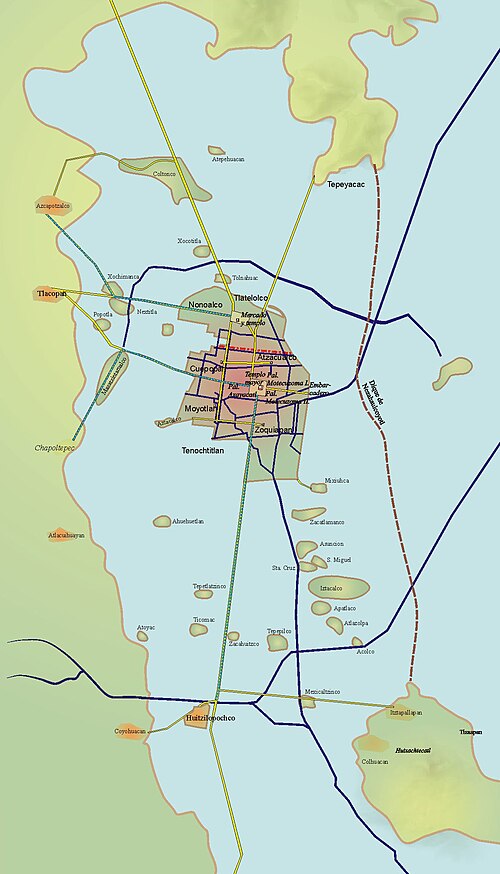
Since the Aztecs had damaged bridges on four of the eight causeways into the island city, the Spaniards devised a portable bridge they could use in order to cross any unspanned sections of water. Cortés ordered that as much of the accumulated gold and other treasure as was feasible be packed and carried away, and invited the Spanish soldiers to take and carry away as much as they wished of the remainder. This invitation would lead to the demise of many soldiers who, overburdened with treasure, found it impossible to navigate the causeways and other obstacles encountered on the way out of the city.[4]:297,306
Cortés ultimately would have to choose among three land routes: north to Tlatelolco, which was the least dangerous path but required the longest trip through the city; south to Coyohuacan and Iztapalapa, two towns that would not welcome the Spanish; or west to Tlacopan, which required the shortest trip through Tenochtitlan, though they would not be welcome there either. Cortés selected the western causeway to Tlacopan, needing the quickest route out of Tenochtitlan with all his provisions and people.
Spanish head for the causeway out
في ليلة الأول من يوليو عام ١٥٢٠، [ ٦ ] غادر جيش كورتيز الكبير معسكره واتجه غربًا نحو جسر تلاكوبان . كان الجسر على ما يبدو غير محمي، فتسلل الإسبان من مجمعهم دون أن يلاحظهم أحد، متسللين عبر المدينة النائمة تحت غطاء عاصفة مطرية. قبل وصولهم إلى الجسر، لاحظهم جنود الأزتك النخبة المعروفون باسم محاربي النسر ، الذين أطلقوا صيحة الإنذار. [ ٤ ] : ٢٩٨، ٣٠٥ ثم صرخ آخرون بالإنذار، أولًا امرأة تستقي الماء، ثم كاهن هويتزيلوبوتشتلي من أعلى معبد تيمبلو مايور . [ ٥ ] [ ٧ ] : ٨٥
مع انتشار الإنذار، خرج العديد من محاربي الأزتك، من النبلاء والعامة على حد سواء، من منازلهم وبدأوا بمهاجمة الإسبان من كل جانب من زوارقهم أو على الجسر باستخدام سيوف الماكواهويتيل والرماح والسهام والحجارة التي تُقذف بالمقاليع. كان القتال ضاريًا. عندما وصل الإسبان وحلفاؤهم من السكان الأصليين إلى الجسر، ظهرت مئات الزوارق في المياه المجاورة لمضايقتهم. شق الإسبان طريقهم عبر الجسر تحت المطر. وبسبب ثقل الذهب والمعدات، فقد بعض الجنود توازنهم وسقطوا في البحيرة وغرقوا. وسط طليعة من الفرسان، تقدم كورتيس ووصل إلى اليابسة في تاكوبا ، تاركًا بقية أفراد الحملة يواجهون مصيرهم في هذا العبور المحفوف بالمخاطر. دافع دياز ديل كاستيلو لاحقًا عن فعله، مصرحًا بأن محاولة البقاء والقتال من أجل البقية كانت ستؤدي على الأرجح إلى إبادتهم جميعًا. [ 4 ] : 299-300
عندما رأى كورتيس وفرسانه الناجين الجرحى يتدافعون إلى القرية، عادوا أدراجهم إلى الطريق، حيث صادفوا بيدرو دي ألفارادو ، وقد سقط عن حصانه وأصيب بجروح بالغة، برفقة عدد قليل من الإسبان والتلاكسكالتيك. [ 7 ] ووفقًا لبرنال دياز ديل كاستيلو ، عند هذه النقطة تحديدًا انهمرت دموع كورتيس، حين أدرك حجم الكارثة. [ 4 ] : 300
تمكن كورتيس وألفارادو وأقوى الرجال وأكثرهم مهارة من شق طريقهم للخروج من تينوتشتيتلان، رغم أنهم كانوا جميعًا غارقين في الدماء ومنهكين. وقد أصيب كورتيس نفسه في القتال. وفُقدت جميع المدفعية، وكذلك معظم الخيول. [ 4 ] : 302
تختلف المصادر حول العدد الإجمالي للخسائر التي تكبدتها الحملة. فقد زعم كورتيس نفسه أن 154 إسبانيًا لقوا حتفهم إلى جانب أكثر من 2000 من الحلفاء المحليين. وقال ثوان كانو، وهو شاهد عيان آخر على الحدث، إن 1170 إسبانيًا لقوا حتفهم، لكن من المرجح أن هذا العدد يتجاوز العدد الإجمالي للإسبان الذين شاركوا في الحملة. [ 8 ] وقدّر فرانسيسكو لوبيز دي غومارا ، الذي لم يكن شاهد عيان، أن 450 إسبانيًا و4000 من الحلفاء لقوا حتفهم. [ 9 ] أما دياز ديل كاستيلو، الذي كان شاهد عيان، فيتحدث عن مقتل حوالي 450 إسبانيًا و1000 من الحلفاء. [ 4 ]
قُتل ابن مونتيزوما، تشيمالبوبوكا ؛ كما قُتل أمير تيبانيك، تلالتيكاتزين ، [ 5 ] : 87 الملك كاكاماتزين ، وشقيقاته الثلاث وشقيقاه. [ 5 ] : 90
يذكر دياز أن الإسبان تكبدوا خسائر فادحة بلغت 860 قتيلاً من جنودهم، بمن فيهم أولئك الذين شاركوا في معركة أوتومبا اللاحقة . أما التلاكسكالتيك، فقد خسروا ألف جندي. كما تكبد غير المقاتلين المرافقين للحملة خسائر فادحة بلغت 72 إصابة، من بينهم خمس نساء إسبانيات. ومن بين النساء القلائل اللواتي نجين ، لا مالينتشي المترجمة، ودونا لويزا، وماريا إسترادا . [ 4 ] : 302، 305-306 . وقد سُميت هذه الحادثة بـ"ليلة الأحزان" (La Noche Triste) نسبةً إلى الحزن الذي شعر به كورتيس وأتباعه الناجون، والذي عبروا عنه، إزاء الخسائر في الأرواح والأموال التي تكبدوها أثناء الهروب من تينوتشتيتلان.
التداعيات
كانت معارك أخرى تنتظر الإسبان وحلفائهم وهم يشقون طريقهم حول الطرف الشمالي لبحيرة زومبانغو . بعد أسبوع، في معركة أوتومبا ، غير بعيد عن تيوتيهواكان ، التفتوا لمقاتلة الأزتيك المطاردين، وهزموهم هزيمة ساحقة - وفقًا لكورتيس، لأنه قتل قائد الأزتيك - مما منح الإسبان فترة راحة قصيرة سمحت لهم بالوصول إلى تلاكسكالا . [ 4 ] : 303-305
في تلاكسكالا خطط كورتيس لحصار تينوتشتيتلان والتدمير النهائي لإمبراطورية الأزتك.
انظر أيضاً
الحواشي
- ↑ تيوريا دي لا بانديرا.جويدو فيلا. 1974 "اجتمعت مجموعة الاكتشافات والغزوات العظيمة للعالم الجديد تحت رايات قشتالة المتجسدة". تنضم شركات التنقيب وغزو العالم الجديد إلى أسفل المتجسدين في قشتالة.
- ↑ رودريغيز-أليغريا، إنريكي (2023). "كيفية بناء إسبانيا جديدة" . مطبعة جامعة أكسفورد. ISBN 9780197682319.
- ^ كليندينن ، إنجا (1991/01/01). ""قسوةٌ وحشيةٌ وغير طبيعية": كورتيس وغزو المكسيك . تمثيلات . 33 (33): 65-100 . doi : 10.2307/2928758 . ISSN 0734-6018 . JSTOR 2928758 .
- 1 2 3 4 5 6 7 8 9 10 دياز، ب.، 1963، غزو إسبانيا الجديدة ، لندن: كتب بنجوين، ISBN 0140441239
- 1 2 3 4 ليون-بورتيلا، م. 1992، الرماح المكسورة : روايات الأزتك عن غزو المكسيك. بوسطن: دار بيكون للنشر، ISBN 978-0807055014
- ↑ تعطي مصادر مختلفة تواريخ تتراوح من 30 يونيو إلى 4 يوليو، وهي مشكلة تزداد تعقيدًا بسبب استخدام التقويم اليولياني في أوروبا في ذلك الوقت، والذي انحرف عن التاريخ الحقيقي (الشمسي) بما يقرب من 12 يومًا.
- 1 2 هانسون، فيكتور ديفيس (2007). المذبحة والثقافة: معارك بارزة في صعود القوى الغربية . مجموعة كنوبف دابلداي للنشر. ISBN 978-0-307-42518-8.
- ↑ بريسكوت، الملحق.
- ↑ بريسكوت، الكتاب الخامس، الفصل الثالث.
مراجع
المصادر الأولية
- التاريخ الحقيقي لغزو إسبانيا الجديدة (Historia verdadera de la conquista de la Nueva España) بقلم برنال دياز ديل كاستيلو . خدم برنال دياز ديل كاستيلو كجندي مسلح بالسيف والترس في حملة كورتيس، وشارك شخصيًا في المعركة الليلية المعروفة باسم "الليلة الحزينة" (La noche triste). ويُعدّ الفصل 128 من كتابه ("كيف اتفقنا على الفرار من المكسيك، وماذا فعلنا حيال ذلك") سردًا لهذه الأحداث.
- La Historia General de las Indias ("التاريخ العام لجزر الهند") بقلم غونزالو فرنانديز دي أوفييدو إي فالديس . انظر بارسونز (أدناه)، المجلد الثالث، الصفحات من 296 إلى 292. ادعى أوفييدو، الذي لم يكن هو نفسه شاهدًا على La Noche Triste، أنه أجرى مقابلة مع Thoan Cano، وهو عضو في بعثة Pánfilo Narváez الاستكشافية الذي انضم إلى Cortés في عودته إلى المكسيك والذي نجا من الهروب من المدينة.
Secondary sources
- Conquest: Cortés, and the Fall of Old Mexico by Hugh Thomas (1993) ISBN 0-671-51104-1.
- Cortés and the Downfall of the Aztec Empire by Jon Manchip White (1971) ISBN 0-7867-0271-0.
- History of the Conquest of Mexico. by William H. PrescottISBN 0-375-75803-8.
- The Rain God cries over Mexico by László Passuth.
- Seven Myths of the Spanish Conquest by Matthew Restall, Oxford University Press (2003) ISBN 0-19-516077-0.
- The Conquest of America by Tzvetan Todorov (1996) ISBN 0-06-132095-1.
- The Conquistadors by Michael Wood (2002) PBS.
External links
- Página de relación
- Hernando Cortes on the Web with thumbnail galleries
- Catholic Encyclopedia (1911)
- Conquistadors, with Michael Wood – 2001 PBS documentary
- Ibero-American Electronic Text Series presented online by the University of Wisconsin Digital Collections Center.
- 1520 in Mexico
- 1520 in North America
- Battles involving Spain
- Battles involving the Aztec Empire
- Battles involving Tlaxcala
- 1520 conflicts
- Spanish conquest of the Aztec Empire
- 1520s in the Aztec civilization