
Production function

In economics, a production function gives the technological relation between quantities of physical inputs and quantities of output of goods. The production function is one of the key concepts of mainstreamneoclassical theories, used to define marginal product and to distinguish allocative efficiency, a key focus of economics. One important purpose of the production function is to address allocative efficiency in the use of factor inputs in production and the resulting distribution of income to those factors, while abstracting away from the technological problems of achieving technical efficiency, as an engineer or professional manager might understand it.
For modelling the case of many outputs and many inputs, researchers often use the so-called Shephard's distance functions or, alternatively, directional distance functions, which are generalizations of the simple production function in economics.[1]
In macroeconomics, aggregate production functions are estimated to create a framework in which to distinguish how much of economic growth to attribute to changes in factor allocation (e.g. the accumulation of physical capital) and how much to attribute to advancing technology. Some non-mainstream economists, however, reject the very concept of an aggregate production function.[2][3]
The theory of production functions
بشكل عام، لا يُعد الناتج الاقتصادي دالةً رياضيةً للمدخلات، إذ يمكن استخدام أي مجموعة معينة من المدخلات لإنتاج نطاق من المخرجات. ولتحقيق التعريف الرياضي للدالة ، يُفترض عادةً أن دالة الإنتاج تُحدد الحد الأقصى للناتج الذي يمكن الحصول عليه من مجموعة معينة من المدخلات. وبالتالي، تصف دالة الإنتاج حدًا أو نطاقًا يُمثل أقصى ناتج يمكن الحصول عليه من كل توليفة ممكنة من المدخلات. وبدلاً من ذلك، يمكن تعريف دالة الإنتاج بأنها تحديد الحد الأدنى من متطلبات المدخلات اللازمة لإنتاج كميات محددة من الناتج. إن افتراض الحصول على أقصى ناتج من مدخلات معينة يسمح للاقتصاديين بتجاهل المشكلات التقنية والإدارية المرتبطة بتحقيق هذا الحد الأقصى التقني، والتركيز حصريًا على مشكلة كفاءة التخصيص ، المرتبطة بالاختيار الاقتصادي لكمية عامل الإنتاج المستخدمة، أو مدى إمكانية استبدال عامل بآخر. في دالة الإنتاج نفسها، تكون العلاقة بين الناتج والمدخلات غير نقدية؛ أي أن دالة الإنتاج تربط المدخلات المادية بالناتج المادي، ولا تنعكس الأسعار والتكاليف في هذه الدالة.
في إطار اتخاذ القرارات الاقتصادية للشركة فيما يتعلق بالإنتاج - أي تحديد كمية كل عامل إنتاجي تُستخدم لإنتاج كمية محددة من الناتج - وفي ظل أسعار السوق للمنتجات والمدخلات، تمثل دالة الإنتاج الإمكانيات التي توفرها التكنولوجيا الخارجية. وبافتراضات معينة، يمكن استخدام دالة الإنتاج لاستنتاج الناتج الحدي لكل عامل. ستختار الشركة الساعية إلى تعظيم الربح في سوق المنافسة الكاملة (بافتراض ثبات أسعار المنتجات والمدخلات) إضافة مدخلات حتى النقطة التي تتساوى فيها التكلفة الحدية للمدخل الإضافي مع الناتج الحدي في الناتج الإضافي. وهذا يعني تقسيمًا مثاليًا للدخل الناتج عن الإنتاج إلى دخل مستحق لكل عامل إنتاجي، يساوي الناتج الحدي لكل مدخل.
The inputs to the production function are commonly termed factors of production and may represent primary factors, which are stocks. Classically, the primary factors of production were land, labour and capital. Primary factors do not become part of the output product, nor are the primary factors, themselves, transformed in the production process. The production function, as a theoretical construct, may be abstracting away from the secondary factors and intermediate products consumed in a production process. The production function is not a full model of the production process: it deliberately abstracts from inherent aspects of physical production processes that some would argue are essential, including error, entropy or waste, and the consumption of energy or the co-production of pollution. Moreover, production functions do not ordinarily model the business processes, either, ignoring the role of strategic and operational business management. (For a primer on the fundamental elements of microeconomic production theory, see production theory basics).
The production function is central to the marginalist focus of neoclassical economics, its definition of efficiency as allocative efficiency, its analysis of how market prices can govern the achievement of allocative efficiency in a decentralized economy, and an analysis of the distribution of income, which attributes factor income to the marginal product of factor input.
Specifying the production function
A production function can be expressed in a functional form as the right side of

where is the quantity of output and are the quantities of factor inputs (such as capital, labour, land or raw materials). For it must be since we cannot produce anything without inputs.




If is a scalar, then this form does not encompass joint production, which is a production process that has multiple co-products. On the other hand, if maps from to then it is a joint production function expressing the determination of different types of output based on the joint usage of the specified quantities of the inputs.


One formulation is as a linear function:

where are parameters that are determined empirically. Linear functions imply that inputs are perfect substitutes in production. Another is as a Cobb–Douglas production function:


where is the so-called total factor productivity. The Leontief production function applies to situations in which inputs must be used in fixed proportions; starting from those proportions, if usage of one input is increased without another being increased, the output will not change. This production function is given by


تشمل الأشكال الأخرى دالة الإنتاج ذات المرونة الثابتة للإحلال (CES)، وهي شكل معمّم لدالة كوب-دوغلاس، ودالة الإنتاج التربيعية. أفضل شكل للمعادلة التي يجب استخدامها وقيم المعاملات (تختلف هذه العوامل من شركة لأخرى ومن قطاع لآخر. على المدى القصير، تمثل وظيفة الإنتاج واحدة على الأقل مما يلي:تُعتبر المدخلات ثابتة. على المدى الطويل، تكون جميع مدخلات عوامل الإنتاج متغيرة وفقًا لتقدير الإدارة.


يقدم مويسان وسينوسي (2016) صيغة تحليلية لجميع دوال الإنتاج الكلاسيكية الجديدة ذات المدخلين. [ 4 ]
دالة الإنتاج كرسم بياني

يمكن تمثيل أي من هذه المعادلات بيانيًا. يوضح الرسم البياني التالي دالة إنتاج نموذجية (تربيعية) بافتراض وجود مُدخل متغير واحد (أو نسب ثابتة من المُدخلات بحيث يمكن التعامل معها كمتغير واحد). جميع النقاط أعلى دالة الإنتاج غير قابلة للتحقيق بالتكنولوجيا الحالية، وجميع النقاط أسفلها قابلة للتحقيق تقنيًا، وتُظهر جميع النقاط على الدالة الحد الأقصى لكمية الإنتاج التي يمكن الحصول عليها عند مستوى استخدام مُحدد للمُدخل. من النقطة أ إلى النقطة ج، تُحقق الشركة عوائد هامشية موجبة ولكنها متناقصة للمُدخل المتغير. مع استخدام وحدات إضافية من المُدخل، يزداد الإنتاج ولكن بمعدل متناقص. النقطة ب هي النقطة التي تبدأ بعدها العوائد المتوسطة بالتناقص، كما يتضح من انخفاض ميل منحنى متوسط الناتج المادي (APP) بعد النقطة ص. النقطة ب هي مماس لأشد شعاع انحدارًا من نقطة الأصل، وبالتالي يكون متوسط الناتج المادي عند أقصى قيمة له. بعد النقطة B، تتطلب الضرورة الرياضية أن يكون المنحنى الهامشي أسفل المنحنى المتوسط (انظر أساسيات نظرية الإنتاج لمزيد من التوضيح و Sickles و Zelenyuk (2019) لمزيد من المناقشات الموسعة حول وظائف الإنتاج المختلفة وتعميماتها وتقديراتها).
مراحل الإنتاج
لتبسيط تفسير دالة الإنتاج، يُقسّم نطاقها عادةً إلى ثلاث مراحل. في المرحلة الأولى (من نقطة الأصل إلى النقطة ب)، يُستخدم المدخل المتغير مع زيادة في الناتج لكل وحدة، حيث يصل الناتج إلى أقصى قيمة له عند النقطة ب (لأن متوسط المنتج المادي يكون في أقصى قيمة له عند تلك النقطة). ولأن الناتج لكل وحدة من المدخل المتغير يتحسن طوال المرحلة الأولى، فإن الشركة التي لا تتأثر بالسعر ستعمل دائمًا بعد هذه المرحلة.
في المرحلة الثانية، يزداد الإنتاج بمعدل متناقص، وينخفض كل من متوسط الناتج المادي والناتج الحدي . مع ذلك، لا يزال متوسط ناتج المدخلات الثابتة (غير موضح) في ازدياد، لأن الإنتاج يرتفع بينما يظل استخدام المدخلات الثابتة ثابتًا. في هذه المرحلة، يؤدي استخدام مدخلات متغيرة إضافية إلى زيادة الناتج لكل وحدة من المدخلات الثابتة، ولكنه يقلل الناتج لكل وحدة من المدخلات المتغيرة. سيكون المزيج الأمثل للمدخلات/المخرجات للشركة التي تتلقى السعر في المرحلة الثانية، على الرغم من أن الشركة التي تواجه منحنى طلب متناقص قد تجد أن العمل في المرحلة الثانية هو الأكثر ربحية. في المرحلة الثالثة، يُستخدم قدر كبير جدًا من المدخلات المتغيرة مقارنةً بالمدخلات الثابتة المتاحة: تُستغل المدخلات المتغيرة بشكل مفرط بمعنى أن وجودها على الهامش يعيق عملية الإنتاج بدلًا من تحسينها. ينخفض الناتج لكل وحدة من كل من المدخلات الثابتة والمتغيرة خلال هذه المرحلة. عند الحد الفاصل بين المرحلتين الثانية والثالثة، يتم الحصول على أعلى ناتج ممكن من المدخلات الثابتة.
تغيير وظيفة الإنتاج
بحسب التعريف، يمكن للشركة على المدى الطويل تغيير حجم عملياتها بتعديل مستوى المدخلات الثابتة على المدى القصير، مما يؤدي إلى رفع دالة الإنتاج عند تمثيلها بيانيًا مقابل المدخلات المتغيرة. إذا كانت المدخلات الثابتة غير منتظمة، فقد تكون تعديلات حجم العمليات أكثر أهمية من مجرد موازنة الطاقة الإنتاجية مع الطلب. على سبيل المثال، قد تحتاج فقط إلى زيادة الإنتاج بمقدار مليون وحدة سنويًا لمواكبة الطلب، ولكن ترقيات معدات الإنتاج المتاحة قد تتطلب زيادة الطاقة الإنتاجية بمقدار مليوني وحدة سنويًا.

إذا كانت الشركة تعمل عند مستوى يُحقق أقصى ربح في المرحلة الأولى، فقد تختار، على المدى الطويل، تقليص حجم عملياتها (عن طريق بيع المعدات الرأسمالية). بتقليل كمية مدخلات رأس المال الثابت، سينخفض منحنى الإنتاج. وتنتقل بداية المرحلة الثانية من B1 إلى B2. وسيكون مستوى الإنتاج الذي يُحقق أقصى ربح (دون تغيير) الآن في المرحلة الثانية.
وظائف الإنتاج المتجانسة والمتماثلة
هناك فئتان خاصتان من دوال الإنتاج يتم تحليلهما بشكل متكرر. دالة الإنتاجيقال إنه متجانس من الدرجة، إذا تم إعطاء أي ثابت موجب،. لوتُظهر الدالة عوائد متزايدة على نطاق الإنتاج ، وتُظهر عوائد متناقصة على نطاق الإنتاج إذاإذا كانت متجانسة من الدرجة, it exhibits constant returns to scale. The presence of increasing returns means that a one percent increase in the usage levels of all inputs would result in a greater than one percent increase in output; the presence of decreasing returns means that it would result in a less than one percent increase in output. Constant returns to scale is the in-between case. In the Cobb–Douglas production function referred to above, returns to scale are increasing if , decreasing if , and constant if .








If a production function is homogeneous of degree one, it is sometimes called "linearly homogeneous". A linearly homogeneous production function with inputs capital and labour has the properties that the marginal and average physical products of both capital and labour can be expressed as functions of the capital-labour ratio alone. Moreover, in this case, if each input is paid at a rate equal to its marginal product, the firm's revenues will be exactly exhausted and there will be no excess economic profit.[5]:pp.412–414
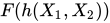
Homothetic functions are functions whose marginal technical rate of substitution (the slope of the isoquant, a curve drawn through the set of points in say labour-capital space at which the same quantity of output is produced for varying combinations of the inputs) is homogeneous of degree zero. Due to this, along rays coming from the origin, the slopes of the isoquants will be the same. Homothetic functions are of the form where is a monotonically increasing function (the derivative of is positive ()), and the function is a homogeneous function of any degree.


Aggregate production functions
In macroeconomics, aggregate production functions for whole nations are sometimes constructed. In theory, they are the summation of all the production functions of individual producers; however there are methodological problems associated with aggregate production functions, and economists have debated extensively whether the concept is valid.[3]
Criticisms of the production function theory
There are two major criticisms of the standard form of the production function.[6]
On the concept of capital
During the 1950s, '60s, and '70s there was a lively debate about the theoretical soundness of production functions (see the Capital controversy). Although the criticism was directed primarily at aggregate production functions, microeconomic production functions were also put under scrutiny. The debate began in 1953 when Joan Robinson criticized the way the factor input capital was measured and how the notion of factor proportions had distracted economists. She wrote:
لقد كانت دالة الإنتاج أداة قوية للتضليل التعليمي. يُعلَّم طالب النظرية الاقتصادية أن يكتبأينهي كمية من العمالة،كمية من رأس المال ومعدل إنتاج السلع. [يُطلب منهم] افتراض أن جميع العمال متساوون، وقياسفي ساعات العمل؛ يُخبرون بشيء عن مشكلة الرقم القياسي في اختيار وحدة الإنتاج؛ ثم يُسرعون بهم إلى السؤال التالي، على أمل أن ينسوا السؤال عن وحدات قياس K. قبل أن يسألوا، يكونون قد أصبحوا أساتذة، وهكذا تنتقل عادات التفكير غير الدقيقة من جيل إلى جيل. [ 7 ]
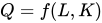


بحسب هذا الرأي، يستحيل تصور رأس المال بحيث تكون كميته مستقلة عن أسعار الفائدة والأجور . تكمن المشكلة في أن هذا الاستقلال شرط أساسي لرسم منحنى الإنتاج المتساوي. علاوة على ذلك، يساعد ميل منحنى الإنتاج المتساوي في تحديد أسعار عوامل الإنتاج النسبية، ولكن لا يمكن رسم المنحنى (وقياس ميله) إلا إذا كانت الأسعار معروفة مسبقًا.
حول الأهمية التجريبية
نتيجةً للانتقادات الموجهة لضعف أسسها النظرية، زُعم أن النتائج التجريبية تدعم بقوة استخدام دوال الإنتاج الكلية الكلاسيكية الجديدة ذات السلوك الجيد . ومع ذلك، فقد أثبت أنور شيخ أنها تفتقر أيضاً إلى أي صلة تجريبية، طالما أن التطابق الجيد المزعوم نابع من معادلة محاسبية، وليس من أي قوانين أساسية للإنتاج/التوزيع. [ 8 ]
الموارد الطبيعية
عادةً ما تغيب الموارد الطبيعية عن دوال الإنتاج. عندما حاول روبرت سولو وجوزيف ستيغليتز تطوير دالة إنتاج أكثر واقعية بإدراج الموارد الطبيعية، اتبعا أسلوبًا انتقده الخبير الاقتصادي نيكولاس جورجيسكو-رويجن ووصفه بأنه "خدعة": فقد أغفل سولو وستيغليتز قوانين الديناميكا الحرارية ، إذ سمح نموذجهما لرأس المال البشري بأن يحل محل الموارد الطبيعية تمامًا. لم يُعلّق سولو ولا ستيغليتز على انتقاد جورجيسكو-رويجن، رغم دعوتهما لذلك في عدد سبتمبر 1997 من مجلة الاقتصاد البيئي . [ 2 ] [ 9 ] : 127-136 [ 3 ] [ 10 ]
يمكن فهم جورجيسكو-رويجن على أنه ينتقد منهج سولو وستيغليتز في النمذجة الرياضية لعوامل الإنتاج. وسنستخدم مثال الطاقة لتوضيح نقاط القوة والضعف في المنهجين المذكورين.
عوامل الإنتاج المستقلة
يصف روبرت سولو وجوزيف ستيغليتز نهجًا لنمذجة الطاقة كعامل إنتاج يفترض ما يلي: [ 11 ]
- تُعدّ العمالة ورأس المال ومدخلات الطاقة والتغير التقني (التي تم حذفها أدناه للاختصار) العوامل الوحيدة ذات الصلة بالإنتاج.
- عوامل الإنتاج مستقلة عن بعضها البعض بحيث تأخذ دالة الإنتاج الشكل العام،
- لا تعتمد مدخلات العمل ورأس المال والطاقة إلا على الوقت بحيث.


ينتج عن هذا النهج دالة إنتاج تعتمد على الطاقة، تُعطى على النحو التالي:[ 11 ] [ 12 ] مع ذلك ، وكما نوقش في دراسات أحدث، لا يُحاكي هذا النهج بدقة الآلية التي تؤثر بها الطاقة على عمليات الإنتاج. [ 13 ] انظر الحالات التالية التي تدعم مراجعة الافتراضات التي يقوم عليها هذا النموذج:

- إذا كان العمال في أي مرحلة من مراحل عملية الإنتاج يعتمدون على الكهرباء لأداء وظائفهم، فإن انقطاع التيار الكهربائي سيقلل بشكل كبير من إنتاجهم الأقصى، وانقطاع التيار الكهربائي لفترة طويلة بما يكفي سيؤدي إلى انخفاض إنتاجهم الأقصى إلى الصفر. لذلكينبغي تصميمها بحيث تعتمد بشكل مباشر على مدخلات الطاقة المتغيرة مع الزمن.

- في حال انقطاع التيار الكهربائي، لن تتمكن الآلات من العمل، وبالتالي سينخفض إنتاجها الأقصى إلى الصفر. لذلكينبغي تصميمها بحيث تعتمد بشكل مباشر على مدخلات الطاقة المتغيرة مع الزمن.
وقد أظهر هذا النموذج أيضًا أنه يتنبأ بانخفاض الإنتاج بنسبة 28% مقابل انخفاض الطاقة بنسبة 99%، مما يدعم مراجعة افتراضات هذا النموذج. [ 13 ] تجدر الإشارة إلى أنه على الرغم من عدم ملاءمة هذا النموذج للطاقة، إلا أن اتباع نهج نمذجة "مستقل" قد يكون مناسبًا لنمذجة موارد طبيعية أخرى مثل الأراضي.
عوامل الإنتاج المترابطة
يمكن مراجعة دالة الإنتاج "المستقلة" المعتمدة على الطاقة من خلال النظر في دوال مدخلات العمل ورأس المال المعتمدة على الطاقة،ينتج عن هذا النهج دالة إنتاج تعتمد على الطاقة، تُعطى بشكل عام على النحو التالي:تُناقش تفاصيل اشتقاق صيغة وظيفية محددة لدالة الإنتاج هذه، بالإضافة إلى الدعم التجريبي لهذه الصيغة، في دراسة نُشرت مؤخرًا. [ 13 ] تجدر الإشارة إلى أنه يمكن استخدام حجج مماثلة لتطوير دوال إنتاج أكثر واقعية تأخذ في الاعتبار موارد طبيعية أخرى قابلة للنضوب إلى جانب الطاقة.



- إذا نفدت الموارد الطبيعية اللازمة لإنتاج آلة معينة أو صيانة الآلات الموجودة في منطقة جغرافية ما، وعجزت عن استيراد المزيد أو إعادة التدوير، فإن الآلات في تلك المنطقة ستتلف في نهاية المطاف، وسينخفض إنتاجها الأقصى إلى ما يقارب الصفر. ينبغي نمذجة هذا الأمر باعتباره يؤثر بشكل كبير على إجمالي الإنتاج. لذلك،ينبغي تصميمها على أنها تعتمد بشكل مباشر على مدخلات الموارد الطبيعية المتغيرة مع الزمن.

The practice of production functions
The theory of the production function depicts the relation between physical outputs of a production process and physical inputs, i.e. factors of production. The practical application of production functions is obtained by valuing the physical outputs and inputs by their prices. The economic value of physical outputs minus the economic value of physical inputs is the income generated by the production process. By keeping the prices fixed between two periods under review we get the income change generated by a change of the production function. This is the principle how the production function is made a practical concept, i.e. measureable and understandable in practical situations.
See also
- Assembly line
- Computer-aided manufacturing
- Distribution (economics)
- Division of labour
- Economic region of production
- Industrial Revolution
- Mass production
- Production
- Production theory basics
- Production possibility frontier
- Productive forces
- Productive and unproductive labour
- Productivity
- Productivity improving technologies (historical)
- Productivity model
- Second Industrial Revolution
References
Citations
- ↑Sickles, R., & Zelenyuk, V. (2019). Measurement of Productivity and Efficiency: Theory and Practice. Cambridge: Cambridge University Press. doi:10.1017/9781139565981
- 12Daly, H (1997). "Forum on Georgescu-Roegen versus Solow/Stiglitz". Ecological Economics. 22 (3): 261–306. doi:10.1016/S0921-8009(97)00080-3.
- 123Cohen, A. J.; Harcourt, G. C. (2003). "Retrospectives: Whatever Happened to the Cambridge Capital Theory Controversies?". Journal of Economic Perspectives. 17 (1): 199–214. doi:10.1257/089533003321165010.
- ↑see Moysan and, G.; Senouci, M. (2016). "A note on 2-input neoclassical production functions". Journal of Mathematical Economics. 67: 80–86. doi:10.1016/j.jmateco.2016.09.011. S2CID 3581910.
- ↑Chiang, Alpha C. (1984) Fundamental Methods of Mathematical Economics, third edition, McGraw-Hill.
- ↑On the history of production functions, see Mishra, S. K. (2007). "A Brief History of Production Functions". Working Paper. SSRN 1020577.
- ↑Robinson, Joan (1953). "The Production Function and the Theory of Capital". Review of Economic Studies. 21 (2): 81–106. doi:10.2307/2296002. JSTOR 2296002.
- ↑Shaikh, A. (1974). "Laws of Production and Laws of Algebra: The Humbug Production Function". Review of Economics and Statistics. 56 (1): 115–120. doi:10.2307/1927538. JSTOR 1927538.
- ↑Daly, Herman E. (2007). "How long can neoclassical economists ignore the contributions of Georgescu-Roegen?". Ecological Economics and Sustainable Development. Selected Essays of Herman Daly(PDF). Cheltenham: Edward Elgar. ISBN 978-1-84720-101-0– via United Diversity.
- ↑Ayres, Robert U.; Warr, Benjamin (2009). The Economic Growth Engine: How Useful Work Creates Material Prosperity. Edward Elgar. ISBN 978-1-84844-182-8.
- 12Stiglitz, Joseph E. (1974). "Growth with Exhaustible Natural Resources: The Competitive Economy". The Review of Economic Studies. 41: 139–152. doi:10.2307/2296378. ISSN 0034-6527. JSTOR 2296378.
- ↑Kümmel, Reiner; Ayres, Robert U.; Lindenberger, Dietmar (2010-07-01). "Thermodynamic laws, economic methods and the productive power of energy". Journal of Non-Equilibrium Thermodynamics. 35 (2): 145–179. Bibcode:2010JNET...35..145K. doi:10.1515/jnetdy.2010.009. ISSN 1437-4358. S2CID 73538957.
- 123Keen, Steve; Ayres, Robert U.; Standish, Russell (2019-03-01). "A Note on the Role of Energy in Production". Ecological Economics. 157: 40–46. Bibcode:2019EcoEc.157...40K. doi:10.1016/j.ecolecon.2018.11.002. ISSN 0921-8009. S2CID 158863011.
Sources
- Jorgenson, D.W.; Ho, M.S.; Samuels, J.D. (2014). Long-term Estimates of U.S. Productivity and Growth(PDF). Tokyo: Third World KLEMS Conference.
- Riistama, K.; Jyrkkiö E. (1971). Operatiivinen laskentatoimi (Operative accounting). Weilin + Göös. p. 335.
- Saari, S. (2006). Productivity. Theory and Measurement in Business(PDF). Espoo, Finland: European Productivity Conference.
- Saari, S. (2011). Production and Productivity as Sources of Well-being. MIDO OY. p. 25.
- Sickles, R., & Zelenyuk, V. (2019). Measurement of Productivity and Efficiency: Theory and Practice. Cambridge: Cambridge University Press. https://assets.cambridge.org/97811070/36161/frontmatter/9781107036161_frontmatter.pdf
Further reading
- Brems, Hans (1968). "The Production Function". Quantitative Economic Theory. New York: Wiley. pp. 62–74.
- Craig, C.; Harris, R. (1973). "Total Productivity Measurement at the Firm Level". Sloan Management Review (Spring 1973): 13–28.
- Guerrien B. and O. Gun (2015) "Putting an end to the aggregate function of production... forever?", Real World Economic Review N°73
- Hulten, C. R. (January 2000). "Total Factor Productivity: A Short Biography". NBER Working Paper No. 7471. doi:10.3386/w7471.
- Heathfield, D. F. (1971). Production Functions. Macmillan Studies in Economics. New York: Macmillan Press.
- Intriligator, Michael D. (1971). Mathematical Optimalization and Economic Theory. Englewood Cliffs: Prentice-Hall. pp. 178–189. ISBN 0-13-561753-7.
- Laidler, David (1981). Introduction to Microeconomics (Second ed.). Oxford: Philip Allan. pp. 124–137. ISBN 0-86003-131-4.
- Maurice, S. Charles; Phillips, Owen R.; Ferguson, C. E. (1982). Economic Analysis: Theory and Application (Fourth ed.). Homewood: Irwin. pp. 169–222. ISBN 0-256-02614-9.
- Moroney, J. R. (1967). "Cobb–Douglass production functions and returns to scale in US manufacturing industry". Western Economic Journal. 6 (1): 39–51. doi:10.1111/j.1465-7295.1967.tb01174.x.
- Pearl, D.; Enos, J. (1975). "Engineering Production Functions and Technological Progress". Journal of Industrial Economics. 24 (1): 55–72. doi:10.2307/2098099. JSTOR 2098099.
- Shephard, R. (1970). Theory of Cost and Production Functions. Princeton, NJ: Princeton University Press.
- Thompson, A. (1981). Economics of the Firm: Theory and Practice (3rd ed.). Englewood Cliffs: Prentice Hall. ISBN 0-13-231423-1.
- Sickles, R., & Zelenyuk, V. (2019). Measurement of Productivity and Efficiency: Theory and Practice. Cambridge: Cambridge University Press. https://assets.cambridge.org/97811070/36161/frontmatter/9781107036161_frontmatter.pdf
External links
- Production economics