
Silvery lutung
The silvery lutung (Trachypithecus cristatus), also known as the silvered leaf monkey or the silvery langur, is an Old World monkey. It is arboreal, living in coastal, mangrove, and riverine forests in Sumatra, Borneo, Java, as well as in parts of the southwestern Malay Peninsula, the Natuna Islands, and other nearby islands. It is the type species of its species group.
Description
The silvery lutung is a medium-sized monkey with a long, non-prehensile tail. It has grey-tipped, dark brown or black fur, giving it a uniform silvery appearance. Unlike some related species, there are no paler markings on the face or body, except for a patch of whitish hair on the groin of females. A crest of fur runs along the top of the head, and the hair on the cheeks is long, often obscuring the ears. The hands and feet are hairless, with dark-coloured skin, and have opposable thumbs and toes.[3]
Females range from 46 to 51 centimetres (18 to 20 in) in head-body length, with an average weight of 5.7 kilograms (13 lb) and a tail length of 67 to 75 centimetres (26 to 30 in). Males are slightly larger, from 50 to 58 centimetres (20 to 23 in) in length, with an average weight of 6.6 kilograms (15 lb) and a tail length of 67 to 75 centimetres (26 to 30 in).[4]
Like other langurs, the silvery lutung has a large three-chambered stomach to digest the cellulose found in its herbivorous diet. This allows for fermentation of food, and has some similarities with the stomach of ruminants. The intestine is unusually long, even compared to those of other langurs, and has several pouches along its length, which carry out further fermentation of plant matter. The teeth have grinding ridges and other modifications to allow the more efficient processing of tough leaves.[3]
Distribution and habitat
The silvery lutung is found across Borneo, Sumatra, and Java, as well as in parts of the southwestern Malay Peninsula, the Natuna Islands, and other nearby islands. It inhabits mangrove swamps and nearby forest regions and generally avoids travelling far from coasts or rivers.[2]
Taxonomy
The number and identity of subspecies of the silvery lutung is currently debated. A 2008 analysis confirms the presence of only two subspecies:[5]
- Trachypithecus cristatus cristatus - Borneo, Sumatra, Natuna Islands
- Trachypithecus cristatus selangorensis - Malay Peninsula
The Malay Peninsula form has been subsequently elevated to a separate species, the Selangor silvered langurT. selangorensis[6]
However, some sources distinguish the silvery lutungs of the Natuna Islands as a separate subspecies, T. c. vigilans.[1][2]
Evolution
Genetic analysis has shown that the silvery lutung probably first evolved during a rapid speciation event that occurred between 0.95 and 1.25 million years ago, during which all the living species of the T. cristatus species group evolved. Because of the relative speed and diversity of this event, the species of the group are difficult to distinguish genetically, and there is some uncertainty as to which represents genuinely distinct species.[5] However, the closest living relative of the silvery lutung may be the Javan lutung,[7] although silvery lutungs have also been reported to produce hybrids with Phayre's leaf monkey, generally considered to belong to a different species group.[3]
Fossils of the species are known from the late Pleistocene onwards and occupy the same geographic range as today. Some of these fossils had significantly larger cheek teeth than living animals, although they have not been assigned to a distinct subspecies.[3]
Hybridization
في ولاية صباح الماليزية، لوحظ وجود قرود اللوتونغ الفضية ضمن مجموعات مختلطة الأنواع مع قرود الخرطوم ، كما رُصد تزاوج بين الأنواع، وربما هجين . [ 8 ] شوهد الهجين المشتبه به لأول مرة عندما كان صغيرًا بالقرب من نهر كيناباتانجان في بورنيو الماليزية. [ 9 ] بدأ الباحثون بمراقبة الحيوان وتحليل صوره أثناء نموه، مما أدى إلى استنتاج أنه ظاهرة نادرة للغاية. [ 9 ] يقول الباحثون إن التهجين بين الأنواع وثيقة الصلة ليس بالأمر غير المألوف، ومع ذلك، نادرًا ما يُرصد نسل نوعين متباعدين في البرية، ويضيفون أن هذا الهجين تحديدًا هو ثاني حالة تهجين بين الأجناس (نسل ناتج عن تزاوج بين أجناس مختلفة ) تُسجل في الرئيسيات البرية. [ 9 ] غالبًا ما تكون الحيوانات الهجينة عقيمة، لا سيما مع الأنواع المتباعدة، لأن ذلك يُسبب خللًا في الكروموسومات . [ 9 ] مع ذلك، أظهرت صورة للحيوان في مرحلة البلوغ وهي تحمل رضيعًا يبدو أنها ترضعه. [ 9 ] يعتقد الباحثون أن هذا قد يكون نتيجة انحصار النوعين في رقعة صغيرة من الغابات النهرية بسبب إزالة الغابات لزراعة أشجار نخيل الزيت ، [ 8 ] وهو شكل من أشكال تجزئة الموائل ، مما أدى إلى نشوء مجموعة سكانية منفصلة من كلا النوعين.
السلوك والبيئة

طيور اللوتونغ الفضية نهارية النشاط ، وتتنقل في مجموعات تتراوح بين 9 و40 فرداً، تضم ذكراً بالغاً واحداً والعديد من الإناث البالغات اللواتي يتشاركن رعاية الصغار. نادراً ما تغادر هذه الطيور الأشجار، التي توفر لها الحماية من الحيوانات المفترسة الأرضية، وتفرّ بسرعة عند تعرضها للخطر. تشغل كل مجموعة نطاقاً منزلياً يتراوح بين 20 و43 هكتاراً (49 إلى 106 فداناً) ، مع إمكانية تداخل هذه النطاقات مع نطاقات المجموعات المجاورة. خلال النهار، قد تقطع الطيور مسافة تصل إلى 500 متر (1600 قدم) عبر الغابة، حيث تشكل بعضها مجموعات فرعية من الإناث فقط تنفصل عن المجموعة التي تضم الذكر. وتلجأ المجموعة بأكملها إلى شجرة واحدة ليلاً. [ 3 ]
The social structure of silvery lutungs is matrilineal and harem based. Females remain in the group for life, while males leave shortly after reaching adulthood, living in small groups of their own until they can take over an established harem. Within the group, males dominate the females, and females with young dominate those without. However, there is relatively little aggression within the group compared with some related species.
Because group ranges often overlap, different groups frequently come into contact with one another. The adult male protects his group and territory from competing males, communicating his dominance to other males via vocalizations and fighting. In the absence of males, however, females from different groups are more likely to interact peacefully. The most serious conflicts occur when a male intrudes directly on the territory of another male, which may result in the intruder displacing the resident and taking control of the group. In many other primates, such a displacement would normally be followed by the male-killing any infants sired by his predecessor; although this may occur in silvery lutungs, it has not been directly observed and may be less common than in some other species.[3]
Although less vocal than other closely related species, silvery lutungs make at least thirteen different vocalisations, with the most common being used by adult males defending their territory. Other vocalisations express fear, anger, excitement, and satisfaction, in addition to various calls made by infants.[3]
Diet
The silvery lutung is a specialist folivore, including a higher proportion of leaves in its diet than any other colobine monkey. Although it does also eat fruit, and some seeds and flowers, these comprise only 9% of the diet, and it is also able to feed on tougher and more mature leaves than any of its close relatives.[10] Because of these differences, silvery lutungs do not normally live in the same parts of the forest as other monkeys. Where other species are found in the same area, silvery lutungs are more commonly found in the middle canopy of the forest, leaving the higher branches to monkeys with a more frugivorous diet.[3]
Reproduction
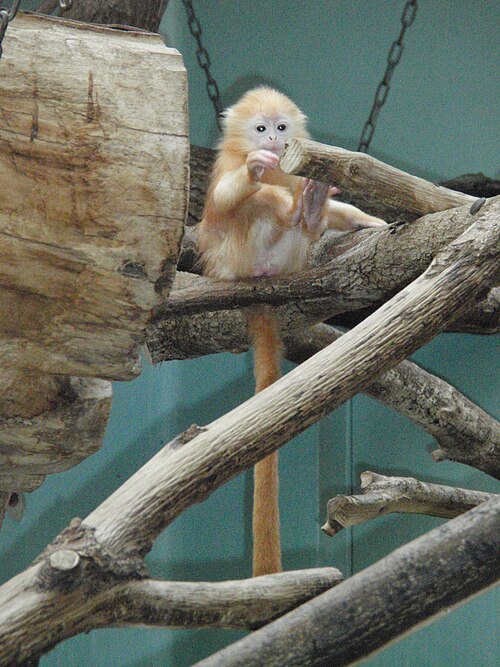
تتكاثر طيور اللوتونغ الفضية على مدار العام، دون موسم تكاثر محدد ، مع أن كل أنثى تلد عادةً مرة واحدة كل 18 إلى 24 شهرًا على الأكثر. [ 11 ] تجذب الأنثى الذكر بتحريك رأسها من جانب إلى آخر، وقد يحدث التزاوج عدة مرات خلال اللقاء الواحد. ومن النادر أن تصل الإناث إلى سن اليأس في البرية، وقد تعيش حتى تسع سنوات بعد الولادة. [ 3 ]
تلد الأنثى صغيرًا واحدًا بعد فترة حمل تتراوح بين 181 و200 يوم. يزن الصغير حوالي 400 غرام (14 أونصة) ، ويبلغ طوله حوالي 20 سم (7.9 بوصة) ، وهو مكتمل النمو، ويتمتع بقبضة قوية تمكنه من التشبث بأمه. يولد حيوان اللوتونغ الفضي بفراء برتقالي وجلد أبيض خالٍ من الشعر على الوجه واليدين والقدمين. يتغير لون الجلد بسرعة إلى لون البالغين الداكن، لكن الفراء لا يصل إلى نمط البالغين إلا بعد ثلاثة إلى خمسة أشهر من الولادة. تتشارك الإناث في رعاية الصغار، ولا يتم فطامهم إلا بعد 18 شهرًا، على الرغم من أن الأم البيولوجية تتوقف عن الإرضاع بعد 12 شهرًا فقط. [ 12 ] يصل الصغار إلى النضج الجنسي بمجرد انتهاء فطامهم تقريبًا، وفي المتوسط، تلد الإناث لأول مرة في عمر 35 شهرًا. [ 13 ]
عاشت طيور اللوتونغ الفضية حتى 31 عامًا في الأسر. [ 3 ]
المفترسات
تشمل الحيوانات المفترسة المحلية القادرة على التغذي على طيور اللوتونغ الفضية النمور والفهود والكلاب البرية وبعض الثعابين الكبيرة. ومن المحتمل أن حيوانات البنتورونغ والعديد من الحيوانات اللاحمة الصغيرة الأخرى قادرة على التغذي على الصغار. [ 3 ]
الأمراض
تُعد آلات النفخ الفضية عرضة بشكل غير عادي للأمراض البشرية، بما في ذلك الإيدز ، ولذلك فقد تم استخدامها على نطاق واسع في البحوث الطبية. [ 14 ]
حفظ
يُصنّف طائر اللوتونغ الفضي ضمن الأنواع المُعرّضة للخطر في القائمة الحمراء للاتحاد الدولي لحفظ الطبيعة ، وهو مُدرج في الملحق الثاني لاتفاقية سايتس . [ 2 ] ويتعرّض موطنه لتهديدات بالغة في جميع أنحاء نطاق انتشاره بسبب قطع الأشجار وإنشاء مزارع نخيل الزيت . كما يُهدّده الصيد للحصول على لحمه، والقبض عليه لتجارة الحيوانات الأليفة. [ 15 ]
مراجع
- 12Groves, C. P. (2005). Wilson, D. E.; Reeder, D. M. (eds.). Mammal Species of the World: A Taxonomic and Geographic Reference (3rd ed.). Baltimore: Johns Hopkins University Press. p. 176. ISBN 0-801-88221-4. OCLC 62265494.
- 1234Meijaard, E. & Nijman, V. (2020). "Trachypithecus cristatus". IUCN Red List of Threatened Species. 2020 e.T22035A17959977. doi:10.2305/IUCN.UK.2020-2.RLTS.T22035A17959977.en. Retrieved 19 November 2021.
- 1234567891011Harding, L.E. (2010). "Trachypithecus cristatus (Primates: Cercopithecidae)". Mammalian Species. 42 (1): 149–165. doi:10.1644/862.1.
- ↑Napier, P.H. (1985). Catalogue of Primates in the British Museum (Natural History) and elsewhere in the British Isles. Part III: family Cercopithecidae, subfamily Colobinae. London: British Museum (Natural History).
- 12Roos, C.; Nadler, T.; Walter, L. (2008). "Mitochondrial phylogeny, taxonomy and biogeography of the silvered langur species group (Trachypithecus cristatus)". Molecular Phylogenetics and Evolution. 47 (2): 629–636. Bibcode:2008MolPE..47..629R. doi:10.1016/j.ympev.2008.03.006. PMID 18406631.
- ↑Roos, C.; Boonratana, R.; Supriatna, J.; Fellowes, J.R.; Groves, C.P.; Nash, S.D.; Rylands, A.B.; Mittermeier, R.A. (2014). "An updated taxonomy and conservation status review of Asian primates"(PDF). Asian Primates Journal. 4 (1): 2−38.
- ↑Rosenblum, L.L.; et al. (1997). "High mitochondrial DNA diversity with little structure within and among leaf monkey populations (Trachypithecus cristatus and Trachypithecus auratus)". International Journal of Primatology. 18 (6): 1005–1028. doi:10.1023/A:1026304415648. S2CID 19214458.
- 12Lhota, S.; Yap, J.L.; Benedict, M.L.; Ching, K. (2022). "Is Malaysia's "mystery monkey" a hybrid between Nasalis larvatus and Trachypithecus cristatus? An assessment of photographs". International Journal of Primatology. 43 (3): 513–532. doi:10.1007/s10764-022-00293-z. PMC 9039274. PMID 35498121.
- 12345Reporter, Robyn White Nature (2022-05-05). "Hybrid 'Mystery Monkey' Discovered in Borneo". Newsweek. Retrieved 2024-01-27.
- ↑Caton, J.M. (1999). "Digestive strategy of the Asian colobine genus Trachypithecus". Primates. 40 (2): 311–325. doi:10.1007/bf02557555. S2CID 19986844.
- ↑Medway, L. (1970). "Breeding of the silvered leaf monkey, Presbytis cristata, in Malaya". Journal of Mammalogy. 51 (3): 630–632. doi:10.2307/1378413. JSTOR 1378413.
- ↑Shelmidine, N.; et al. (2009). "Patterns of reproduction in Malayan silvered leaf monkeys at the Bronx Zoo". American Journal of Primatology. 71 (10): 852–859. doi:10.1002/ajp.20712. PMID 19472173. S2CID 7671570.
- ↑Shelmidine, N.; et al. (2007). "Genital swellings in silvered langurs: what do they indicate?". American Journal of Primatology. 69 (5): 519–532. doi:10.1002/ajp.20359. PMID 17154387. S2CID 34267698.
- ↑Lo, S-C.; et al. (1989). "Fatal infection of silvered leaf monkeys with a virus-like infectious agent (VLIA) derived from a patient with AIDS". American Journal of Tropical Medicine and Hygiene. 40 (4): 399–409. doi:10.4269/ajtmh.1989.40.399. PMID 2712198.
- ↑Corlett, R.T. (2007). "The impact of hunting on the mammalian fauna of tropical Asian forests". Biotropica. 39 (3): 292–303. Bibcode:2007Biotr..39..292C. doi:10.1111/j.1744-7429.2007.00271.x. S2CID 85988264.
External links
- BBC: Silvered Langur
- (in Malay)Lotong Kelabu
- IUCN Red List vulnerable species
- Trachypithecus
- Arboreal mammals
- Primates of Southeast Asia
- Mammals of Indonesia
- Mammals of Malaysia
- Primates of Borneo
- Near threatened animals
- Near threatened biota of Asia
- Mammals described in 1821
- Taxa named by Thomas Stamford Raffles