
Socialist Party of Chile
The Socialist Party of Chile (Spanish: Partido Socialista de Chile, PS) is a centre-left to left-wing political party founded in 1933.
Its historic leader was President of ChileSalvador Allende, who was deposed in a coup d'état by General Augusto Pinochet in 1973. The military junta immediately banned socialist, Marxist and other leftist political parties.[19] Members of the Socialist party and other leftists were subject to violent suppression, including torture and murder, under the Pinochet dictatorship, and many went into exile.
Twenty-seven years after the 1973 coup, Ricardo Lagos Escobar won the Presidency as the Socialist Party candidate in the 1999–2000 Chilean presidential election. Socialist Michelle Bachelet won the 2005–06 Chilean presidential election. She was the first female president of Chile and was succeeded by Sebastián Piñera in 2010. In the 2013 Chilean general election, she was again elected president, leaving office in 2018.
History
Beginnings

The Socialist Party of Chile was co-founded on 19 April 1933 by Colonel Marmaduque Grove, who had already led several governments, Oscar Schnake, Carlos Alberto Martínez, future President Salvador Allende, and other personalities. After the Chilean coup of 1973 it was proscribed (along with the other leftist parties constituting the Popular Unity coalition) and the party split into several groups which would not reunite until after the return to civilian rule in 1990.
Socialist thought in Chile goes back to the mid-19th century, when Francisco Bilbao and Santiago Arcos opened a debate on civil rights and social equality in Chile. These ideas took hold in the labour movement at the beginning of the 20th century and, along with them, the various communist, anarchist, socialist, and mutualist ideals of the time were diffused by writers and leaders such as Luis Emilio Recabarren. The impact of the 1917 October Revolution in Russia imparted new vigor to Chile's revolutionary movements, which in the 1920s were mostly identified with the global Communist movement; the Communist Party of Chile was formed.
The Great Depression in the 1930s plunged the country's working and middle classes into a serious crisis that led them to sympathize with socialist ideas, which found expression in the establishment of the short-lived Socialist Republic of Chile in 1932. The idea of founding a political party to unite the different movements identified with socialism took shape in the foundation of the Socialist Party of Chile, on 19 April 1933. At a conference in Santiago, at 150 Serrano, 14 delegates from the Socialist Marxist Party led by Eduardo Rodriguez Mazer; 18 from the New Public Action, headed by the lawyer Eugenio Matte Stolen; 12 delegates of the Socialist Order, whose main exponent was the architect Arturo Bianchi Gundian; and 26 representatives of the Revolutionary Socialist Action of Óscar Schnake formulated the new party's founding document and its short-term action plan, and elected Óscar Schnake as its first executive Secretary General.
The Party's Statement of Principles was:
- The Socialist Party embodies Marxism, enriched by scientific and social progress.
- The Capitalist exploitation based on the doctrine of private property regarding land, industry, resource, and transportation, necessarily must be replaced by an economically socialist state in which said private property be transformed into collective.
- During the process of total transformation of the system of government, a representative revolutionary government of the manual and intellectual labourers' class is necessary. The new socialist state only can be born of the initiative and the revolutionary action of the proletariat masses.
- The socialist doctrine is of an international character and requires the support of all the workers of the world. The Socialist Party will support their revolutionary goals in economics and politics across Latin America in order to pursue a vision of a Confederacy of the Socialist Republics of the Continent, the first step toward the World Socialist Confederation.
The Party quickly obtained popular support. Its partisan structure exhibits some singularities, such as the creation of "brigades" that group their militants according to environment of activity; brigades that live together organically, and brigades of militant youths such as the Confederacy of the Socialist Youth, and the Confederacy of Socialist Women. In the later 1930s they included the "Left Communist" faction, formed by a split of the Communist Party of Chile, headed by Manuel Noble Plaza and comprising the journalist Oscar Waiss, the lawyer Tomás Chadwick and the first secretary of the PS, Ramón Sepúlveda Loyal, among others.
In 1934, the Socialists, along with the Radical-Socialist Party and the Democratic Party, formed the "Leftist Bloc". In the first parliamentary election (March 1937) they obtained 22 representatives (19 representatives and 3 senators), among them its Secretary general Oscar Schnake, elected senator of Tarapacá-Antofagasta, placed by the PS in a noticeable place inside the political giants of the epoch. For the 1938 presidential election, the PS participated in the formation of the Popular Front, withdrawing its presidential candidate, the colonel Marmaduque Grove, and supporting the Radical Party's candidate, Pedro Aguirre Cerda, who narrowly defeated the right-wing candidate following an attempted coup by the National Socialist Movement of Chile. In the government of Aguirre Cerda the socialists obtained the Ministries of Public Health, Forecast and Social Assistance, given to Salvador Allende, the Minister of Promotion, trusted to Oscar Schnake, and the Ministers of Lands and Colonization, handed out to Rolando Merino.
The participation of the Socialist Party in the government of Aguirre Cerda reached an end on 15 December 1940, due to internal conflicts among the Popular Front coalition, in particular with the Communist Party. In the parliamentary elections of March 1941 the PS advanced outside of the Popular Front and obtained 17,9% of the votes, 17 representatives and 2 senators. The PS integrated into the new leftist coalition following Cerda's death, now named Democratic Alliance, which supported the candidacy of the Radical Juan Antonio Ríos, who was triumphantly elected. The Socialists participated in his cabinet, alongside Radicals, members of the Democratic Party and of the Liberal Party and even of the National Falange. Oscar Schnake occupied once again the post of Promotion and the socialist Pedro Populate Vera and Eduardo Escudero Forrastal assumed the positions of Lands and Colonization and Social Assistance, respectively.
The youth of the party assumed a very critical attitude toward these changes and mergers, which caused the expulsion of all the Central Committee of the FJS, among them Raúl Vásquez (its secretary general), Raúl Ampuero, Mario Palestro and Carlos Briones. In the IX Congress of the PS of the year 1943 Salvador Allende displaced Marmaduque Grove as Secretary General and withdrew his party from the government of Ríos. Grove did not accept this situation, and was expelled from the PS and formed the Authentic Socialist Party. These conflicts caused the PS to drop violently to only 7% of the votes in the parliamentary elections of March 1945, diminishing significantly its parliamentary strength.
After World War II
The Socialist Party entered into decline in the 1940s.[20]
There was complete confusion in the Socialist Party for the presidential election of 1946. The PS decided to put up its own candidate; its secretary general Bernardo Ibáñez. However, many militants supported the radical candidate Gabriel González Videla, while the Authentic Socialist Party of Grove stopped supporting the liberal Fernando Alessandri.
After the failure of the candidacy of Ibáñez (who obtained barely a 2.5% of the votes), the purges continued. In the XI Ordinary Congress the current "revolution" of Raúl Ampuero was imposed and he assigned to academic Eugenio González the making of the Program of the Socialist Party which defined its north; the Democratic Republic of Workers.
كان إصدار القانون رقم 8.987 "قانون الدفاع عن الديمقراطية" عام 1948، الذي حظر الشيوعيين، عاملاً آخر للانقسام بين الاشتراكيين. [ 21 ] أيده برناردو إيبانيز، وأوسكار شناكه، وخوان باوتيستا روسيتي، وغيرهم من الاشتراكيين المناهضين للشيوعية، بحماس؛ بينما رفضه مجلس إدارة الحزب بقيادة راؤول أمبويرو ويوجينيو غونزاليس. طُردت المجموعة المناهضة للشيوعية بقيادة إيبانيز من الحزب الاشتراكي، وشكّلت حزب العمال الاشتراكي؛ ومع ذلك، خصّص المحافظون في السجل الانتخابي لمجموعة إيبانيز اسم الحزب الاشتراكي التشيلي، مما أجبر مجموعة أمبويرو على تبني اسم الحزب الشعبي الاشتراكي . [ 22 ]
أعلن الحزب الاشتراكي الشعبي، في مؤتمره الرابع عشر الذي عُقد في تشيلان في مايو 1952، ترشيح كارلوس إيبانيز ديل كامبو لمنصب الرئيس، رغم رفض السيناتورين سلفادور أليندي وتوماس تشادويك. انشق أليندي عن الحزب وانضم إلى الحزب الاشتراكي التشيلي، الذي تحالف مع الحزب الشيوعي (المحظور) وقدم ترشيح أليندي لجبهة الشعب. أتاح فوز إيبانيز للاشتراكيين الشعبيين الحصول على مناصب قيادية هامة، مثل منصب وزير العمل (كلودوميرو ألميدا) ووزير العقارات (فيليبي هيريرا).
بعد الانتخابات البرلمانية لعام 1953؛ حيث حصل الحزب الاشتراكي الشعبي على 5 أعضاء في مجلس الشيوخ و19 نائباً، تخلى الاشتراكيون الشعبيون عن حكومة كارلوس إيبانيز ديل كامبو وأعلنوا الحاجة إلى إنشاء جبهة عمالية، بالاشتراك مع الحزب الديمقراطي الشعبي، واشتراكيي تشيلي، والشيوعيين المحظورين.
وأخيراً، في الأول من مارس عام 1956، وقع الحزبان الاشتراكيان (الحزب الاشتراكي التشيلي والحزب الشعبي الاشتراكي)، وحزب العمال (الشيوعي المحظور)، والحزب الديمقراطي الشعبي، والحزب الديمقراطي، جميعهم على محضر تأسيس جبهة العمل الشعبي (FRAP) برئاسة سلفادور أليندي جوسينس، الذي شارك بنجاح في الانتخابات البلدية التي جرت في أبريل عام 1956.
بعد الانتخابات البرلمانية التي جرت في مارس 1957، وصل "مؤتمر الوحدة" إلى السلطة، وقد تشكل من الحزب الاشتراكي الشعبي بقيادة راؤول أمبويرو والحزب الاشتراكي التشيلي السلفادوري بقيادة أليندي غوسينس. واختار هذان الحزبان الأمين العام للحزب الاشتراكي الموحد، سالومون كوربالان.
On 31 July 1958, the Law of Permanent Defense of Democracy was derogated by the National Congress, therefore the ban of the Communist Party was repealed. In the presidential elections of 1958, the standard bearer of the Front of Popular Action (FRAP), the socialist Salvador Allende, lost the presidential election narrowly to Jorge Alessandri. In spite of the loss, the unification of the socialist parties had a new leader, and Chile was one of the few countries of the world in which a Marxist had clear possibilities to win the presidency of the Republic through democratic elections.
The overwhelming triumph of Eduardo Frei Montalva over the candidate of the FRAP Salvador Allende Gossens in the presidential elections of September 1964 caused demoralization among the followers of the "Chilean way to socialism". The National Democratic Party (PADENA) abandoned the coalition of left; and the influence of the Cuban revolution and above all of the "guerrilla way of Ernesto Guevara" they were left to feel the heart of the Socialist Party. The discrepancies of the party were perceived clearly. In July from 1967 the senators Raúl Ampuero and Tomás Chadwick and the representatives Ramón Silva Ulloa, Eduardo Osorio Pardo and Oscar Naranjo Arias were expelled, and founded the popular socialist union (USOPO).
In the XXII Congress, which took place in Chillán in November 1967, the political became more radical, under the influence of Carlos Altamirano Orrego and the leader of the Ranquil Rural Confederation, Rolando Calderón Aránguiz. The party officially adhered to Marxism-Leninism, declared itself in favour of revolutionary, anticapitalist and anti-imperialist changes.[23]
Popular Unity government
In 1969, skepticism about the "Chilean way to socialism" prevailed in the Central Committee of the Socialist Party. Salvador Allende Gossens was proclaimed as the party's presidential candidate, with 13 votes in favor and 14 abstentions, among them that of its secretary general, Aniceto Rodriguez, of Carlos Altamirano Orrego, and of Clodomiro Almeyda Medina. Nevertheless, the candidacy of Allende galvanized the forces of the left, who formed, in October 1969, the Popular Unity coalition including the Socialist Party, Communist Party, Radical Party, Popular Unitary Action Movement (which had split from the Christian Democrat Party), and Independent Popular Action, consisting of former supporters of Carlos Ibáñez. Popular Unity triumphed in the presidential election of September 1970.
في 24 أكتوبر 1970، أُعلن سلفادور أليندي غوسينس رسميًا رئيسًا لجمهورية تشيلي. كان العالم يترقب ذلك؛ فقد وافق على إدارة الائتلاف وأن يكون رئيسًا ماركسيًا ملتزمًا صراحةً ببناء الاشتراكية، مع احترام الآليات الديمقراطية والمؤسسية.
أصبح موقف الحزب الاشتراكي بشأن الانضمام إلى حكومة الاتحاد أكثر راديكالية عندما تولى السيناتور كارلوس ألتاميرانو أوريغو زعامة الحزب، بعد انتخابه في المؤتمر الثالث والعشرين في لا سيرينا في يناير 1971. وأعلن أن الحزب يجب أن يصبح "الطليعة التشيلية في المسيرة نحو الاشتراكية".
في الانتخابات البلدية التي جرت في أبريل/نيسان 1971، حقق الائتلاف اليساري أغلبية مطلقة في انتخابات أعضاء المجالس المحلية، مما أدى إلى تفاقم الاستقطاب نتيجة تحالف الديمقراطيين المسيحيين مع قطاعات اليمين في البلاد. وقد أدى انسحاب حزب اليسار الراديكالي من الحكومة، بمقاعده الستة في مجلس النواب والخمسة في مجلس الشيوخ، إلى حصول حكومة أليندي على أقل من ثلث مقاعد مجلسي البرلمان.

في الانتخابات البرلمانية التي جرت في مارس 1973، نجح ائتلاف الوحدة الشعبية الحاكم في إحباط محاولة من جانب الكونفدرالية الديمقراطية المعارضة لعزل أليندي. ولم تحصل هذه المبادرة على أغلبية الثلثين المطلوبة.
انقلاب وقمع سياسي
لم تُسفر المشاكل الاقتصادية الخطيرة التي واجهت الحكومة إلا عن تعميق الانقسامات السياسية في البلاد. فقد عارض الحزب الاشتراكي، الذي حقق أعلى نسبة تأييد انتخابي في تاريخه، إلى جانب حركة مابو ، أي حوار مع المعارضة اليمينية. وفي الوقت نفسه، كانت الولايات المتحدة تُنفذ خطة مُنسقة لمنع الاشتراكيين من الوصول إلى السلطة في جميع أنحاء العالم، بما في ذلك دعم وكالة المخابرات المركزية لليمين في تشيلي. وفي 11 سبتمبر/أيلول 1973، قاد أوغستو بينوشيه انقلابًا عسكريًا ضد حكومة أليندي، منهيًا بذلك عهد الجمهورية الرئاسية الذي بدأ عام 1924. ورفض الرئيس سلفادور أليندي التنازل عن السلطة للقوات المسلحة، وانتحر في نهاية المطاف في مكتبه بقصر لا مونيدا ، أثناء قصف جوي مكثف للمبنى التاريخي. [ 24 ]
The military coup d'état was devastating to the organization of the Chilean Socialist Party. Within a few weeks of the coup, four members of their Central Committee and seven regional secretaries of the Partido Social had been murdered. A further twelve members of the Central Committee were imprisoned, while the remaining members took refuge in various foreign embassies. The Socialist Party's Secretary General, Carlos Altamirano, managed to escape from Chile, appearing in Havana on 1 January 1974, during the anniversary of the Cuban Revolution.
Lack of experience working 'underground' during the ban led to the breakup of the Party's Secret Directorate. The secret services of the military state managed to infiltrate the organization and, one by one, arrested its principal leaders. The bodies of Exequiel Ponce Vicencio, Carlos Lorca Tobar (disappeared 1975), Ricardo Lagos Salinas and Víctor Zerega Ponce were never found.
Other victims of repression were the former home Secretary, José Tohá González and the former Minister of National Defense, Orlando Letelier del Solar. Having reviewed the consequences of the defeat of the Unidad Popular, and observed the experiences of refugees of "true socialism" in Eastern Europe, and seeing the lack of a cohesive strategy to continue against Pinochet's regime, there was deep dissent within its exterior organization, whose central management was in the German Democratic Republic.
In April 1979, the Tercer Pleno Exterior, the majority sector of the party, named Clodomiro Almeyda as the new Secretary General, Galo Gómez as the Assistant Secretary and expelled Carlos Altamirano, Jorge Arrate, Jaime Suaréz, Luis Meneses and Erich Schnake from the party, charging them with being "remnants of a past which is in the process of being overcome who testify to the survival of a nucleus which is irreducible and resistant to the superior qualitative development of a true revolutionary vanguard".
Altamirano, not accepting this, declared a re-organization of the party and called a Conference. The XXIV Conference took place in France in 1980 and Altamirano declared there that, "Only a very deep and rigorous renewal of definitions and proposals for action, language, style and methods of "doing politics" will make our revolutionary action effective (...) It does not force us to "relaunch" the Partido Social (Socialist Party) of Chile. Yes, it means we must "renew it", understand it as our most precious instrument of change, as an option for power, as an alternative to transformation."
1980s reemergence under dictatorship
في ثمانينيات القرن العشرين، برزت الفصائل الاشتراكية مجدداً كمعارضين فاعلين لحكومة بينوشيه. أسس قطاعٌ من بين ما يُسمى بـ"الاشتراكيين المُجددين" حركة "التقارب الاشتراكي"، التي ساهمت في "حركة العمل الشعبي الموحد" (MAPU)، وحركة عمال الفلاحين (MAPU)، واليساريين المسيحيين. وكان هدفهم، بالتعاون مع الديمقراطية المسيحية، إنهاء الديكتاتورية عبر "أساليب غير هدّامة". أما القطاع الآخر (أغلبيته من بين المناضلين الاشتراكيين في المناطق الداخلية من البلاد) فقد شكّل تحالف "الانتفاضة الشعبية" - وهو اتفاق مع الحزب الشيوعي، والحركة الثورية اليسارية، والحزب الراديكالي لأنسيلمو سولي. وكانت الأهداف واحدة. بعد الاحتجاج الوطني الأول ضد نظام بينوشيه، الذي اندلع في 11 مايو 1983، تكثفت جهود مختلف فصائل الحزب الاشتراكي.
قرر المؤتمر الرابع والعشرون ("المُجدد") للحزب الاشتراكي، بقيادة ريكاردو نونيز ، تشكيل التحالف الديمقراطي. كان هذا التحالف يضم الديمقراطيين المسيحيين، وراديكاليي سيلفا سيما، وقطاعات من اليمين الجمهوري والديمقراطي. وقد عقدوا يوم الاحتجاج الوطني الرابع (11 أغسطس 1983)، واقترحوا، في سبتمبر 1983، تشكيل الكتلة الاشتراكية، وهي أول محاولة لتوحيد الاشتراكية التشيلية تحت شعار "الديمقراطية الآن!".
في غضون ذلك، قام حزب "ألميدا" الاجتماعي، بالاشتراك مع الحزب الشيوعي، وراديكاليين أنيبال بالم، والحركة الثورية اليسارية، بتأسيس "الحركة الديمقراطية الشعبية" (MDP) في 6 سبتمبر 1983، مما تسبب في اليوم الخامس من الاحتجاجات الوطنية.
أدى توقيع الاتفاق الوطني في أواخر أغسطس/آب 1985، بين التحالف الديمقراطي وقطاعات من اليمين الموالي للنظام العسكري، إلى تعميق الانقسامات داخل الجناح اليساري التشيلي. عارض الجناح السياسي العسكري الأكثر راديكالية منهج الانتقال التدريجي نحو الديمقراطية، وكان أبرز ممثليه جبهة مانويل رودريغيز الوطنية (FPMR).
تمت إضافة حزب MAPU-OC، الذي كان من أبرز شخصياته خايمي غازموري وخورخي مولينا وخايمي إستيفيز، إلى حزب Partido Social "المجدد"، الذي يديره الآن كارلوس بريونيس.
In September 1986, the politico-military method of "mass violent insurrectionist uprisings" was finally aborted after the failure of "Operation 20th century", as the assassination attempt on Pinochet by the FPMR was called. Some of the top leaders from among the revolutionary sectors of the "Almeyda" Partido Social, along with conciliators and opportunists, on realizing that the idea of overthrowing the dictatorship was not a viable strategy, began to take control of the party and distance themselves from the Communist Party. As a result, the socialist left wing realized that a "negotiated solution" to the conflict could not be found outside of the provisions of the 1980 Constitution.
In March 1987, Clodomiro Almeyda entered Chile secretly and presented himself before the court to rectify his situation. He was deported to Chile Chico, condemned and deprived of his civic rights.[25]
In April 1987, Ricardo Núñez, new leader of the "renewed" Partido Social, announced, at the 54th Anniversary of the party, "We are not going to remove Pinochet from the political scene using weapons. We shall defeat him with the ballot boxes (..) We are convinced that the town is going to stop Pinochet with the ballot boxes. We are going to build that army of seven million citizens to embrace different alternatives to the Chilean political landscape."
In December 1987 the "renewed" Partido Social founded the Partido por la Democracia (PPD) (Party for Democracy), an "instrumental" party serving as a tool to enable legally democratic forces to participate in the 1988 Plebiscite (Referendum) and in subsequent elections. Ricardo Lagos was appointed as the president. Some radicals, dissident communists, and even democratic liberals joined this party.
In February 1988 the Concertación de Partidos por el No (Coalition of Parties for the 'No') was formed. 17 political parties and movements in Chile joined this coalition. Among them were the members of the Alianza Democrática (the Democratic Alliance), the Almeyda Partido Social, and the Christian Left. The political direction of the campaign fell on the Christian Democratic leader, Patricio Aylwin, and Ricardo Lagos from the PPD. They achieved successful results in the 5 October 1988, Plebiscite, where close to 56% of the valid votes cast rejected the idea that Pinochet would continue as the President of the Republic.[26]
بعد استفتاء أكتوبر 1988، دعا حزب الكونسيرتاسيون إلى إصلاح دستوري لإزالة "البنود الاستبدادية" من دستور 1980. وقد قُبل هذا المقترح من المعارضة الديمقراطية جزئيًا من قبل الحكومة الاستبدادية عبر استفتاء 30 يوليو 1989، حيث تمت الموافقة على 54 تعديلًا على الدستور القائم. ومن بين هذه التعديلات إلغاء المادة 8 المثيرة للجدل، والتي كانت أساسًا لاستبعاد الزعيم الاشتراكي، كلودوميرو ألميدا ، من المشاركة السياسية.
في نوفمبر 1988، شكل حزب ألميدا بارتيدو سوسيال، واليسار المسيحي، والحزب الشيوعي، من بين منظمات يسارية أخرى، حزباً "أداتياً" يُدعى بارتيدو أمبليو دي إزكويردا سوسياليستا (PAIS) (حزب اليسار الاشتراكي العريض)، برئاسة لويس مايرا وأمانة ريكاردو سولاري العامة. [ 27 ]
كونسيرتاسيون
في مايو 1989، أجرى الحزب الاشتراكي "المُجدد" انتخابات داخلية بالاقتراع السري لأعضائه على مستوى البلاد، وذلك لأول مرة في تاريخ الاشتراكية التشيلية. وفازت قائمة خورخي أراتي ولويس ألفارادو، على حساب القوائم المنافسة لإريك شناكه وأكيم سوتو، وقائمة هيرالدو مونيوز (المدعومة من فصيل ريكاردو لاغوس داخل الحزب).
مثّلت قائمة خورخي أراتي الفائزة توجه "التجديد الاشتراكي"، إذ حافظت على تحالف دائم مع الديمقراطيين المسيحيين ضمن تحالف " كونسيرتاسيون "، ودافعت بقوة عن وحدة الحزب، على عكس التوجهات الداخلية الأخرى. بعد الانتخابات، انعقد المؤتمر الخامس والعشرون في كوستا أزول، والذي اتخذ قرارًا تاريخيًا للاشتراكية التشيلية بالتخلي عن عزلتها التقليدية والانضمام إلى الأممية الاشتراكية.
في يونيو/حزيران 1989، عيّن حزب الكونسيرتاسيون الديمقراطي المسيحي باتريسيو أيلوين مرشحًا له في الانتخابات الرئاسية. وكان أيلوين قد فاز على غابرييل فالديس وإدواردو فراي رويز-تاغلي في الانتخابات الداخلية للحزب، وقبل أسابيع قليلة من الانتخابات، حظي بدعم أنصار سيلفا سيما الراديكاليين، بل وحتى أنصار ألميدا السابقين (حزب ألميدا الاشتراكي). وفي نهاية المطاف، استبعد حزب أراتي الاشتراكي (أو حزب التجديد الاشتراكي) مرشحه ريكاردو لاغوس، وانضم إلى ترشيح أيلوين، الذي كان، بصفته رئيسًا للحزب الديمقراطي المسيحي، أحد أبرز معارضي حكومة الوحدة الشعبية.
Aylwin won easily in the presidential elections of 1989, gaining more than the 55% of the valid votes.[28] "Renewal Socialism" was strengthened as 16 representatives of the PPD were elected, 13 of whom were members of the PS-Arrate. In the matter of senators, three of their members were chosen (Ricardo Núñez Muñoz, Jaime Gazmuri and Hernán Vodanovic), but there was regret over the rout of Ricardo Lagos in his candidacy of Santiago West.
PS-Almeyda obtained seven representatives, two of them standing for the PAIS, and the other five elected as independents within the Concertación list. Rolando Calderon Aránguiz was elected as senator in Magallanes.
The fall of the wall of Berlin, on 9 November 1989, deeply affected the Chilean left, especially in its more orthodox sector. This accelerated the process of unification within the party, which was finalized on 27 December 1989. The Movimiento de Acción Popular Unitaria, led by Oscar Guillermo Garretón, took this chance to join the united PS.
Between 22 and 25 November 1990 the "Salvador Allende Unity Congress" was held, with past leaders such as Raúl Ampuero and Aniceto Rodriguez and the Christian Left headed by its president Luis Maira and its two representatives (Sergio Aguiló and Jaime Naranjo) joining the party. In that Congress Jorge Arrate was chosen as president, Ricardo Núñez Muñoz as vice president and Manuel Almeyda Medina as secretary general.
Hortensia Bussi, the widow of Allende, sent a message to the Congress from Mexico:
I salute with deep feeling the reunification of the Socialist Party of Chile. You all know how I have waited for this moment, certain that Allende's comrades would overcome their differences and rebuild the powerful democratic left that Chile needs.
The first challenges for the unified socialists were the exercise of power and the "double membership" status of the "renewal socialists" as members of both the PS and the PPD. Finally, the Socialist Party decided to have itself recorded under its own name and symbols in the electoral rolls, and gave a two-year time limit to its members to opt for the PS or the PPD. A significant number of "renewal socialists" did not return to the PS; among them Erich Schnake, Sergio Bitar, Guido Girardi, Jorge Molina, Vicente Sotta, Víctor Barrueto and Octavio Jara.
In power, the socialists Enrique Correa (as the minister General Secretary of Government), Carlos Ominami (Economy), Germán Correa (Transportation), Ricardo Lagos and Jorge Arrate (Education) and Luis Alvarado (National Resources) entered the cabinets of President Aylwin, while in the House of Representatives, the socialists José Antonio Viera-Gallo and Jaime Estevéz exercised its presidency.
في انتخابات عام 1992، انتُخب جيرمان كوريا رئيسًا للحزب الاشتراكي، بدعم من مجموعة "التجديد" بقيادة ريكاردو نونيز مونيوز وفصيل "النهج الثالث" داخل تيار ألميدا. وقد فازوا على كاميلو إسكالونا وكلودوميرو ألميدا وخايمي إستيفيز، الذين يمثلون تحالفًا بين أنصار كلودوميرو ألميدا التقليديين وفصيل من تيار "التجديد" بقيادة خورخي أراتي.
Concertación تحت قيادة الديمقراطيين المسيحيين (1990-2000)
دعم اليسار (الحزب الاشتراكي - حزب الشعب الديمقراطي) ريكاردو لاغوس مرشحًا عن حزب الكونسيرتاسيون في الانتخابات الرئاسية لعام 1993، لكنه هُزم أمام الديمقراطي المسيحي إدواردو فراي رويز تاغلي ، حيث لم يحصل إلا على 36.6% من الأصوات في الانتخابات التمهيدية التي جرت في 23 مايو. بعد أن أصبح فراي رئيسًا، شغل الاشتراكيون مناصب عليا في حكومته الأولى: الداخلية (جيرمان كوريا)، والتخطيط ( لويس مايرا )، والعمل ( خورخي أراتي )، والأشغال العامة (ريكاردو لاغوس). [ 29 ]
في الانتخابات البرلمانية التي جرت في ديسمبر 1997، حقق الحزب الاشتراكي أداءً سيئاً: فقد انخفض عدد نوابه من 16 إلى 11، وانخفض عدد أعضائه في مجلس الشيوخ من 5 إلى 4. وحصل مرشحه لمجلس الشيوخ كاميلو إسكالونا على 16% فقط من الأصوات في سانتياغو الغربية.
تسبب اعتقال بينوشيه في لندن في أكتوبر 1998 في توترات داخل الحزب الاشتراكي. ضغط وزيرا الخارجية الاشتراكيان خوسيه ميغيل إنسولزا وخوان غابرييل فالديس من أجل إعادة الديكتاتور السابق إلى تشيلي، بينما سافرت مجموعة من كبار الاشتراكيين، بمن فيهم إيزابيل أليندي بوسي ، وخوان بابلو ليتيلير ، وفاني بولارولو، وخوان بوستوس راميريز، إلى لندن لدعم إجراءات القاضي بالتاسار غارزون لتسليمه إلى إسبانيا.
قبل الانتخابات الرئاسية لعام ١٩٩٩، دعمت أحزاب PS وPPD والحزب الاشتراكي الديمقراطي الراديكالي لاغوس مجدداً كمرشح. هذه المرة، فاز لاغوس في الانتخابات التمهيدية التي جرت في ٣٠ مايو بنسبة ٧٠.٢٪ من الأصوات. وفي الانتخابات العامة، حصل على ٤٨.٠٪ من الأصوات في الجولة الأولى، وانتُخب بنسبة ٥١.٣٪ في الجولة الثانية.
على الرغم من إعادة توحيد الحزب في عام 1990، كان للحزب الاشتراكي خمسة فصائل داخلية؛ نويفا إزكيردا، جينيراسيونال، تيرسيريزمو ، أراتيسمو ونونييسمو . [ 30 ] بحلول عام 1998، اندمجت Arratismo و Nuñismo في Megatendencia بينما اندمجت Generacional، وهي تيار قصير يسمى Almeydismo وعناصر من Nueva Izquierda، في Colectivo de Identidad Socialista. ظلت Nueva Izquierda وTercerismo فصائل مستقرة نسبيًا بحلول عام 1998 .
Concertación under Socialist governments (2000–2010)

Lagos was elected president in 1999, defeating the rightwing candidate Joaquín Lavín with 51.3% of the vote,[31] thus becoming the first president in thirty years to have Socialist support – even though Lagos himself was a PD member. Socialist ministers in his first cabinet were José Miguel Insulza (Interior), Ricardo Solari (Labor), Carlos Cruz (Public Works), and Michelle Bachelet (Health).
In the 2001 Chilean parliamentary election, as part of the Coalition of Parties for Democracy, the party won 10 out of 117 seats in the Chamber of Deputies of Chile and 5 out of 38 elected seats in the Senate. The 2001 parliamentary elections were a setback for the Socialists and for the Concertación as a whole. The PS increased its representation by only one deputy and one senator, while the Concertación vote sank below 50% for the first time in its existence.
In September 2003, marking 30 years since the coup against Allende, the Socialist Party issued a document accepting responsibility for the events:
It is beyond all doubt that President Allende maintained an unchanging and impeccable attitude (...) Nevertheless, the socialists have made it clear, and we repeat it now, that we did not do enough to defend the democratic regime. We aimed to carry through a program of change without the necessary majorities in parliament and in society, we remained intransigent in the matter, and we did not give President Allende the support of his party that he needed to lead the government along the pathways that had been defined.
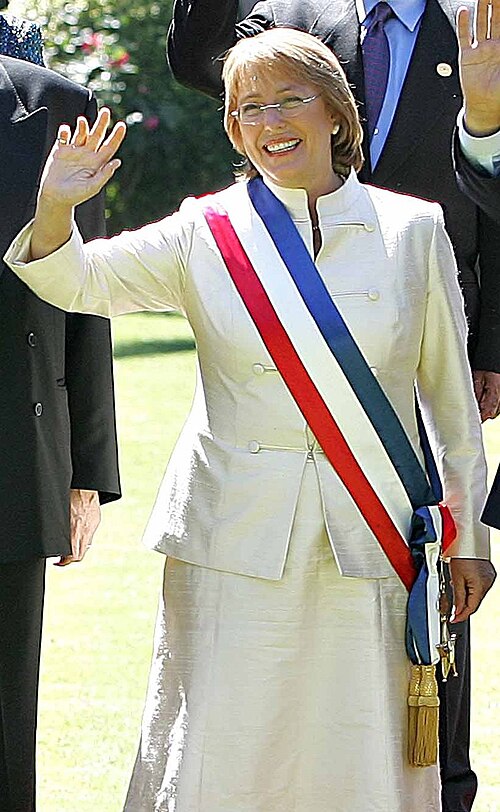
The outcome of the 2005 parliamentary elections was favorable both for the Socialists and for the Concertación: the PS increased its deputies from 12 to 15, and its senators from 5 to 8, giving it the largest block it had ever had in the Senate. Moreover, Michelle Bachelet was elected as president of Chile. For its part, the Concertación regained its electoral hegemony, with an absolute majority in both chambers of parliament.
تولت باشيليت منصب الرئيسة في 11 مارس 2006. وكانت أول امرأة تتولى هذا المنصب في تاريخ البلاد، [ 32 ] ورابع رئيسة على التوالي من حزب الكونسيرتاسيون . تراجعت شعبيتها المرتفعة في البداية بشكل ملحوظ نتيجةً لحركة الطلاب عام 2006 المعروفة باسم " ثورة البطريق "، وأزمة ترانس سانتياغو ، والعديد من الصراعات داخل الائتلاف الحاكم. وصفت حكومتها عهدها بأنه " عقد اجتماعي "، حيث قامت بإصلاح نظام المعاشات التقاعدية ونظام الضمان الاجتماعي، بهدف مساعدة آلاف التشيليين على تحسين مستوى معيشتهم. [ 33 ] واجهت حكومتها الأزمة الاقتصادية العالمية عام 2008 ، لكن شعبيتها تعافت مع تكوين التشيليين رأيًا إيجابيًا تجاه قيادتها، وبلغت نسبة تأييدها النهائية 84%، وهي نسبة لم يسبق لأي رئيس دولة تشيلي أن حققها عند انتهاء ولايته. [ 34 ]
اتسعت الانقسامات داخل الحزب، حيث عارضت فصائل منشقة سياسة كاميلو إسكالونا . واستقالت شخصيات بارزة، من بينهم خورخي أراتي ، والسيناتور أليخاندرو نافارو، والنائب ماركو إنريكيز أومينامي، من الحزب في عامي 2008 و2009.
في الانتخابات البرلمانية لعام 2009، مُني الحزب الاشتراكي بقيادة إسكالونا بهزيمة نكراء: فقد هيمنته على مجلس الشيوخ، إذ لم يحصل إلا على 5 مقاعد، وانخفض عدد نوابه من 15 إلى 11. وفي الوقت نفسه، في الانتخابات الرئاسية الجديدة، خسر مرشح حزب التحالف إدواردو فراي أمام اليميني سيباستيان بينيرا ، منهيًا بذلك عشرين عامًا من حكم حزب التحالف . [ 35 ]
نويفا مايوريا
فازت ميشيل باشيليت بالجولة الثانية من الانتخابات الرئاسية التشيلية لعام 2013 بنسبة 62% من الأصوات. وكانت مرشحة حزب "الأغلبية الجديدة" ( Nueva Mayoría )، وهو نسخة موسعة من تحالف "كونسيرتاسيون" (Concertación) الذي يضم الآن الحزب الشيوعي وأحزابًا أخرى. [ 36 ]
الرؤساء المنتخبون
- 1970 – سلفادور أليندي
- 2000 – ريكاردو لاغوس (مع عضوية مزدوجة في حزب الديمقراطية )
- 2006 – ميشيل باشيليت
- 2014 – ميشيل باشيليت
نتائج الانتخابات
بسبب عضويتها في تحالف أحزاب الديمقراطية ، أيد الحزب مرشحي أحزاب أخرى في مناسبات عديدة. تُجرى الانتخابات الرئاسية في تشيلي بنظام جولتين ، وتُعرض نتائجها أدناه.
الانتخابات الرئاسية
| Date | Candidate | Party | Round I | Round II | Result |
|---|---|---|---|---|---|
| % | % | ||||
| 1932 | Marmaduke Grove Vallejo | NAP | 17.7 | Lost | |
| 1938 | Pedro Aguirre Cerda | PR | 50.5 | Won | |
| 1942 | Juan Antonio Ríos | PR | 56.0 | Won | |
| 1946 | Bernardo Ibáñez | PS | 2.5 | Lost | |
| 1952 | Salvador Allende | PS | 5.4 | Lost | |
| 1958 | Salvador Allende | PS | 28.8 | Lost | |
| 1964 | Salvador Allende | PS | 38.9 | Lost | |
| 1970 | Salvador Allende | PS | 36.6 | Won | |
| Results from 1989 represent Concertación totals | |||||
| 1989 | Patricio Aylwin | PDC | 55.2 | Won | |
| 1993 | Eduardo Frei Ruiz-Tagle | PDC | 58.0 | Won | |
| 1999 | Ricardo Lagos | PPD | 48.0 | 51.3 | Won |
| 2005 | Michelle Bachelet | PS | 46.0 | 53.5 | Won |
| 2009 | Eduardo Frei Ruiz-Tagle | PDC | 29.6 | 48.4 | Lost |
| 2013 | Michelle Bachelet | PS | 46.7 | 62.2 | Won |
| 2017 | Alejandro Guillier | Ind. | 22.7 | 45.4 | Lost |
| 2021 | Yasna Provoste | PDC | 11.6 | Lost | |
| 2025 | Jeannette Jara | PCCh | 26.85 | 41.84 | Lost |
| Election | Leader | Votes | % | Seats | ± | Coalition | President |
|---|---|---|---|---|---|---|---|
| 1937 | Óscar Schanke | 46,050 | 11.17% | 19 / 146(13%) | N/A | Popular Front | Arturo Alessandri (PL) |
| 1941 | Marmaduke Grove | 80,377 | 11.85% | 17 / 147(12%) | -2 | Pedro Aguirre Cerda (PR) | |
| 1945 | Bernardo Ibáñez | 32,314 | 7.13% | 6 / 147(4%) | -11 | Democratic Alliance | Juan Antonio Ríos (PR) |
| 1949 | Eugenio González | 15,676 | 3.43% | 5 / 147(3%) | -1 | Gabriel González Videla (PR) | |
| 1953 | Raúl Ampuero | 41,679 | 5.56% | 9 / 147(6%) | +4 | FRENAP | Carlos Ibáñez del Campo (Ind.) |
| 1957 | Salomón Corbalán | 38,783 | 10.67% | 7 / 147(5%) | -2 | FRAP | Carlos Ibáñez del Campo (Ind.) |
| 1961 | Raúl Ampuero | 149,122 | 11.13% | 12 / 147(8%) | +5 | Jorge Alessandri (Ind.) | |
| 1965 | Raúl Ampuero | 241,593 | 10.58% | 15 / 147(10%) | +3 | Eduardo Frei Montalva (PDC) | |
| 1969 | Aniceto Rodríguez | 294,448 | 12.76% | 15 / 150(10%) | 0 | Eduardo Frei Montalva (PDC) | |
| 1973 | Carlos Altamirano | 678,796 | 18.70% | 28 / 150(19%) | +13 | Popular Unity | Salvador Allende (PS) |
| Congress Suspended (1973–1989) | |||||||
| 1993 | Germán Correa | 803,719 | 11.93% | 15 / 120(13%) | N/A | Concertación | Eduardo Frei Ruiz-Tagle (PDC) |
| 1997 | Camilo Escalona | 640,397 | 11.05% | 11 / 120(9%) | -4 | Eduardo Frei Ruiz-Tagle (PDC) | |
| 2001 | Camilo Escalona | 614,434 | 10.00% | 10 / 120(8%) | -1 | Ricardo Lagos (PPD) | |
| 2005 | Ricardo Núñez | 663,561 | 10.05% | 15 / 120(13%) | +5 | Michelle Bachelet (PS) | |
| 2009 | Camilo Escalona | 647,533 | 10.02% | 11 / 120(9%) | -4 | Sebastián Piñera (RN) | |
| 2013 | Osvaldo Andrade | 690,620 | 11.13% | 17 / 120(14%) | +6 | New Majority | Michelle Bachelet (PS) |
| 2017 | Álvaro Elizalde | 585,128 | 9.76% | 19 / 155(12%) | +2 | The Force of the Majority | Sebastián Piñera (Ind.) |
| 2021 | Álvaro Elizalde | 343,437 | 5.43% | 13 / 155(8%) | -6 | New Social Pact | Gabriel Boric (CS) |
| 2025 | Paulina Vodanovic | 586,348 | 5.47% | 11 / 155(7%) | -2 | Unidad por Chile | José Antonio Kast (PRCh) |
See also
- Government Junta of Chile (1973)
- Human rights violations in Pinochet's Chile
- Víctor Olea Alegria, disappeared in 1974
- Carlos Lorca, disappeared in 1975
- Carlos Altamirano, general secretary between 1971 and 1979
- Chamber of Deputies of Chile Resolution of 22 August 1973
References
- ↑"Total de afiliados a partidos políticos". Servicio Electoral de Chile (in Spanish). Retrieved 22 June 2026.
- ↑Kenneth M. Roberts (2008). "Is Social Democracy Possible in Latin America?". Retrieved 15 May 2021.
- 1 2 شافيز، رودريجو سوازو (2014). "| تقييم شخصية الحكومة الاجتماعية الديمقراطية لميشيل باشيليت" . Revista de Estudios Políticos y Estratégicos (بالإسبانية). 2 (1): 90– 107. ISSN 0719-3688 .
- ^ موران تابيا، خوانا غييرمينا، فيرا راميريز، ميريان إيرين (2010). "أحداث اتجاهات الأحزاب السياسية في بلدان أمريكا اللاتينية لجيل الثراء والنمو الاقتصادي، الفترة 1990-2007" . تم الاسترجاع في 12 مارس 2026 .
{{cite web}}: صيانة CS1: أسماء متعددة: قائمة المؤلفين ( رابط ) - ↑ [ 2 ] [ 3 ] [ 4 ]
- ^ أليكسيا ساراي فاسكويز بينو (2015). "PARTIDO COMUNISTA Y PARTIDO SOCIALISTA DE CHILE: ESTRUCTURACIÓN PROGRAMÁTICA DESDE LOS OCHENTA A LA ACTUALIDAD" (PDF) . تم الاسترجاع في 12 مارس 2026 .
- ^ أليكسيا ساراي فاسكويز بينو (2015). "PARTIDO COMUNISTA Y PARTIDO SOCIALISTA DE CHILE: ESTRUCTURACIÓN PROGRAMÁTICA DESDE LOS OCHENTA A LA ACTUALIDAD" (PDF) . تم الاسترجاع في 12 مارس 2026 .
- ^ أليكسيا ساراي فاسكويز بينو (2015). "PARTIDO COMUNISTA Y PARTIDO SOCIALISTA DE CHILE: ESTRUCTURACIÓN PROGRAMÁTICA DESDE LOS OCHENTA A LA ACTUALIDAD" (PDF) . تم الاسترجاع في 12 مارس 2026 .
- ^ فيكتور مونيوز تامايو (2015). "الحزب الاشتراكي في تشيلي وثقافة الفصائل الحالية" . تم الاسترجاع في 12 مارس 2026 .
- ↑ [ 8 ] [ 9 ]
- 1 2 3 جاك راي توماس (فبراير 1967)، تطور الاشتراكي التشيلي ، جامعة ديوك، doi : 10.1215/00182168-47.1.22
- ^ (بالفرنسية) بيير أوستيغوي، La Transformation de système des Partis Politiques Chiliens ، Politique et société، vol.24، Éditeur : Société québécoise de science politique، 2005. ص 132
- 1 2 3 ووكر، اجناسيو (1990)، الاشتراكية والديمقراطية (PDF) (بالإسبانية)، سيبلان، ص. 128، أرشفة من النسخة الأصلية (PDF) في 24 سبتمبر 2015
- ↑ جان-بالجريف ماكميلان، محرر. (2003). المجلة الأمريكية للمراجعة 200 - مرجع/075 . دار نشر كوجان بيج . ص 39.
- ↑ [ 3 ] [ 14 ]
- ^ موران تابيا، خوانا غييرمينا فيرا راميريز، ميريان إيرين (2010). "أحداث اتجاهات الأحزاب السياسية في بلدان أمريكا اللاتينية لجيل الثراء والنمو الاقتصادي، الفترة 1990-2007" . تم الاسترجاع في 12 مارس 2026 .
{{cite web}}: صيانة CS1: أسماء متعددة: قائمة المؤلفين ( رابط ) - ↑ [ 16 ]
- ↑"Internacional Socialista - Políticas Progresistas Para un Mundo Más Justo". Archived from the original on 29 November 2014. Retrieved 16 April 2015.
- ↑"DL-77 13-OCT-1973 Ministerio del Interior". leychile.cl. Ley Chile – Biblioteca del Congreso Nacional. 13 October 1973. Archived from the original on 29 October 2013.
- ↑Drake, Paul W. (1973). "The Chilean Socialist Party and Coalition Politics, 1932-1946". The Hispanic American Historical Review. 53 (4): 619–643. doi:10.2307/2511903. ISSN 0018-2168.
- ↑Vergara, Angela (2010). Copper Workers, International Business, and Domestic Politics in Cold War Chile. Penn State Press. p. 72. ISBN 9780271047836. Retrieved 22 September 2015.
- ↑Faúndez, Julio (1988). Marxism and Democracy in Chile: From 1932 to the Fall of Allende. Yale University Press. p. 81. ISBN 9780300040241. Retrieved 22 September 2015.
- ↑(in French) Pierre Ostiguy, La transformation de système des partis politiques chiliens, Politique et société, vol.24, Éditeur : Société québécoise de science politique, 2005. p 132
- ↑"Chilean president Salvador Allende committed suicide, autopsy confirms". The guardian. Associated Press. 20 July 2011. Retrieved 7 May 2012.
- ↑Inter-American Commission on Human Rights, ed. (1991). Inter-American Yearbook on Human Rights, 1988. Martinus Nijhoff Publishers. p. 392. ISBN 9780792312642. Retrieved 22 September 2015.
- ↑Guillermo Perry; Danny M. Leipziger, eds. (1999). Chile: Recent Policy Lessons and Emerging Challenges. World Bank Publications. p. 396. ISBN 9780821345009. Retrieved 22 September 2015.
- ↑Roberts, Kenneth M. (1998). Deepening Democracy?: The Modern Left and Social Movements in Chile and Peru. Stanford University Press. p. 288. ISBN 9780804731942. Retrieved 22 September 2015.
- ↑Meyer, Peter J. (2010). Chile: Political and Economic Conditions and U. S. Relations. DIANE Publishing. p. 4. ISBN 9781437931389. Retrieved 22 September 2015.
- ↑Siavelis, Peter M. (2010). President and Congress in Postauthoritarian Chile: Institutional Constraints to Democratic Consolidation. Penn State Press. p. 66. ISBN 9780271042459. Retrieved 22 September 2015.
- 12Gamboa, Ricardo; Salcedo, Rodrigo (2009). "El faccionalismo en el Partido Socialista de Chile (1990-2006): Características y efectos políticos en sus procesos de toma de decisión"[Party Factions in the Chilean Socialist Party (1990-2006): Characteristics and Political Influence in Decision-Making Processes]. Revista de ciencia política (in Spanish). 29 (3). doi:10.4067/S0718-090X2009000300001. hdl:10533/140268.
- ↑Heenan, Patrick; Lamonttagne, Monique (2014). The South America Handbook. Routledge. pp. 103–104. ISBN 9781135973148. Retrieved 22 September 2015.
- ↑Jalalzai, Farida (2015). Women Presidents of Latin America: Beyond Family Ties?. Routledge. p. 48. ISBN 9781317668350. Retrieved 22 September 2015.
- ↑Katja Hujo, ed. (2014). Reforming Pensions in Developing and Transition Countries: Chapter 10. Palgrave Macmillan. ISBN 9781137396129. Retrieved 22 September 2015.
- ↑Buckman, Robert T. (2014). Latin America 2014. Rowman & Littlefield. p. 123. ISBN 9781475812282. Retrieved 22 September 2015.
- ↑Chile Investment, Trade Laws and Regulations Handbook Volume 1 Strategic Information and Basic Laws. International Business Publications. 2015. p. 32. ISBN 9781433075629. Retrieved 22 September 2015.
- ↑Britannica Book of the Year 2014. Encyclopædia Britannica. March 2014. p. 405. ISBN 9781625131713. Retrieved 22 September 2015.
External links
- Partido Socialista de Chile(in Spanish)
- Declaración de Principios del Partido Socialista de Chile(in Spanish)
- Socialist Party of Chile
- Centre-left parties in South America
- Left-wing nationalist parties
- Political parties in Chile
- Progressive parties
- Social democratic parties in South America
- Socialist parties in Chile
- 1933 establishments in Chile