
Agricultural chemistry

Agricultural chemistry is the chemistry, especially organic chemistry and biochemistry, as they relate to agriculture. Agricultural chemistry embraces the structures and chemical reactions relevant in the production, protection, and use of crops and livestock. Its applied science and technology aspects are directed towards increasing yields and improving quality, which comes with multiple advantages and disadvantages.[1]
Agricultural and environmental chemistry
This aspect of agricultural chemistry deals with the role of molecular chemistry in agriculture as well as the negative consequences.
Plant biochemistry
Plant biochemistry encompasses the chemical reactions that occur within plants. In principle, knowledge at a molecular level informs technologies for providing food. Particular focus is on the biochemical differences between plants and other organisms as well as the differences within the plant kingdom, such as dicotyledons vs monocotyledons, gymnosperms vs angiosperms, C2- vs C4-fixers, etc.
Pesticides
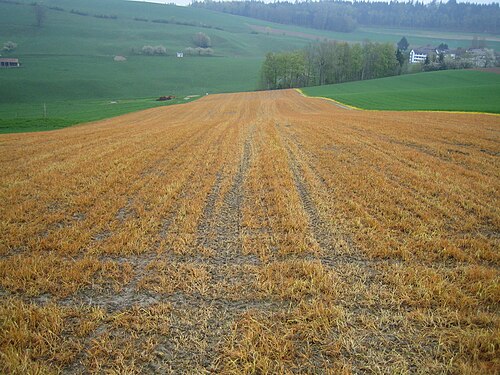
Chemical materials developed to assist in the production of food, feed, and fiber include herbicides, insecticides, fungicides,[2] and other pesticides. Pesticides are chemicals that play an important role in increasing crop yield and mitigating crop losses.[3] These work to keep insects and other animals away from crops to allow them to grow undisturbed, effectively regulating pests and diseases.
Disadvantages of pesticides include contamination of the ground and water (see persistent organic pollutants). They may be toxic to non-target species, including birds, fish,[4] pollinators,[5] as well as the farmworkers themselves.
Soil chemistry
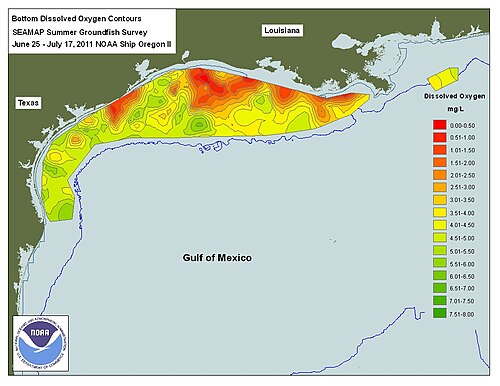
Agricultural chemistry often aims at preserving or increasing the fertility of soil with the goals of maintaining or improving the agricultural yield and improving the quality of the crop. Soils are analyzed with attention to the inorganic matter (minerals), which comprise most of the mass of dry soil, and organic matter, which consists of living organisms, their degradation products, humic acids and fulvic acids.[8]
Fertilizers are a major consideration. While organic fertilizers are time-honored, their use has largely been displaced by chemicals produced from mining (phosphate rock) and the Haber-Bosch process. The use of these materials dramatically increased the rate at which crops are produced, which is able to support the growing human population. Common fertilizers include urea, ammonium sulphate, diammonium phosphate, and calcium ammonium phosphate.[9][10]
Biofuels and bio-derived materials

Agricultural chemistry encompasses the science and technology of producing not only edible crops, but feedstocks for fuels ("biofuels") and materials. Ethanol fuel obtained by fermentation of sugars. Biodiesel is derived from fats, both animal- and plant-derived. Methane can be recovered from manure and other ag wastes by microbial action.[11][12]Lignocellulose is a promising precursor to new materials.[13]
Biotechnology

Biocatalysis is used to produce a number of food products. More than five billion tons of high fructose corn syrup are produced annually by the action of the immobilized enzymeglucose isomerase of corn-derived glucose. Emerging technologies are numerous, including enzymes for clarifying or debittering of fruit juices.[14]
تُستخلص مجموعة متنوعة من المواد الكيميائية التي قد تكون مفيدة من خلال النباتات المعدلة وراثيًا. وتُعد المعالجة الحيوية مسارًا صديقًا للبيئة للتحلل البيولوجي .
الكائنات المعدلة وراثيًا
الكائنات المعدلة وراثيًا هي نباتات أو كائنات حية تم تعديلها على المستوى الجيني من قبل العلماء لتحسين خصائصها. تشمل هذه الخصائص توفير لقاحات جديدة للبشر، وزيادة إمدادات العناصر الغذائية، وإنتاج أنواع فريدة من البلاستيك. [ 15 ] وقد تكون قادرة أيضًا على النمو في مناخات غير ملائمة عادةً لنمو الكائن الأصلي. [ 15 ] من أمثلة الكائنات المعدلة وراثيًا: التبغ والقرع المقاومان للفيروسات، والطماطم المتأخرة النضج، وفول الصويا المقاوم لمبيدات الأعشاب. [ 15 ]
تزامن ظهور الكائنات المعدلة وراثيًا مع ازدياد الاهتمام باستخدام التقنية الحيوية لإنتاج الأسمدة والمبيدات. ونظرًا لتزايد اهتمام السوق بالتقنية الحيوية في سبعينيات القرن الماضي، شهدت هذه التقنية تطورًا ملحوظًا في التكنولوجيا والبنية التحتية، وانخفاضًا في التكاليف، وتقدمًا في الأبحاث. ومنذ أوائل ثمانينيات القرن الماضي، بدأ إدخال المحاصيل المعدلة وراثيًا في الزراعة. ويتطلب العمل المتزايد في مجال التقنية الحيوية دمج علم الأحياء والكيمياء لإنتاج محاصيل محسّنة، ويعود السبب الرئيسي وراء ذلك إلى تزايد كمية الغذاء اللازمة لإطعام السكان المتزايدين. [ 16 ]
مع ذلك، تشمل المخاوف المتعلقة بالكائنات المعدلة وراثيًا احتمالية ظهور مقاومة للمضادات الحيوية نتيجة تناولها. [ 15 ] كما توجد مخاوف بشأن آثارها طويلة المدى على جسم الإنسان، نظرًا لأن العديد من الكائنات المعدلة وراثيًا طُوّرت حديثًا. [ 15 ]
يحيط بالكائنات المعدلة وراثيًا جدل كبير. في الولايات المتحدة، يجب وضع ملصق على جميع الأطعمة التي تحتوي على كائنات معدلة وراثيًا. [ 17 ]
علم الجينوم
وتكتسب البروتينات أهمية خاصة لأن البروتين (التغذية) يوجه الكثير من الزراعة.
انظر أيضاً
ملاحظات ومراجع
- ↑ "Scope, Journal of Agricultural Chemistry" .
- ↑ دريكورن، باري أ.؛ أوين، دبليو. جون (2000). "مبيدات الفطريات الزراعية". موسوعة كيرك-أوتمير للتكنولوجيا الكيميائية . doi : 10.1002/0471238961.0621140704180509.a01 . ISBN 978-0-471-48494-3.
- ↑ الصالح، إ. أ. (1994). "المبيدات: مقال استعراضي". مجلة علم الأمراض البيئية، وعلم السموم، وعلم الأورام . 13 (3): 151-161 . PMID 7722882. INIST 3483983 .
- ↑Aktar, Wasim; Sengupta, Dwaipayan; Chowdhury, Ashim (March 2009). "Impact of pesticides use in agriculture: their benefits and hazards". Interdisciplinary Toxicology. 2 (1): 1–12. doi:10.2478/v10102-009-0001-7. PMC 2984095. PMID 21217838.
- ↑Bomgardner, Melody; Erickson, Britt (13 January 2020). "Food brands and retailers will scrutinize pesticides". C&EN Global Enterprise. 98 (2): 33. doi:10.1021/cen-09802-cover8.
- ↑"NOAA: Gulf of Mexico 'Dead Zone' Predictions Feature Uncertainty". U.S. Geological Survey (USGS). June 21, 2012. Archived from the original on 2016-04-11. Retrieved June 23, 2012.
- ↑"What is hypoxia?". Louisiana Universities Marine Consortium (LUMCON). Archived from the original on June 12, 2013. Retrieved May 18, 2013.
- ↑Arai, Yuji (2016). "Soil Chemistry". Kirk-Othmer Encyclopedia of Chemical Technology. pp. 1–37. doi:10.1002/0471238961.koe00021. ISBN 978-0-471-48494-3.
- ↑Rouwenhorst, K.H.R.; Elishav, O.; Mosevitzky Lis, B.; Grader, G.S.; Mounaïm-Rousselle, C.; Roldan, A.; Valera-Medina, A. (2021). "Future Trends"(PDF). Techno-Economic Challenges of Green Ammonia as an Energy Vector. pp. 303–319. doi:10.1016/B978-0-12-820560-0.00013-8. ISBN 978-0-12-820560-0. S2CID 243358894.
- ↑Leghari, Shah Jahan; Wahocho, Niaz Ahmed; Laghari, Ghulam Mustafa; HafeezLaghari, Abdul; MustafaBhabhan, Ghulam; HussainTalpur, Khalid; Bhutto, Tofique Ahmed; Wahocho, Safdar Ali; Lashari, Ayaz Ahmed (September 2016). "Role of nitrogen for plant growth and development: a review". Advances in Environmental Biology. 10 (9): 209–219. Gale A472372583.
- ↑Murzin, Dmitry Yu.; Mäki-Arvela, Päivi; Simakova, Irina L. (2012). "Triglycerides and Oils for Biofuels". Kirk-Othmer Encyclopedia of Chemical Technology. pp. 1–14. doi:10.1002/0471238961.trigmurz.a01. ISBN 978-0-471-48494-3.
- ↑Paisley, Mark A. (2003). "Biomass Energy". Kirk-Othmer Encyclopedia of Chemical Technology. doi:10.1002/0471238961.0621051211120119.a01.pub2. ISBN 978-0-471-48494-3.
- ↑Upton, Brianna M.; Kasko, Andrea M. (2016). "Strategies for the Conversion of Lignin to High-Value Polymeric Materials: Review and Perspective". Chemical Reviews. 116 (4): 2275–2306. doi:10.1021/acs.chemrev.5b00345. PMID 26654678.
- ↑Dicosimo, Robert; McAuliffe, Joseph; Poulose, Ayrookaran J.; Bohlmann, Gregory (2013). "Industrial Use of Immobilized Enzymes". Chemical Society Reviews. 42 (15): 6437–6474. doi:10.1039/c3cs35506c. PMID 23436023.
- 12345Bawa, A. S.; Anilakumar, K. R. (December 2013). "Genetically modified foods: safety, risks and public concerns—a review". Journal of Food Science and Technology. 50 (6): 1035–1046. doi:10.1007/s13197-012-0899-1. PMC 3791249. PMID 24426015.
- ↑Meadows-Smith, Marcus; Meadows-Smith, Holly (3 July 2017). "Perspectives: Chemistry seeks its new level in agtech". C&EN Global Enterprise. 95 (27): 22–23. doi:10.1021/cen-09527-scitech2.
- ↑Erickson, Britt (18 July 2016). "House clears GMO food labeling bill". C&EN Global Enterprise. 94 (29): 16. doi:10.1021/cen-09429-notw11.
- Agriculture
- Biochemistry