
Assad family
The Assad family (Arabic: عَائِلَةُ ٱلْأَسَدِ, romanized: ʿāʾilat al-ʾAsad) ruled Syria from 1971, when Hafez al-Assad became president under the Ba'ath Party following the 1970 coup, until Bashar al-Assad was ousted on 8 December 2024.[1] Bashar succeeded his father, Hafez al-Assad, after Hafez's death in 2000.
The Assads are originally from Qardaha, Latakia Governorate. They belong to the AlawiteKalbiyya tribe.[2] In 1927, Ali Sulayman changed his last name from al-Wahsh, Arabic for 'the savage', to al-Assad, 'the lion', possibly in connection with his social standing as a local mediator and his political activities. All members of the extended Assad family stem from Ali Sulayman and his second wife, Naissa, who came from a village in the Syrian Coastal Mountains.[3]
During his early reign in the 1970s, Hafez al-Assad created patronage networks of Ba'ath party elites loyal to his family. Members of the Assad family established control over vast swathes of the Syrian economy, and corruption became endemic in the public and private sectors.[4] After Hafez's death, family connections continued to be important in Syrian politics. Several close family members of Hafez also held vital positions in the government since his rise to power, an arrangement which existed until the fall of the Assad regime.[5][6] The Syrian bureaucracy and business community were also dominated by members of the Assad family and individuals affiliated with them.[7][8]
Hafez al-Assad built his regime into a bureaucracy that was marked by a cult of personality. Images, portraits, quotes and praises of Assad are displayed everywhere from schools to public markets and government offices. Hafez was referred to as the "Immortal Leader" and the al-Muqaddas ("Sanctified One") in official Assadist ideology. Hafez re-organised Syrian society in militaristic lines and persistently invoked conspiratorial rhetoric on the dangers of foreign-backed plots abetted by fifth columnists and promoted the armed forces as a central aspect of public life. After Hafez al-Assad's death, his son and successor Bashar al-Assad inherited the existing personality cult, with the party hailing him as the "Young Leader" and "Hope of the People". Drawing influence from the veneration of the Kim dynasty in North Korea's hereditary leadership model led by Kim Il Sung, official propaganda in Syria ascribed divine features to the Assad family and revered the Assad patriarchs as the founding fathers of modern Syria.[9][10][11]
Opposition to the Assad family's rule coalesced into the Syrian Civil War, which began on 15 March 2011. On 8 December 2024, Bashar al-Assad was reported to have fled Damascus, signalling the end of the Assad family's rule in Syria.[1][12] After the fall of Damascus, Assad and his family including his wife Asma al-Assad had fled to Moscow, Russia; but remnants and loyalists to Assad have engaged in a conflict against the new Syrian government.[13]
Origin
The Assad family originates from Ali Sulayman al-Wahsh, Hafez al-Assad's father, who was born in 1875 and lived in the village of Qardaha in the coastal Syrian mountains. The locals reportedly nicknamed him "Wahsh", Arabic for "wild beast", because he was physically strong and a good fighter. Al-Wahsh remained the family name until the 1920s, when it was changed to al-Assad, Arabic for "lion".[14][15] Because of Sulayman's reported strength and marksmanship, he was respected in his village. At the outbreak of World War I, the Ottoman governor of the Aleppo Vilayet sent troops to the area to collect taxes and round up recruits. The troops were reportedly fought off by Sulayman and his friends who were armed only with sabres and old muskets.[16] Because Sulayman was respected, he was a local mediator between quarreling families. He was also one of the local chieftains who were the de facto rulers of the area. The chieftains from the powerful families would provide protection to their neighbours and in return they gained loyalty and respect.[17] He lived until 1963, long enough to see his son's rise to power. He married twice and over three decades had eleven children. His first wife Sa'ada was from the district of Haffeh. They had three sons and two daughters. His second wife was Na'isa, twenty years younger than him. She was the daughter of Uthman Abbud from the village of Al-Qutailibiyah, a dozen kilometres further up the mountain. They had a daughter and five sons. Hafez was born on 6 October 1930 and was the fourth child.[18]
Al-Assad family is affiliated with the Alawite sect, a syncretic sect with links to early Shi'ism. Since coming to power in 1970, the Assad family traditionally used sectarian loyalty from the Alawite sect as a vital component to legitimize their dynastic rule. Many Alawite loyalists were assigned to crucial posts in the bureaucracy, security forces, military, judiciary, etc., in-order to consolidate Assad family's grip on power.[19]
Cult of personality
In no other country in recent memory ... not Mao's China, nor Tito's Yugoslavia, has the intensity of the personality cult reached such extremes. Asad's image, speaking, smiling, listening, benevolent or stern, solemn or reflective, is everywhere. Sometimes there are half a dozen pictures of him in a row. His face envelops telephone poles and trucks, churches and mosques. His is the visage a Syrian sees when he opens his newspaper.
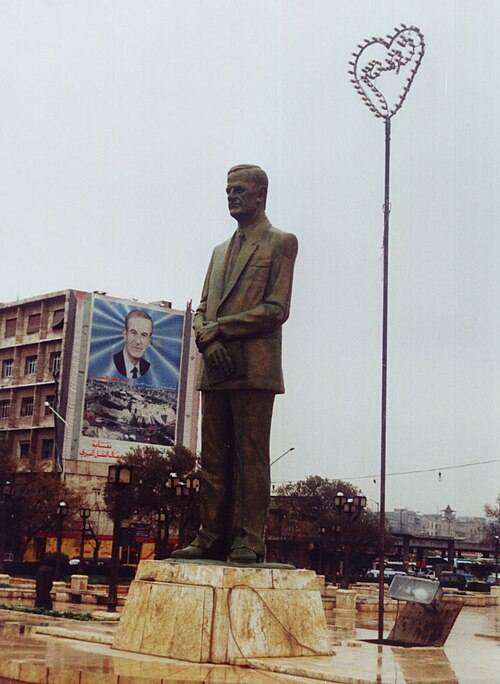
During the 1950s, Syrian Alawites started becoming influential in the Syrian Armed Forces and Ba'ath Party. Led by Alawite military officers, like Salah Jadid, Ba'athist factions staged a series of coups during the 1960s and built up a one-party state. The party cemented its total control over the state and society by purging civilian elites, pursued an aggressive propaganda policy of "state-nationalist indoctrination" and established patronage networks based on sectarian lines to mobilise support.[22] Following the 1970 coup d'etat that ousted his rival Salah Jadid; Hafez al-Assad developed a Stalinist-style personality cult around him; which depicted him as the father figure of Syrian nation. After Hafez's death, the personality cult was extended to his son, Bashar al-Assad. Monuments, pictures, statues, symbols and billboards of both the leaders extensively pervade Syrian society, designed to consolidate the notion of "Assad's Syria". Observers view the state propaganda efforts as a strategy for securing the compliance of the masses and identifying Syrian nationhood with the Assad dynasty.[23][24][25][26][27]
من جهة أخرى، أدى تضخيم الدعاية وتزايد أهمية عبادة الشخصية المحيطة بآل الأسد إلى تراجع الاهتمام بالهوية السورية نفسها، نتيجةً لتكرار الواقع. فبالإضافة إلى تجريم أي نقد للنظام، تُقيّد وسائل التواصل بين الدولة والمجتمع المدني تقييدًا صارمًا ضمن حدود ما هو مقبول رسميًا. كما حظرت الدولة الآراء السياسية الخاصة المنتقدة للنظام، وشجعت المواطنين على الإبلاغ عن الأقارب والأصدقاء الذين يُبدون سلوكيات غير مرغوب فيها. وقد فاقمت سياسات التحرير الاقتصادي التي طُبقت خلال العقد الأول من الألفية الثانية من حدة الفساد، إذ كان المستفيدون الرئيسيون من نتائجها رجال أعمال وأقارب مقربون من عائلة الأسد، مثل رامي مخلوف . [ 28 ] [ 29 ] [ 30 ]
على عكس الأنظمة الديكتاتورية العربية الأخرى، مكّنت هذه السمة لنظام البعث ، المتمثلة في مركزية السلطة المطلقة في أيدي حكام الأسد، من غرس اللامبالاة السياسية بين المواطنين؛ حيث أدى ترديد شعارات الدولة ورموزها إلى امتثال فعلي. ونتيجة لذلك، باتت فرص العمل السياسي الحر المتاحة للسوريين العاديين أقل بكثير مقارنةً بدول عربية أخرى. وحتى وقت قريب، كان الكثيرون يتجنبون العمل السياسي، مفضلين الاستقرار الذي يوفره النظام. إلا أن ظهور الإنترنت والقنوات الفضائية ، وانتشار منظمات المجتمع المدني والناشطين السياسيين المستقلين خلال العقد الأول من الألفية الثانية، بدأ يتحدى احتكار الدولة للمعلومات، مما أدى إلى تصاعد المعارضة السياسية بين الأجيال الشابة. [ 30 ] [ 31 ] [ 28 ] [ 29 ] تصف كارولين، وهي مسيحية سورية وناشطة مدنية سُجنت من قبل النظام خلال احتجاجات الربيع العربي 2011-2012، الصعوبات التي واجهت رفع الوعي السياسي لدى المواطنين السوريين من خلال مقارنة وضعهم بوضع المتظاهرين العرب الآخرين ، وتقول:
"قبل الثورة في مصر ، كان يُسمح للناس بالتجمع، وكان لديهم أحزاب سياسية؛ وكان الناس يتعرضون للحياة السياسية. أما في سوريا، فقد كنا بعيدين عن السياسة. لقد تربينا في سوريا وكان آباؤنا يقولون لنا ألا نتحدث مع أي شخص عن ديننا أو عن السياسة" [ 32 ]
Since Hafiz al-Assad's seizure of power in 1970; state propaganda has promoted a new national discourse based on unifying Syrians under "a single imagined Ba'athist identity" and Assadism.[33] Fervently loyalist paramilitaries known as the Shabiha (tr. ghosts) deify the Assad dynasty through slogans such as There is no God except Bashar! (Arabic: لا إله الا بشار) and pursue psychological warfare against non-conformist populations.
In December 2024, the Assad family's regime collapsed when the rebels entered and captured Damascus, the Syrian capital, during the 2024 Syrian opposition offensives. Assad and his family left Syria for the Russian capital, Moscow, to seek asylum.[34]
Hafez's family

Hafez al-Assad
- Hafez al-Assad (1930–2000). President of Syria 1971–2000.[35][36][37]
- Anisa Makhlouf (1930–2016), wife of Hafez and First Lady of Syria.[38]
- Bushra al-Assad, died as an infant before 1960.[39]
- Bushra al-Assad (born 1960) is a pharmacist and a mother of five children,[40] and was married to General Assef Shawkat (1950–2012), who was deputy-chief of staff of the Syrian army and the former head of military intelligence. He was killed on 18 July 2012 in a bombing in Damascus, during the Syrian Civil War.
- Bassel al-Assad (1962–1994), was the original candidate for presidential succession but died in a car accident.[41]
- Bashar al-Assad (born 1965), was the President of Syria until 8 December 2024. Before Bassel's death he was an ophthalmologist. He is married to Asma al-Assad (born 1975). She was the First Lady of Syria and took a prominent public role until 8 December 2024. Before being married, she was an investment banker. They have three children (Hafez Bashar, Zein and Karim).[6][42] The couple were also regarded as the "main economic players" in Syria and controlled large parts of Syrian business sectors, banking, telecommunications, real estate, and maritime industries.[7]
- Majd al-Assad (1966–2009), was an electrical engineer with a reported history of severe mental problems.[43] He was married to Ru'a Ayyoub (born 1976) and had no children.[44] Majd died in Damascus on 12 December 2009 after a long unspecified chronic illness.[45][46][47]
- Maher al-Assad (born 1967), is the former commander of the Republican Guard, which are also known as the Presidential Guard, and the army's elite Fourth Armored Division, which together with Syria's secret police form the core of the country's security forces.[48] He is also a member of the Ba'ath Party central command and is said to have an aggressive and uncontrollable personality. He is married and has two daughters.[45][49] He is reported to have been severely disabled in a 2012 bombing in Damascus during the Syrian civil war.[50][51] He reportedly shot Assef Shawkat in the stomach in October 1999, during an argument. Maher is also known by many to be the most ruthless in the Al-Assad family.[52] He has been linked to "overseeing a Captagon factory in al-Basa" and production centres in the Qalamoun Mountains.[53] He is sanctioned by the US government.[53]
Hafez's siblings
Jamil al-Assad
- Jamil al-Assad (1932–2004), parliamentarian and commander of a minor militia. Politically marginalized years before his death.[6] Children:
- Mundhir al-Assad (born 1961), was arrested in 2005 at the Beirut Airport while entering Lebanon.[6] He was reported to have been involved in arms smuggling to the Iraqi insurgents.[54] In 2011, the EU placed sanctions on him for being involved with the Shabbiha militia in the repression of protestors during the Syrian Civil War.[49][55]
- Fawwaz al-Assad (1962–2015), was the first real Shabiha and gave the meaning known today to the word Shabiha and the concept of Tashbeeh that is to act like a thug.[56] He had sanctions placed on him in 2011 by the EU for being involved with the Shabbiha militia in the repression of protestors during the Syrian Civil War.[54][55]
- One daughter is married to Yarob Kanaan, whose father is Ghazi Kanaan (1942–2005), who in 2005 during his term as interior minister presumably killed himself. The Kanaans come from the Kalabiyya tribe.[57]
Rifaat al-Assad
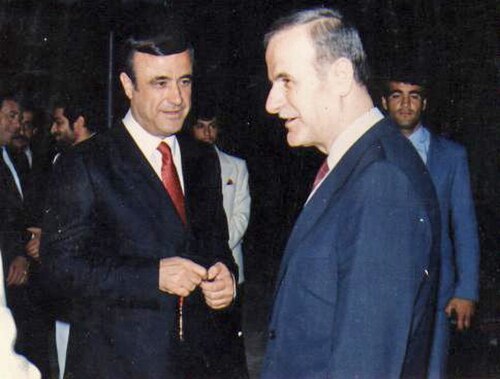
- Rifaat al-Assad (1937–2026). Formerly a powerful security chief and commander of the Defense Companies, who was responsible for the 1982 Hama massacre. After attempting a coup d'état in 1987, he went into exile in France and also lived in London.[58] He is married with four wives: Amira 'Aziz al-Assad (died 2019), a cousin.[57] Sana' Ismail Makhluf (died 2021), from the family of Hafez's wife.[57] Rajaa Bakrat, from a wealthy Sunni Damascene family.[57] Lina al-Khayer, sister of Hessa bint Tarad al-Shaalan, wife of the late Saudi King Abdullah bin Abdulaziz (1924–2015).[57] Rifaat has a number of children from these marriages, including:
- Ribal al-Assad (born 1975), has lived abroad since he was nine years old; currently he lives in the United States. In an interview in 2010, he denied that his father was involved in the massacre of Hama or that his family's branch was connected to Abdul Halim Khaddam (1932–2020) or Ghazi Kanaan.[58]
- Somar al-Assad, supports his father actively in his opposition to Bashar.[57]
- Lamia, is married to 'Ala al-Fayad, the son of Shafiq Fayadh (former Syrian General).[54][57][59]
- Mudar al-Assad, is married to May Haydar, daughter of the Syrian multimillionaire Muhammad Haydar.[60]
- Tumadhir, is married to Mu'ein Nasif Kheirbek also from the Kalabiyya tribe and related to Mohammed Nasif Kheirbek (1937–2015), who is indirectly related by marriage and blood to Abd al-Halim Khaddam, Rafic Hariri (1944–2005) and the influential Homs al-Atassi family.[57]
- Firas al-Assad, accused his cousin, President Bashar, of killing more than 100,000 Alawites and more than half a million Syrians to stay in power.[61]
Shalish family
- Sister of Hafez al-Assad married into the Shalish family. The family through paternal cousin General Dhu al Himma al-Shalish maintains a significant level of influence in the Bashar al-Assad government. The Shalishes are mainly active in the automobile and construction sectors.
- General Dhu al-Himma Shalish (1951–2022), a cousin of Bashar al-Assad, was the head of presidential security and was part of the inner circle of leadership of the Bashar al-Assad government.[62][63] He had sanctions placed on him by the US government for supplying weapons to Saddam Hussein and his government.[62][64] On 24 June 2011, the EU sanctioned him for being involved in violence against demonstrators during the Syrian Civil War.[65]
- Riyad Shalish, a cousin of Bashar Assad and the former director of the governmental construction organization the Military Housing Establishment, which during the 1990s he managed to transform into his own company. He made a fortune on construction and contracting deals in Syria involving large scale projects financed by other Arab states. On 24 June 2011, the EU sanctioned him for providing funding to the regime to repress protesters of the Syrian Civil War.[65][67]
Ahmed al-Assad
- Ahmed al-Assad (1910–1975), was an older half-brother of Hafez from Ali's first wife Sa'ada.[68]
- Anwar al-Assad,
- Hilal al-Assad (died 2014), was the president of the Syrian Arabian Horse Association. Hilal was killed on 22 March 2014, during the 2014 Latakia offensive in the battle for a border crossing at Kessab with Turkey in the north of Latakia.[69]
- Suleiman al-Assad, Hilal's son, was arrested in August 2015 after allegedly murdering an off-duty colonel in a 'road rage' incident in Latakia.[70] He was sentenced to 20 years in prison but in late 2020 was released after four years.[71] In December 2024, video of a man being lynched and hung from a crane after the fall of the Assad regime went viral with the claim that it depicted Suleiman, but this was false.[72]
- Hael al-Assad, was the head of the Military Police of the army's 4th Armoured Division, whose official commander is Maher al-Assad. He is also the director of the prison in which Maher al-Assad keeps his personal prisoners outside of state jurisdiction.[68]
- Haroun al-Assad, is an elected municipal official of the village of Qardaha.[68]
- Daad al-Assad, is married to General Zouheir al-Assad, who was born in 1958 and is a distant cousin. Zouheir al-Assad commanded the 90th Regiment, a unit of some 10,000 men, charged with protecting the capital.[68]
- Hilal al-Assad (died 2014), was the president of the Syrian Arabian Horse Association. Hilal was killed on 22 March 2014, during the 2014 Latakia offensive in the battle for a border crossing at Kessab with Turkey in the north of Latakia.[69]
- Anwar al-Assad,
Isma'il al-Assad
- Isma'il al-Assad (1913–?) was an older half-brother of Hafez from Ali's first wife Sa'ada.
- Tawfiq al-Assad,
- Muhammad al-Assad (died 2015), another leader of the "Struggle companies". He was killed in a dispute with a powerful person over control in the al-Qerdaha area of Latakia province, on 14 March 2015.[73]
- Hussein al-Assad, son of Muhammad. He took over the criminal network of his father and reorganized it into a paramilitary unit, the Lions of Hussein.[74]
- Muhammad al-Assad (died 2015), another leader of the "Struggle companies". He was killed in a dispute with a powerful person over control in the al-Qerdaha area of Latakia province, on 14 March 2015.[73]
- Tawfiq al-Assad,
Ibrahim al-Assad
- Ibrahim al-Assad, was an older half-brother of Hafez al-Assad from Ali Sulayman's first wife Sa'ada. He was married to Umm Anwar who took over the smuggling business of her son Malek.[75]
- Malek al-Assad was the first known smuggler in the Assad family.[75]
About Hafez's siblings who died early—Bayat, Bahijat and an unknown sister—almost nothing is publicly known.[3]
Anisa's siblings
Makhlouf family
The Makhloufs belong to the Alawi Haddad tribe,[57][76] both Hafez and Rifaat are related through marriage to the Makhloufs. The Makhlouf family rose from humble beginnings to become the financial advisor to Hafez al-Assad after the former President married Makhlouf's sister. The family headed by Mohammad Makhlouf has established a vast financial empire in the telecommunication, retail, banking, power generation, and oil and gas sectors. The net worth of the family was estimated in 2010 to be at least five billion dollars.[45][77]
- Mohammed Makhlouf (1932–2020),[78] made a fortune, both through management of state companies and in the private sector.[79]
- Rami Makhlouf (born 1969), is a wealthy businessman and the main owner of Syriatel.[45] According to the Financial Times he is thought to control as much as 60% of the economy through his web of business interests that include telecommunications, oil and gas, construction, banking, airlines and retail, and he is widely seen as the business arm of the Assad government.[49][80] He is regarded as Syria's wealthiest man – worth approximately 5 billion dollars.[81] In 2020, intense dispute arose between Makhlouf and Bashar al-Assad over the issue of backtaxes; which severely damaged Assad's reputation amongst Alawite loyalists.[82]
- حافظ مخلوف (مواليد 1971)، كان نائب مدير مديرية الأمن العام ورئيس جهاز المخابرات في دمشق. [ 83 ] [ 49 ] [ 80 ] [ 84 ] [ 85 ] [ 62 ]
- إياد مخلوف (مواليد 1973)، وهو توأم إيهاب مخلوف، ضابط في مديرية الأمن العام . وقد فرض الاتحاد الأوروبي والولايات المتحدة [ 86 ] والمملكة المتحدة [ 87 ] عقوبات عليه لتورطه في أعمال عنف ضد السكان المدنيين خلال الحرب الأهلية السورية. [ 55 ]
- إيهاب مخلوف (1973-2024)، شقيق إياد مخلوف التوأم، كان نائب رئيس مجلس إدارة شركة سيرياتل سابقًا [ 88 ] ومسؤولًا عن شركة رامي مخلوف الأمريكية. فرض الاتحاد الأوروبي عقوبات عليه لتمويله حكومة الأسد وتغاضيه عن العنف ضد المتظاهرين في الحرب الأهلية السورية. [ 55 ] يُعتقد أنه كان مسؤولًا عن وحدات القناصة التي استُخدمت لإطلاق النار على المتظاهرين خلال الانتفاضة. [ 89 ] قُتل في سيارته في 8 ديسمبر 2024، بعد سقوط نظام الأسد .
- فاطمة مخلوف شقيقة أنيسة مخلوف.
- عاطف نجيب (مواليد 1960)، هو الرئيس السابق لمديرية الأمن السياسي في درعا. [ 90 ] وقد فرض الاتحاد الأوروبي عقوبات عليه لتورطه في أعمال عنف ضد المتظاهرين في الحرب الأهلية السورية. [ 49 ]
- الجنرال عدنان مخلوف، ابن عم أنيسة، القائد السابق للحرس الجمهوري . [ 91 ]
- اللواء طلال مخلوف، ابن عم أنيسة، القائد السابق للحرس الجمهوري . [ 92 ]
أبناء عمومة حافظ
- وبحسب ما ورد، أسس نمير الأسد الشبيحة مع رفعت الأسد في ثمانينيات القرن الماضي، وسيطر على شبكات التهريب المنظمة التي تتخذ من ميناء اللاذقية مقراً لها. [ 93 ]
- عدنان الأسد، قائد ميليشيا " سرايا الكفاح " في دمشق . [ 94 ]
- شفيق فياض (1937-2015)، ابن عم حافظ من جهة عمته في قرية عين العروس بجبلة . قائد الفرقة السابعة للمشاة الآلية 1973-1978. [ 95 ] قائد الفرقة الثالثة المدرعة منذ عام 1978. [ 96 ] أفادت التقارير أنه أُصيب بنوبة قلبية في عامي 1991/1992. [ 95 ] يصفه باتاتو بأنه جنرال فيلق.
أقارب آخرون
- كان نمير الأسد، ابن عم أبناء حافظ من الدرجة الثانية، زعيماً للشبيحة في اللاذقية . [ 6 ] سُجن إثر عملية سطو في عام 2005 في سجن صيدنايا ، وبقي هناك حتى ديسمبر 2024. ثم أُعيد القبض عليه في أكتوبر 2025. [ 97 ] [ 98 ]
- نزار الأسد، هو ابن عم بشار الأسد. كان رئيسًا لشركة نزار لتوريدات حقول النفط. وقد فرض الاتحاد الأوروبي عقوبات عليه لعلاقاته الوثيقة مع مسؤولين حكوميين بارزين ولتمويله الشبيحة في منطقة اللاذقية. [ 65 ]
- فواز الأسد ابن شقيق حافظ زعيم الشبيحة [ 99 ]
- منذر الأسد ابن شقيق حافظ زعيم الشبيحة [ 99 ]
- يدير سامر الأسد، ابن كمال وحفيد إسماعيل الذي كان أخا غير شقيق لحافظ الأسد، أحد مصانع الكبتاغون العديدة في البصة . [ 100 ]
- دريد أسد، زوج رشا خازم ووالد شمس أسد. هُرِّبت رشا وشمس أسد إلى لبنان بعد سقوط نظام الأسد، وأُلقي القبض عليهما في مطار بيروت الدولي لحيازتهما جواز سفر مزور. [ 101 ]
- وسيم الأسد، ابن عم بشار الأسد وقائد ميليشيا سابق. أُلقي القبض عليه في يونيو/حزيران 2025 من قبل السلطات السورية بتهمة تهريب المخدرات وارتكاب جرائم حرب، بعد سنوات من قيادة ميليشيات موالية للنظام والعمل في تجارة الكبتاغون. [ 102 ] [ 103 ] [ 104 ]
- عمار الأسد، ابن عم بشار الأسد. اشتهر بتورطه المبكر في عمليات التهريب والشبكات الإجرامية المحلية في اللاذقية، ويُقال إنه كان تحت حماية عمه جميل الأسد. [ 105 ]
انظر أيضاً
مراجع
- الاقتباسات
- ١ ٢ «غادر الرئيس السوري بشار الأسد دمشق إلى وجهة غير معلومة، بحسب ضابطين عسكريين رفيعي المستوى» . رويترز . ٨ ديسمبر ٢٠٢٤. تم الاطلاع عليه بتاريخ ٨ ديسمبر ٢٠٢٤ .
- ↑ ماكونفيل، باتريك سيل بمساعدة مورين (1990). أسد سوريا: الصراع على الشرق الأوسط . بيركلي: مطبعة جامعة كاليفورنيا. ص 9. ISBN 978-0-520-06976-3
ختم كالبيا
. - 1 2 مارتن ستاهيلي: السياسة الخارجية السورية تحت حافظ الأسد ، فرانز شتاينر فيرلاغ، شتوتغارت 2001، ISBN 3-515-07867-3ص 40
- ↑ م. سادوفسكي، يحيى (1987). "الرعاية وحزب البعث: الفساد والسيطرة في سوريا المعاصرة" . مجلة الدراسات العربية الفصلية . 9 (4): 442-461 . JSTOR 41857946 .
- ↑ روبن رايت (22 فبراير 2008). "العقوبات المفروضة على رجل أعمال تستهدف الدائرة المقربة في سوريا" . صحيفة واشنطن بوست . مؤرشف من الأصل في 20 أغسطس 2011. تم الاطلاع عليه في 31 مارس 2010 .
- ١ ٢ ٣ ٤ ٥ بار، شموئيل (٢٠٠٦). "سوريا بشار: النظام ورؤيته الاستراتيجية للعالم" (ملف PDF) . الاستراتيجية المقارنة . ٢٥ (٥): ٣٨٠. doi : 10.1080/01495930601105412 . S2CID 154739379. مؤرشف من الأصل (ملف PDF) في ٢٣ يوليو ٢٠١١. تم الاطلاع عليه في ١٥ مايو ٢٠١١ .
- 1 2 "تغييرات في النخبة التجارية السورية تُركّز الثروة في أيدي الزوجين الرئاسيين" . تقرير سوريا . 15 نوفمبر 2022. مؤرشف من الأصل في 2 ديسمبر 2022.
- ↑ كورنيش، كلوي؛ خطاب، آسر (25 يوليو 2019). "الأسد السوري يضغط على النخبة الاقتصادية" . فايننشال تايمز . مؤرشف من الأصل في 27 يوليو 2019.
- ↑ هالاسا، مالو؛ عمرين، زاهر؛ محفوظ، نوارة (2014). سوريا تتحدث: الفن والثقافة من خط المواجهة . لندن: كتب الساقي. ص 125، 147-156 ، 161. ISBN 978-0-86356-787-2.
- ↑ بايبس، دانيال (1995). سوريا ما وراء عملية السلام . واشنطن العاصمة: معهد واشنطن لسياسة الشرق الأدنى. الصفحات 6، 7، 13-17 . ISBN 0-944029-64-7.
- ↑ شمايلة، عمار (2017). الثقة والإرهاب: رأس المال الاجتماعي واستخدام الإرهاب كأداة للمقاومة . نيويورك: روتليدج. ص 66، 70-72 ، 82. ISBN 978-1-138-20173-6.
- ↑"Syrian government appears to have fallen in stunning end to 50-year rule of Assad family". AP news. 7 December 2024.
- ↑نخستوزیر سوریه: مرحله جدیدی آغاز شده/ از محل حضور اسد اطلاعی ندارم (Syrian Prime Minister: A new phase has begun/I have no information about Assad's whereabouts)
- ↑Zahler 2009, p. 25.
- ↑Alianak 2007, p. 128.
- ↑Seale 1990, p. 3.
- ↑Seale 1990, p. 4.
- ↑Seale 1990, p. 5.
- ↑Baltacioglu-Brammer, Ayse (November 2013). "Alawites and the Fate of Syria". OSU.EDU. Ohio State University. Archived from the original on 7 September 2023.
- ↑"Middle East Insight". United States. 1985. p. 15 – via International Insight, Incorporated.
- ↑Ma'oz, Moshe (1988). Asad: The Sphinx of Damascus – A Political Biography. New York: Weidenfeld & Nicolson. p. 43. ISBN 1-555-84062-0.
- ↑Carlos BC, Juan (9 December 2021). "The Assad Family Has Been Shaping Syria for 50 Years". Fair Observer. Archived from the original on 9 December 2021.
- ↑L. Stanton, Andrea (2012). "Al-Assad, Hafez". Cultural Sociology of the Middle East, Asia, and Africa: An Encyclopedia. California: Sage. pp. 233–235. ISBN 978-1-4129-8176-7.
- ↑A. Reilly, James (2018). "7: Thirty Years of Hafez Al-Assad". Fragile Nation, Shattered Land: The Modern History of Syria. London: I.B. Tauris. pp. 160–162, 169. ISBN 978-1-78453-961-0.
- ↑Bonsen, Sabrina (2019). "2: Theoretical Framework, State of Research and Method". Martyr Cults and Political Identities in Lebanon. Muhlacker, Germany: Springer. p. 9. ISBN 978-3-658-28097-0.
- ↑Suzanne Kassab, Elizabeth (2019). "3: Tanwir Debates in Syria in the 1990s". Enlightenment on the Eve of Revolution: The Egyptian and Syrian Debates. Columbia University Press. pp. 172–173. ISBN 9780231549677.
- ↑Pipes, Daniel (1995). "1: Assad's Post-Soviet Predicament". Syria Beyond the Peace Process. Washington Institute for Near East Policy. pp. 6, 7. ISBN 0-944029-64-7.
- 1 2 شمايلة، عمار (2017). "2: الثقة والإرهاب والربيع العربي: مصر وليبيا وسوريا". الثقة والإرهاب: رأس المال الاجتماعي واستخدام الإرهاب كأداة للمقاومة . نيويورك: روتليدج. ص 16-17 . ISBN 978-1-138-20173-6.
- 1 2 توركو، هيلغا (2018). "3: التداعيات الأمنية طويلة الأمد لمهاجمة الممتلكات الثقافية". تدمير الممتلكات الثقافية كسلاح حرب . سويسرا: بالغراف ماكميلان. ص 74. doi : 10.1007/978-3-319-57282-6_1 . ISBN 978-3-319-57281-9.
- 1 2 أصلان أوزغول، بيلور (2019). قيادة الاحتجاجات في العصر الرقمي: نشاط الشباب في مصر وسوريا (الطبعة الأولى ). بالغراف ماكميلان. الصفحات 9-10 ، 41-44 ، 227. doi : 10.1007/978-3-030-25450-6 . ISBN 978-3-030-25449-0. S2CID 204449526 .
- ↑ ستالارد، كاتي (2022). الرقص على العظام: التاريخ والسلطة في الصين وروسيا وكوريا الشمالية . نيويورك: مطبعة جامعة أكسفورد. ص 164. ISBN 978-0-19-757535-2.
- ↑ أصلان أوزغول، بيلور (2019). "2: مصر وسوريا: أوجه التشابه والاختلاف بين البلدين". قيادة الاحتجاجات في العصر الرقمي: نشاط الشباب في مصر وسوريا ( الطبعة الأولى). بالغراف ماكميلان. ص 43-44 . doi : 10.1007/978-3-030-25450-6 . ISBN 978-3-030-25449-0. S2CID 204449526 .
- ↑ كارلوس بي سي، خوان (9 ديسمبر 2021). "عائلة الأسد تُشكّل سوريا منذ 50 عامًا" . فير أوبزرفر . مؤرشف من الأصل في 9 ديسمبر 2021.
- ↑ فيليبس، كريستوفر (2015). معركة سوريا: التنافس الدولي في الشرق الأوسط الجديد . لندن: مطبعة جامعة ييل. ص 131. ISBN 9780300217179.
- ↑ إيال زيسر (2004). "بشار الأسد ونظامه - بين الاستمرارية والتغيير" . أورينت. مؤرشف من الأصل في 1 أغسطس 2017. تم الاطلاع عليه في 2 أبريل 2011 .
- ↑ كيماك، ماجدالينا؛ بيوركلوند، هيتا (2022). اللاجئون وإنتاج المعرفة: ماضي أوروبا وحاضرها . أبينغدون، أوكسون: روتليدج. ص 73. doi : 10.4324/9781003092421 . ISBN 978-0-367-55206-0. S2CID 246668129 .
- ↑Turku, Helga (2018). "3: Long-Term Security Repercussions of Attacking Cultural Property". The Destruction of Cultural Property as a Weapon of War. palgrave macmillan. p. 74. doi:10.1007/978-3-319-57282-6. ISBN 978-3-319-57282-6.
- ↑"Council Implementing Decision". European Union. Archived from the original on 1 May 2020. Retrieved 21 January 2013.
- ↑Mohamad Daoud (October 2006). "Dossier: Bushra Assad". Mideast Monitor. Archived from the original on 21 July 2011. Retrieved 2 April 2011.
- ↑"Cookies op AD.nl – AD.nl". www.ad.nl. Archived from the original on 3 March 2016. Retrieved 28 March 2018.
- ↑William E. Schmidt (22 January 1994). "Asad's son killed in an auto crash". The New York Times. Archived from the original on 9 February 2011. Retrieved 31 March 2011.
- ↑William Christou and Pjotr Sauer: "Assad family live in Russian luxury as Bashar ‘brushes up on ophthalmology’" The Guardian, 15 December 2025, retrieved 25 December 2025
- ↑Papacostas, Savvas (28 August 2015). Madness and Leadership: From Antiquity to the New Common Era. Edward Elgar Publishing. p. 156. ISBN 9781784719586.
Majd al-Assad, an electrical engineer, is rumoured to suffer from a mental illness, adding credence to our assertion that leadership and madness are genetically linked.
- ↑"Majd Hafiz al-Assad, the younger brother of President Bashar al-Assad, died on Saturday December 12, 2009 at the age of 43". Joshua Landis Blog. 12 December 2009. Archived from the original on 30 January 2014. Retrieved 12 February 2014.
- 12345Bar, Shmuel (2006). "Bashar's Syria: The Regime and its Strategic Worldview"(PDF). Comparative Strategy. 25 (5): 379. doi:10.1080/01495930601105412. S2CID 154739379. Archived from the original(PDF) on 23 July 2011. Retrieved 15 May 2011.
- ↑"SANA: Bashar al-Assads Youngest Brother Dead". iloubnan.info. 12 December 2010. Archived from the original on 6 October 2011. Retrieved 3 April 2011.
- ↑Martin Stäheli: Die syrische Außenpolitik unter Hafiz Assad, Franz Steiner Verlag, Stuttgart 2001, ISBN 3-515-07867-3; p. 42
- ↑"Syria's military: what does Assad have?". Reuters. 6 April 2011. Archived from the original on 1 May 2011. Retrieved 5 May 2011.
- 12345"Council Decision 2011/273/CFSP of 9 May 2011 concerning restrictive measures against Syria". Official Journal of the European Union. L121/11. 10 May 2011. Archived from the original on 16 May 2011. Retrieved 10 May 2011.
- ↑"Syria: Bashar al-Assad's brother Maher 'loses leg'". The Telegraph. London. 16 August 2012. Archived from the original on 16 August 2012. Retrieved 16 August 2012.
- ↑"Assad's feared brother lost leg in bomb attack: sources". Reuters. 16 August 2012. Archived from the original on 16 August 2012. Retrieved 16 August 2012.
- ↑Brian Rokus; Brian Todd (10 September 2013). "Syrian Maher al-Assad is ruthless aide to brother Bashar, analysts say". cnn.com. CNN. Archived from the original on 29 March 2018. Retrieved 28 March 2018.
- 12Caroline Rose; Alexander Soderholm (April 2022). "The Captagon Threat" (Intelligence briefing). New Lines Institute. p. 22.
- 123Landis, Joshua. "An Asad Arrested for Smuggling Weapons". Syria Comment. Archived from the original on 10 February 2012. Retrieved 16 May 2011.
- 1 2 3 4 "قرار المجلس التنفيذي 2011/302/CFSP الصادر في 23 مايو 2011، القرار التنفيذي 2011/273/CFSP بشأن التدابير التقييدية ضد سوريا" . الجريدة الرسمية للاتحاد الأوروبي . L136/91. 24 مايو 2011. مؤرشف من الأصل في 3 مارس 2012. تم الاطلاع عليه في 25 مايو 2011 .
- ↑ "الشبيحة الأصلية" . جوشوا لانديس. ١٧ أغسطس ٢٠١٢. مؤرشف من الأصل في ١٧ أغسطس ٢٠١٢. تم الاطلاع عليه في ٢١ يناير ٢٠١٣ .
- 1 2 3 4 5 6 7 8 9 بار، شموئيل (2006). "سوريا بشار: النظام ورؤيته الاستراتيجية للعالم" (ملف PDF) . الاستراتيجية المقارنة . 25 (5): 381. doi : 10.1080/01495930601105412 . S2CID 154739379. مؤرشف من الأصل (ملف PDF) في 23 يوليو 2011. تم الاطلاع عليه في 15 مايو 2011 .
- ١ ٢ روبرت فيسك (١٦ سبتمبر ٢٠١٠). "الحرية والديمقراطية وحقوق الإنسان في سوريا - يقدم ريبال الأسد لكاتبنا نظرة نادرة على السلالة التي شكلت سوريا الحديثة" . صحيفة الإندبندنت . مؤرشف من الأصل في ٢٨ فبراير ٢٠١١. تم الاطلاع عليه في ٣ أبريل ٢٠١١ .
- 1 2 دولفر، تشارلز (30 سبتمبر 2004). التقرير الشامل للمستشار الخاص لمدير المخابرات المركزية بشأن أسلحة الدمار الشامل العراقية (ملف PDF) . وكالة المخابرات المركزية. الصفحات 103-104 . مؤرشف من الأصل (ملف PDF) في 13 أغسطس 2011. تم الاطلاع عليه في 16 مايو 2011 .
- ↑ شموئيل بار: سوريا بشار: النظام ورؤيته الاستراتيجية للعالم ، في: الاستراتيجية المقارنة، 25، 2006، عدد خاص، ص 382
- ↑ «ابن عم الأسد: النظام قتل أكثر من 500 ألف سوري» . ميدل إيست مونيتور . 7 أغسطس/آب 2019. مؤرشف من الأصل في 8 نوفمبر/تشرين الثاني 2020. تم الاطلاع عليه في 11 يناير/كانون الثاني 2021 .
- 1 2 3 الهندي، عهد (3 مايو 2011). "بنية القمع في سوريا" . الشؤون الخارجية . مؤرشف من الأصل في 8 فبراير 2015. تم الاطلاع عليه في 5 مايو 2011 .
- ↑"Biography for Dhu al-Himma Shalish". Siloworker. Retrieved 16 May 2011.
- ↑"Alphabetical Listing of Specially Designated Nationals and Blocked Persons ("SDN List")". US Department of the Treasury. 31 March 2011. Archived from the original on 16 March 2011. Retrieved 3 April 2011.
- 123"Council Implementing Regulation (EU) No 611/2011 of 23 June 2011 implementing Regulation(EU) No 442/2011 concerning restrictive measures in view of the situation in Syria". Official Journal of the European Union. L164/54. 24 June 2011. Archived from the original on 15 October 2012. Retrieved 25 June 2011.
- ↑Bar, Shmuel (2006). "Bashar's Syria: The Regime and its Strategic Worldview"(PDF). Comparative Strategy. 25 (5): 395. doi:10.1080/01495930601105412. S2CID 154739379. Archived from the original(PDF) on 23 July 2011. Retrieved 15 May 2011.
- ↑"Biography for Riyad Shalish". Archived from the original on 12 March 2012. Retrieved 25 June 2011.
- 12345Leverrier, Ignace (25 February 2012). "In Bashar al-Assad's Syria, the disinformation is also a family affair". Le Monde. Archived from the original on 29 February 2012. Retrieved 8 March 2012.
- ↑"Assad cousin killed in Syria's Latakia". Al Jazeera. 24 March 2014.
- ↑"Alawites rally after 'Assad's cousin killed officer'". www.aljazeera.com. Archived from the original on 11 October 2017. Retrieved 28 March 2018.
- ↑"An "unending nightmare," Bashar al Assad's nephew is out of prison". trtworld.com. 1 December 2020. Archived from the original on 28 January 2021. Retrieved 11 January 2021.
- ↑ عبده، المعتز (9 ديسمبر 2024). "حقيقة مقتل سليمان هلال الأسد في اللاذقية" . أحداث العرب (باللغة العربية) . تم الاسترجاع في 9 ديسمبر 2024 .
- ↑ وكالة فرانس برس، قناة العربية (14 مارس/آذار 2015). "اغتيال قريب للأسد في سوريا" . الشرق الأوسط: alarabiya.net. مؤرشف من الأصل في 4 مارس/آذار 2016. تم الاطلاع عليه في 14 مارس/آذار 2014 .
- ↑ فينسنت بشارة؛ كودي روش (11 ديسمبر 2016). "ميليشيات نظام الأسد والجهاديون الشيعة في الحرب الأهلية السورية" . بيلينغكات . مؤرشف من الأصل في 17 أبريل 2019. تم الاطلاع عليه في 11 يناير 2017 .
- ١ ٢ "تعليقات سوريا » الأرشيف » "الشبيحة الأصلية"، بقلم محمد د" . Joshualandis.com. ١٧ أغسطس ٢٠١٢. مؤرشف من الأصل في ١٧ أغسطس ٢٠١٢. تم الاطلاع عليه في ٢١ يناير ٢٠١٣ .
- ↑ بريسكو، إيفان؛ فلور جانسن روزان سميتس (نوفمبر 2012). "الاستقرار والتعافي الاقتصادي بعد الأسد: خطوات أساسية لانتقال سوريا ما بعد النزاع" (ملف PDF) . كلينغندايل : 1-51 . مؤرشف من الأصل (ملف PDF) في 19 نوفمبر 2012. تم الاطلاع عليه في 7 مارس 2013 .
- ↑ تيم ليستر وجيمي كروفورد (7 مارس 2012). "تعرّف على أغنى رجل في سوريا وأكثرهم غموضًا" . سي إن إن . مؤرشف من الأصل في 12 مارس 2012. تم الاطلاع عليه في 28 مارس 2012 .
- ↑ «وفاة عم بشار الأسد في سوريا جراء إصابته بفيروس كورونا» . صدى البلد . ١٢ سبتمبر ٢٠٢٠.
- ↑ «برقية السفارة الأمريكية: الولايات المتحدة تسعى لممارسة ضغوط مالية على كبار المسؤولين السوريين» . صحيفة الغارديان . لندن. ويكيليكس. 20 ديسمبر/كانون الأول 2010. مؤرشف من الأصل في 23 أبريل/نيسان 2014. تم الاطلاع عليه في 16 مايو/أيار 2011 .
- 1 2 بيل، مايكل (27 أبريل 2011). "عائلة الأسد تحت أنظار الغرب" . فايننشال تايمز . مؤرشف من الأصل في 21 يناير 2013. تم الاطلاع عليه في 6 مايو 2011 .
- ↑ داو، نيكول (26 مارس 2012). "التعرف على العائلة الأولى في سوريا" . cnn.com . سي إن إن. مؤرشف من الأصل في 11 أكتوبر 2017. تم الاطلاع عليه في 28 مارس 2018 .
- ↑ فوهرا، أنشال (15 يونيو 2020). "الحرب وصلت إلى داخل عائلة الأسد" . فورين بوليسي . مؤرشف من الأصل في 8 ديسمبر 2022.
- ↑ «تفجير يودي بحياة وزير الدفاع السوري، وصهر الأسد، ومساعدين بارزين» . العربية . ١٨ يوليو ٢٠١٢. مؤرشف من الأصل في ١٩ يوليو ٢٠١٢. تم الاطلاع عليه في ١٨ يوليو ٢٠١٢ .
- ↑ "مكتب مراقبة الأصول الأجنبية: قائمة المواطنين المصنفين بشكل خاص والأشخاص المحظورين" (ملف PDF) . وزارة الخزانة . مؤرشف (ملف PDF) من الأصل بتاريخ 3 سبتمبر 2011. تم الاطلاع عليه بتاريخ 7 مايو 2011 .
- ↑ شديد، أنتوني (10 مايو 2011). "النخبة السورية ستخوض معارك ضارية ضد الاحتجاجات حتى النهاية"صحيفة نيويورك تايمز . مؤرشفة من الأصل بتاريخ 13 مايو 2011. تم الاطلاع عليها بتاريخ 11 مايو 2011 .
- ↑ «الولايات المتحدة تفرض عقوبات على سوريين وكيانات مرتبطة بالحكومة» . رويترز . ١٦ مايو ٢٠١٧. مؤرشف من الأصل في ٢٠ مايو ٢٠٢٢. تم الاطلاع عليه في ٢٠ مايو ٢٠٢٢ .
- ↑ «مكتب تنفيذ العقوبات المالية، وزارة الخزانة البريطانية. إشعار العقوبات المالية، سوريا» (ملف PDF) . ١٩ مايو ٢٠٢٢. مؤرشف (ملف PDF) من الأصل في ١٩ مايو ٢٠٢٢. تم الاطلاع عليه في ٢٠ مايو ٢٠٢٢ .
- ↑ «الولايات المتحدة تفرض عقوبات على سوريين وكيانات مرتبطة بالحكومة» . رويترز . ١٦ مايو ٢٠١٧. مؤرشف من الأصل في ٢٠ مايو ٢٠٢٢. تم الاطلاع عليه في ٢٣ مايو ٢٠٢٢ .
- ^ ترومبيتا ، لورنزو (27 أبريل 2011). "Le sanzioni americane colpiscono i Boss dell'apparato repressivo (العقوبات الأمريكية تستهدف قادة القمع)" . أوروبا . مؤرشفة من الأصلي في 30 أبريل 2011 . تم الاسترجاع 9 مايو 2011 .
- ↑ "سيرة عاطف نجيب" . Silobreaker . Able2Act. مؤرشف من الأصل في 12 مارس 2012. تم الاطلاع عليه في 17 مايو 2011 .
- ↑ "مُشاهد الكابل" . ويكيليكس. 7 فبراير 1994. مؤرشف من الأصل في 13 فبراير 2013. تم الاطلاع عليه في 21 يناير 2013 .
- ↑ «طلال شفيق مخلوف» . برو جستس . مؤرشف من الأصل في 21 فبراير 2024. تم الاطلاع عليه في 21 فبراير 2024 .
- ↑ هيو ماكلويد؛ أناصوفي فلاماند (15 يونيو 2012). "داخل فرق الموت الشبيحة في سوريا" . تورنتو ستار . مؤرشف من الأصل في 15 أغسطس 2012. تم الاطلاع عليه في 21 يناير 2013 .
- ↑ سيل، باتريك (1988). أسد سوريا: الصراع على الشرق الأوسط . مطبعة جامعة كاليفورنيا. ص 429. ISBN 0-520-06667-7.
- 1 2 حنا باتاتو (1999). فلاحو سوريا، وأحفاد وجهاء الريف الصغار، وسياساتهم . مطبعة جامعة برينستون. ص 220. ISBN 978-0-691-00254-5تمت أرشفة هذا النص من المصدر الأصلي في 31 ديسمبر 2013.
- ↑ «الحرس البريتوري السوري: مدخل تمهيدي» . نشرة استخبارات الشرق الأوسط . المجلد 2، العدد 7 (5 أغسطس/آب 2000). مؤرشف من الأصل في 4 يوليو/تموز 2012. تم الاطلاع عليه في 20 مايو/أيار 2011 .
- ↑ "من هو نمير الأسد الذي اعتقلته "الداخلية السورية"( باللغة العربية). enabbaladi.net. 16 أكتوبر 2025.
- ^ "من اتفاق الحرية وعودة إلى الجريمة: قصة نمير الأسد بعد 20 عامًا في السجن" (بالعربية). yallasyrianews.com. 17 أكتوبر 2025.
- 1 2 كوبر (2015) ، ص. 20.
- ^ "Echte Drogen، falsche Dschihadisten" . spiegel.de (باللغة الألمانية). 3 يوليو 2020 مؤرشفة من الأصلي في 8 يوليو 2020 . تم الاسترجاع في 10 يوليو 2020 .
- ↑ "اعتقال اثنين من أقارب الأسد في مطار بيروت بجوازات سفر مزورة"" . ياهو نيوز . 29 ديسمبر 2024. تم الاطلاع عليه في 30 ديسمبر 2024. "
- ↑"Syrian authorities arrest Bashar Assad's cousin on drug trafficking charges". AP News. 21 June 2025. Retrieved 21 June 2025.
- ↑"Syrian security forces detain cousin of toppled leader Assad". Reuters. 21 June 2025. Retrieved 21 June 2025.
- ↑Alsayed | AP, Ghaith (21 June 2025). "Syrian authorities arrest Bashar Assad's cousin on drug trafficking charges". The Washington Post. ISSN 0190-8286. Retrieved 21 June 2025.
- ↑"The Assad Family: Who Rules Syria?". Zaman al-Wasl. 30 July 2015. Retrieved 21 June 2025.
- Bibliography
- Alianak, Sonia (2007). Middle Eastern Leaders and Islam: A Precarious Equilibrium. Peter Lang. ISBN 9780820469249.
- Cooper, Tom (2015). Syrian Conflagration. The Civil War 2011–2013. Solihull: Helion & Company Limited. ISBN 978-1-910294-10-9.
- Seale, Patrick (1990). Asad: The Struggle for the Middle East. University of California Press. ISBN 9780520069763.
- Zahler, Kathy A. (2009). The Assads' Syria. Twenty-First Century Books. ISBN 9780822590958.
External links
- Syria's First Family, Slate Magazine, 10 February 2012
- Bashar al-Assad's inner circle, BBC, 10 May 2011
- Syria's Leaders, Esther Pan, Council on Foreign Relations, 10 March 2006
- Assad family
- Ba'athism
- Syrian families
- Political families of Syria
- Syrian Alawites