
آرني سوند
كان آرني تورالف سوند (6 ديسمبر 1883 - 30 يوليو 1972) سياسيًا نرويجيًا ، وراميًا أولمبيًا ، وضابطًا في الجيش. اشتهر بمشاركته في الحملة النرويجية عام 1940 ، وانضمامه إلى حكومة نيغاردسفولد خلال فترة نفيها إلى لندن بين عامي 1940 و1945، وعمله سفيرًا لدى الأمم المتحدة لمدة ثلاث سنوات. كما ترأس سوند مجلس الأمن التابع للأمم المتحدة في يونيو 1949 ويوليو 1950.
قبل الحرب العالمية الثانية
الحياة الشخصية
وُلد آرني سونده في السادس من ديسمبر عام ١٨٨٣ في العاصمة النرويجية كريستيانيا . كان والداه إلياس سونده ، المدير العام لسكك الحديد النرويجية وعضو البرلمان ووزير المالية، وزوجته بينيديكت لويز تيرسلاند. في السادس والعشرين من يوليو عام ١٩١٦، تزوج آرني سونده من سيغريد نيكولين أوبير لي (المعروفة باسم "ديدي" أو "تيتي"). [ ٢ ] [ ٣ ] كانت زوجته ابنة الكاتب بيرنت لي ، وبالتالي كان آرني سونده صهرًا لإميل لي . كما كانت زوجة سونده ابنة عم ثانية لجوناس لي ، رئيس الشرطة النازية الذي انضم إلى الحكومة المزعومة بعد فرار سونده وكثيرين غيره من النرويج خلال الحرب العالمية الثانية. [ ٥ ] من جهة أخرى، كانت عمة زوجة سونده والدة تيكن مانوس، أحد أعضاء المقاومة . [ 6 ] أنجب الزوجان ثلاثة أبناء بحلول عام 1930. [ 7 ] توفي سوندي في أوسلو في 30 يوليو 1972، عن عمر يناهز 88 عامًا. [ 2 ]
الرياضة
كان سوندي رامياً رياضياً شغوفاً في جمعية كريستيانيا سكايترلاغ للرماية ، ومقرها أوسلو . [ 8 ] شارك في الفريق النرويجي في دورة الألعاب الأولمبية الصيفية لعام 1912 في ستوكهولم، السويد. تنافس سوندي في الفعاليات التالية عام 1912: [ 9 ] [ 10 ]
التعليم والمسار الوظيفي المبكر
Sunde was educated in law and military studies,[11] first graduating from Kristiania Cathedral School in 1902.[1] Having been working as an officer since graduating from the Norwegian Military Academy in 1905,[1][2] first at the Bergenske Brigade and then at the 2nd Akerhuske Brigade,[7] Sunde graduated from the Norwegian Military College in 1907. From 1907 to 1909, Sunde taught at the NCO school in Bergen, holding the rank of premierløytnant.[1][2] He then served with the 5th Østoplandenes Infantry Regiment until 1918.[7] In 1911, he took the cand.jur. degree after attending law school.[1][12] From 1911 to 1912, he worked as a barrister and judge.[1][13] In 1913, Sunde studied political science at the École Libre des Sciences Politiques in Paris. He then served as a district stipendiary magistrate (Norwegian: sorenskriver) for Eiker, Modum and Sigdal District Court in Buskerud from 1913 to 1914. In 1916, Sunde was appointed adjunct military attaché to the Norwegian legation in Paris, and in 1919 he was an assistant in financial questions for the Norwegian legation during the negotiations leading up to the Treaty of Versailles. From 1918, he served as an infantry captain in the Norwegian Army2nd Division. Between 1917 and 1920, Sunde worked for Det Norske A/S for Elektrokemisk Industri, as a legal advisor and sousdirektør. In the same time period he was the secretary of the Norwegian State Financial Council (Norwegian: Statens finansråd), and from 1922 he served as a barrister at the Supreme Court. From 1920 to 1921, he was secretary during the Norwegian treaty negotiations with the so-called "wine countries" (France, Spain and Portugal) with regards to the Norwegian prohibition. In 1924, he was a board member of the bank Den Norske Handelsbank and a member of the administrative board of the Bank of Norway.[1] From 1918 to 1930, he commanded Company 7 of the 5th Østoplandenes Infantry Regiment, before being made supernumerary.[7]
Political career
One of Arne Sunde's earliest encounters with national politics came in 1926. At the appointment of Lykke's Cabinet under Conservative Party politician Ivar Lykke, many Norwegians instead wanted a national unity government led by explorer, scientist, diplomat and Nobel Peace Prize laureate Fridtjof Nansen.[14] Arne Sunde was among a number of prominent Norwegians to sign a declaration calling on Norway's conservative parties to approach King Haakon VII and ask him to request that Nansen form a government of national unity to replace Lykke's Cabinet.[15] In 1929 Sunde became deputy mayor of Aker, where he now lived. He advanced to mayor of the same municipality in 1930, and serving until 1931 with the exception of his Minister of Justice period.[1]
Sunde was appointed Minister of Justice in the Liberal Party of Norway's Mowinckel's Second Cabinet in November 1930. He lost this position in May 1931,[16] when the Agrarian Kolstad's Cabinet took over.[13] From 1932 to 1933, Sunde presided for Norway in the Eastern Greenland Case at the Permanent Court of International Justice.[11] In March 1933, the Agrarian cabinet fell, and Sunde returned to government as Minister of Justice in the Mowinckel's Third Cabinet.[16] The cabinet lasted until March 1935, when it was replaced by the Nygaardsvold's Cabinet.[17]
He was a member of the Norwegian Association for Women's Rights.[18]
Supreme Court Justice and banker
بعد مسيرته السياسية الأولى، شغل سوندي منصب قاضي المحكمة العليا في النرويج لمدة عام واحد قبل أن يتجه إلى العمل المصرفي، حيث شغل منصب رئيس مكتب أوسلو لبنك بيرجنز بريفاتبانك [ 12 ] حتى الغزو الألماني في عام 1940. [ 3 ] [ 19 ]
الحرب العالمية الثانية
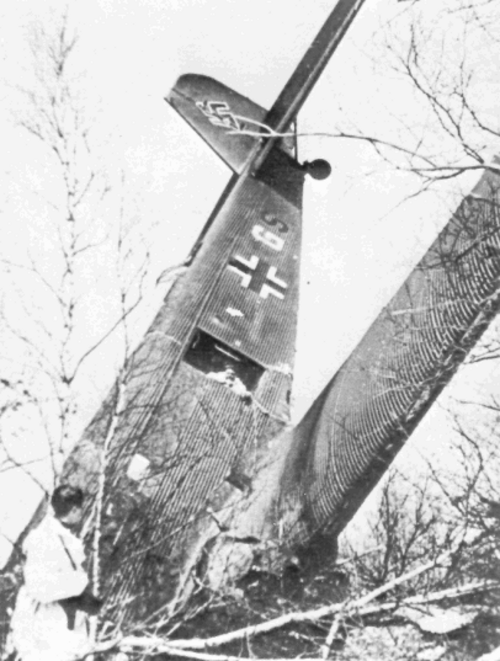
حملة نرويجية
شارك آرني سوندي، وهو رائد في الاحتياط ، في القتال الذي أعقب الغزو الألماني للنرويج . [ 11 ] في 9 أبريل، اتصل سوندي بوزارة الدفاع النرويجية ، مستفسرًا عن مكان التحاقه بالخدمة. أُبلغ سوندي أن التعبئة النرويجية لن تبدأ حتى 11 أبريل، أي بعد يومين كاملين من بدء الهجوم الألماني. رغبةً منه في المشاركة في الدفاع عن النرويج، انطلق سوندي متزلجًا عبر نورد ماركا شمال أوسلو في 12 أبريل، باحثًا عن قوات للانضمام إليها. [ 2 ]
معركة دومباس
كانت معركة دومباس هي المعركة الرئيسية التي شارك فيها الرائد آرني سوندي خلال الحملة النرويجية، حيث قاد الكتيبة الأولى من فوج المشاة الحادي عشر ومجموعة من الوحدات الأخرى في الفترة من 17 إلى 19 أبريل 1940، محققًا النصر على سرية من جنود المظليين الألمان (فالشيرمياغر) الذين أُنزلوا على مفترق الطرق والسكك الحديدية النرويجية في دومباس في 14 أبريل. [ 20 ] وكانت مهمة القوات الألمانية قطع خطوط السكك الحديدية والطرق بين ميناء أوندالسنيس في غرب النرويج ووادي غودبراندسدال في الجنوب الشرقي. [ 21 ] وبحلول 19 أبريل، طلب قائد القوات الألمانية، الملازم أول هربرت شميدت ، استسلامًا تفاوضيًا، لكن سوندي رفض طلبه. وطالب الرائد سوندي باستسلام غير مشروط في غضون 10 دقائق، وإلا سيستأنف قصف المواقع الألمانية المحاصرة بالمدفعية . وبعد تسع دقائق ونصف، استسلم حوالي 150 جنديًا ألمانيًا متبقيًا من قوات المظليين (Fallschirmjäger) للقوات النرويجية بقيادة سوند. [ 20 ]
في المنفى
After Nygaardsvold's Cabinet requisitioned the Norwegian merchant navy Sunde was ordered to London together with Øivind Lorentzen og Benjamin Vogt to build a Norwegian shipping mission in exile; Nortraship.[11][12] Sunde left Norway from the western port of Åndalsnes on the British cruiser HMS Galatea in the late hours of 23 April 1940, bringing 200 large crates of gold bars belonging to the Norwegian National Treasury to the United Kingdom.[22] The transport of the gold from the Bank of Norway central bank headquarters in Oslo had been guarded by troops led by his brother, Bjørn Sunde, who was also a major in the Norwegian Army.[4] After arriving in London on 25 April Sunde, being a banker, was given the responsibility for the exiled Norwegians' finances. Shortly after arriving in the UK Sunde managed to secure a £100,000 credit from Hambros Bank.[2] On 7 June 1940, Sunde was appointed consultative Councillor of State without portfolio,[12][23] as one of two new councillors not from the Labour Party, the other being the Agrarian Party'sAnders Fjeldstad.[23] The appointment of the two new councillors of state was mentioned in a speech by King Haakon VII in a radio address to the occupied Norwegian people on 26 August 1940.[19] At the same he time continued as a member of the consultative council of the shipping director. From 19 November 1940 to 1 November 1942, he headed the Norwegian Ministry of Provisioning. When that ministry was restructured on 1 November 1942 Arne Sunde continued as Minister of Shipping[11][12] until he left the cabinet on 25 June 1945, after the end of the Second World War and the return to Norway of the exiled Norwegian authorities.[11]
Conflicts
Sunde's time in exile was marked by difficulties, with almost constant conflicts with the leaders of Nortraship. While Sunde and most of the other politicians wanted increased political control over the shipping company, the leadership of Nortraship wanted greater freedom to make business decisions. One result of the conflicts was that the Minister of Shipping's authority was decreased by Royal Resolution on 3 September 1943.[11]
One of the earliest and most dramatic conflicts involving Sunde in London was when he, supported by fellow non-Labour Party ministers Anders Fjelstad and Sven Nielsen, on 6 August 1940 demanded that Minister of Foreign Affairs Halvdan Koht resign from his post. The conflict was based in personal animosities between Sunde and Koht, as well as the impression that Koht had been responsible for Norway's failed policy of neutrality before the German attack in April 1940. Sunde withdrew his demands when he realised that he did not have the support of Prime MinisterJohan Nygaardsvold.[24] At the time of the altercation Sunde was one of the leading candidates to take over the Ministry of Foreign Affairs, but was instead given the Ministry of Provisioning after Trygve Lie left that position to become Minister of Foreign Affairs.[12]
Despite the many internal conflicts within the various parts of the Norwegian authorities during their time in exile Sunde defended the Cabinet Nygaardsvold during a 21 October 1942 meeting with four priests of the Norwegian Church Abroad who were accusing Nygaardsvold of excluding people not associated with the Labour Party from influential positions. Sunde stated that in his opinion the Cabinet had always made it a priority to attract competent individuals to its service, regardless of those individuals' political affiliations.[25]
Post-war
Dissolving Nortraship
Having left the government in 1945, Sunde's first task after the Second World War was to in 1946 head the last board of Nortraship, tasked with dissolving the company.[2][11]
From 1945 to 1948, Sunde again headed the Oslo office of Bergens Privatbank.[2]
UN ambassador
From 1949 to 1952, Arne Sunde was the Norwegian ambassador to the United Nations.[11] The perhaps pivotal moment of his career at the United Nations came on 7 July 1950 when he, as President of the Security Council,[26] led the meeting that adopted the United Nations Security Council Resolution 84, recommending United Nations member states to assist the Republic of Korea in resisting the invasion initiated some two weeks earlier by the Democratic People's Republic of Korea.[27] The resolution paved the way for a United States-led UN force in the Korean War.[28] During the negotiations leading up to the resolution Sunde clashed with US ambassador Warren R. Austin, Austin offending Sunde to such a degree that one observer believed that personal relations between the US and Norwegian delegations had been "irreconcilably damaged".[29] At the time the Secretary-General of the United Nations was the Norwegian Trygve Lie and Norway was a non-permanent member of the Security Council.[30] Sunde had also been the UN Security Council President in June 1949.[31] When he was interviewed on his 80th birthday in 1964 Sunde stated that he viewed his time on the Security Council as the absolute high point of his life.[2]
Quotations
...the stamina and courage of American boys who hardly dreamed 14 days ago that they were to be the first to fight for the ideals and principles of the United Nations . . . Let us hope that we shall not fall too far behind these men in our determination and in our dedication. (Security Council President Sunde about US soldiers fighting in the early phases of the Korean War).[27]
Malik is very rude. And he looks as if he believed in his rudeness. (Ambassador Sunde about fellow United Nations ambassador, Soviet Yakov Malik).[32]
Post-Korean War
From 1953 to 1958, Sunde chaired NATO's control commission on the expenses of jointly financed military installations.[2]
Honours
By 1935, Sunde had been awarded Haakon VII's Jubilee Medal 1905–1930, been made a Chevalier of the French Légion d'honneur and an Officer of the Portuguese Order of Christ.[1] He was later decorated Commander with Star of the Royal Norwegian Order of St. Olav, and given the Defence Medal 1940–1945 and the French Croix de guerre.[2]
A small junction of paths near the river Lysakerelva has been named Arne Sundes plass, "Arne Sunde's square".
References
- 123456789Hoffstad, Einar (1935). "Sunde, Arne (Toralf)". Merkantilt biografisk leksikon: hvem er hvem i næringslivet? (in Norwegian). Oslo: A.S Yrkesforlaget. p. 733.
- 123456789101112Norby, Reginald. "Arne Sunde". In Helle, Knut (ed.). Norsk biografisk leksikon (in Norwegian). Oslo: Kunnskapsforlaget. Retrieved 4 December 2009.
- 123Larsen, Stein Ugelvik; Beatrice Sandberg; Volker Dahm (2008). Meldungen aus Norwegen 1940–1945: Die geheimen Lageberichte des Befehlshabers der Sicherheitspolizei und des SD in Norwegen (in German). Oldenbourg Wissenschaftsverlag. p. 16. ISBN 978-3-486-55891-3.
- 12Øksendal 1974: 84
- ↑"Lie – slekt etter Mons Jonassøn". Store norske leksikon (in Norwegian). Oslo: Kunnskapsforlaget. Retrieved 3 June 2011.
- ↑Moland, Arnfinn. "Max Manus". In Helle, Knut (ed.). Norsk biografisk leksikon (in Norwegian). Oslo: Kunnskapsforlaget. Retrieved 3 June 2011.
- 1234Barth, Bjarne Keyser, ed. (1930). "Sunde, A. T.". Norges militære embedsmenn 1929 (in Norwegian). Oslo: A. M. Hanche. p. 575.
- ↑"Arne Sunde". Olympedia. Retrieved 3 June 2021.
- ↑ "آرني سوند" . مرجع رياضي ذ.م.م. مؤرشف من الأصل في 18 أبريل 2020. تم الاسترجاع في 15 نوفمبر 2008 .
- ^ "آرني تورولف سوندي" . issf-sports.org . الاتحاد الدولي لرياضة الرماية . تم الاسترجاع في 9 نوفمبر 2023 .
- 1 2 3 4 5 6 7 8 9 ثوسين، أتلي (1995). "سوندي، آرني (تورالف)" . في دال، هانز فريدريك (محرر). نورسك كريجسليكيكون 1940-45 (باللغة النرويجية). أوسلو: كابلين. ص. 404 . تم الاسترجاع 15 نوفمبر 2008 .
- 1 2 3 4 5 6 Riste 1990: 118
- 1 2 "حكومة يوهان موينكل الثانية" . حكومة النرويج. 3 ديسمبر 2007. تم الاطلاع عليه في 15 نوفمبر 2008 .
- ↑ "إيفار ليك (1872-1949)" (باللغة النرويجية). بلدية تروندهايم . مؤرشف من الأصل في 11 يونيو 2011. تم الاطلاع عليه في 16 نوفمبر 2008 .
- ^ "Dokumentasjonswebside om Eystein Eggen، Gutten fra Gimle" . تيدينس تيجن (باللغة النرويجية). بلوتو.لا. مؤرشفة من الأصلي في 6 أكتوبر 2008 . تم الاسترجاع 16 نوفمبر 2008 .
- 1 2 "آرني تورالف سوند" . خدمات بيانات العلوم الاجتماعية النرويجية (NSD) (باللغة النرويجية). مؤرشف من الأصل في 27 مايو 2011. تم الاطلاع عليه في 3 يونيو 2011 .
- ↑ "حكومة يوهان موينكل الثالثة" . Government.no . 3 ديسمبر 2007. تم الاطلاع عليه في 15 نوفمبر 2008 .
- ^ "دعم" . نورسك تيديند . 5 مايو 1936.
- 1 2 "Haakon 7: Om Regjeringens og Kongens avreise fra Norge" (باللغة النرويجية). فيركسوم أورد/جامعة بيرغن. مؤرشفة من الأصلي في 28 فبراير 2007 . تم الاسترجاع 16 نوفمبر 2008 .
- 1 2 هاوج 1995: 261
- ↑ هاوج 1995: 249
- ↑ أوكسندال 1974: 51، 126
- 1 2 Voksø 1995: 44
- ↑ فوكسو 1995: 62
- ↑ فوكسو 1995: 274
- ↑"Presidents of the Security Council : 1950–1959". United Nations. Archived from the original on 28 August 2011. Retrieved 16 November 2008.
- 12"Strength on Double Seven". Time. 17 July 1950. Archived from the original on 31 January 2011. Retrieved 16 November 2008.
- ↑"84 (1950) Resolution of 7 July 1950"(Portable Document Format). United Nations. 7 July 1950. pp. 5–6. Retrieved 16 November 2008.
- ↑Stueck, William Whitney (1997). The Korean War: An international history. Princeton University Press. p. 57. ISBN 0-691-01624-0.
- ↑Enebakk, Magnar H. "Koreakrigen og det norske feltsykehuset" (in Norwegian). Norwegian Military Journal. Archived from the original on 27 January 2002. Retrieved 16 November 2008.
- ↑"Presidents of the Security Council : 1946–1949". United Nations. Retrieved 18 July 2009.
- ↑"Junior S.O.B."Time. 21 August 1950. Archived from the original on 26 October 2012. Retrieved 16 November 2008.
Bibliography
- Hauge, Andreas (1995). Kampene i Norge 1940 (in Norwegian). Vol. 1. Sandefjord: Krigshistorisk Forlag. ISBN 82-993369-0-2.
- Øksendal, Asbjørn (1974). Gulltransporten (in Norwegian). Oslo: Aschehoug. ISBN 82-03-06336-5.
- Riste, Olav (1990). Norge i krig – Utefront (in Norwegian). Oslo: Aschehoug. ISBN 82-03-11422-9.
- Voksø, Per (1994). Krigens Dagbok – Norge 1940–1945 (in Norwegian). Oslo: Forlaget Det Beste. ISBN 82-7010-245-8.
- 1883 births
- 1972 deaths
- Norwegian Military Academy alumni
- Norwegian Military College alumni
- Sciences Po alumni
- ISSF rifle shooters
- Norwegian male sport shooters
- Olympic shooters for Norway
- Shooters at the 1912 Summer Olympics
- Government ministers of Norway
- Ministers of trade and shipping of Norway
- Liberal Party (Norway) politicians
- Politicians from Aker
- Mayors of places in Akershus
- Norwegian bankers
- Norwegian expatriates in France
- 20th-century Norwegian lawyers
- Norwegian Army personnel of World War II
- Nortraship people
- Military attachés for Norway
- People of the Korean War
- قضاة المحكمة العليا النرويجية
- الممثلون الدائمون للنرويج لدى الأمم المتحدة
- الأشخاص الذين تلقوا تعليمهم في مدرسة كاتدرائية أوسلو
- الجمعية النرويجية لحقوق المرأة
- فرسان جوقة الشرف
- ضباط وسام المسيح (البرتغال)
- الحاصلون على الصليب الحربي 1939-1945 (فرنسا)
- وزراء العدل في النرويج
- النرويجيون الحائزون على وسام جوقة الشرف