
Dual-mode bus

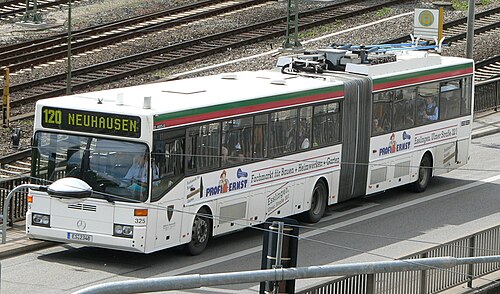
A dual-mode bus, also known as a duobus or bimodal bus, is a bus that can operate using two independent power sources. Most commonly, this refers to a vehicle that combines the features of an electric trolleybus, drawing power from overhead lines, and a conventional bus, powered by a diesel engine.[1]
The term is primarily used for buses with two full-fledged, powerful propulsion systems, designed for regular service on routes that are only partially equipped with overhead wires.[2] This distinguishes them from trolleybuses equipped with a small auxiliary power unit (APU), which is only intended for short-distance, low-speed maneuvers such as bypassing obstacles or navigating depots.[2] A separate term, IMC Electric bus (for In-Motion Charging), is used for modern vehicles that combine overhead wire operation with a large battery pack, allowing for significant wireless travel without a fossil fuel engine.
Characteristics
Advantages
The primary advantage of a dual-mode bus is its flexibility. It can operate as a zero-emission electric vehicle in city centers or on heavily used corridors where overhead lines are installed, offering benefits like high acceleration, low noise, and no local air pollution. On suburban sections of the route or in areas where installing overhead lines is impractical or too expensive, it can switch to its diesel engine and operate with the same range and flexibility as a standard bus.[1]
This capability allows for one-seat rides on routes that transition from wired to unwired sections, eliminating the need for passengers to transfer. It also provides operational redundancy; the bus can continue to run during power outages or when overhead lines are damaged by switching to its diesel engine. Furthermore, routes can be extended into new areas before the wire infrastructure is built.[3]
Disadvantages
Despite their flexibility, dual-mode buses have several drawbacks that have limited their widespread adoption. The inclusion of two complete powertrains (an electric motor and control systems, plus a diesel engine, fuel tank, and transmission) significantly increases the vehicle's weight. For example, the electrical equipment on a Mercedes-Benz O 405 GTD added six tons to its weight.[4] This extra weight leads to higher energy consumption in both modes of operation.
Dual-mode buses are also more expensive to purchase and maintain than either a standard trolleybus or a diesel bus. The complexity of the dual systems can lead to lower reliability and higher maintenance costs. The space required for the additional equipment can also reduce passenger capacity, impacting the vehicle's economic efficiency.[1] Finally, the process of switching between power modes requires the bus to stop, which can add to overall journey times.[1]
History and decline
Early precursors to the modern dual-mode bus concept include the "All-Service Vehicle" in New Jersey and dual-power vehicles in several European cities. However, the term "Duo-Bus" was first popularized in Esslingen am Neckar, Germany, initially for a battery-trolleybus hybrid in the 1970s. When that proved unsuccessful, Esslingen introduced a diesel-trolleybus model in 1979, which became the template for the modern dual-mode bus.[1]
The concept saw peak interest in the 1980s and 1990s, with several cities in Europe and North America adopting fleets. However, due to the operational challenges and high costs, many of these systems were short-lived. A significant number of dual-mode buses were prematurely retired, converted into either diesel-only buses or electric-only trolleybuses, or sold to other operators who did not use their dual-mode capability.[1]
Since the 2000s, advances in battery technology have led to the rise of in-motion charging (IMC) electric buses. These vehicles offer the same operational flexibility as diesel dual-mode buses but without the emissions, weight, and maintenance complexity of a combustion engine, effectively making the classic diesel duobus concept largely obsolete.[2] As of 2018, only two cities, Fribourg, Switzerland, and Boston, USA, were still operating diesel dual-mode bus systems, and Boston has since retired its fleet.[1][5]
List of models
Excluding early precursors, a total of 438 series-production dual-mode buses have been built. The vast majority of these were articulated vehicles.[1]
| الشركة المصنعة | يكتب | سنوات الإنتاج | المعدات الكهربائية | الوحدات المبنية | المشغلون الرئيسيون |
|---|---|---|---|---|---|
| بريدا | ADPB 350 | 1988–1991 | إيه إي جي / ويستنجهاوس | 236 | مترو مقاطعة كينغ (سياتل) |
| رينو | لكل 180 ساعة | 1982–1984 | (متنوع) | 64 | نانسي، سانت إتيان، غرونوبل (فرنسا) |
| دايملر بنز | مرسيدس بنز O405 GTD | 1986–1995 | AEG | 47 | إسلنغن، إيسن (ألمانيا)؛ بيرغن (النرويج) وغيرها |
| نيوبلان | AN460LF | 2004–2006 | سكودا | 32 | هيئة النقل في خليج ماساتشوستس (بوسطن) |
| نيوبلان | N 6121 | 1998 | فوسلو كيبي | 27 | TL (لوزان) |
| فولفو / هيس | فولفو B10M | 1987–1989 | BBC-Sécheron / ABB | 12 | TPF (فريبورغ) |
| رجل / هيس | NGT 204 F | 2004 | كيبي | 9 | TPF (فريبورغ) |
| دايملر بنز | مرسيدس بنز O305 GTD | 1983 | AEG | 4 | إسلينغن، إيسن (ألمانيا) |
| دايملر بنز | مرسيدس بنز O305 D/E (صلبة) | 1979 | بوش / دورنير | 2 | إس في إي (إسلينجن) |
| دايملر بنز | مرسيدس بنز O305 GD/E (مفصلية) | 1979 | بوش / دورنير | 1 | إس في إي (إسلينجن) |
| رجل | SG 240 H Duo | 1983 | كيبي | 1 | شركة إيسن للنقل (إيسن) |
| مان / فويث | MAN SL200 (نموذج أولي) | 1984 | بي بي سي-سيشيرون | 1 | مركبة تجريبية |
| دايملر بنز | مرسيدس بنز O405 GNTD | 1996 | كيبي / زد إف | 1 | Verkehrsbetriebe زيورخ (زيورخ) |
| فان هول | AG300TD | 1993 | كيبي | 1 | كونيكسيون (أرنهيم) |
أمثلة على الاستخدام
- سياتل، واشنطن ، الولايات المتحدة الأمريكية: شغّلت 236 حافلة من طراز بريدا ADPB 350 في نفق النقل بوسط مدينة سياتل من عام 1990 إلى عام 2004. كانت الحافلات تعمل بالكهرباء داخل النفق، وتتحول إلى الديزل للسير على الطرقات العامة. تم إخراج الأسطول من الخدمة واستبداله بحافلات كهربائية هجينة. [ 6 ]
- بوسطن ، ماساتشوستس، الولايات المتحدة الأمريكية: استخدمت 32 حافلة من طراز Neoplan AN460LF على الجزء الواقع على الواجهة البحرية من خطها الفضي من عام 2005 إلى عام 2023. تم استخدام الطاقة الكهربائية في النفق أسفل قناة فورت بوينت ، بينما تم استخدام طاقة الديزل للشوارع السطحية ونفق تيد ويليامز المؤدي إلى مطار لوجان . [ 7 ]
- إسلينغن آم نيكار ، ألمانيا: أحد الأنظمة الرائدة، التي كانت تشغل طرازات مختلفة من مرسيدس بنز من عام 1979 حتى عام 2008.
- طوّرت جامعة مدينة طوكيو حافلة تعمل بالهيدروجين عام ٢٠٠٩. وحصلت على لوحة ترخيص من وزارة الأراضي والبنية التحتية والنقل والسياحة، لتصبح بذلك أول حافلة تعمل بمحرك هيدروجيني في اليابان يُسمح لها قانونًا بالعمل على الطرق العامة. وقد استُخدمت كحافلة نقل بين حرم الجامعة. [ ٨ ] [ ٩ ]
انظر أيضاً
- حافلة كهربائية
- قاطرة كهربائية تعمل بالديزل ، وهي المكافئ في مجال السكك الحديدية
- الحافلة الموجهة
- حافلة كهربائية هجينة
- حافلة كهربائية من شركة IMC
- قائمة الحافلات
مراجع
- 1 2 3 4 5 6 7 8 "Duo-Bus" . ويكيبيديا الألمانية (بالألمانية) . تم الاطلاع عليه بتاريخ 26-10-2024 .
- 1 2 3 "Дуобус" . ويكيبيديا الروسية (باللغة الروسية) . تم الاطلاع عليه بتاريخ 26-10-2024 .
- ^ "ديوبوس" . ويكيبيديا السويدية (باللغة السويدية) . تم الاسترجاع 2024-10-26 .
- ↑ ست 66 سنة تحت ستروم. شتوتغارتر تسايتونج، 2 نوفمبر 2010
- ↑ "هيئة النقل في بوسطن تُخرج آخر حافلاتها ثنائية الوضع من الخدمة وتستبدلها بحافلات هجينة وحافلات كهربائية تعمل بالبطاريات" . هيئة النقل في بوسطن . 31 يوليو 2023. تاريخ الاطلاع: 26 أكتوبر 2024 .
- ↑ "حافلة بريدا 5000 ثنائية الوضع متقاعدة" . مترو أونلاين . مؤرشفة من الأصل بتاريخ 28-05-2010 . تم الاطلاع عليها بتاريخ 04-12-2009 .
- ↑ "هيئة النقل في بوسطن تُخرج آخر حافلاتها ثنائية الوضع من الخدمة وتستبدلها بحافلات هجينة وحافلات كهربائية تعمل بالبطاريات" . هيئة النقل في بوسطن . 31 يوليو 2023. تاريخ الاطلاع: 26 أكتوبر 2024 .
- ↑ تنفيذ قيادة الحافلات التي تعمل بمحركات وقود الهيدروجين على الطرق العامة
- ↑ [جامعة مدينة طوكيو تنجح في تطوير حافلة تعمل بمحرك وقود الهيدروجين]
روابط خارجية
 الوسائط المتعلقة بالحافلات ثنائية الوضع على ويكيميديا كومنز
- الحافلات حسب النوع
- المركبات الكهربائية الهجينة