
الحاكم العام لتشوسن
الحاكم العام لتشوسن ( اليابانية :朝鮮総督، بالحروف اللاتينية : Chōsen Sōtoku ؛ الكورية : 조선총독 ، بالحروف اللاتينية : جوسون تشونغدوك ) كان المدير الرئيسي للحكومة العامة لتشوسين، وهي جزء من جهاز إداري أنشأته الحكومة الإمبراطورية اليابانية. كان هذا المنصب موجودًا من عام 1910 إلى عام 1945.
أُنشئ منصب الحاكم العام لتشوسين بعد فترة وجيزة من ضم الإمبراطورية الكورية رسميًا إلى الإمبراطورية اليابانية بموجب معاهدة اليابان وكوريا لعام 1910، ليحل محل لقب المقيم العام . وكان يُعيّن حاكم تشوسين العام من طوكيو ، ويخضع لسلطة إمبراطور اليابان . وتولى الحاكم العام لتشوسين مسؤولية إدارة شؤون منطقة تشوسين، بما في ذلك البنية التحتية والثقافة والعدالة والرقابة وقمع حركة الاستقلال الكورية . [ 1 ] [ 2 ]

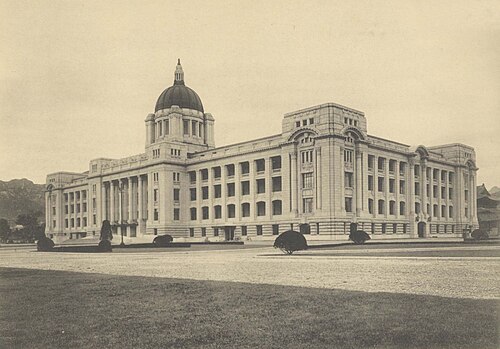
كان الحاكم العام لتشوسن يجلس في مبنى الحكومة العامة في كيجو بعد اكتماله في عام 1926. [ 3 ] ريثما يكتمل المبنى، كان الحاكم العام يقيم في نامسان . [ 4 ]
تاريخ
بعد ضم كوريا إلى اليابان عام ١٩١٠، استُبدل منصب المقيم العام بمنصب الحاكم العام. إلا أن هذا المنصب كان فريدًا بين ممتلكات اليابان الخارجية، إذ تمتع الحاكم العام بصلاحيات واسعة النطاق ، وشمل أيضًا الإشراف القضائي وبعض الصلاحيات التشريعية . وحتى عام ١٩٤٤، لم يكن الحاكم العام مسؤولًا عن قيادة وحدات الجيش الإمبراطوري الياباني أو البحرية الإمبراطورية اليابانية المتمركزة في تشوسين . [ ٥ ] ونظرًا للصلاحيات ومستويات المسؤولية، لم يُختار لهذا المنصب إلا كبار الجنرالات في الجيش الإمبراطوري الياباني، باستثناء الفيكونت سايتو ، وهو أميرال متقاعد.
The governor-general of Chōsen had a police organisation, which may have been partly involved in having Korean women working as comfort women.[6]
After the Japanese defeat in World War II, the Korean Peninsula was administered by the Democratic People's Republic of Korea and the Republic of Korea. The governor-general building was demolished during administration of South Korean presidentKim Young-sam on August 15, 1995.
Prime Ministers of Japan
Four individuals who held the position of the governor-general of Chōsen also held the office of the prime minister of Japan. Three, Terauchi Masatake, Saitō Makoto, and Koiso Kuniaki, were governors-general before becoming prime ministers. One, Abe Nobuyuki, was prime minister before his appointment as governor-general. Ugaki Kazushige was named prime minister-designate, but he could not take office because he was unable to form a cabinet.
In addition, Resident-General Itō Hirobumi served four terms as prime minister prior to his appointment to Korea.
Governors-general
After the annexation of Korea to Japan in 1910, the office of resident general was replaced by that of governor-general.
- GeneralCountTerauchi Masatake 寺内 正毅 (1910–1916)
- GensuiCountHasegawa Yoshimichi 長谷川好道 (1916–1919)
- AdmiralViscountSaitō Makoto 斎藤 実 (1919–1927)
- GeneralKazushige Ugaki 宇垣 一成 (1927)
- GeneralYamanashi Hanzō 山梨半造 (1927–1929)
- ViscountSaitō Makoto 斎藤 実 (second time 1929–1931)
- GeneralKazushige Ugaki 宇垣 一成 (second time 1931–1936)
- GeneralMinami Jirō 南次郎 (1936–1942)
- General (ret'd) Koiso Kuniaki 小磯 國昭 (1942–1944)
- General (ret'd) Abe Nobuyuki 阿部信行 (1944–1945)
See also
References
- Kim, Djun (2005). The History of Korea. Greenwood Press. ISBN 0-313-33296-7.
- ↑Governor-General of Korea. 統計年報[Statistics Annual Report]
- ↑黄文雄 Kō Bun'yū 歪められた朝鮮総督府 [Distorted facts about Governor-General of Korea](in Japanese).光文社 Kobunsya
- ↑The building was demolished during the administration of South Korean president Kim Young-sam on August 15, 1995.
- ↑잡지 일본지 조선(日本誌 朝鮮) 1911 Magazine Japanese Chosun (Illustration)
- ↑Grajdanzev, Andrew (2007). "The Government of Korea". Modern Korea (2nd ed.). Orchard Press. p. 238. ISBN 978-1-4067-3825-4.
- ↑西岡力 Tsutomu Nishioka 政府は名誉回復の戦いを止めてはならぬ [The Japanese government must not stop demanding the restoration of honour] in Seiron March 2016 (in Japanese).産経新聞社 [Sankei Shimbun Sya]. p. 83
External links
- Governors-general of Chōsen
- Anti-Japanese sentiment in Korea
- Japanese imperialism and colonialism
- Keijō